
Welcome to Place Study — a series observing thoughtful spaces through design, sketching, photography, and the details worth noticing.
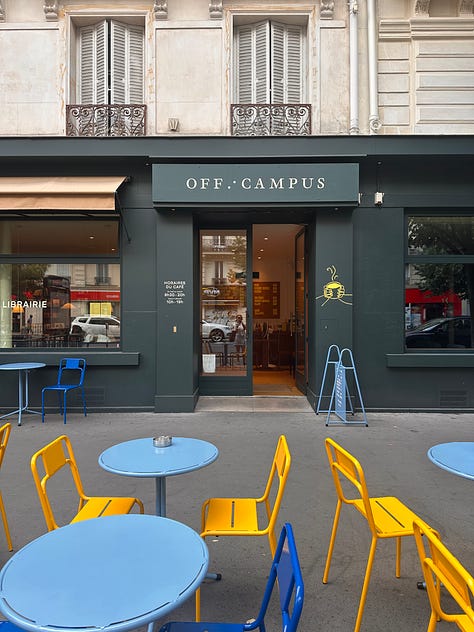
Every city needs more spaces like Off-Campus.
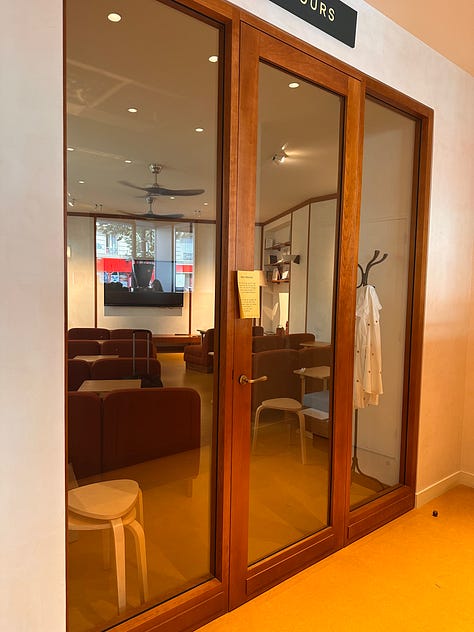
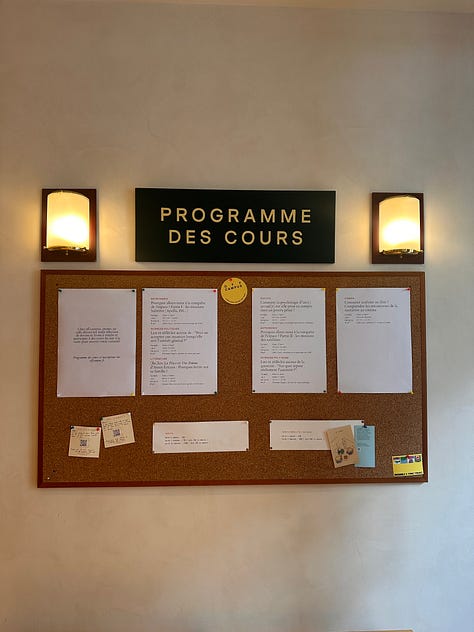
Off Campus is learning-forward, offering an extensive lineup of evening courses open for sign-up: geopolitics, literature, history, philosophy, ecology, cinema, astronomy, and more. The only downside for me is that the courses are currently offered in French, and they’re unsure when English classes will return.
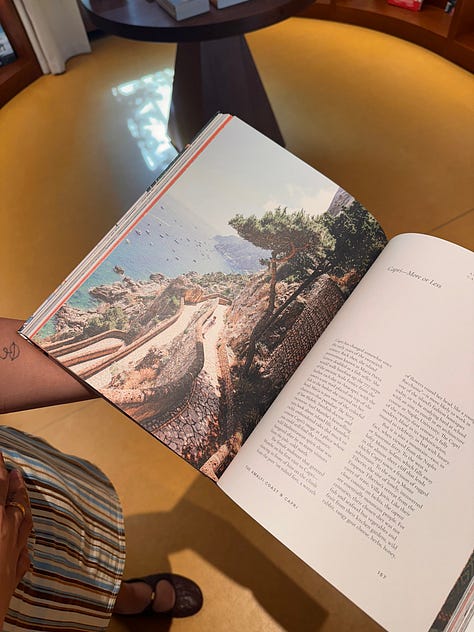
When I visit cafés, I always notice how comfortable they feel to actually spend time in. I love a spacious, cozy café with good tables, and Off Campus feels designed for exactly that. There’s room for laptop learning, but also for casual catch-ups, reading, or simply sitting with a book for a while.
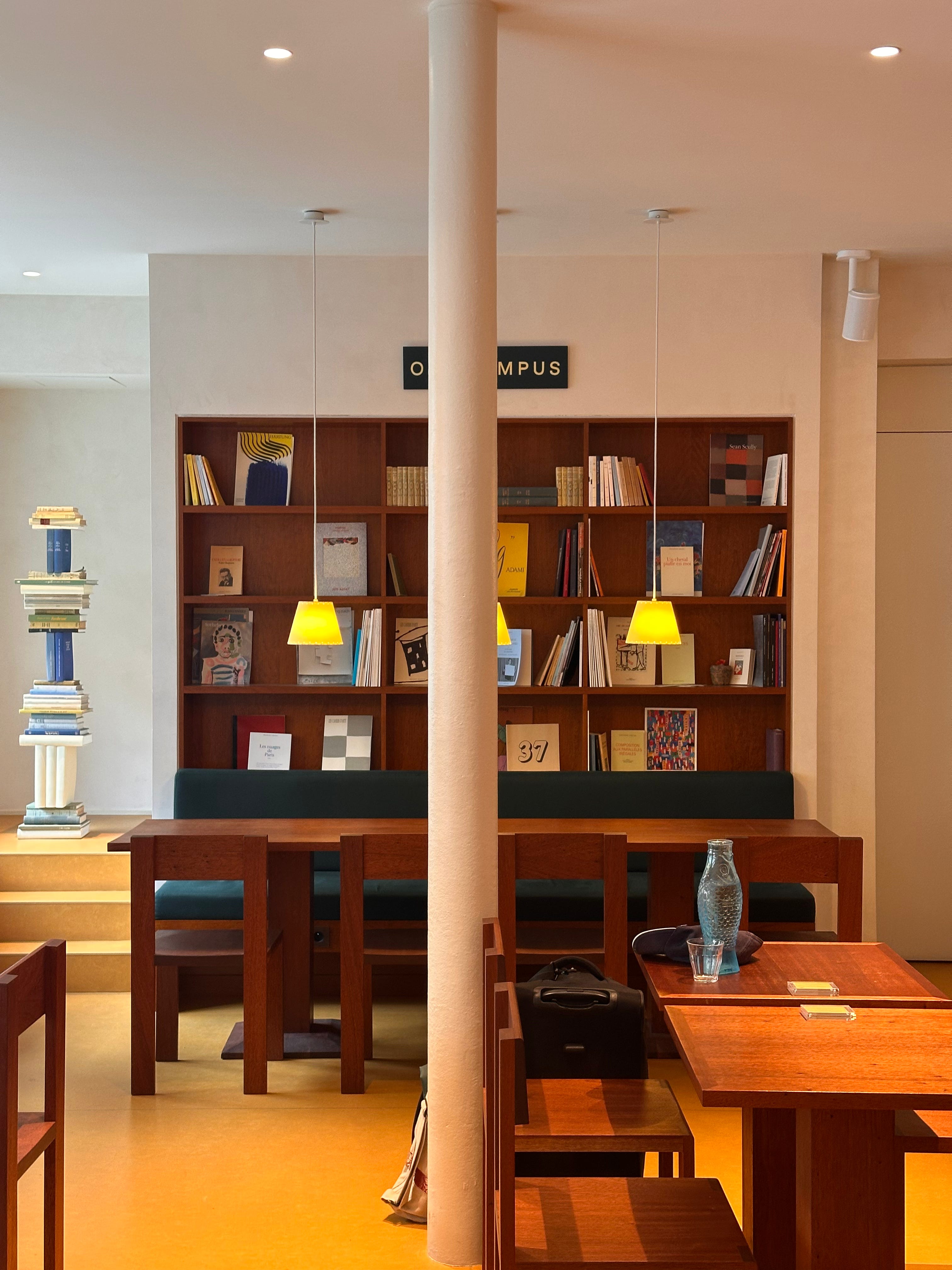
It feels somewhere between a café, a library, and a university common room, and that feeling seems completely intentional.
01. Designing around a feeling
The first thing I noticed was what I can only describe as a mature university feeling.
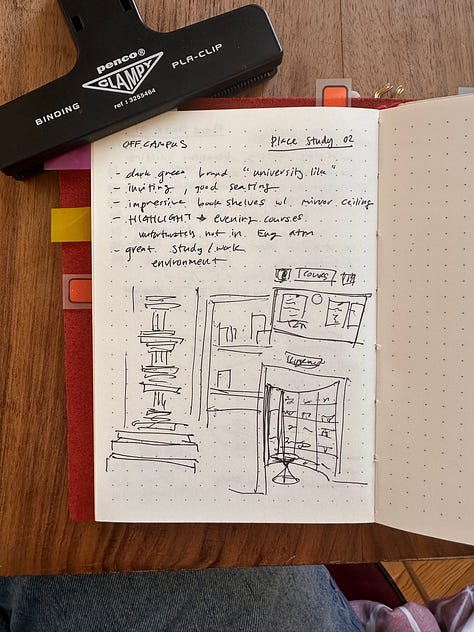
The books, darker wood, green tones, communal tables, warm lighting, and slightly academic atmosphere all reinforce the same identity. Nothing feels overly themed or literal, but together, all of these choices make the space feel like somewhere you might come to study, exchange ideas, or learn something new.
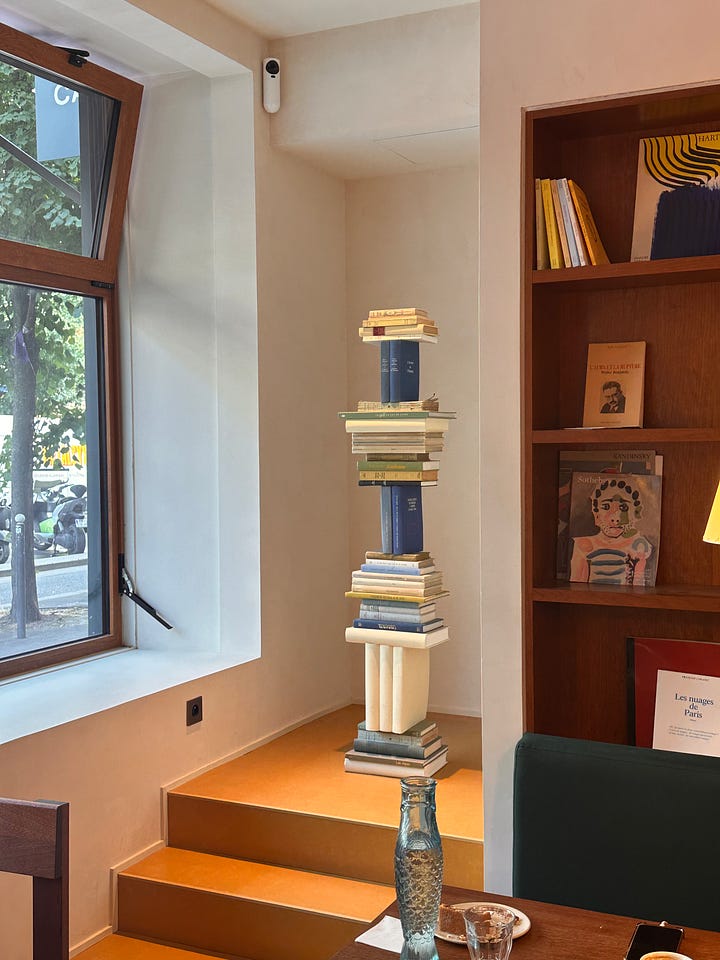
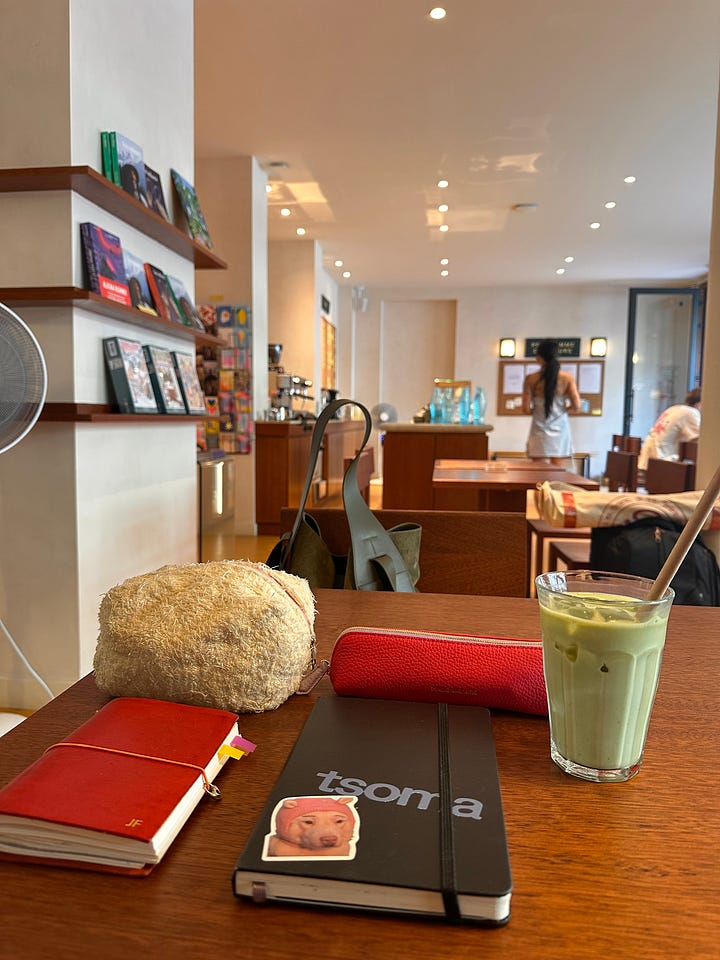
It made me think about how a strong interior concept doesn’t necessarily need a theme. Sometimes it’s simply lots of small decisions that all point toward the same feeling.
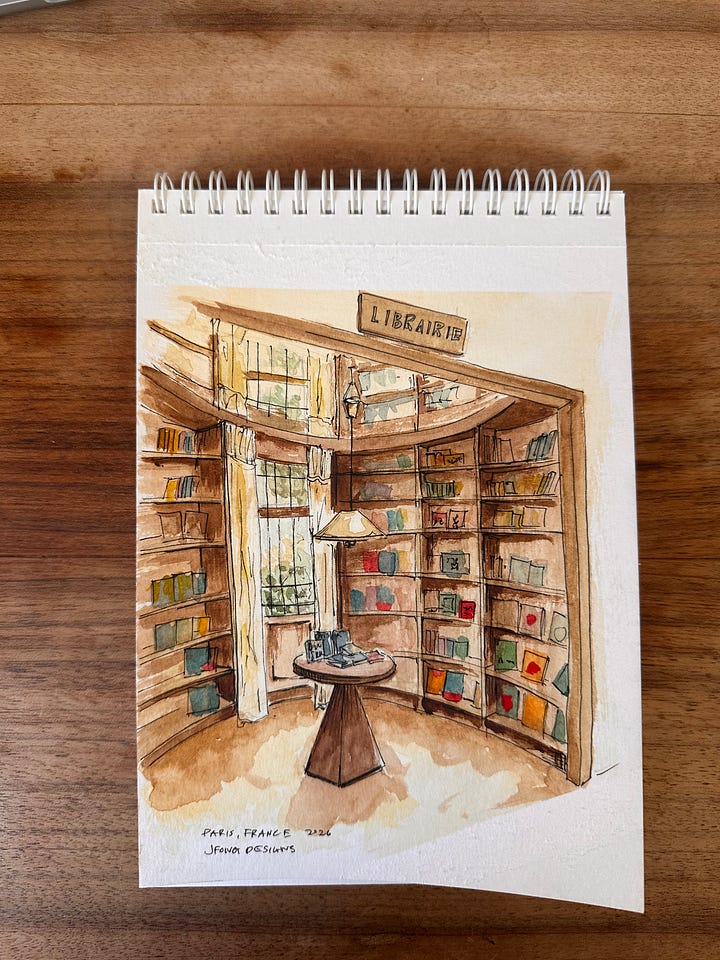
02. Books become part of the architecture
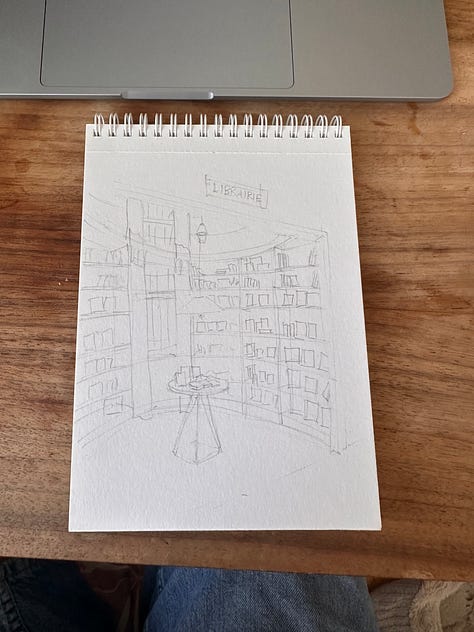
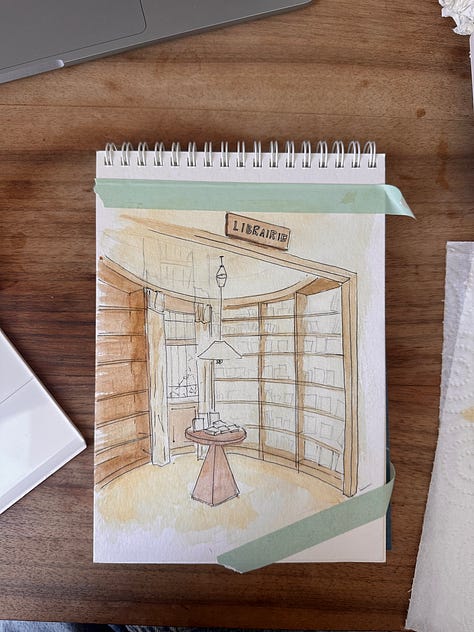
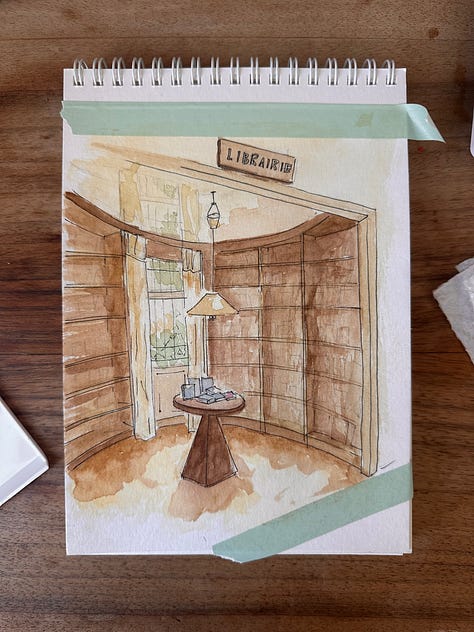
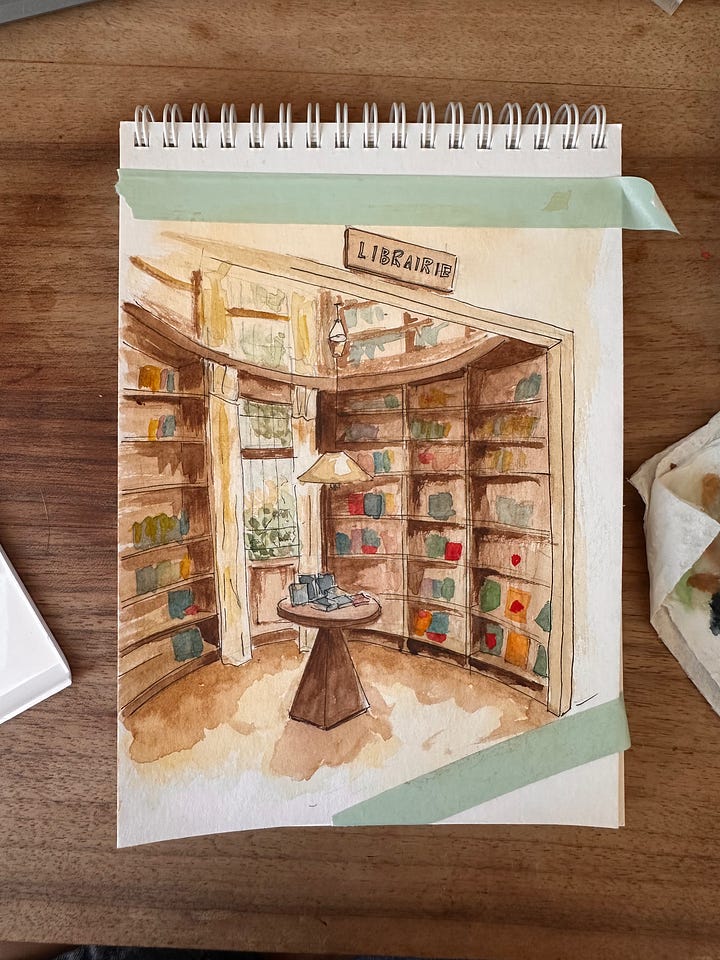
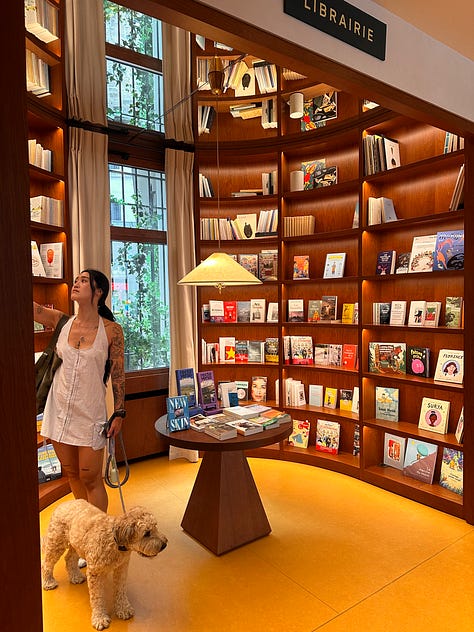
Books are everywhere, but they don’t feel like decorative objects placed around the café as an afterthought.
Instead, the shelving helps define the space itself. The books bring colour, texture, repetition, and a sense of life to the walls while reinforcing the idea of Off Campus as a place for learning.
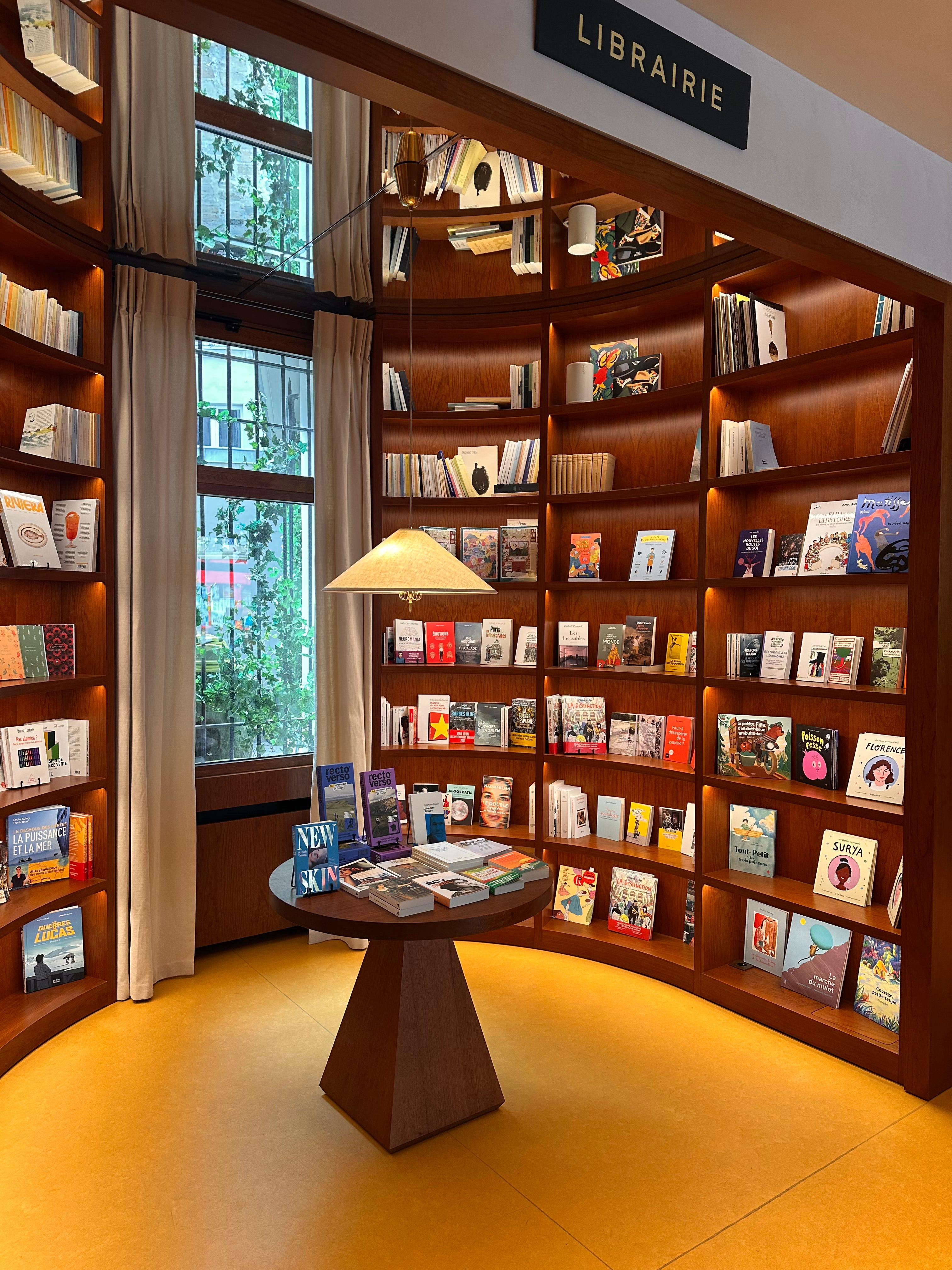
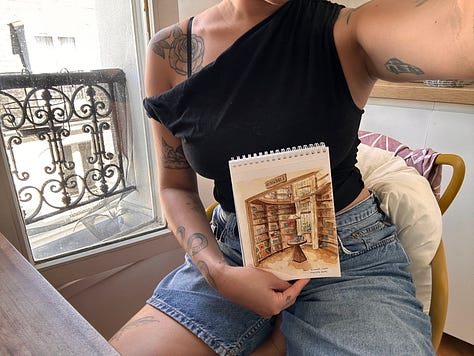
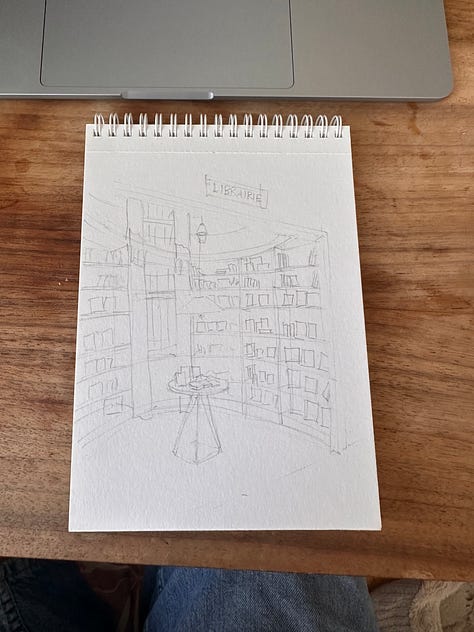
I’m not going to lie this was one of the captivating points of why we wanted to come to this place. The stunning 180 librarie that felt endless. Notice how they did not pack the area neck to neck with books.
I’m increasingly drawn to interiors that feel lived in rather than perfectly styled. Here, something as functional as storing books becomes part of the architecture and identity of the space.
03. Look up
One of my favourite details was actually above me: the mirrored ceiling.
It reflects fragments of the room back at you — the furniture, lights, movement, and people below — adding another layer to how you experience the space. It also makes the room feel larger and gives you something unexpected to notice once you look beyond eye level.
It was a good reminder that when observing interiors, there is so much more to look at than the walls and furniture.
Sometimes the most interesting design decision is above you.
04. Rules can shape a space
What makes Off Campus particularly interesting is that its design goes beyond how the café looks.
There are rules around laptop use at certain times, and in the evenings, the space hosts its courses and events. Both influence how people behave within it.
Limiting laptops can shift a table from somewhere to work into somewhere to talk. Hosting classes turns the café from somewhere people simply consume into somewhere they participate.
This is quite common in EU compared to NA. Some cafes do not allow laptops at all, some allow on weekends, and some allow on certain tables only.
It made me think about rules as another layer of spatial design. A space isn’t only shaped by its furniture, lighting, materials, or layout. It’s also shaped by what people are encouraged to do once they’re inside it.
Look above eye level.
Repetition can make functional objects feel architectural.
Build a palette through materials, not just paint colours.
Consider how rules influence the way people use a space.
Design the feeling first, then the objects.
The more spaces I study, the more I realise that what stays with me usually isn’t one beautiful chair or one clever detail. It’s the feeling created when architecture, objects, colour, materials, and even human behaviour start working together.
Off Campus reminded me that designing a space isn’t only about deciding what goes inside it. You’re also quietly designing how people move through it, what they notice, how long they stay, and sometimes even how they interact with one another.
Maybe the most memorable spaces aren’t simply designed to be looked at. They’re designed to be participated in.
See you in the next note,
Janice
Continue reading
No posts
Comments
Nothing yet. Say the first thing.
Sign in to join the conversation.