
The first demonstration I ever participated in happened in Munich. where I was a university student. On June 2, 1967, 26-year-old Benno Ohnesorg was fatally shot in Berlin by a policeman when he protested against the visit of the Shah of Iran. It was Benno’s first-ever demonstration, he never was a rebel-rouser, and the news of his murder spread like wildfire and caused protests in every major German city.
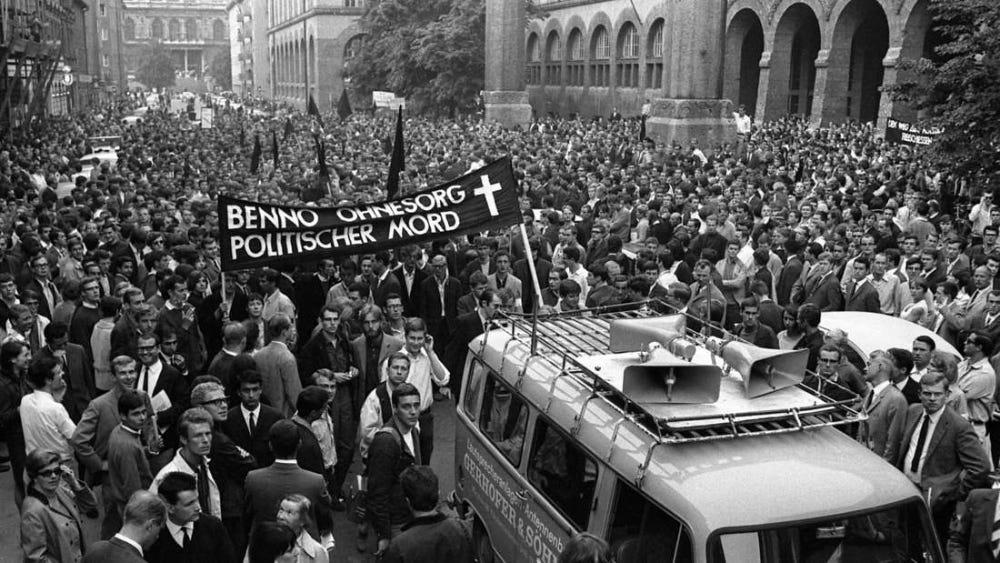
It was a pivotal moment for me, as well. I was brought up in a strict bourgeois family and was told ever since the first grade that I would go to university. There was no choice; that I could become a carpenter, a car mechanic, or a potter just wasn’t a conscious possibility. But once I went to demonstrations and met others who rejected the status quo my life changed. I can only compare it to the way the Wizard of Oz movie changed from black-and-white to color: it was the psychedelic era, after all. I started to smoke hashish and took LSD, rebellious acts at the time. And the music! Both from Great Britain and the U.S., but there was also Munich’s own rock group Amon Düül and Tangerine Dream in Berlin, famous far beyond Germany’s borders.
Psychedelics had a profound effect on me, deepening my understanding of the world and its many creatures. I had rejected organized religion at an early age, but kept a lightly-held belief in beings without a physical body. Myths and fairy tales (the Brother Grimm versions, not the watered-down Disney tales) never lost their appeal. What I took away from my acid trips was the experience that life and consciousness fundamentally imbued everything, even rocks and mountains, and that “rocks” and “mountains” were nothing but words to name parts of the whole which were connected to everything else. They were words, concepts, not the real thing. At some point in the late 70s in San Francisco I had this strong sense that I had learned everything I could from LSD, and I never took another trip.
In the meantime, back in Munich, I demonstrated against the Vietnam War, against the superficial materialism in Germany symbolized by the Wirtschaftswunder, the economic miracle which lifted West-Germany from total destruction after the war to one of the strongest economies in Europe, and against the authoritarianism and bourgeois notions of my parents’ generation. They hated the music. When mini-skirts became fashionable in the late 60s, conventional opinion was outraged and called them scandalously inappropriate. Shortly after, when young women rejected the by then accepted short hemline and were wearing long, flowing skirts to protest against commercial fashion, the same critics complained again.
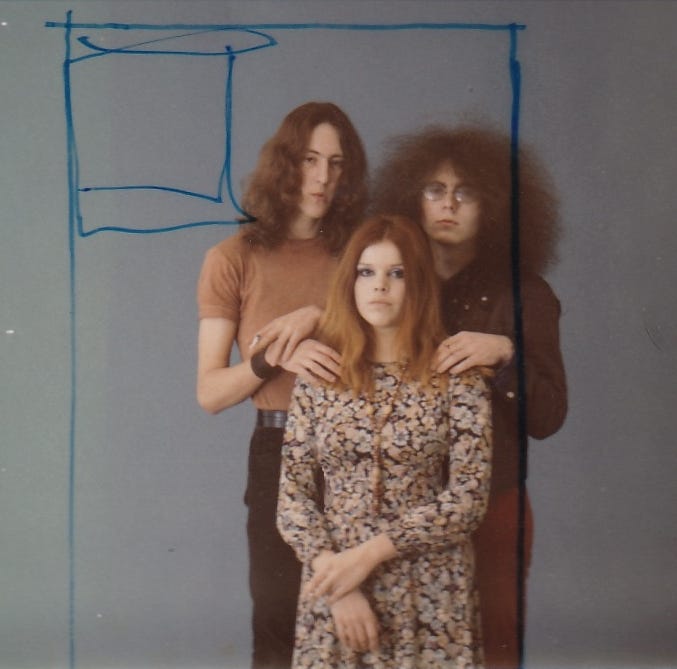
There were several factions of anti-authoritarian rebels in Munich in the late 60s. The equivalent to the U.S. Students for a Democratic Society (SDS) attracted people who studied Marxism, didn’t smoke pot, and were too dogmatic and stiff for my taste. Munich had a film school, so there were those attracted to avant-garde filmmaking, looking decorative, and playing music. And then there was a group of political pranksters, sort of in-between the two others, the “fun guerilla” : political but not dead serious, into music and smoking pot, but motivated by a desire for social change. That’s what I belonged to; five of us lived in a commune in Munich, together with at the time notoriously prominent firebrand Fritz Teufel. His girlfriend, Inga Möller, Jimmy Vogler, one other guy, and I were the original members, but soon we had people from Berlin and Hamburg visiting, and a more permanent guest: Rosy-Rosy, who died just about exactly three years ago. Strange to find out because of writing this piece, when I haven’t thought about her for ages.
I forget how long I lived in the commune, not much longer than one year, I think. During that time we went to demonstrations and organized protest events, for example against the Vietnam War, the attempted assassination of Berlin activist Rudi Dutschke, and the passing of the German Emergency Acts. The police were always brutal, the press was always lying and claimed that we had been violent, when I knew exactly what had happened because I had been there whereas the reporters had not. This had the effect that I wanted to become more radical. If they’d beat us up anyway, if they’d put us in jail overnight, at least I wanted to do something to deserve it. Justice wasn’t available to us, I felt. Somehow this feeling escalated, and when some people from Berlin who were on their way to Italy stayed with us for a week or so, and when I learned that they planned to travel further to Jordan to join the El Fatah and learn to make bombs, I decided to join them.
I didn’t have a clear idea what this would involve, but it sounded like a good adventure. I drove with them all the way to Italy, but somewhere between Rome and Naples I realized that I didn’t really like the people I was with. Especially Dieter Kunzelmann from Berlin came across as a self-absorbed loudmouth. It dawned on me that one had to change oneself first, if one wanted to change the world, and I decided to go back to Munich; I hitch-hiked.
To this day I thank my guardian angel for that spur-of-the-moment decision. The others did indeed make it to Jordan. Georg von Rauch, part of our group travelling from Munich to Italy, was shot by the police in 1971. By that time I was in India, the political climate in Germany had become too oppressive. I lived in Japan for four years and ended up in San Francisco in 1977. That’s when I learned that my friend Inga Möller had been in prison and had tried to commit suicide, together with three other political inmates. Inga survived and stated that they were murdered, that she never stabbed herself. I saw this on the TV News in San Francisco and almost had a nervous breakdown. How easily I could have been in her shoes. For many years I had nightmares that I was stuck in Germany and couldn’t get out.
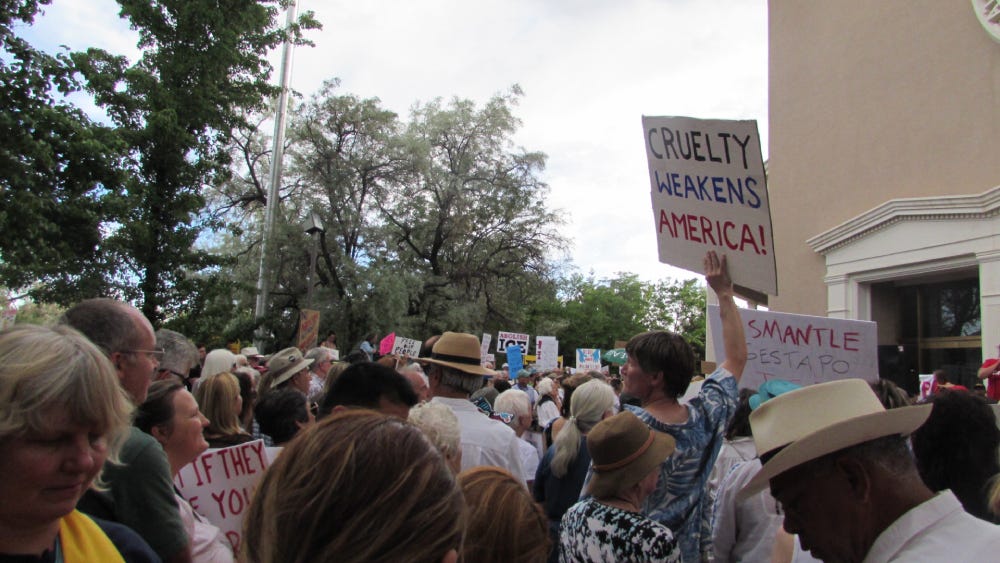
Politics in the United States – in 1980, Regan was elected as president, a total surprise to me because nobody that I knew in San Francisco had voted for him – didn’t affect me as deeply as they had in Germany. But I did protest against the Gulf War of 1990 - 91, this time with my daughter: we joined over 100,000 people who marched in San Francisco. And in 2018, in Santa Fe, I was part of a rally that asked to abolish ICE, among other things.
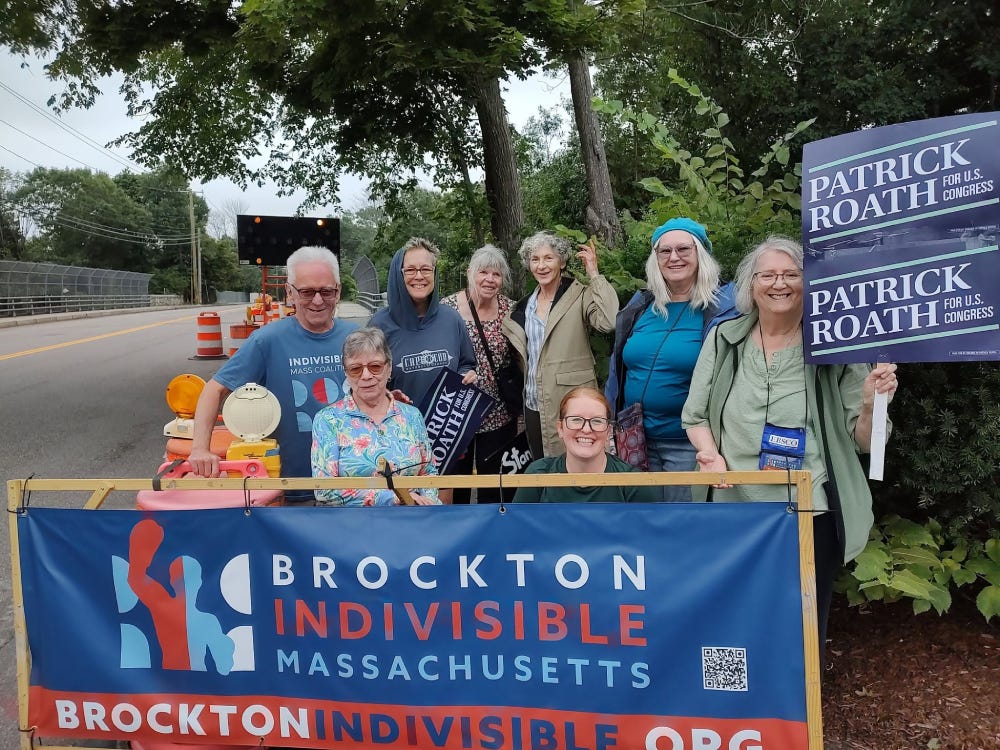
I had to turn almost 80 before I learned that the best way to impact politics is to work at the local level. Last year, I voted for the mayor of our city – the one I wanted didn’t win, but he will next time, maybe. The current representative in Congress for our district, Stephen Lynch, has held his seat for 25 years! So, I’m busy getting him replaced. Patrick Roath is a young progressive, concerned about the future of his daughter, who doesn’t take corporate money and would work for term limits for Congress members. He’s worth fighting for!
Comments
Nothing yet. Say the first thing.
Sign in to join the conversation.