
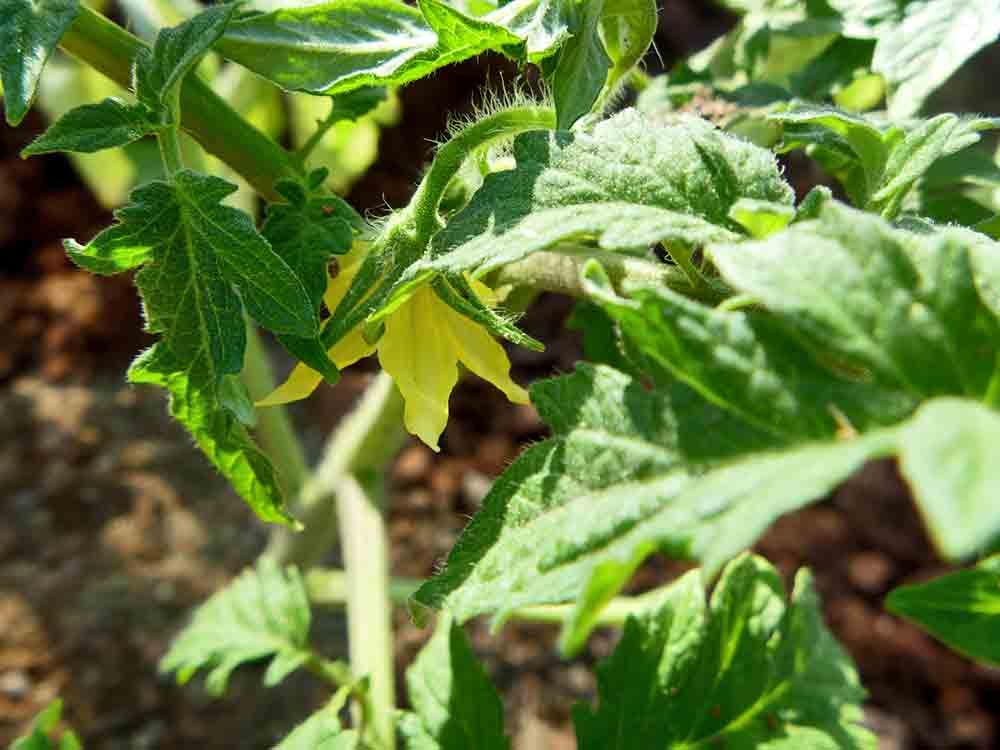
For the last few weeks I’ve been planting stuff in the garden. I bought little seedlings at the nursery – tomatoes, green peppers, eggplants, zucchini, a watermelon, cucumbers, and some other vegetables. I ordered some seed potatoes. And I got a bunch of annual seeds: cosmos, nasturtiums, morning glories, snap dragons, and wildflower mixes. I’ve been doing this for over fifty years, ever since I lived in Japan right by a river on the outskirts of Nagano together with Masao, my daughter’s father. He had a beautiful, black cat named Popeye, and in the summer he grew spinach, lettuce, and other vegetables. When we moved to the United States and ended up in Berkeley/California, I turned a dry, barren backyard into a show-stopping paradise with vegetable beds, lots of roses, day lilies, irises, yarrow, lavender, daisies, foxglove, and many, many other flowers. A little pond with a waterfall. A home-made bench nearby, surrounded by an arch of honeysuckle. I did not build all this by myself, mind you: two neighbors who also lived in the house which was built by the renown architect Bernard Maybeck were instrumental in creating this urban oasis. In 2000 I needed more peace and quiet, and moved to a tiny village in northern New Mexico. Gardening was more difficult in the dry, arid climate 7,000 feet above the sea; while in Berkeley everything grew so profusely that my main efforts involved trimming and cutting back, so that the garden wouldn’t turn into an impenetrable jungle, the work was much harder in New Mexico and had relatively meager results. Still, I always had something growing, at least Swiss chard and arugula.
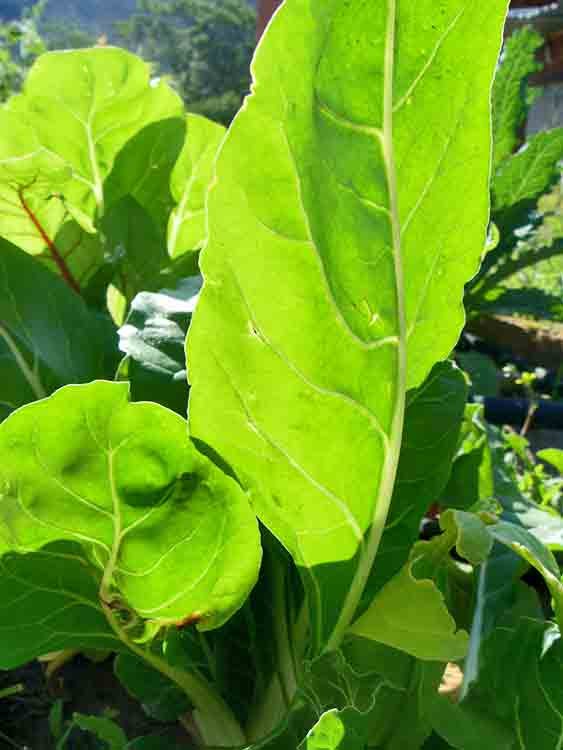
And now comes the twist: in all these years I never once wondered how something can grow from a tiny seed. I mean, really thought about it.
Take a black bean, for example. It’s a dry, hard pebble-like little thing that can rest on a dark shelf for up to four years and still germinate under the right conditions. Which is an absolutely miraculous transformation, when you think about it! It’s the first stage of a plant’s life cycle and requires soil and water. The bean absorbs water and begins to swell. Isn’t it interesting that all living things require water, people, animals, plants, fungi, even microorganisms. Human bodies, for example, consist of at least 60% water, plants of 80 - 90%. Contact with water starts our little bean’s germination process and stimulates a number of biochemical reactions, such as cell division, protein synthesis, and enzyme development. But these are just words… The scientific explanation is quite complex and detailed, and yet – as a lay person, I’m wondering: HOW is this possible? The exposure to water wakes something up in the little black bean, and when the seed coat bursts, at one end a tiny root appears. Soon after, the other end brings forth a shoot which reaches out of the soil. All of this lay dormant in the tiny bean.
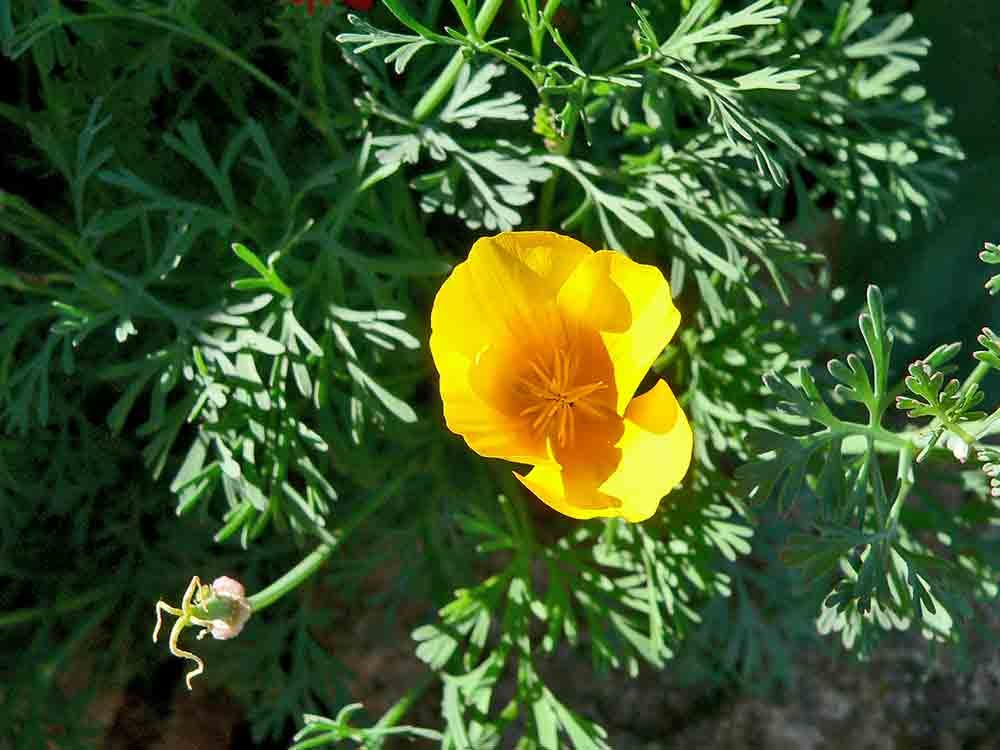
It’s the same process, whether you take a poppy seed or an acorn. A grain of rice, a kernel of corn, an avocado pit. Water awakens something, brings it to life. Like magic! And from then on, the wonder, the miracle continues. A little vertical thing, with roots on one end and a sprout on the other, defies gravity and begins to push upwards, towards the sunlight. Each tiny seed contains the blueprint for the whole, mature plant, no matter how big. A beechnut will develop into a huge, majestic beechtree. There’s one a few blocks away, and I would visit her regularly when my dog Max and I would go on our daily walk. (Why a “she”? In German, my mother tongue, oaks, elms, birches, pine trees, beeches, etc. are all female. Which is a bit odd because the generic word, “tree”, is male. But that’s how it is. And to call a tree “it” just seems wrong.)
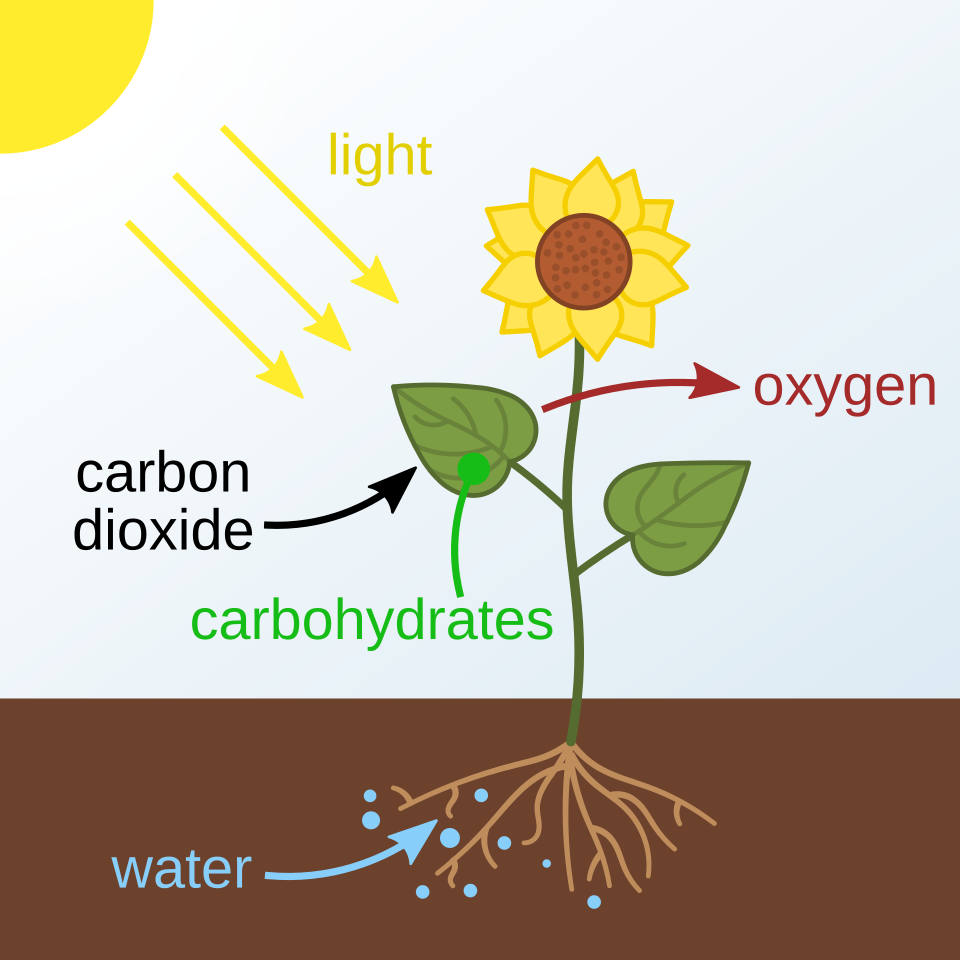
So we have a seedling which has roots in the soil for nutrients, and the other end, the cotyledon, reaches up towards the sun, another nutrient. The seedling transforms the energy from sunlight into the substances it needs to grow and mature, such as sugars and other carbohydrates. Yes, plants and algae and cyanobacteria feed on sunlight – that’s quite astounding as well, when you think about it!
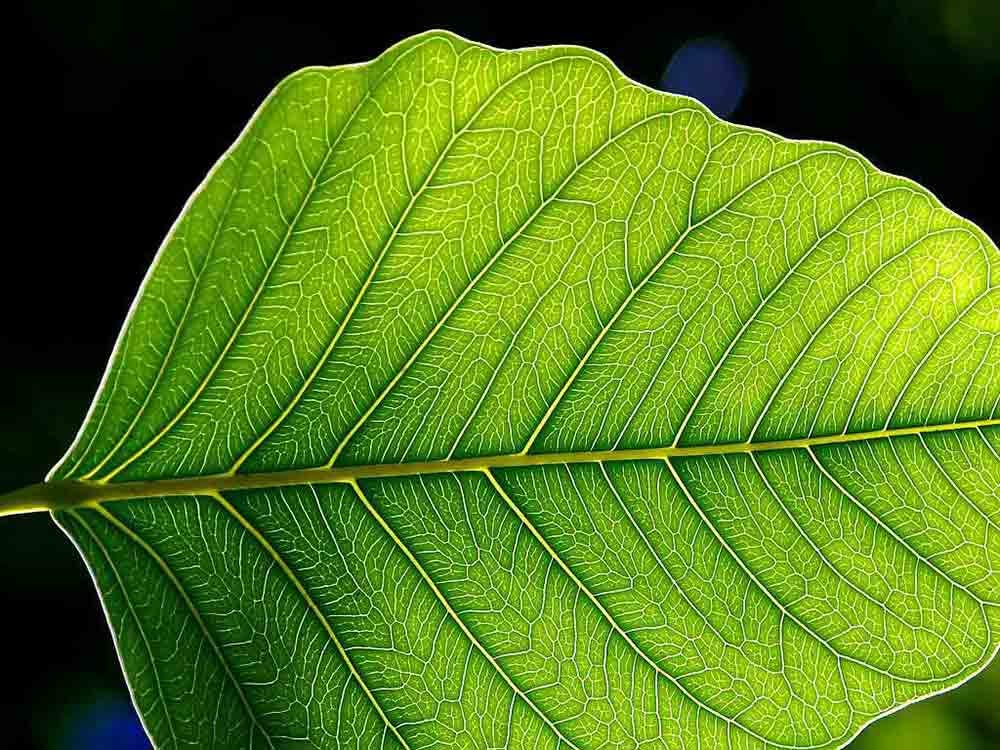
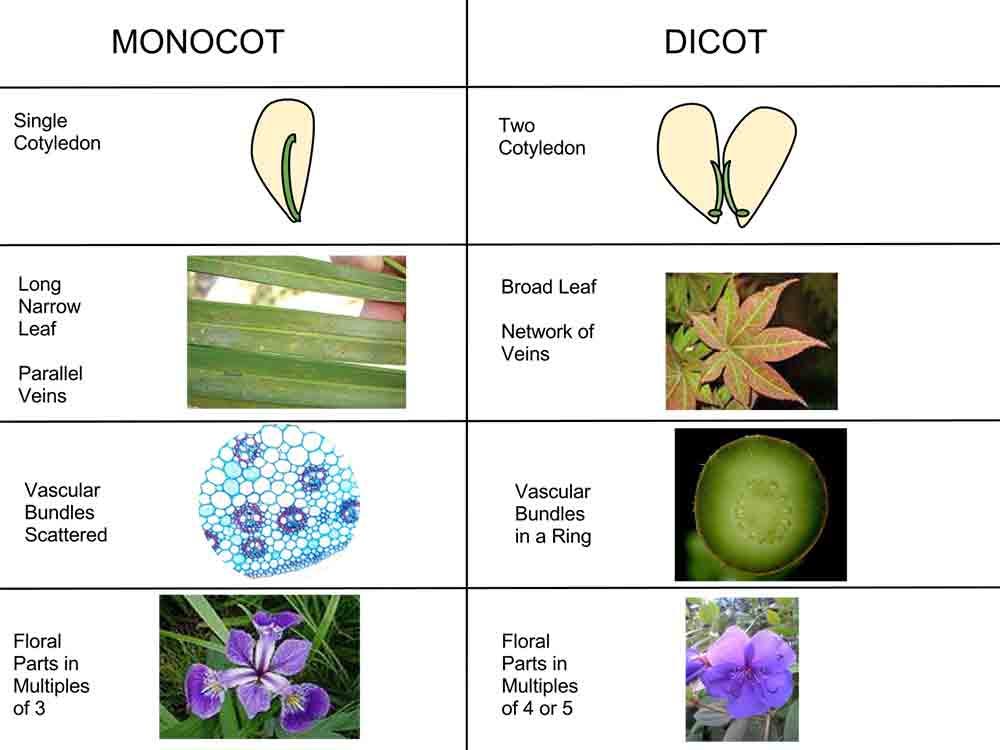
Another amazing fact: all flowering plants, about 300,000 species, fall into two categories: those who sprout with only one leaf emerging from the top of a seed, the monocotyledons or monocots for short, and the dicotyledons which have two leaves (the dicots). The first group includes grasses, also those that produce grains, such as wheat, rice, corn, and other staples. Palm trees and bamboos, common crops such as onions and garlic, all are monocots. Flowers belonging to this group include lilies, tulips, irises, and orchids.
The dicots, with about 200,000 species, the larger group of flowering plants, include fruit trees (apples, peaches, pears, plums, etc.) vines (grapes), beans and peas, most berries, and roses, poppies, daisies, sunflowers, and many other ornamental flowers. A while back, I wrote a piece about the more archetypal qualities of these two groups of flowering plants, you can read it here. I suggested some artistic activities, such as simple pencil drawings after a close and careful observation of the plant in front of you. When you manage to keep your intellect quiet (the part of your mind that wants to name everything, put a label on it, which ends any further enquiry) you begin to listen to the plant. These exercises are based on Johann Wolfgang von Goethe’s scientific methodology.
People who have studied Goethe’s scientific work in depth, such as the German anthroposophist and writer Ernst Lehrs, have pointed out the gravity-defying impulse of all plants to grow upwards, and called it levity. It makes sense in the context of Goethe’s worldview which posits that our life on Earth is defined by opposites: light and dark, hot and cold, large and small, and so on. He called them ‘primal phenomena’, and the idea of levity explained to him the miraculous fact that all plants grow up, toward the light.
This brings me back to the reason why I started this Substack: I am the world, I am the universe. I am connected to all the wonders going on around me all the time, a caterpillar metamorphosing into a butterfly, a tadpole becoming a frog, the many seeds I planted becoming beautiful flowers or edible vegetables. THAT’s what is important. The daily news is an unfortunate distraction; yes, we have to pay attention to the immense dangers facing our democracy, but the underlying cause of all these ills is that we’ve lost sight of being connected to the other beings around us. The non-human world. We’re part of this world, we don’t own it, and we destroy it at our own peril.
Comments
Nothing yet. Say the first thing.
Sign in to join the conversation.