
I effectively live in a one-company town.
Bentonville, Arkansas, is what it is because of Walmart and Sam Walton. It’s the reason vendors have set up shop in town. It, and the money that has come from it, are the core reason behind the city’s explosive growth.
So it’s been rather illuminating to bike through the boom and bust towns in the West and Midwest—where a city’s growth and success was tied to one railroad line, one gold mine, or a single natural resource or crop. When that one source of jobs or resource went away or lost its value, those once-growing communities began to dry up seemingly overnight.
There are desolate shells of boomtowns across the American West and Midwest—restaurants and hotels and shops left to crumble in the heat and wind, with signs or rotting wooden frames as a marking of each town’s former glory. In one town I rode through this week, the most activity in town seemed to be stemming from a funeral home.
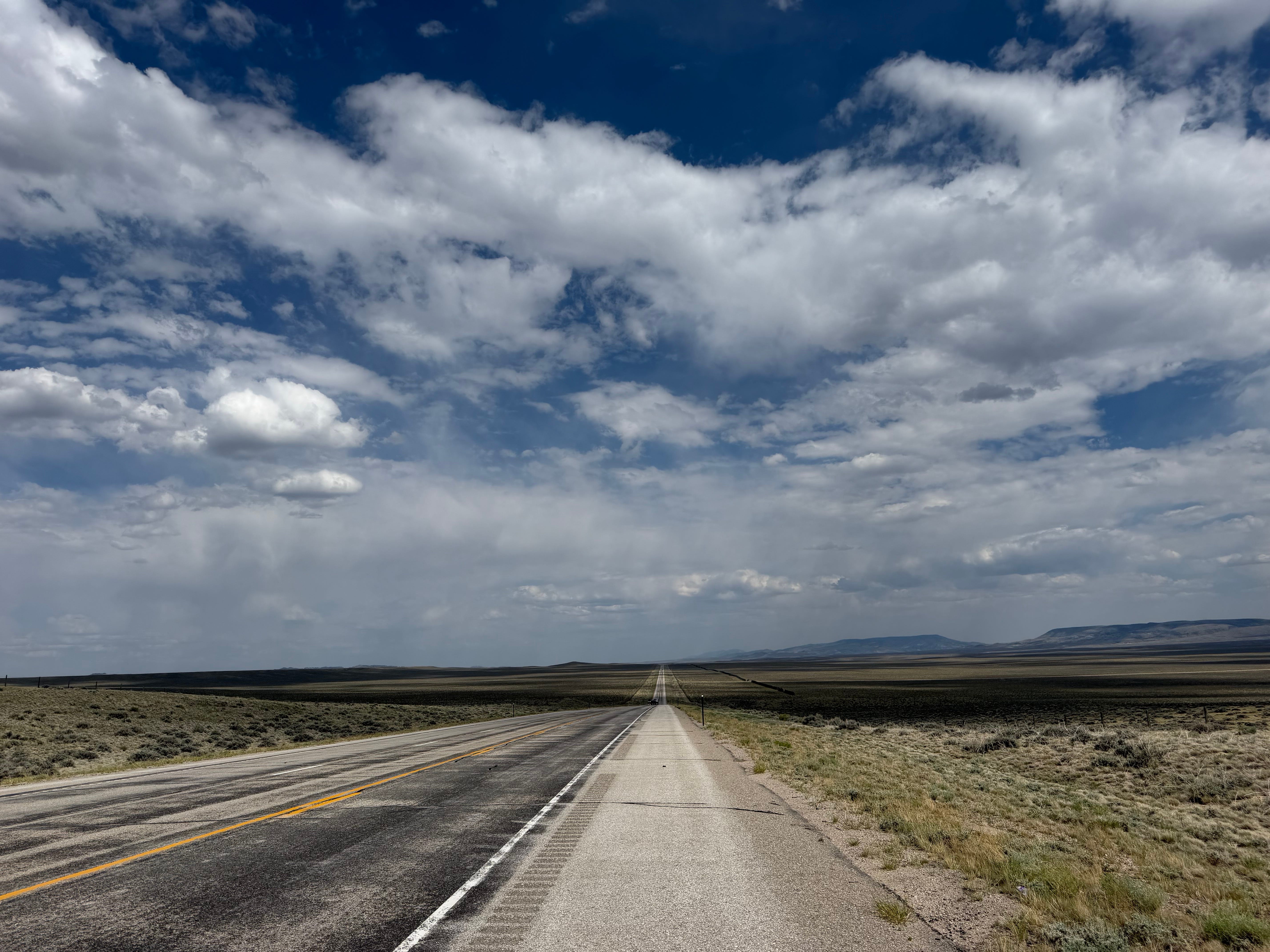
There was something particularly alluring about one of these such towns. Jeffrey City, Wyoming—a former Cold War-era uranium mining town—sits in the vast Great Divide basin of Wyoming, the only sign of life for about 50 miles each way.
In the 1980s, when the price of uranium plummeted, the city’s chief employer Western Nuclear shut down the mine. Within only a few years, nearly all of the town’s more than 4,000 residents left in droves. Recently, however, there have been rumors that Jeffrey City could make a comeback: AI data center need constant electricity for power and have driven demand for nuclear energy. Wyoming—which has the country’s largest uranium reserves—has seen mines reopen, including one by Ur-Energy that had sat dormant since the 1990s.
People call Jeffrey City a “ghost town,” and when you first pedal up to it, relieved you have finally reached a stop with services, it does indeed look abandoned. Show up at the wrong hour and you’ll find it desolate—no lights on and no sign of the forty-odd people who supposedly still live here. If you arrive during the right hours, however, there will be some signs of life. There is a restaurant that a woman named Isabelle closes at will. There is coffee and breakfast in a trailer some days of the week—the hours on a small sheet of paper. And across the street is Byron Seeley’s gallery, Monk King Bird Pottery.
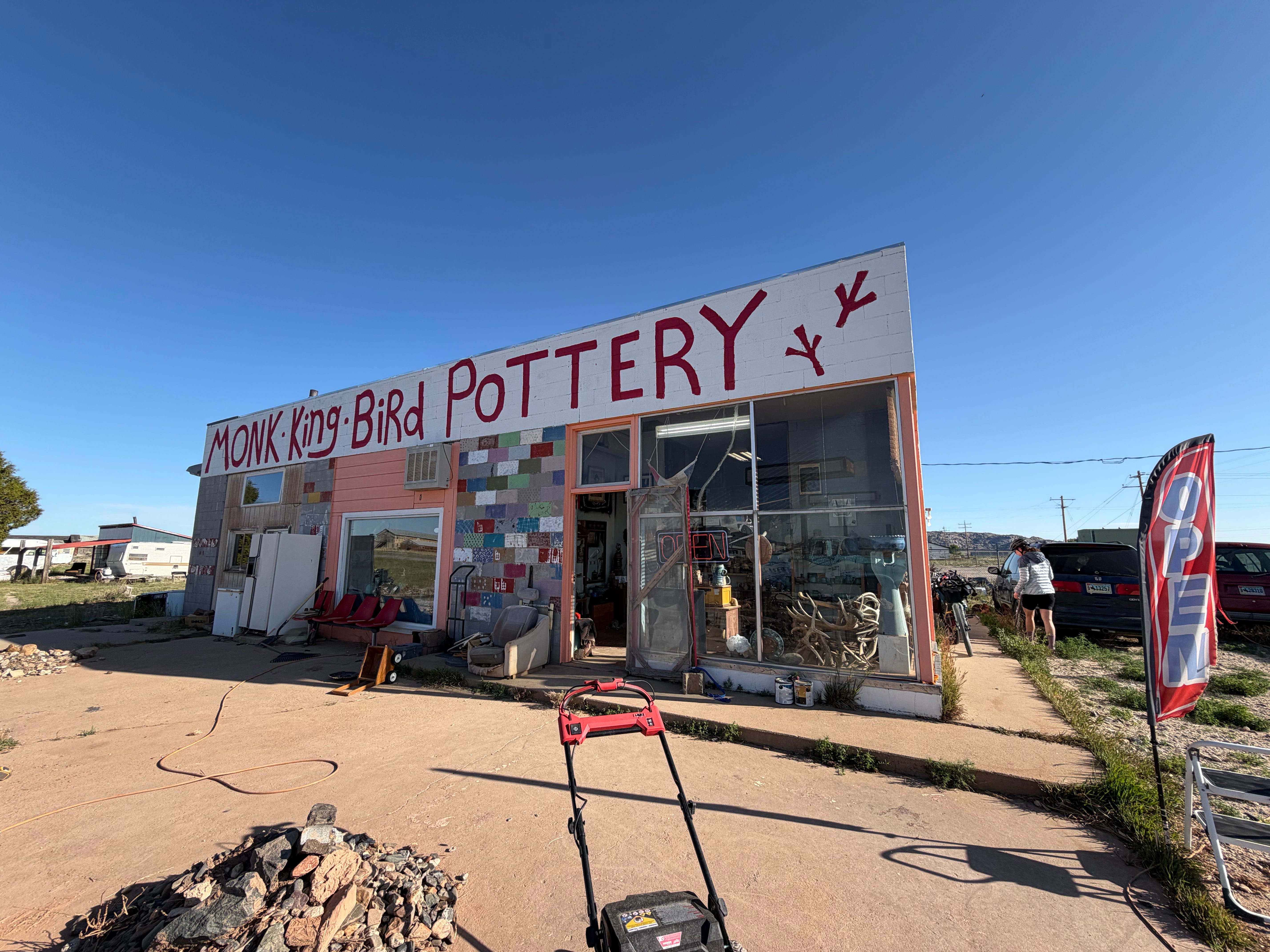
Out behind some abandoned buildings is a small white church, open to cyclists to camp. And there’s a single motel.
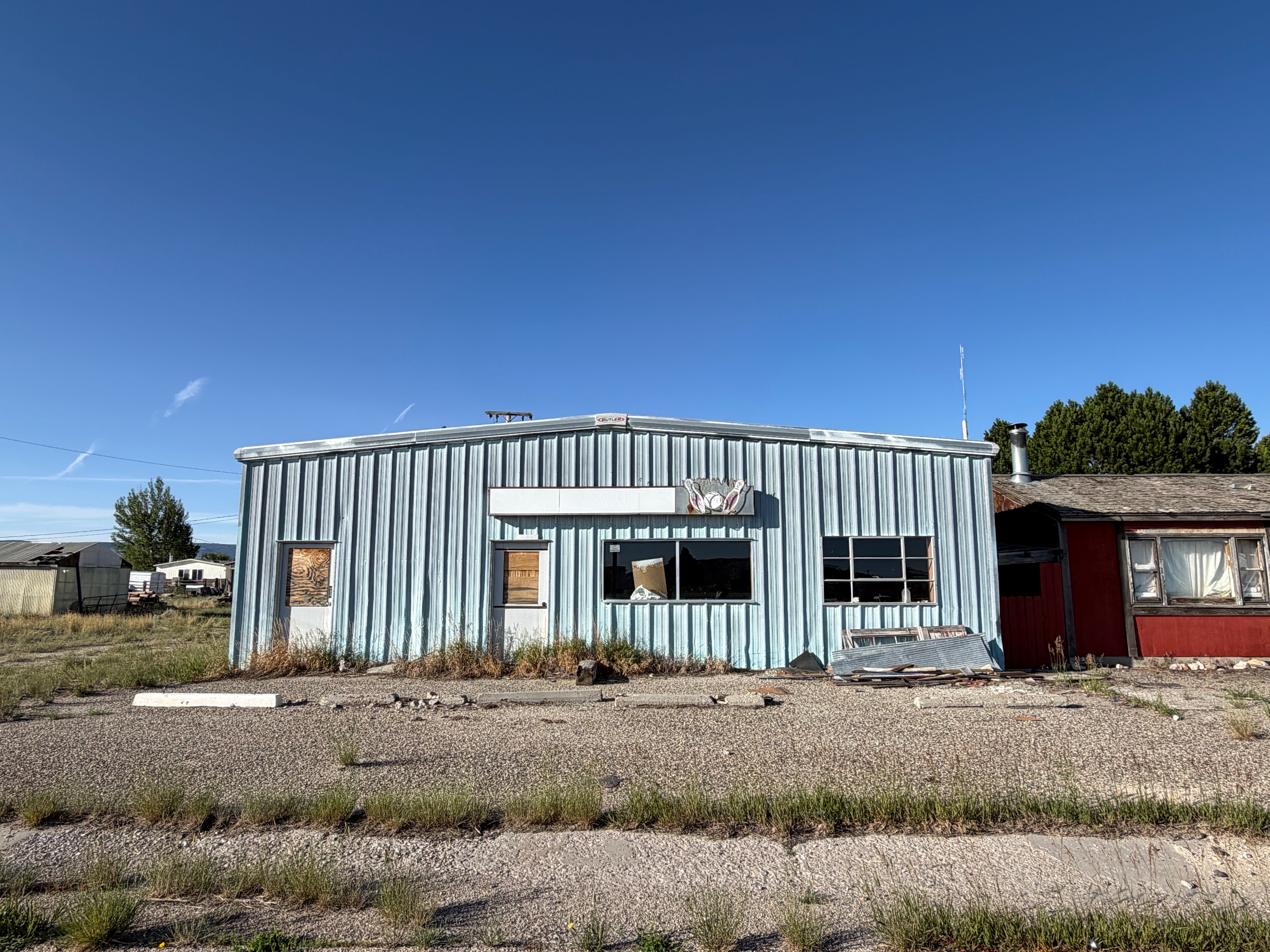
The rest of the town seems entirely empty; a long-retired worker dormitory and post office, fire department, and sheriff’s office, a former bowling alley. Everything boarded up and quiet.
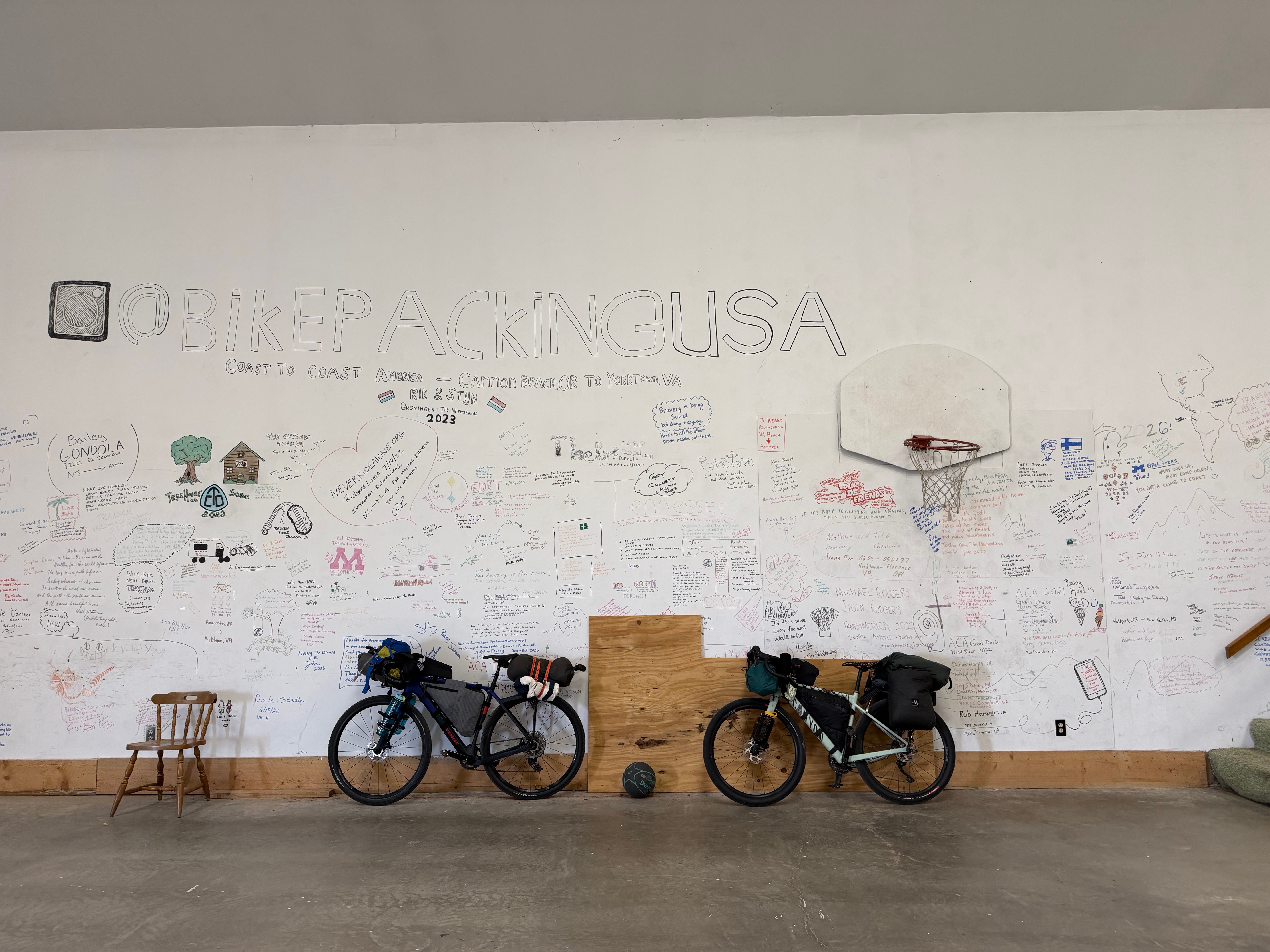
At first, I found it rather off putting. After a day of battling headwinds a few weeks ago, my spirits sunk when me and my friend Elizabeth, who joined me in Wyoming, rolled in to find almost nothing there. When we got to the church, the rooms smelled musty and looked like a scene from a horror film. But the walls of what seemed to be a former gym were also littered with messages and drawings from cyclists over the years, which were quite fun to read.
“Many small people who in many small places do many small things can alter the world,” one cyclist had penned in red marker on the wall nearby a drawing of a croc sandal and a traffic cone.
And when we got to the restaurant, we were pleasantly surprised it was indeed open. Isabelle made us burgers, and even gave us each a slice of her leftover birthday cake from earlier that week. Elizabeth helped her open a box of warm coronas for us to drink. And the only other customers, two men who were in town for a few weeks working on oil rig that had been set up nearby, kindly bought our meals and bought us a shot of flavored tequila that I thought would taste much worse than it did.
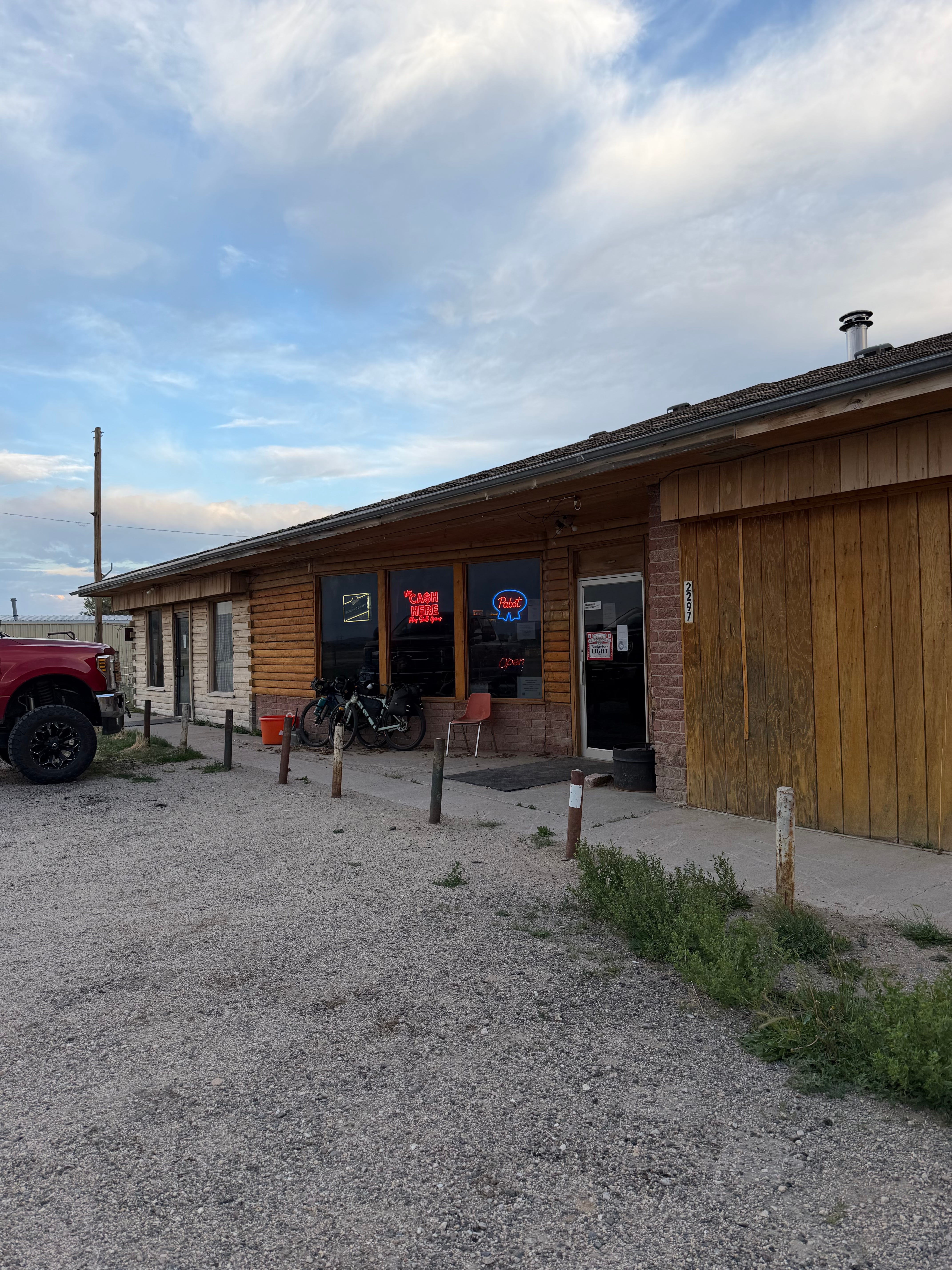
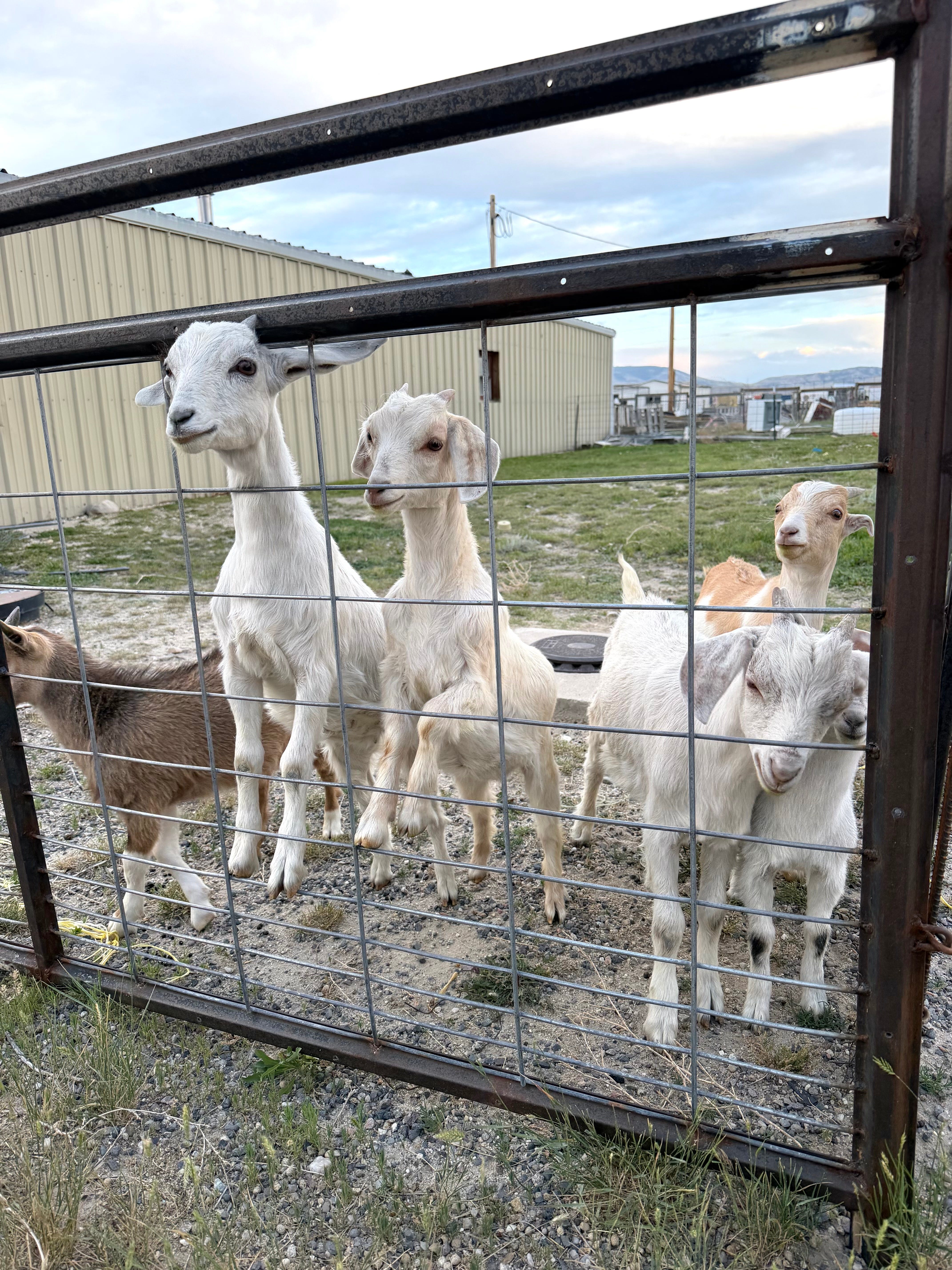
It was entirely silent when we walked in, but by the time we left, one of the oil rig guys had started playing music on the jukebox. Isabelle’s husband had stopped by with her dogs who were excitedly roaming about. And on our way back to the church-where we set up our tents on the floor due to our worries that mice might crawl over us in the evening—we stopped to see Isabelle’s goats who ran up to the fence to greet us and watched an incredible sunset in the sand outside the church.
No one would deny that Jeffrey City is a shell of what it once was. By the last census in 2020, there were some 47 people reported to still live there—11 fewer than a decade ago—though some locals are skeptical of that figure.
“There’s more than that. I can count,” says Sarah Carrelli, a 68-year-old resident who owns the breakfast burrito truck and made Elizabeth and me breakfast and coffee before we took off in the morning.
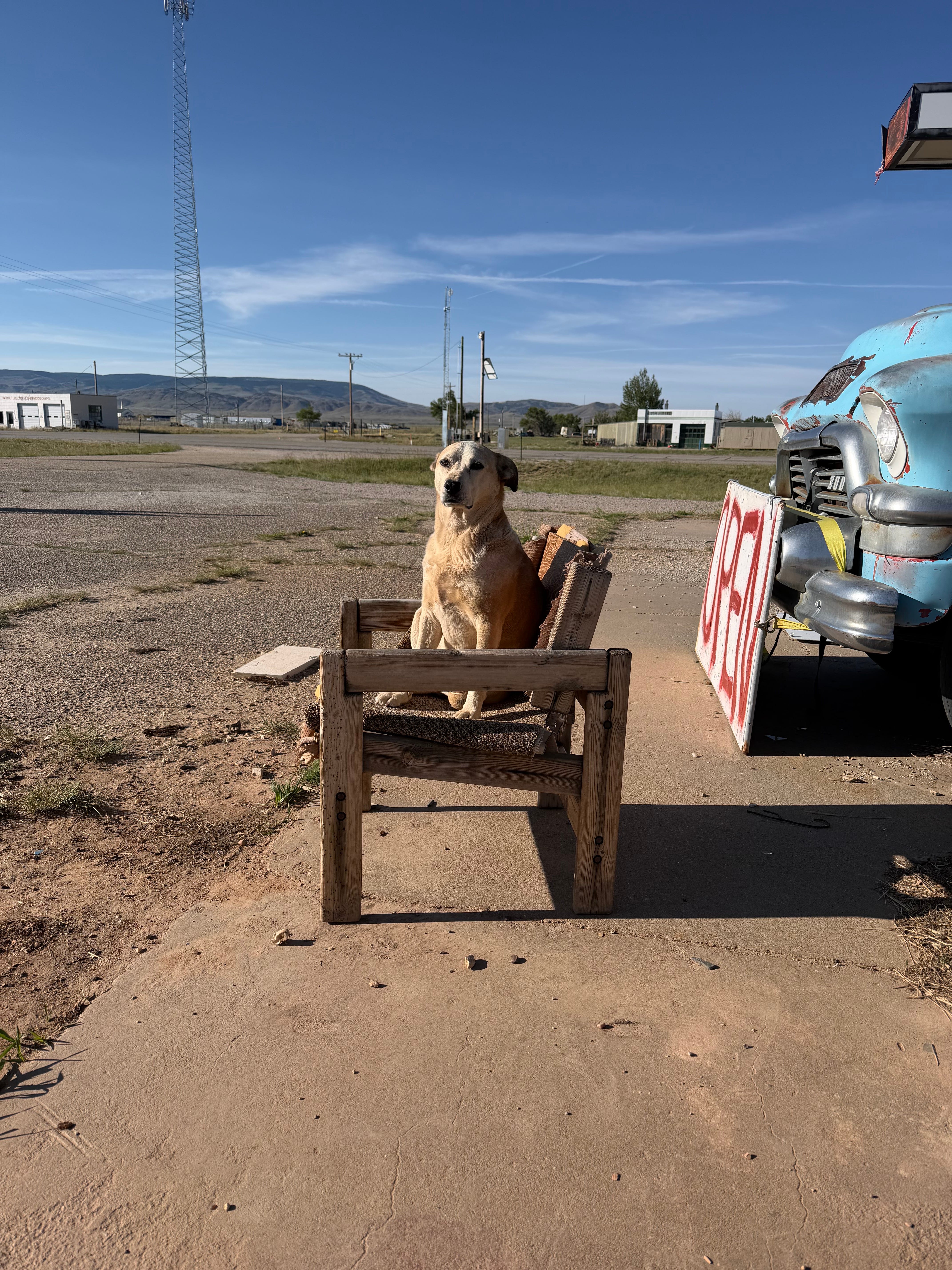
However you do count it, it’s not many people who remain. Seeley, of Monk King Bird Pottery told me as his dog Lloyd perched upright in a chair near us that it can feel empty out here running his gallery.
“Nobody stops here in the wintertime. It’s cold, it’s windy, and it’s lonely,” he said.
You can’t help but wonder whether some of the country’s newfound energy needs could revitalize a place like Jeffrey City and bring it back to life—or if what remains of it will slowly disappear entirely as the people who stayed close down shop or leave.
But there is something about this place that continues to draw people in. Carrelli had told me she had moved there a few years back, and she pointed out how her husband, who does oil paintings and illustrations, is going to use the building they purchased behind the food trailer as a studio.
“Decompression,” she said when I asked why she chose here. “Solitude. We have the most beautiful sunrises and the most beautiful sunsets. If you can find that somewhere—if you can find your zen,” she said.
But when there are no jobs, and you have to be airlifted out to go to a hospital, the number of people willing, able, or wanting to move for such reasons will surely be small.
So for now, Jeffrey City sits quiet in the Great Divide basin—a reminder of how vulnerable some places are to the fortunes of one company or industry. But with a sunset just as beautiful nonetheless.
No posts
Comments
Nothing yet. Say the first thing.
Sign in to join the conversation.