
Back in 2004, I wrote a piece for BBC Music Magazine that people still sometimes ask me about today. It’s about bereavement, music and healing, rooted in my own experiences, and it includes interview material with Daniel Barenboim, Roxanna Panufnik and Nicholas Daniel, among others. Admittedly it’s 22 years old and some things are not what they were (in particular the note of hope sounded around the West-Eastern Divan Orchestra and the situation in Israel and Palestine) but I hope it can still reach, touch and maybe help a new audience.
I’ve been struggling a bit since getting back from Germany. I sometimes find myself knocked out with fatigue and joint pain if I overdo things and I have to retreat for a day or two to recover. Saturday was like that and left me unable to attend our beloved Henrietta Foster’s memorial service. She has been very much on my mind. Every concert that I would have gone to with her will be a memorial in itself. Thinking of this has made me want to post this article again now.
I hope you enjoy reading it.
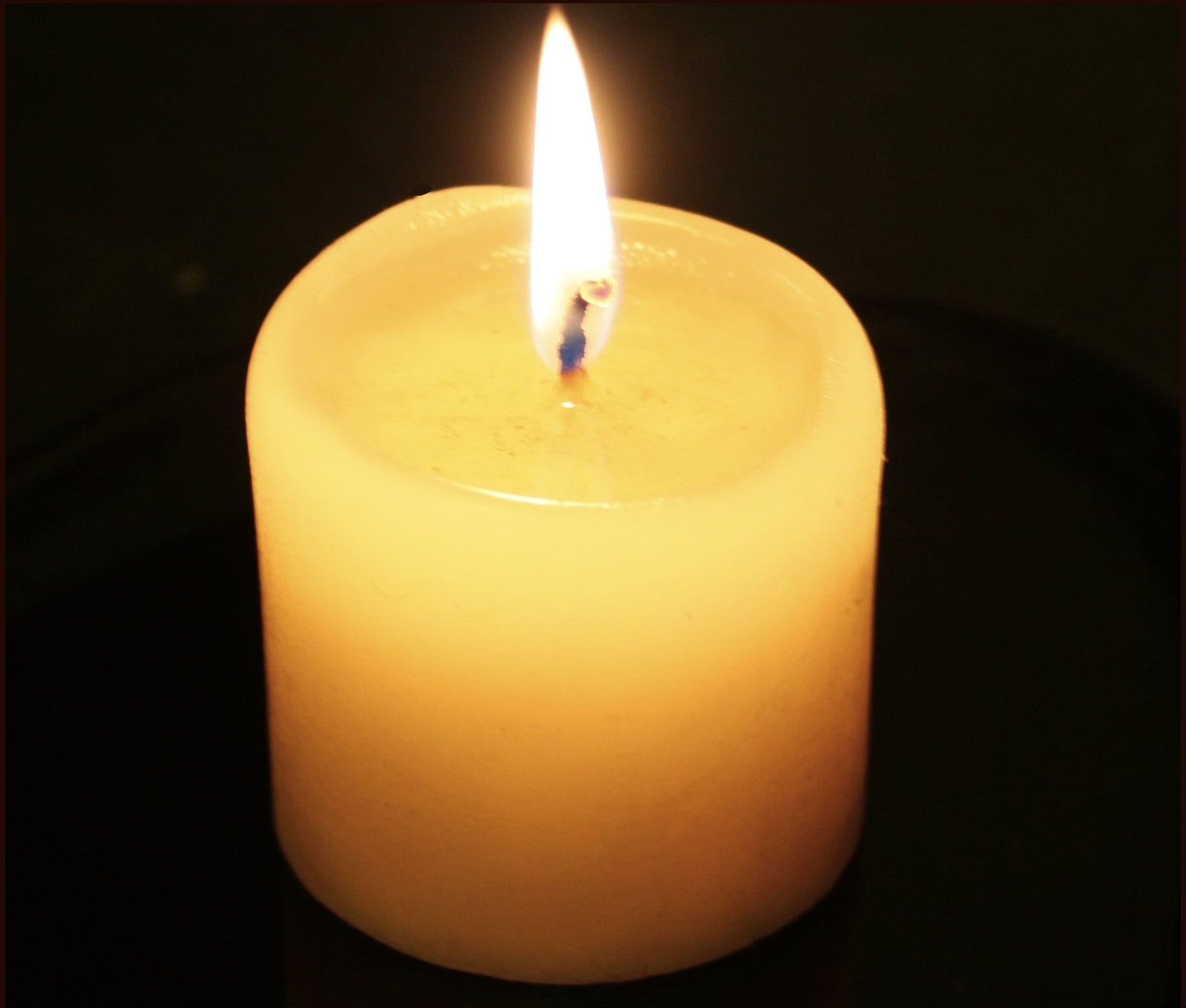
This article first appeared in BBC Music Magazine in 2004. Reproduced with kind permission.
Between 1994 and 2000, my parents and my sister died of cancer in quick succession. It was a difficult time. Again and again friends said to me: ‘I don’t know how you cope.’ The short answer was that I didn’t, not really; instead, I tried to do my best under the circumstances, as would anyone. The long answer was that I don’t know how I would have got through it without music. Music has been at the core of my life for as long as I can remember, but never has it been more important to me than in those years.
While my mother was dying, all I could listen to was the Bach St Matthew Passion. Everything else seemed trivial. Yet when my father was in his final coma, I practised Janáček on the piano. I felt drawn constantly towards On an Overgrown Path, which seemed to encapsulate all the pain I was experiencing – though it was not until much later that I learned Janáček had written these desperately intimate, tender pieces in response to the death of his daughter. Finally, after my sister Claire died aged only 45, I began to re-examine my life in terms of what my regrets would be, were the same thing to happen to me. As a result, I started playing the piano seriously for the first time in 15 years.
Why does music have such power to support us during the most demanding times of our lives? Why does it carry us through when nothing else can? I quickly discovered that I was in good company in turning to this most immediately communicative of art forms for comfort, catharsis and, indeed, something further-reaching.
‘Music was used as a healing tool, even by physicians, for many centuries,’ Daniel Barenboim points out. He is better placed than many to understand the full implications of this, having lost his first wife, Jacqueline du Pré, to multiple sclerosis. ‘There were times, while Jacqueline was ill, when I found it very difficult to get through the day at all,’ he says. ‘Playing music and conducting made my life bearable. Music has that capacity, if you give yourself to it and don’t remain “outside” it.’
One musician who prefers to remain anonymous spoke of the role music has played in sustaining her through a particularly traumatic year. ‘Certain pieces gave me huge hope, sometimes because of the circumstances under which they were written, sometimes because of the music itself. I remember listening to the finale of the Beethoven “Pastoral” Symphony and thinking, “Everything is going to be all right.” It’s not only escapism, which we all find in different ways. You need to know, at such times, that someone else has been there, felt exactly as you feel yourself, and come out the other side. Music can show you that light at the end of the tunnel and assure you that you can reach it.’
There can be an overwhelming sense, when you identify with suffering expressed in music, of a direct link to some immortal spirit embedded in that music (I write, incidentally, as an atheist, with vague eastern-mystical-agnostic leanings on good days). Through that identification gleams an intriguing notion: that by sharing music with everyone else who hears and experiences it, you connect with an intangible support network of countless like-minded individuals. You understand, at these moments, that you are not alone. Oboist Nicholas Daniel, artistic director of the Leicester Festival, told me about a similar sense that he had experienced when his mother took her own life.
‘At first I couldn’t listen to music,’ he says. ‘It was too painful. But about two weeks later, I picked up a CD of John Tavener’s The Protecting Veil. I don’t know what made me listen to it, but I did – and at once I had the most extraordinary sensation, not that my mother or some divine presence was with me, but that John Tavener was. I didn’t know him then, but I’ve got to know him since and he’s written some pieces for me. That is my most powerful memory of the period after my mother’s death. I’d felt cold to music for the first time in my life, but that piece unlocked the way back into it.’
What exactly is it that gives music, in itself, such power in these situations? Richard Bittleston, an organist and special minister for music in the Unitarian Church who has also worked in music therapy, helped me find some answers.
‘I once played a Schubert impromptu at the funeral of a musician,’ he says. ‘It had been his favourite piece and its impact was highly charged, both negatively and positively. The positive charge was the fact that here was something that was still alive. The music communicated an idea about eternity that we would never be able to put into words. It made a particular impact on the musician’s wife, who wept profusely – but she cried because something was being dragged out from the feeling of being carried away into the past and held alive in the music. Music brings a sense of continuity. We can’t ever know what happens to someone after they die, but music can convey a sense of the past and the present being linked, and therefore the present and the future.
‘The ultimate power of music,’ Bittleston goes on, ‘is that it temporarily demands you exist in the present. There are no problems in the present! Music is unlike any other art form – the others are tied up with anything but the present. But in music you can literally leave problems behind, because they’re not there. That would be a very Zen Buddhist way of looking at what music is. In Christianity it was once argued that music transports one through the gates of heaven. But what they were really saying is the same thing – it transports one not through the gates of heaven, but bang-slap into the place that you actually are, which is the “now”. That process dissolves all problems, at least for a time. I think this might be defined as heaven in some circles.’
Composers are only human as well, though, and the experience of grief can make a profound impression upon their music, as Roxanna Panufnik told me, remembering the death of her father, composer Andrzej Panufnik. ‘Having experienced grief so deeply, I then experienced every other emotion much more strongly as well,’ she says. ‘This expanded and enhanced all my musical boundaries and changed my harmonic language completely – it became much more intense, bittersweet and bitonal.’ At first she found hearing her father’s music more painful than healing, ‘because it was so much of him and I couldn’t deal with it at first. A couple of years later, however, BBC Radio 3 asked me to research and present a Composer of the Week about him and I found that very cathartic.’ Creating music, she adds, is as helpful as listening to it: ‘If I have problems or worries, composing helps to take me out of myself. If I feel I’ve done some good work, I can face anything!’
But can music’s healing capability be taken further still? Cellist Robert Cohen suggests that it can. ‘I recently started talking to some healers about how they work, using their hands to convey energy to their patients – and this is exactly the same feeling I have in my hands when I’m playing, especially at moments when everything happens without any effort. The energy just flows through you and through your hands. Life is energy and living is about how we manage the energies in us, around us and between us. Those energies exist in vibration – and music is vibration. As musicians, we’re creating vibrations that travel across a space and are absorbed by the listeners in a variety of physical ways. This has an amazing power.’ A healer friend, Cohen recounts, pointed out that when he plays, Cohen is effectively healing his listeners. ‘I’ve always thought of music in terms of love – striving to communicate that through my own love of the music – but perhaps throughout my musical life I’ve also been training myself to convey healing energies subconsciously.’
Healing can also be carried into a broader arena through music. The collective experience of listening to music – sharing a safe means of emotional yet unspecific communication with large numbers of other human beings – means that music has a unique ability to bring people together. This in itself has wide implications. Cellist Raphael Wallfisch has recently been to Oman, where he worked with young Arabic cellists and taught them, among other things, how to play Bruch’s Kol Nidrai, a piece inextricably bound up with its origins in the Jewish new year ritual. ‘Music makes possible a linking up of cultures that is tremendously positive and healing in itself,’ says Wallfisch. ‘In these situations, differences are simply not thought about: you realise that we can all be cooperative together, given this higher common goal.’
The best-known venture into music as a builder of bridges between people in conflict is currently Daniel Barenboim’s West-Eastern Divan Orchestra, in which young Israeli and Arab musicians join forces to participate in top-level orchestral training for several weeks at a time. The orchestra played at the Proms last year and was the winner of the Royal Philharmonic Society Award for large ensemble for 2004.
‘This orchestra is not a political tool,’ Barenboim declares. ‘We’re not saying we can change people with it. But each side of the conflict has such ignorance of the other. For many years this conflict has been so much at the centre of people’s lives that they forget that the other has a life of their own. Playing in this orchestra, they don’t learn everything immediately about each other, but the first thing they do learn is that they share a passion and have something in common; this is already learning about the other side. Then if the human contact is developed further, all the better.’ Still, as Barenboim says, the Palestinian-Israeli conflict can only be solved, ultimately, by each side accepting ‘a very unusual mixture of understanding the past, seeing the present and out of those two building a common future’.
The healing power of music has its limits – it can’t work miracles or ensure world peace. But, in the words of the Palestinian violinist who accepted the Royal Philharmonic Society Award together with an Israeli pianist on behalf of their colleagues, even if the new understanding through the orchestra cannot create peace, ‘it will enable the peace, when it happens, to be a genuine one’. And for those who, like me, face traumatic losses, as we all must at one time or another, there can be no greater comfort than music which has spoken its message to millions over years, decades and centuries – a message of compassion, strength, fraternity and love.
Comments
Nothing yet. Say the first thing.
Sign in to join the conversation.