
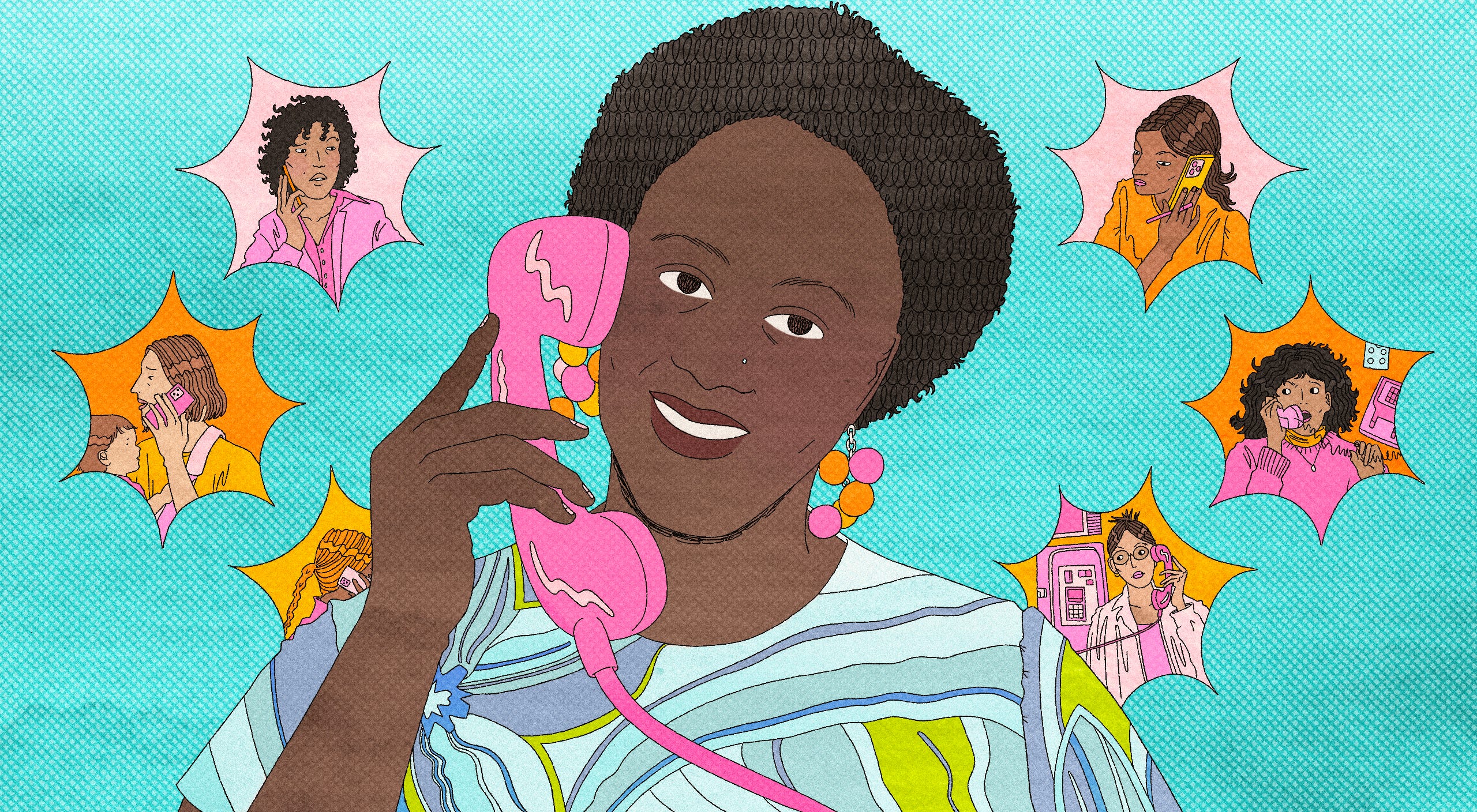
Last week, you met the attorney working to nip pregnancy criminalization in the bud. But attorneys are just one line of defense. There are a lot of stop-gaps to prevent pregnancy-related arrests—including health care workers.
That’s why two primary care physicians founded the Miscarriage+Abortion (M+A) Hotline in 2019: to be a safe space where people self-managing abortions or miscarrying could call if they had any questions, and trust without doubt that they wouldn’t be reported to the police.
April Lockley, a New York-based family physician and medical director of the Hotline, trains volunteers and operates the Hotline herself. They’re open every day and respond to all calls within an hour.
“Over half of our contact is through phone calls. I thought young people would prefer text, but people prefer having a friendly voice on the other line, knowing it’s a real person and not a chatbot.”
If only a hotline run by health workers who’ve pledged never to call the cops on you weren’t so urgently needed. But it is: when people are reported for self-managing an abortion or helping someone else do so, most of the time they’re turned in by health care professionals and acquaintances. Some health workers wrongly believe they’re required to report a pregnant patient they suspect of substance use; others are just acting on their own biases.
One thing is for certain: since the Supreme Court killed Roe, more and more pregnant people are wary of being reported to the cops by healthcare workers. In the year after Dobbs, contacts to the Hotline shot up 210%. This included an increase in calls about self-managed abortion, and calls from states with bans—though calls increased in legal states, too.
“The biggest thing that’s changed [since Dobbs] … is that people are afraid. They’re afraid to be pregnant, to have anything about pregnancy on their medical record. They’re afraid to access miscarriage care.”
Lockley tells Abortion, Every Day that “sometimes the phone is ringing back-to-back, we hang up and immediately get another call. Our goal is to provide the best information and reassurance that we can.”
Lockley talked to us about what a typical call entails; how AI and disinformation have shaped the trajectory of their work; the need for a resource pregnant people can trust; and more.
AED: What does an ordinary day entail for you working at the Hotline?
AL: At M+A Hotline, we’ve been open every day since 2019. No matter what, we’re always available to talk to people within an hour of when they call or text us, and most of the time, we respond within a few minutes. We take shifts—myself, volunteer physicians, midwives, and nurse practitioners. What a day at the Hotline looks like really varies. When people contact us, the Hotline is anonymous, so we don’t ask people’s names or where they’re calling from, though many tell us anyway. We once did a survey and got 500 responses, and found most are contacting us from states with the most severe bans and restrictions.
A typical day is responding to those calls and texts, giving information on how they can access care, whether it’s for an abortion or miscarriage. Many people are afraid to even have on their medical record that they’ve been pregnant, so we’re talking people through that in regards to options for care without having to travel. Often, people are texting or calling us multiple times per day while they’re actively going through the process of taking pills or passing a pregnancy. Other people text or call us after the process, wanting reassurance or confirmation everything went as expected and nothing dangerous is happening to their body.
People often say, “The state I live in won’t take care of me,” so we’re the ones there giving them information and support.
We talk to over 100 people per day at this point. Surprisingly, I would say over half of our contacts are phone calls. I thought young people would prefer text, but people prefer having a friendly voice on the other line, knowing it’s a real person and not a chatbot. Sometimes the phone is ringing back-to-back, we hang up and immediately get another call. Our goal is to provide the best information and reassurance that we can.
Outside this work, I’m a family medicine doctor by training and work a few jobs here in New York, providing abortion, gender-affirming care, and general sexual reproductive health care here.
AED: What are some of the typical calls you might get at the Hotline?
AL: Everyone’s stories are their own to share, but there are many common themes. People who are contacting us are often from the Southeast or Midwest, where we see more severe restrictions. We do get plenty from New York and California—it’s a big reminder of the systemic issues in this country regarding access to care, information, and support, even in states where abortion is legal. We get calls from people in banned states saying they want an abortion, they heard you can get pills by mail, how can they do that. Or they want to travel for in-person care, and we talk them through how to do that.
Some people have the medication and are just nervous to even swallow the first pill, so they want to be on the phone as they’re doing that and ask us questions about what to expect and what’s happening to them. We talk them through that. Then many people have questions about how to know if they’re no longer pregnant, if they need to see a doctor in person.
Most of the time, none of this is that complicated and is very safe. We’re able to reassure people about bleeding, about symptoms to watch out for, when to repeat a pregnancy test. Most people do not ultimately need to see a doctor in person, but they want to do so, we give them some helpful information about how to safely do so. For example, we tell them they don’t have to disclose that they took abortion pills, and they can talk about their symptoms as a miscarriage, without ever mentioning the pills, which can’t be detected. And this might be safer for them.
A lot of times we’re also correcting misinformation people get from anti-abortion websites or with the increasing use of AI and ChatGPT, correcting a lot of misinformation people find from online sources.
AED: How has this work changed or not changed since before and after Dobbs?
AL: Roe v. Wade was obviously an important legal protection in this country, but it was never enough. Even before Dobbs, the work we do and the work of Repro Legal Helpline for example, have long been around, recognizing that information and support just weren’t available to everyone and people were being criminalized. Now, with abortion pills by mail and telehealth, many people who otherwise wouldn’t have been able to access care are able to.
The biggest thing that’s changed outside of access is that people are afraid. They’re afraid to be pregnant, to have anything about pregnancy on their medical record. They’re afraid to access miscarriage care. I specifically remember a caller who, it sounded like they were in perimenopause, having very irregular periods every three to four months. They had negative pregnancy tests, but they were still afraid to go to the doctor because they said, “What if I go to the doctor and I have a positive pregnancy test? I’m in a state with an abortion ban.” The biggest thing is, people are just afraid to access care or have anyone know that they’re even pregnant.
AED: Unfortunately, many cases of pregnancy criminalization come from patients who are reported to police by the health care workers they turn to for help. Can you talk about where this need for M+A Hotline arises from?
AL: The Hotline originally started as a harm-reduction model, where we’re giving people the information and support they need regardless of ZIP code, how many weeks pregnant they are—allowing them to decide the best course of action for them. Even before Roe fell, people were getting criminalized for their pregnancy outcomes, and that is actually most common with miscarriage—not even abortion, even now. Obviously, it’s unfortunate that health care workers would report a patient to the police, and there’s work to do to stop that. But our Hotline exists so that someone doesn’t necessarily need to go to the ER—which is the source of many of these criminalization cases, when someone goes there and is reported—and instead we can give them the information they need. Because one person getting criminalized is one too many.
People have specifically told us, “Thank you for giving this information, I was about to go to the ER.” When people have the correct information, they can figure out what’s best for themselves. They’re less likely to end up at a potentially hostile ER or at a crisis pregnancy center, where their medical information may not be safe.
That is really the mission of M+A, to support people no matter where they are, no matter their circumstances, because people know themselves best, and we can give them that information so that they can make those decisions without going somewhere, or talking with someone who may not have their best interests at hand, if that’s not necessary.
AED: Can you talk about how the rise of AI and online disinformation has affected your work and interactions with callers?
AL: A couple years ago, we were getting a lot of people who seem to have found some good information, but also some disinformation on TikTok. I’m not on TikTok myself, so I don’t know exactly what’s going on there. But we had to correct a lot of people coming with TikTok information, which is still happening. More recently, like the past year, there have been so many more people mentioning ChatGPT and AI in general as their source for this or that. Thankfully there’s great work being done by groups to feed AI correct information about reproductive care, because, unfortunately, at least as I see it, that isn’t going away. This is what people are turning to.
Many times, teens will self-identify themselves and say, “I’m 16, I’m afraid I’m pregnant,” and maybe they just have a pregnancy scare and aren’t even pregnant, and they’ll say they’ve been talking to ChatGPT and it told them X-Y-Z. We understand that there’s a lot of information that could be overwhelming, so we’re here to break that down for them, let them know we’re here every day and they can call and text us so they have a trusted source—if they think they’re pregnant, or having a miscarriage, or anything. Sometimes people find us from AI or ChatGPT. Understanding the landscape in which people are living and finding information is important for this work.
AED: What do you want people to know about the women and patients who call M+A Hotline, in a country that so often treats patients like this as criminals?
AL: I want people to know that you know people who have abortions and miscarriages—they’re our friends, neighbors, co-workers. It’s interesting to me when people call or text us and say they’re thinking about having an abortion or in the middle of having one, but they’ll say, “I never thought I’d have an abortion before.” We know even “pro-life” people have abortions. So, it’s important for everyone to know, even if you aren’t planning to get pregnant or have an abortion, that this information can be helpful to you or someone you love in the future.
Yet, many people aren’t prepared for that. If they find themselves pregnant, they don’t know where to turn, especially in a banned state. So, we want more people to be prepared ahead of time. I love when people call us before they’re even pregnant or before they’ve decided what they want to do. Because if you have information you need and know the resources available to you in advance, that can really help minimize that anxiety, fear, all of that.
AED: What drew you to work at the Hotline and reproductive justice broadly?
AL: I specifically decided to be an abortion provider when I was going through family medicine residency training. I was really drawn to family medicine because we take a lens where you look at the whole picture of someone—how their housing affects their health, how their employment affects their health. Reproductive justice looks at things similarly, and I decided to be an abortion provider because if you’re taking care of a whole person, abortion obviously is a part of many people’s lives.
For myself as a Black woman, I’ve had many patients who said they never had a Black doctor before—and that allowed them to share these stories with me of their reproductive history, their fears, their goals, their abortion stories. It became really important to me to be able to not only care for people who wanted to continue a pregnancy and give birth, but also be able to care for people in a very specific way if they did not want to continue being pregnant. So, that’s why I became an abortion provider to begin with.
Then, this work just kind of naturally fell in line with the goals of M+A Hotline. Our health system often doesn’t support people and their full well-being because we have to worry about insurance, we have to worry about how much a test costs, and like those kind of things. Those things don’t go away with a hotline, but with the hotline, we can truly just talk to the person—we don’t have to worry about time, about cost, we just support them.
I work for organizations that really support people regardless of insurance, immigration status, all those kinds of things. But at the Hotline, it all just gets stripped down to talking to someone one-on-one as a person, no matter their circumstances, however long we need, talking to someone who didn’t have anywhere else to turn. As the medical director, I train other volunteers and we have this great network of volunteers. It feels so good to do this direct work for folks who may not otherwise get this information and support.
AED: How do you unwind and take care of yourself through doing this work?
AL: I have an almost four-year-old daughter, so my unwinding time isn’t always so much unwinding these days. But she brings me so much joy and really is another reason why I do this work, thinking about a better world for her. Being a parent is really eye-opening. Most people who have abortions are parents themselves, because they intimately understand what it’s like to be a parent, and so what it looks like for me to wind down is to spend time with her, just laughing, joking, dancing, being silly. It’s nice to sometimes just forget about what’s going on in the world, and as she’s getting older, obviously we’re exposing her to the realities of this world, but at the same time, embracing the joy of being a child. And then, for a little over a year now I’ve been doing pottery every Thursday morning.
For two hours I turn off my phone and I’m disconnected from the world, I play with clay, I make things with my hands. I’d never call myself an “artist,” but it’s been so good to do something with my hands and make something tangible. And now, everyone knows they can’t get in touch with me on Thursday morning because I’m at pottery class.
Comments
Nothing yet. Say the first thing.
Sign in to join the conversation.