
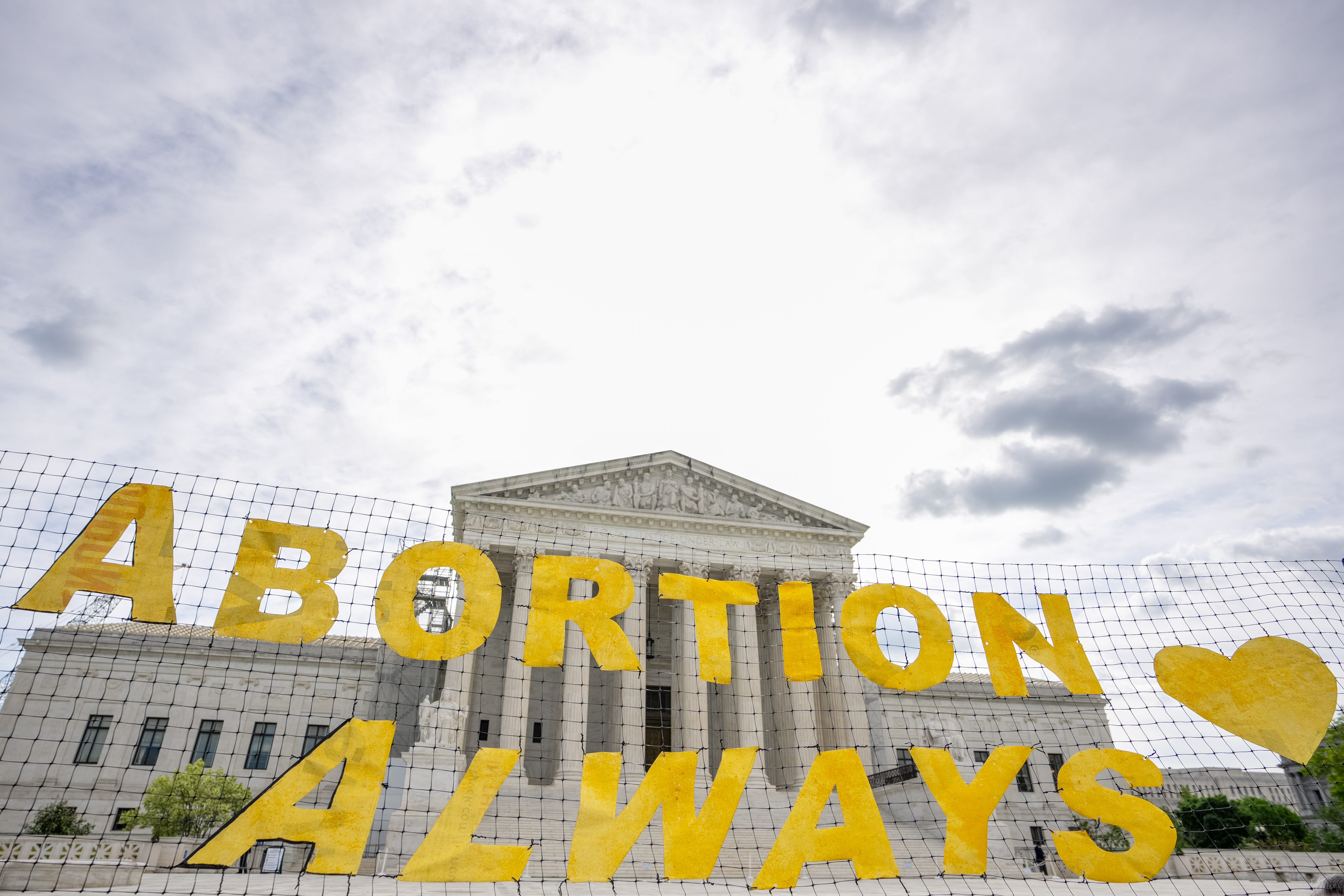
For the first time since the end of Roe v Wade, a federal court has ruled that there are still protections for abortion rights under the U.S. Constitution. Specifically, a U.S. district court judge in Idaho ruled that women have a constitutional right to abortion to preserve their physical and mental health. Not just to save their lives, and not just to prevent a major health catastrophe—but to protect their ongoing health.
This is fantastic news and a big deal, so please stick with me.
A refresher: In 2024, maternal-fetal medicine specialist Dr. Stacy Seyb challenged Idaho’s ban—which only has a health exception for women who are at risk of dying. Seyb and his attorneys at the Lawyering Project and Legal Voice argued that the U.S. Constitution also protects abortion in cases where pregnancy worsens existing conditions, could lead to suicide, or involves fatal or severe fetal diagnoses.
On Thursday night, U.S. District Judge Lynn Winmill largely agreed, ruling that health-preserving abortions are constitutionally protected. That means Idaho must expand its abortion ban exceptions. (Unfortunately, he declined to block Idaho’s ban on abortions for doomed pregnancies.)
Dr. Seyb, who has been caring for high-risk patients in Idaho for close to three decades, celebrated that he’ll be able to “practice medicine without fear of criminal prosecution”—and that his patients will be able to access care without fleeing the state.
While the ruling only applies to Idaho’s law, it has the potential for much broader impact.
It’s a big f’ing deal that a U.S. court has acknowledged there are still federal constitutional protections for abortion. In fact, Judge Winmill ruled that ending a pregnancy for health reasons is rooted in American history and tradition, writing that Idaho’s ban is an “outlier position that contravenes basic principles of our constitutional order.”
Attorney Jamila Johnson with the Lawyering Project told Abortion, Every Day that even though the ruling doesn’t set precedent across the country, “it could have an impact in how the law develops elsewhere.”
The decision will help bolster other legal challenges to bans, for example, and could be cited by state legislators who want to expand their state’s abortion exceptions—or to prevent Republicans from making the ban worse. After all, legislators take an oath to uphold the U.S. Constitution; and a federal court says that means ensuring women can access health-preserving abortion.
“The U.S. Constitution applies across the board, and someone who is living in a state like Idaho shouldn’t have any different rights under the Constitution to someone who is living in Alabama,” Johnson said.
The federal ruling in Idaho also recognizes the mental health harms caused by abortion bans, and treats mental health as seriously as physical health.
This is something I’ve admired about this legal challenge from the start: since Roe was overturned, most lawsuits have focused on urgent dangers associated with pregnancy, like sepsis and hemorrhage. There’s been a fear, I think, in taking on mental health—or anything, really, other than the most devastating physical risks of pregnancy.
We know why: Republicans downplay the impact of mental health harms, and claim that women will “fake it” in order to access abortion. (They say the same about rape and incest exceptions, and it’s just as vile.) But we can’t let anti-abortion cruelty and lies dictate our political and legal strategies.

Seyb’s attorneys weren’t afraid, and they won as a result. I think Judge Winmill said it best in his ruling:
“It is an affront to human dignity to bar pregnant women from receiving life-saving care on the basis that the threat comes from a mental health condition rather than a physical health condition.”
Here’s the rub: Republicans aren’t excluding mental health simply out of ignorance. They know their laws make women want to kill themselves. I’d argue that’s precisely why anti-abortion lawmakers exclude suicidality from “life-of-the-mother” exceptions. As Stephanie Toti, executive director of The Lawyering Project, pointed out at trial:
“Idaho’s own maternal mortality committee found for like five years in a row that mental illness, including suicidality and addiction, are leading underlying causes of death for pregnant people.”
When faced with that truth, do you know what Idaho’s maternal mortality review committee did? They changed the way they collected data on pregnancy-related suicides to drive down numbers.
AED is looking into whether other states are trying similar data-skewing tricks. In the meantime, this ruling is bringing the reality of mental health impacts into the light.
One final thing about this ruling—and an argument that I’d love to see make its way into other cases: self-defense. Toti says, “People have a right to abortion care when facing a serious medical condition for the same reason they have a right to self-defense.” In his ruling, Winmill agreed:
“By prohibiting women from obtaining essential medical care when pregnancy poses a severe danger, Idaho contradicts this long tradition and the underlying right to defend oneself from harm.”
The judge even points out that the state can’t “prohibit a mother from shooting a dangerous intruder in her home or require her to donate an organ to save her toddler’s life.” But because the threat of harm comes from a fetus, Idaho wants to deny women their right to self-preservation.
Winmill writes that the Constitution prevents “subjugation like this.”
Idaho Republicans may appeal the ruling. After all, these are men who fought all the way to the U.S. Supreme Court for the right to deny women life-saving abortions in hospital emergency rooms. I can’t imagine they’ll be super eager to allow abortions to save women’s mental health. Still, we just don’t know—so I’ll keep you updated.
In the meantime, I’m grateful to Seyb and his attorneys for going big and refusing to accept the bare minimum.
Comments
Nothing yet. Say the first thing.
Sign in to join the conversation.