
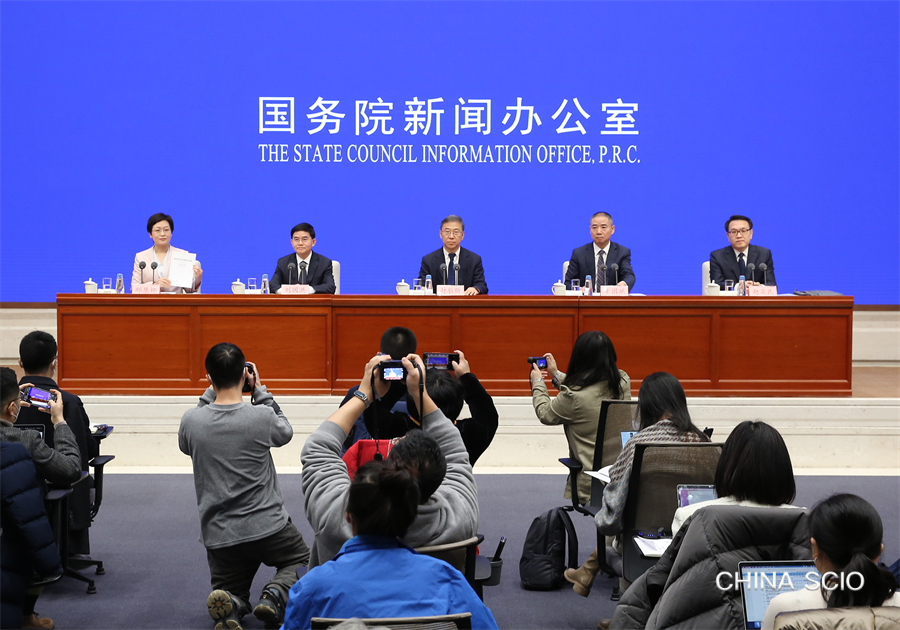
China’s State Council regulation on outbound investment took effect on July 1, 2026, giving Beijing its first comprehensive, cabinet-level legal framework governing how Chinese capital moves abroad. Premier Li Qiang signed the 34-article regulation, formally Decree No. 837, on June 1. It replaces a patchwork of ministerial rules that the National Development and Reform Commission, the Ministry of Commerce, and the State Administration of Foreign Exchange had administered separately for two decades, each covering a different slice of the approval, filing, and remittance process.
The new regulation closes loopholes that let Chinese firms move technology, data, and capital offshore through Cayman or Singapore (remember the Manus AI dispute?) holding structures, personnel transfers, and licensing arrangements that fell outside the old rules.
Beijing is also building state machinery to back its firms abroad that increasingly resembles what Washington has assembled over the past eighteen months. Both governments are moving toward becoming commercial protagonists by using licensing power, equity stakes, security review, and retaliatory authority to help their companies win deals, especially those at the intersection of commerce and national security (Infrastructure, AI, and critical minerals).
A coordinated state support system
In 2025, Chinese critical mineral giant Shenghe Resources lost a bid to U.S. company MP Materials for a venture with Saudi Arabia’s Ma’aden. Though Shenghe (which also previously held stakes in MP) is one of the world’s leading rare earths refiners and processors, President Trump’s decision to put U.S. sovereign backing behind MP Materials pushed the Saudi company to pick the U.S. champion. Shenghe lost the deal. For the U.S., it marked an example of an emerging framework of U.S. economic statecraft that is gradually leveraging U.S. state influence to push for economic outcomes in strategic industries.
China has also long utilized its government bodies and embassies abroad to advocate for Chinese industry in foreign markets—virtually every country does it. The difference now is that what was a more decentralized and ad-hoc process is now being centralized and institutionalized into policy.
The new regulation directs Chinese government bodies to support outbound firms with a more concerted, state-backed push across diplomacy, finance, taxation, customs, insurance, intellectual property protection, dispute resolution, logistics, and consular affairs to make Chinese companies more competitive. It replaces the old approval-and-filing model with a coordination framework that links government authorities, professional institutions, industry associations, and trade promotion organizations.
Investments now fall into three categories: encouraged, restricted, and prohibited. Those deemed to “affect or may affect national security” undergo a dedicated security review conducted jointly by the NDRC and MOFCOM. A separate provision requires Chinese entities facing foreign litigation or regulatory demands for evidence to first clear those disclosures against Chinese state secrets, data security, and export control law. This extends Beijing’s regulatory power into disputes that used to play out entirely on foreign soil.
The regulation also gives Beijing explicit retaliatory authority. It authorizes the government to investigate discriminatory treatment of Chinese investors abroad and to respond under the Anti-Foreign Sanctions Law, with countermeasures that may include restricting imports and exports, barring investment in China, blocking Chinese entities from dealing with targeted foreign parties, and limiting entry for people, goods, or transport. None of this mandates automatic retaliation, but it gives Beijing standing domestic legal authority to escalate as the state deems necessary.
The timing of the regulation is linked to two recent disputes that exposed a gap in Chinese regulation. Meta’s blocked acquisition of the Chinese-rooted AI startup Manus and the Nexperia dispute involving Chinese-owned chipmaker Wingtech Technology both showed that Chinese capital and technology were exposed to foreign control decisions that Beijing had no formal standing to contest. Article 13 of the new regulation closes that gap by capturing formal equity transfers alongside technology transfers through licensing, dispatched engineers, and cross-border technical training, even when no equity changes hands. Article 15 extends the security review to cover the sale of overseas assets, so an exit now draws the same scrutiny as an entry. Practitioners have taken to calling the offshore-restructuring workaround a “Singapore Wash,” and Beijing’s new rules are built to close it.
Washington’s parallel machinery
Washington has built a similar system over roughly the same period, using different instruments. Like Beijing, it wants to keep national capital and technology under state-aligned control while using the state’s weight to shape where that capital and technology go. The closest mirror to China’s new regulation is the Treasury Department’s outbound investment security program, which practitioners call a “reverse CFIUS.” Implementing Executive Order 14105, Treasury issued a final rule in October 2024 that took effect on January 2, 2025, prohibiting or requiring notification of U.S. investments into Chinese entities working in semiconductors, quantum information technologies, and artificial intelligence. Where CFIUS screens foreign capital coming in, the outbound program screens American capital going out, sorting transactions into prohibited and notifiable categories much as Beijing’s regulation sorts outbound deals into restricted and encouraged ones. Treasury can also nullify, void, or compel divestment of any prohibited transaction, an unwinding power that parallels the reach Article 15 now gives Chinese security reviewers over exits.
Washington has also gone further than screening. In August 2025 the Commerce Department converted $8.9 billion in CHIPS Act grants and Secure Enclave program funds into a roughly 10 percent equity stake in Intel, the only US company still capable of producing leading-edge logic chips domestically. Commerce Secretary Howard Lutnick put it plainly: “We should get an equity stake for our money.” The deal came with a warrant to buy an additional 5 percent if Intel’s foundry ownership fell below 51 percent, a direct hedge against foreign control of the company and potential for undesirable foreign transfer. Two months earlier, the administration had converted a CFIUS review into an instrument of permanent control. As the price of approving Nippon Steel’s acquisition of U.S. Steel in June 2025, the government took a “golden share” granting it veto power over major corporate decisions, including cuts to Nippon’s $11 billion investment commitment, relocation of headquarters, transfers of jobs abroad, and plant closures.
American firms now anticipate this trend rather than resist it. On July 2, the Financial Times reported that Sam Altman proposed giving the U.S. government a 5 percent stake in OpenAI, as part of a broader arrangement under which Washington would hold 5 percent of each leading American AI developer through a “sovereign wealth fund-like” vehicle. The direction of pressure tells two different stories about the U.S. and Chinese systems. In Washington, the country’s leading AI firm invites the state as a shareholder. In Beijing, the state barred Manus AI’s leadership from leaving the country earlier this year. While that image is a bit simplistic, many observers may not seek the deeper nuance. In practice, American firms are buying political protection by offering equity. Chinese firms, meanwhile, trigger state retaliation and control by trying to exit.
Between an outbound screening regime aimed squarely at China, an equity position in a strategic chipmaker, and a standing veto extracted through security review, Washington has assembled a toolbox functionally similar to Beijing’s new regulation. Both sides once used these levers to approve or deny sensitive deals. Both now use them to extend their regulatory reach and shape deal outcomes at home and abroad in pursuit of their respective national interests.
The larger picture
This connects uniquely with the question of “What happened to BRI?” If the first decade of BRI was geared toward pushing Chinese capital out the door, this regulation now governs where it lands, who controls it once it gets there, and what state capacity is needed to ensure both. The same period has shifted Washington from a posture of restricting China’s access to frontier technology to one of actively directing where American technology and capital go and on what terms.
Neither government has fully articulated where this ladder ends. Beijing’s countermeasure authority is discretionary, and how aggressively it gets used will depend on the state of US-China relations rather than the text of the regulation itself. Washington’s golden share and its equity position in Intel and offtake deals with M.P. Materials remain first-term experiments rather than settled doctrine of an emerging “sovereignty wealth fund” mentality. A change in administration could unwind either.
No posts
Comments
Nothing yet. Say the first thing.
Sign in to join the conversation.