
For twenty years, we’ve focused on building better tools. Today, we have to start creating teammates.
This is the most excited I’ve been about UX in a long time. There is a massive shift in how we need to approach software. For decades, we designed interfaces that simply served as tools. Today, we get to design interfaces that think.
(This is what I’m discussing at my upcoming talk, “UX IN THE ERA OF AI: Designing Experiences That Think” at the Big Design Conference in Grapevine, Texas, on 4/29/2026)
But here is the catch: building a workflow for a machine that considers context is entirely different than building a flow for a machine that waits for a click. In a large-scale enterprise environment, you aren’t just deploying a feature; you’re onboarding a digital worker. The real friction we face isn’t learning how to prompt; it’s learning how to design the partnership between the human and the agent.
Our entire discipline is built on a specific mental model: software is dumb. We assumed that if we didn’t explicitly draw the path, design the form, and script the error message, the user would hit a dead end. Static interfaces were built for a world where the system couldn’t think for itself.
Those days are over.
When you introduce an LLM into the stack, the interface begins to infer intent. It synthesizes vast amounts of unstructured data and anticipates what a user needs before they even ask. The rigid flow, once our safety net, quickly becomes a bottleneck. The core organizational challenge shifts: we are no longer drawing the literal boundaries of the software; we are setting the behavioral boundaries of a model.
We have to embrace creating all the “Context.” By that, I mean building the environment, business rules, and guardrails necessary for an AI to make the right decisions without needing explicit step-by-step commands.
A lot of the hype suggests that this shift is effortless, that AI just gracefully solves problems out of the box. But anyone who has deployed generative tools in a professional setting knows the reality is far messier.
Mark Cuban captured it perfectly at Convergence Dallas AI:
“AI is like my drunk intern.”
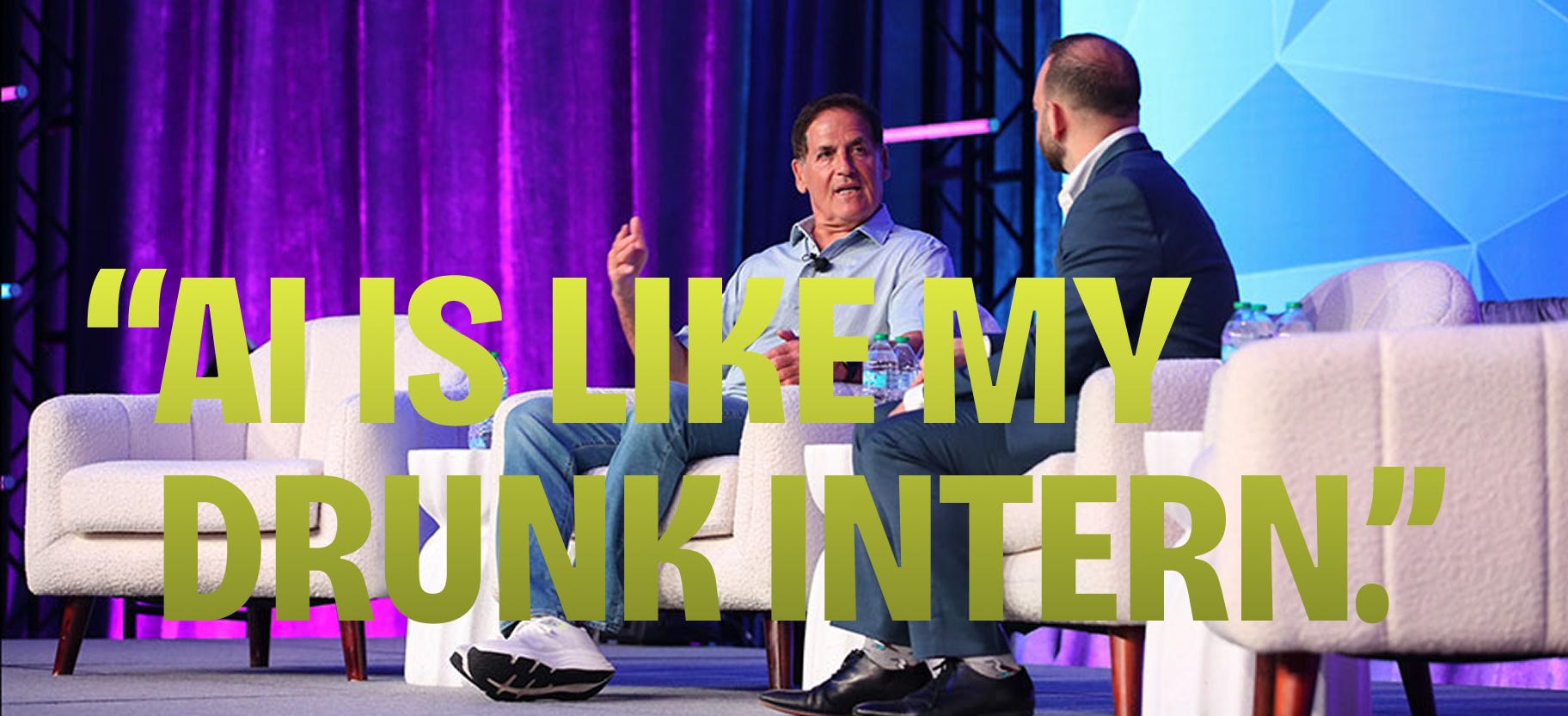
This is a startlingly accurate way to describe the current state of enterprise models. These “interns” can be fast, eager to please, and can synthesize 10,000 documents in two seconds. But it also hallucinates data, misses crucial social nuances, and struggles with the implicit context that “the people who have been doing this job for 20 years” intuitively understand.
While LLMs reduce the mechanical friction of generating UI or pulling reports, they heavily increase the need for high-level human oversight. If we just plug this “intern” into a high-stakes enterprise workflow without supervision, it creates significant friction. We aren’t saving time; we are shifting our effort from drawing screens to managing output validation.
In my experience, the moment a team successfully shifts from “building tools” to “designing partnerships” is the moment they change how they view their foundational UI.
If you are tasked with designing a dashboard, a data table, a chart, or a multi-step flow, you must stop asking, “How do I make this easier to read?” Instead, you should be asking: “How would this interface function if an agent were actively starting the work for the user? How does this UI behave if the system gives direction, outlines next steps, or executes tasks on their behalf (within established guardrails)?”
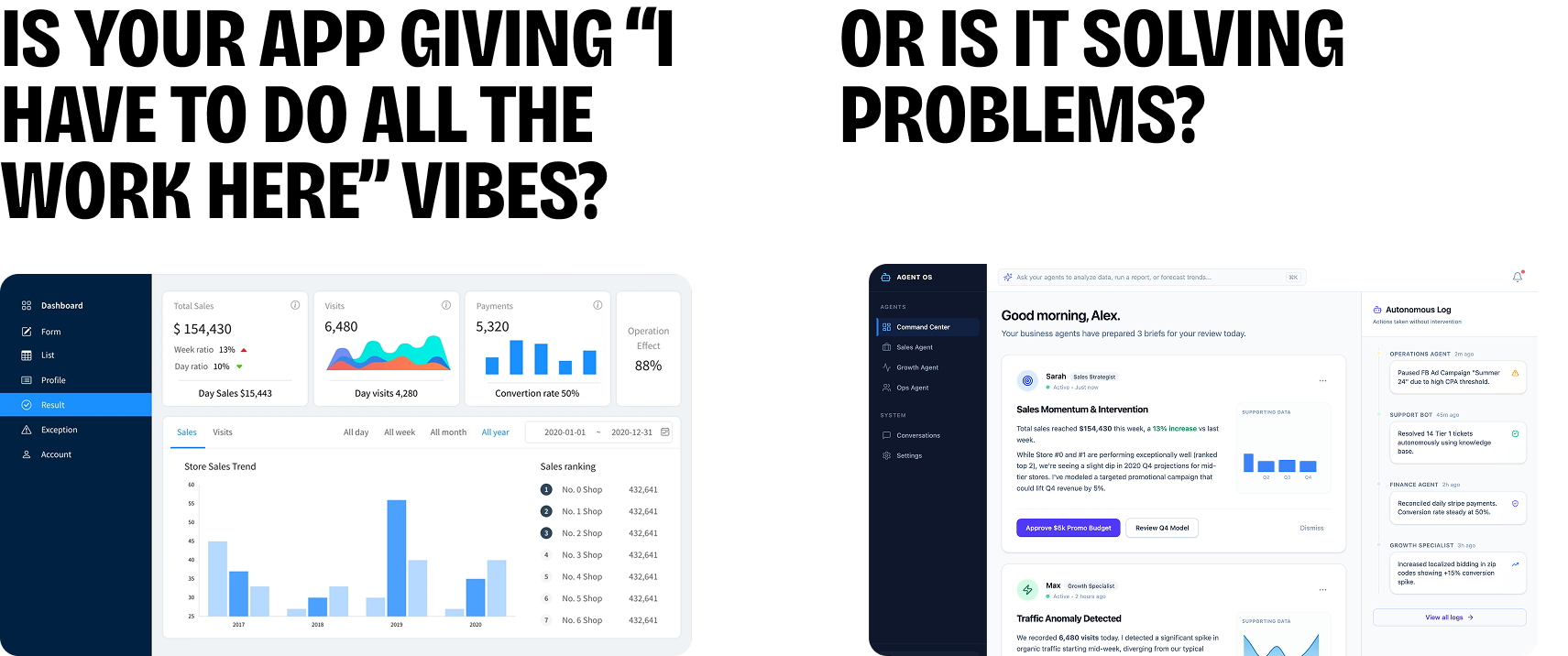
When you realize you are building a teammate rather than just a visualization, the questions you ask in your design reviews fundamentally change:
The Trust Gap: How does the human user know why the system recommended this specific action? You can’t just display a result; you have to design the “Transparency Layer” to show the math.
Error Recovery: When the intern inevitably gets it wrong, what is the feedback loop? How does the front-line user correct the behavior without reverting to a completely manual process?
The Intersection of Agency: Are we designing the system to wait for explicit approval, or are we allowing it to take action on the user’s behalf?
The intern is growing up fast. Every day, it gets smarter, faster, and more capable. But our job as UX leaders isn’t over. The challenge has simply moved upstream. It’s our responsibility to build the framework that turns that eager, slightly unpredictable “drunk intern” into a world-class executive assistant.
Stop giving your users slightly better hammers. Start giving them a coworker who knows how to use the hammer, the saw, and the blueprint.
Where is the friction in your organization right now? Are your teams still trying to force AI into a rigid, traditional UX flow, or are they starting to design the actual partnership? Let me know what you think!
No posts
Comments
Nothing yet. Say the first thing.
Sign in to join the conversation.