
Many people think the bottleneck in Enterprise AI is often the model’s capability. But the best UX Designers and Product Owners know the real friction isn’t technical, it’s often psychological.
There is a fundamental paradigm shift happening in enterprise UX: We are moving from “Software as a Utility” to “Software as a Partner,” deploying powerful “intelligence” into the workflows of seasoned professionals. A utility waits for a command; a partner anticipates intent. But partnership requires something a standard dashboard doesn’t: Trust.
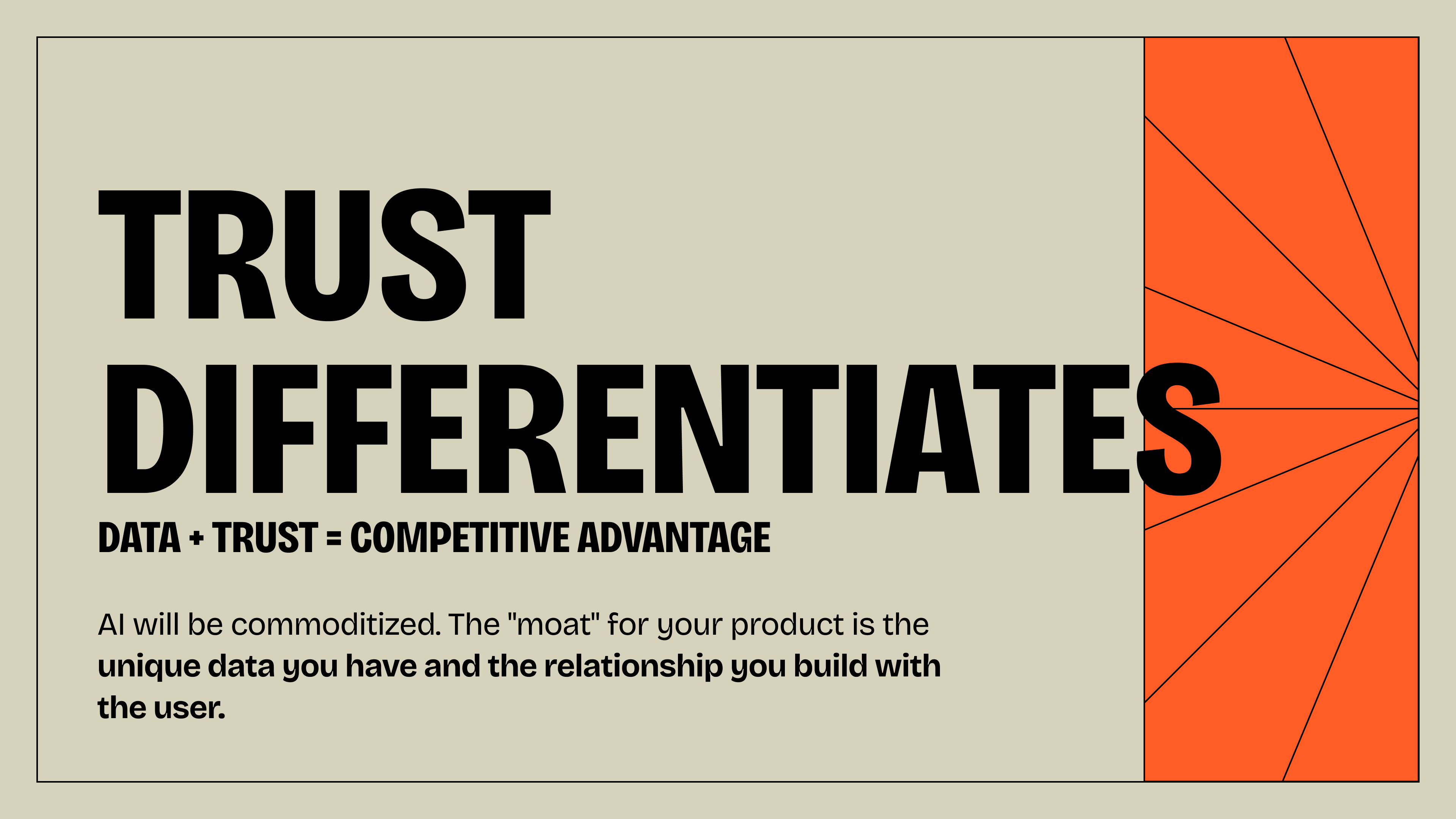
We’ve seen that AI capabilities can be quickly commoditized. The real competitive advantage, the new “moat”, even your brand, is the unique data you have and the relationship you build with the user. By that, I mean the level of confidence a user, customer, or domain expert has in an AI system's decision made on their behalf.
To move from a “Black Box” to a trusted partner, we have to deliberately design for the Four Pillars of Trust.
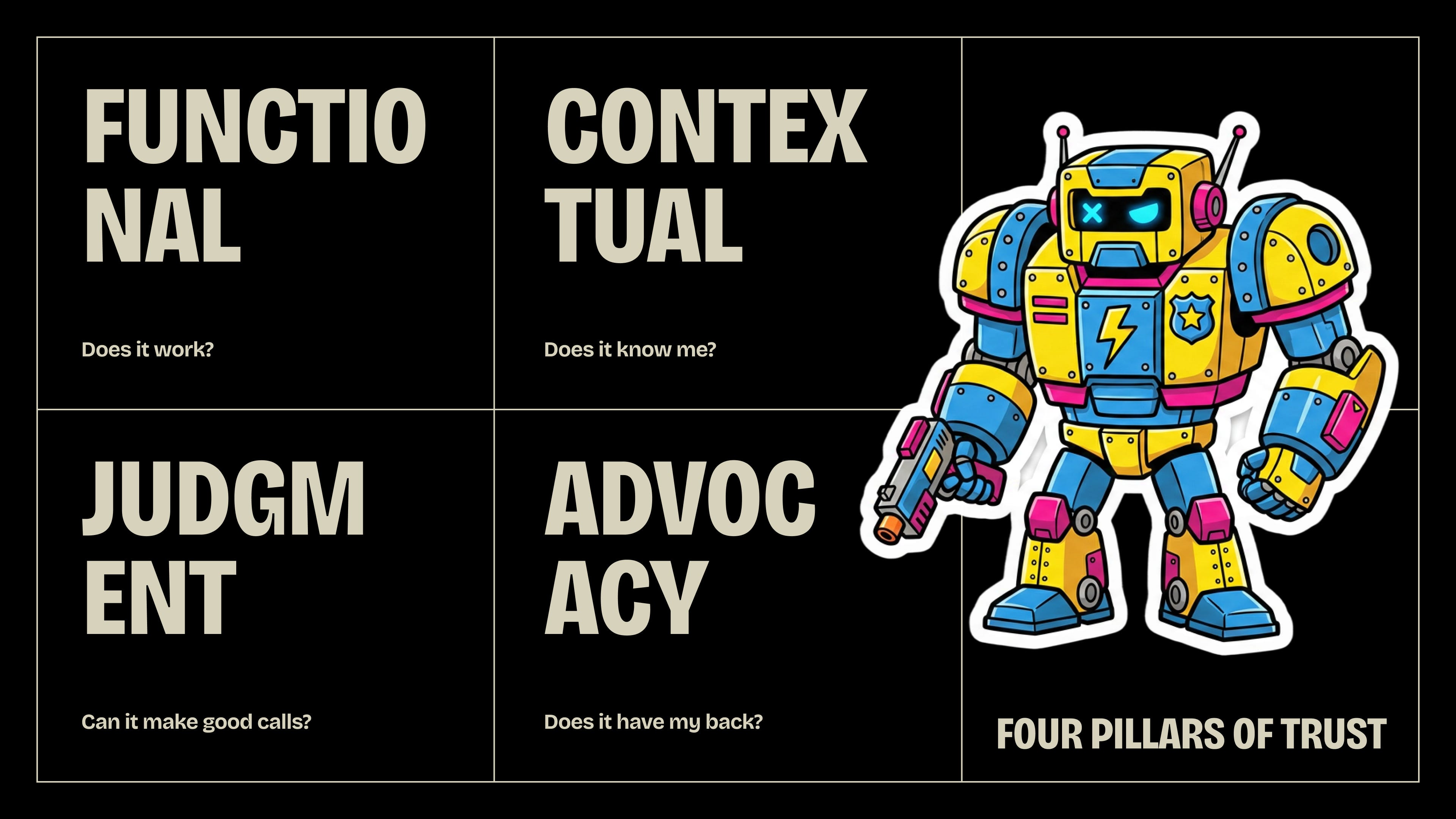
This is the baseline. If the system can’t perform the task reliably, nothing else matters. But functional trust is fragile. It takes months to build and seconds to lose. A system that struggles with basic functional reliability will never earn the right to act as a partner.
Generic AI isn’t a partner; it’s a search engine. A partner understands context and adapts to the user’s specific environment.
Memory is a Feature: If it’s Monday morning, the system should know you usually check the weekly risk report. It learns your patterns so you don’t have to repeat them.
User-Controlled Recall: For memory to be useful, it must be transparent. Users need to see what the system “knows” about them and have the power to review, edit, or remove it.
Training Your Teammate: Instead of the AI implicitly guessing what matters, we need interfaces that let users explicitly define the boundaries of what the system should value.
This is where the “Intersection,” the messy line where human intuition meets AI logic, is most critical. We are asking AI to make decisions, not just summarize text.
Radical Transparency: If the AI is only 80% confident in a recommendation, it needs to show the math. Trust is built when the system knows its own limits. Give the user a “Confidence Score.”
The Architecture of Action: Visibility is the new loading spinner (but it actually adds value). When the agent lists out its steps—researching, analyzing, delivering—it builds functional trust. Show your work.
The “Why” Behind the Answer: If an agent moves a deadline or reorders a priority queue, the UI must explain why. Transparency isn’t a “nice to have” in professional tools; it’s a requirement for accountability.
A good teammate tells you when you’re about to make a mistake. Pushback is a sign of a high-functioning agent. If a user is about to commit a critical error or override a known protocol, the agent should pause and ask: “Are you sure about that?”
Consider any biometric wearable used daily; I’m currently partial to the OURA Ring. It holds my most intimate health data, my sleep cycles, stress levels, and recovery metrics. Right now, it has my complete trust when I interact with its AI agent because it understands my baseline and provides relevant, contextual insights. That trust is their strongest competitive differentiator, far more valuable than the hardware itself.
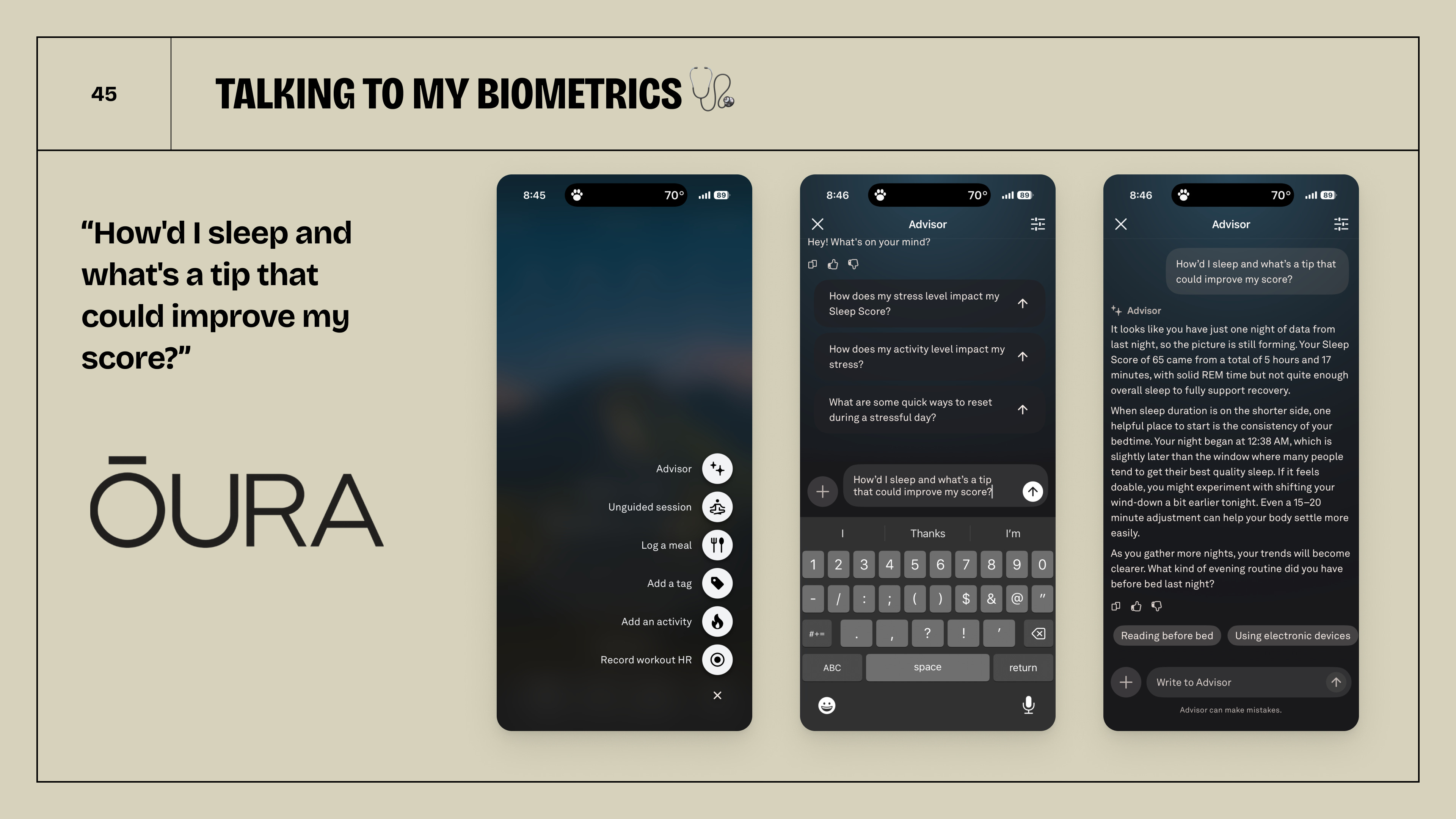
However, that relationship is incredibly fragile. If the agent were to violate any of these Four Pillars—if it hallucinated a health metric, ignored my established routines, or failed to explain why it was recommending a drastic change, that trust would evaporate instantly, and the data moat would collapse.
The exact same principle applies to enterprise software. If we want professionals to trust an agent with their high-stakes operational data, we cannot afford a single breach of these pillars.
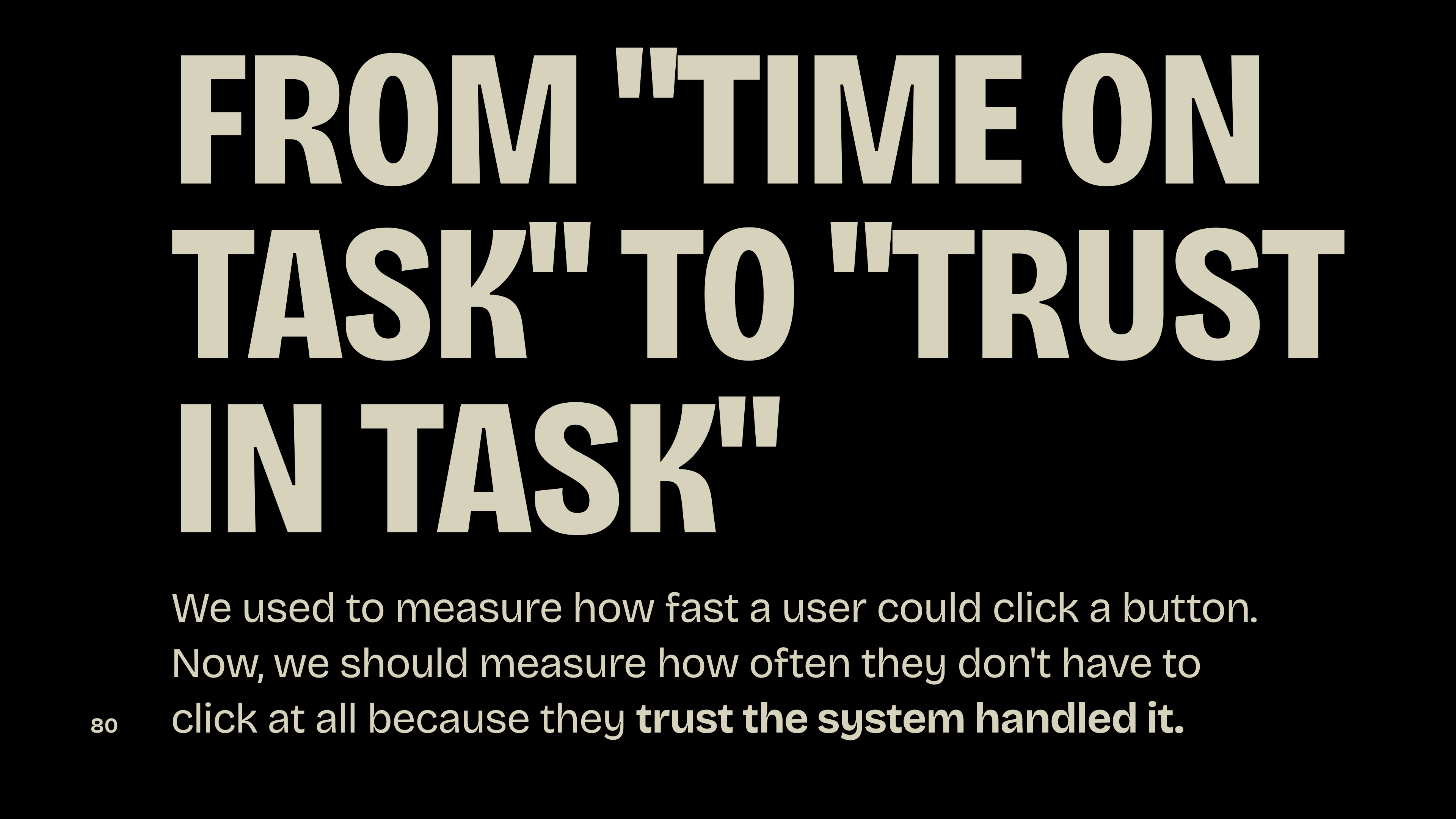
We used to measure how fast a user could click a button, optimizing for “Time on Task.”
Now, we should measure how often they don’t have to click at all because they trust the system handled it. We are shifting to “Trust in Task.”
The tools that win won’t be the ones with the largest context windows. They will be the ones who master the safe, trustworthy design of relationships.
Something to think about. Where in your current product does the AI act like a “black box”? How could you expose its reasoning to build “Trust in Task” this week? Let me know in the comments.
No posts
Comments
Nothing yet. Say the first thing.
Sign in to join the conversation.