
With five children, the last of whom are headed to college this summer, the job of raising littles is behind me. But maybe it’s not behind you. Or maybe you’ve begun the journey of grandparenting. Or maybe you’re simply interested to influence the lives of the next generation in your work or church.
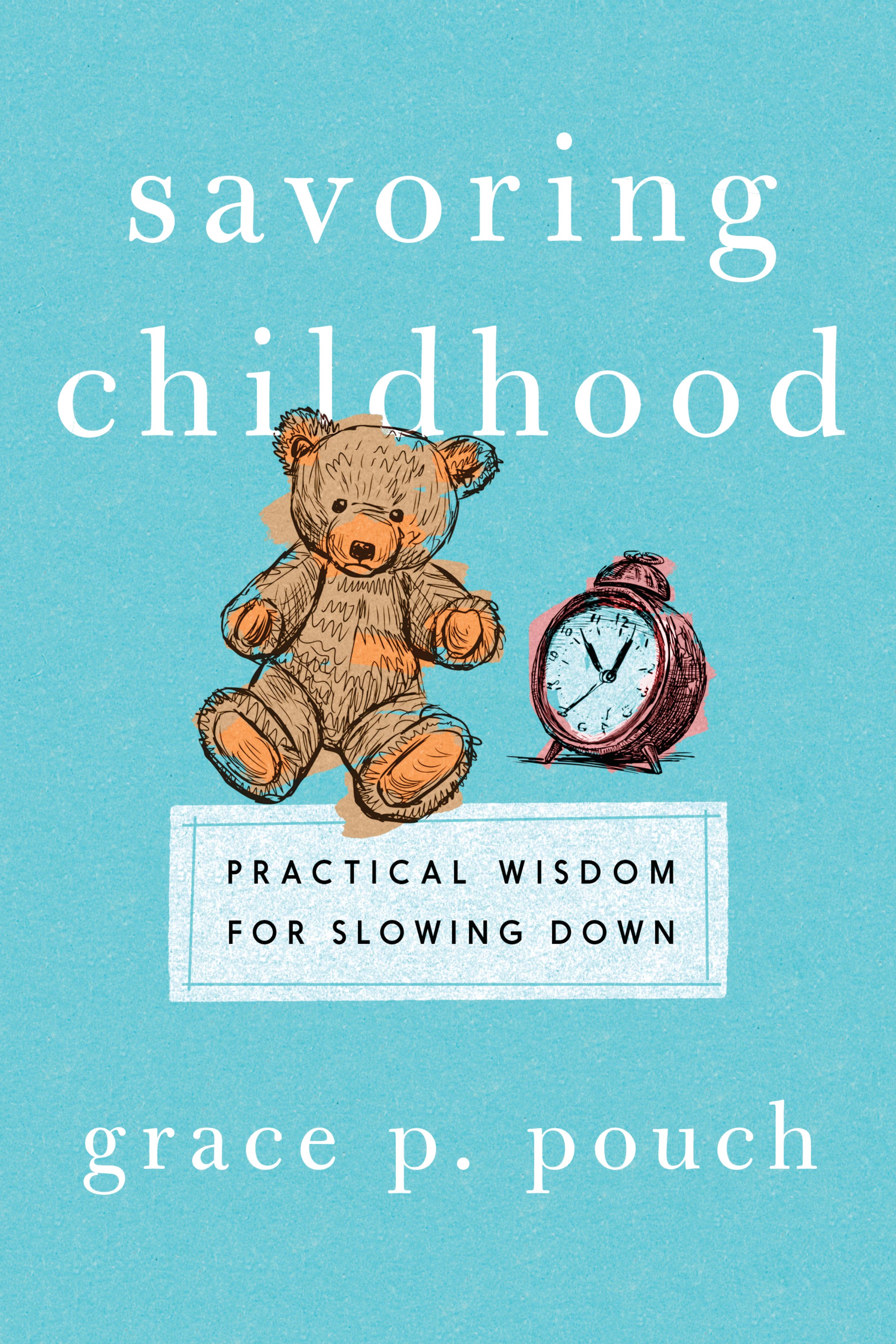
Grace Pate Pouch has written a lovely book called Savoring Childhood: Practical Wisdom for Slowing Down, and I am grateful to have had the opportunity to ask her some questions about that project, which offers an invitation to live into saner rhythms as a family. Don’t forget to comment on the post and get entered to win a free copy of Grace’s book!
Q. Why has childhood become so fast-paced and frenzied?
A. Kids have little say over their schedules and environments. They’re subject to rhythms of home, school, and church. If things are too fast, we might be the ones fueling the frenzy or letting worldly values like ease, efficiency, and achievement shape our kids’ reality.
But the good news is that if we are the pace-setters, it’s within our grasp to slow things down. My claim in Savoring Childhood is that with even a smidge of influence in a child’s life you can make a lasting impact by doing whatever is within your effective control to set a healthy pace. Whether your little corner of say-so is your home, your classroom, your carpool, or your night to have the grandkids over, that is the realm in which you can partner with God to create the conditions for children to flourish. And God is with us in this endeavor, multiplying our little efforts like loaves and fish.
Q. What should be slower about childhood?
A. I started writing Savoring Childhood with less clarity on this question.
Some answers were more obvious: Spiritual formation circles have been abuzz with advice on ruthlessly eliminating hurry from our lives, and that’s crucial for kids too. And we all sense that fast-paced media is making kids distracted and anxious. But I felt sure there were also other parts of life today that were too fast or too much for kids to flourish. I started writing without knowing that I would eventually identify five forms of speed that cause the most harm to children today. And I organized the book around five movements to restore a healthy pace:
● Slow Gratification
● Slow Schedules
● Slow Media
● Slow Consuming
● Slow Growing Up
These five themes emerged after I wrote my first draft. My original manuscript, drafted by hand in a leather journal, was a jumble of family stories, observations from my days as a teacher, memories from my childhood, and wisdom from my parents and grandparents, woven together with Bible stories and sage advice from Christians down through the ages.
I typed up the chapters, laid them all out on a table at church, and asked my mom to let me talk her through the chapters. As we grouped and regrouped my writing, a structure emerged. I went into the second draft with much more clarity, not only on how to finish writing the book but on the actual answer to the question: What should be slower about childhood?
Q. Why do you take a habit-based approach to the idea of slowing and savoring childhood?
A bedrock spiritual formation truth is that we’re all being formed by something. If we don’t take a disciplined approach to patterning our lives after Jesus, someone or something else will shape us. Habits are the anchors that tether us to environments and people and activities that will shape us for good. For example, one habit that helps us protect our kids from the distraction and overload of fast media is keeping our technology grounded in fixed physical locations. A TV in one room, a record player in another, a specific place for the Bluetooth speaker. Even though media companies want us to believe that portability and endless streaming are great features, the truth is that limiting the range of these devices has been liberating for us and for our kids.
Q. Of all the habits you mention, which has been hardest for you to cultivate in your own family? Which has been easiest? Give us a sense of why in each case.
Hardest: I am particularly prone to multitasking, overscheduling, and rushing from thing to thing. Sabbath is one of the habits I recommend in the book that is still under construction for me (and probably will be for my whole life). Setting aside Sunday mornings for church is one small aspect of sabbath that got locked in as habit when I was a kid. But there are other aspects of the sabbath practice that are harder for me, like resisting the intrusion of work.
Easiest: The habits in the book that have been easiest for me might be the ones that have to do with nurturing children’s creativity—encouraging them to make rather than buy, to contribute rather than consume. I was raised in that kind of household, so I had excellent role models in how to parent this way. And to be honest, I have kids who practically came out of the womb bursting with creativity.
Even so, the allure of the ready-made is something I understand. In my most exhausted moments of motherhood, the idea of less hands-on facilitation and less mess has sounded extremely tempting. And sometimes that’s fine; slow consuming is not an all-or-nothing commitment. But the more you choose the fast and easy option, the fewer opportunities your children have to practice being contributors, and it’s that practice, slowly, over time, that forms a child’s identity as a person made in the image of the Creator with something beautiful to offer to the world.
Q. Of all the habits you mention, which has been most transformational? What is some of the good fruit you’ve seen from cultivating this habit?
In the book I write about a salesman who tried to talk me into buying a smart oven that you operate by voice command. Every day, easy button options like this bombard us with the sales pitch that effortlessness is the pinnacle of living. But in a Christian view, effort is not a dirty word. Everything valuable takes time and effort. Relationships take effort. Raising children takes effort. Fulfilling work (like authoring a book) is effortful. And, of course, discipleship is effortful.
Technologies that diminish our capacity for effort and teach our children to avoid it are poison. Here’s how I explain it in the book: “The likelihood that the next generation will choose to say yes to Jesus’ way of life depends on many factors, but one of them is surely this: Do they have a positive outlook on effortful endeavors? Or has their childhood been so easy that the thought of actively following Christ sounds just a bit too hard?”
That idea haunts me. So, I think the most transformational habits for me—and potentially the most potent ways to help my kids have a flourishing life—are the ones in the “Slow Gratification” section of my book, which is about embracing friction and waiting as fertile spaces where patience, endurance, and gratitude grow.
I talk about one of my favorite slow gratification experiments in my chapter called “Time Machines”. (Time machines are old-school methods or tools that reconnect us to something valuable that got lost in innovation—like friction or human collaboration.) As I mentioned, I wrote the first draft of the book by hand. Writing by hand was my time machine to protect me from the distractions of being online and to usher me into the joys and benefits of crafting words slowly. At the pace of handwriting, my thoughts flow more naturally, I’m less worried about being perfect, and going screen-free gives me the freedom to write from anywhere.
Writing by hand was also the perfect gym for building up my stick-to-it muscles at the outset of a massive undertaking. Even though I returned to my laptop for the next phase, the fruit of that time machine stuck with me and helped me endure through the exhaustion and road blocks the book writing adventure. The take-away for all of us, writers or not, is that time machines cost us a little convenience but give us back our God-given capacity to do hard things. (Hallelujah!)
Q. What is uniquely Christian about slowing and savoring childhood?
Our pace of life reveals what we believe matters most, and we desperately need to reexamine those values in the light of the gospel. Your children do not need you to be their travel agent/resume coach—packing days full of excursions, social visits, tutors, culturally enriching shows and museum tours, sports, music lessons, and on and on. That’s well-intentioned, but if all that crowds out the space for kids to connect deeply—with you, with others, with God—they’ll have gained the whole world and forfeited the best part of life (of eternal life).
Thankfully, the solution to any problem involves having “eyes to see and ears to hear” the Lord’s guidance and having the courage to apply it to the present situation. I believe the Spirit is sowing insight about how to reclaim a wholesome childhood generously, among believers and non-believers, because God longs to heal and bless young people. He’s writing the answers all over creation for anyone with “eyes to see”.
Christians should have a head start here. We are citizens of the kingdom, already training with Jesus for a life guided by heaven’s value system; we have a fail-proof measure for what matters and light to see the folly of worldly ways; we have an interactive conversation with the God of all creation; and we have a treasury of evergreen wisdom from ages past. If we will only take up these amazing instruments and use them, we will be agents of healing—in this crisis, and in any others that come.
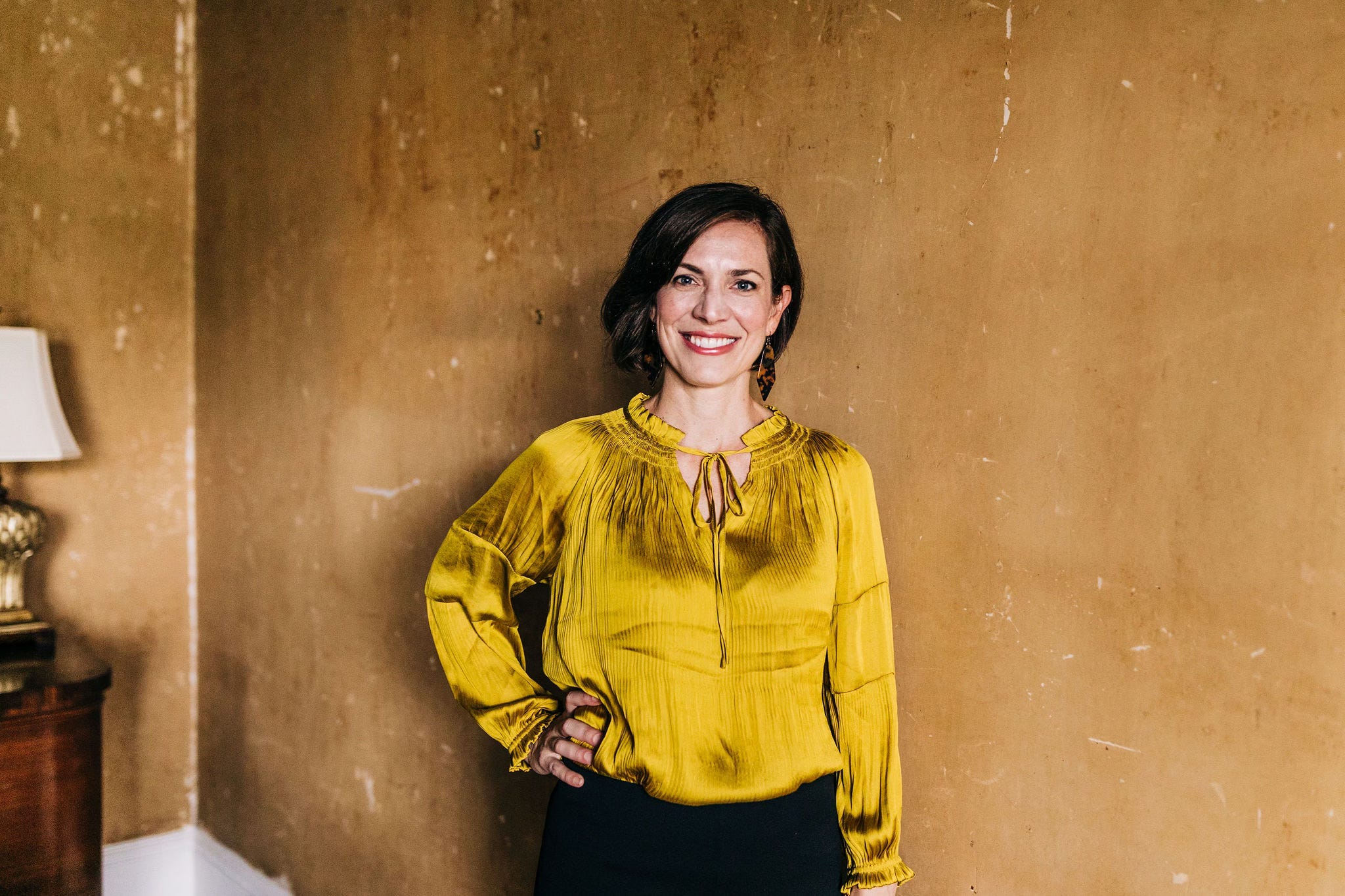
Grace Pate Pouch is Content Manager for Renovaré—an organization that is widely considered the “grandpa” of the spiritual formation movement. She curates the Renovaré Weekly newsletter, oversees in-house publications, and helps produce two podcasts: Life with God hosted by Nathan Foster, and Friends
in Formation.
Grace is the author of Savoring Childhood: Practical
Wisdom for Slowing Down (IVP, 2026), co-founder of the advocacy group Upstate
Unplugged,and previously served as a seminary professor and Christian education
specialist for elementary school children. She and her husband William live
with their two children, Charlotte and Henry, in Greenville, SC. You can find Grace at gracepouch.com, on Instagram, and here on Substack at Grapple
Pie.
No posts
Comments
Nothing yet. Say the first thing.
Sign in to join the conversation.