
July is Disability Pride Month. And, while for many years I was not a true observer, I have grown to feel deeply that we do not embrace and center the point of this month enough. I say that I wasn’t a true observer because, for most of my life, I didn’t identify as disabled. Despite struggling with blindness since childhood, being diagnosed with Marfan Syndrome at 13 years old, and navigating underdiagnosed neurological disorders throughout my adult life, I felt complicated ways about taking on the moniker of disability.
My resistance to calling myself disabled had nothing to do with shame or stigma. Rather, I felt like it was unfair and inappropriate for me to take up space in disability-centered communities as someone who was always told that I wasn’t “really disabled” or that I didn’t “look disabled.” In many ways, I held internalized ableist ideas that didn’t originate with me. Instead, they were holdovers from problematic beliefs about what disabled people look like and how we should comport ourselves in public.
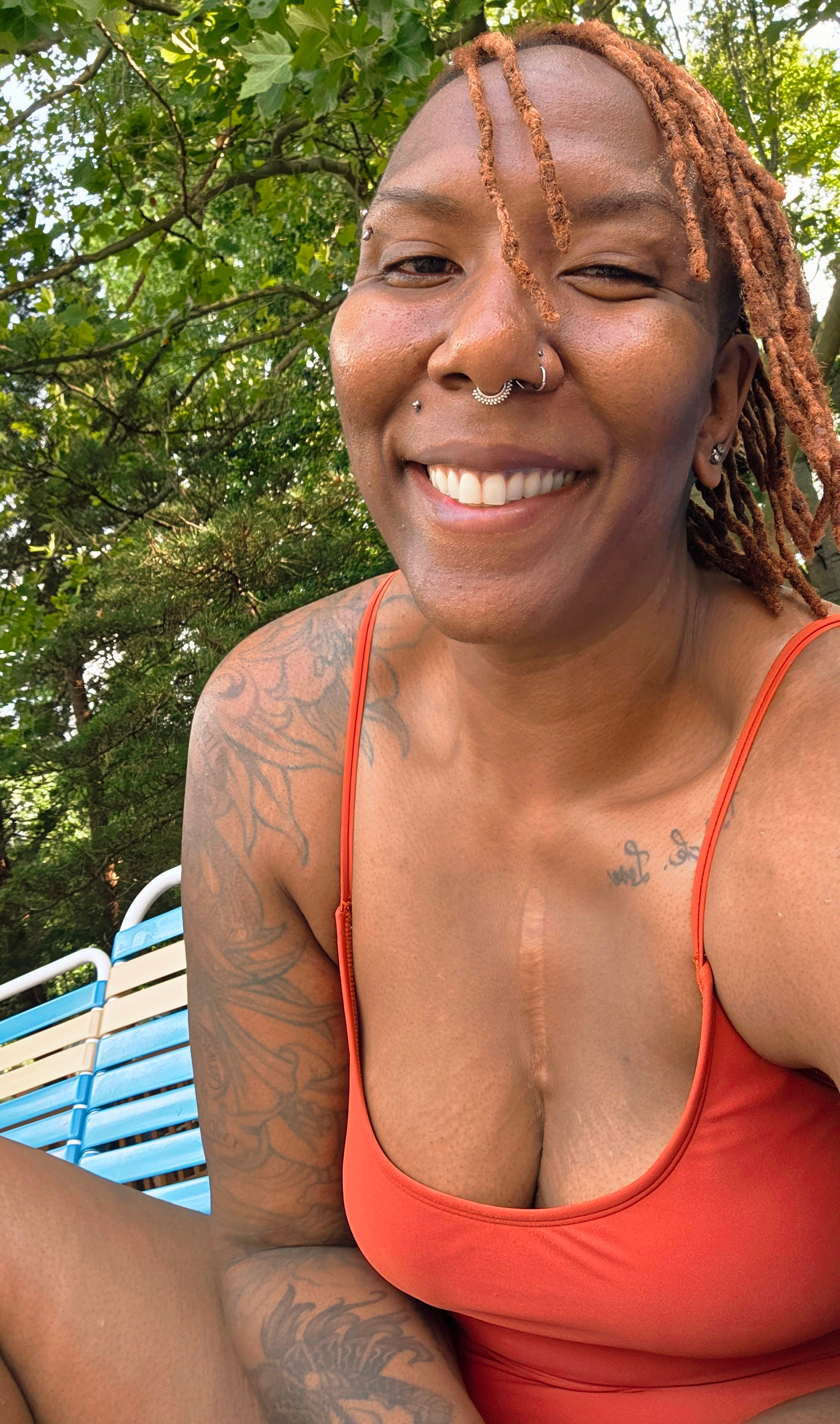
Now, I am astounded that I ever struggled to identify as a disabled person. It reveals to me the ways that Black people, and especially Black women, are often expected to carry the burdens of health issues and uncertainty without community support or acknowledgement. I am grateful to my disabled community members who called me in and reminded me that my disabled life doesn’t have to fit any mold or follow any rules in order to count.
One year ago, I underwent transabdominal aortic repair surgery. Then, in May, I underwent retina replacement, cataracts removal, and treatment for glaucoma. These two surgeries came after several hospitalizations of the past five years and several other operations to improve the conditions of my day-to-day life. I have come to not only identify as disabled, but now, I understand myself to be chronically ill.
Recently, someone told me that it takes a different kind of strength to be chronically ill, especially in today’s world. And, while I agree, I think that strength should not be required of us. We shouldn’t be required to prove that we are disabled. We shouldn’t be asked to perform our disabilities to the satisfaction of able-bodied people. We shouldn’t have to hold so much.
This Disability Pride Month, I hope that we can put some of this weight down and just live.
xoxo, Dr. J
Book Notes:
Although I am currently taking a break from book promotions, I have several exciting updates. First, I can now confirm that my second book POLICING BLACKNESS: HOW THREAT SHAPES BLACK POLITICS will be released in June 2027 from Cornell University Press. That means that, starting in January 2027, I will back in my book promotions bag. In the fall, I will begin posting updates here, at my website, and on IG about the book and what comes next. Stay tuned!
In the meantime, the paperback of BLACK WOMEN TAUGHT US: AN INTIMATE HISTORY OF BLACK FEMINISM is currently available everywhere where books where are sold.
Please support local indie and Black woman-owned bookstores like Cafe Con Libros (Brooklyn), Resist Booksellers (Petersburg, VA), Gladys Books (Brooklyn), Harriett’s Bookshop (Philly), Source Booksellers (Detroit), Call and Response Books (Chicago), Reparations Club (LA), Charis Books & More (Atlanta), and Marcus Books (Oakland).
Follow along on Instagram and at my website for future event updates.
Writing Notes:
July was Disability Pride month, and this year, I chose to honor and center my own lived experiences through writing. We do not talk enough about Black queer disabled people enough, and it must change.
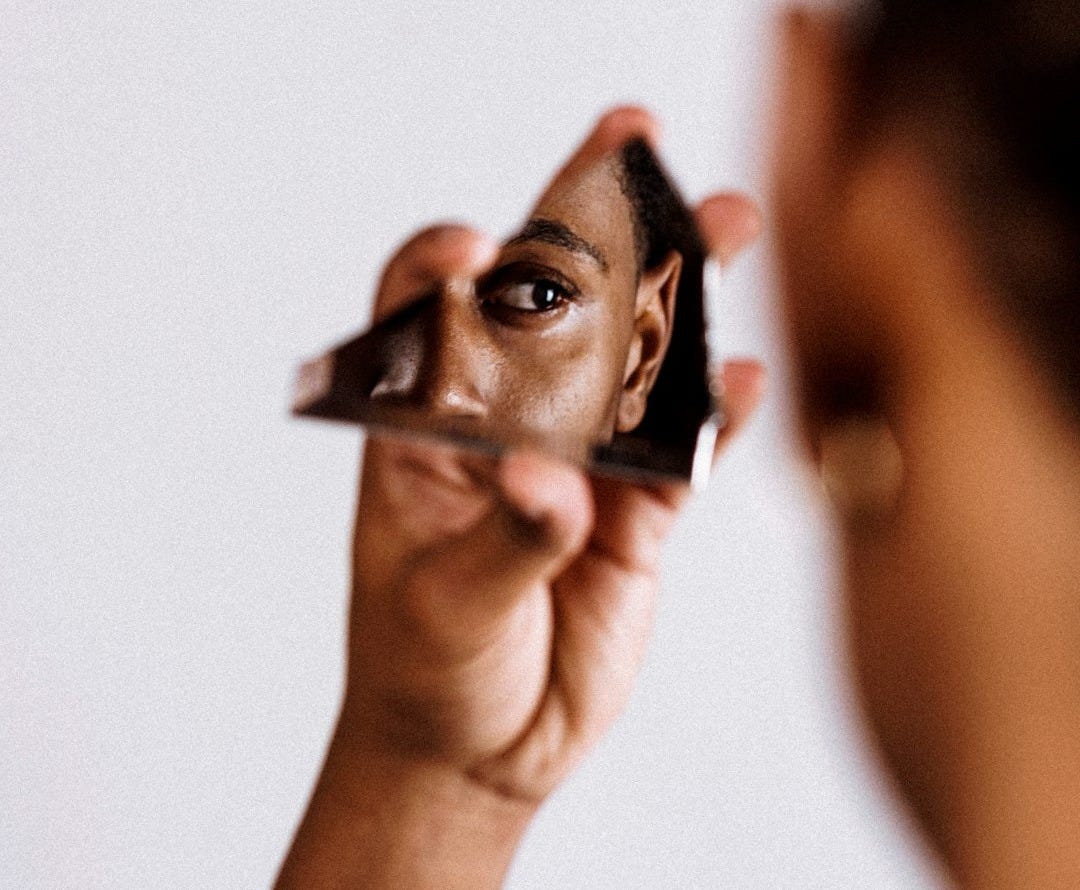
I wrote, “Are Black Women Allowed To Be Autistic?”, a lamentation on my own experiences as a late-diagnosed high functioning autistic Black queer trans disabled woman. While I have always possessed a deep knowing that there was something different about the way my brain functions, in this essay I reflect on the ways Black women, even in childhood, are not actually allowed to be autistic.
Then, I wrote “‘Compassion Fatigue’ in Black Disabled Life.” A few weeks ago, after having an emergency three-part retina surgery, I began thinking about the cost to being cared for when you are Black and disabled. Taking to threads, I asked other Black and queer disabled people about their experiences with friends and family members who seem to get tired of our disabilities and the needs that come along with them. While many began to cite experiences of ‘compassion fatigue,’ I didn’t feel the same. Compassion fatigue might feel like the cost of caring, but when you are a Black disabled woman, people often do not even allow themselves to care too much, lest they be harmed in the process. We suffer from what I call “compassion resentment.”
Lastly, after attending a “polyamory” event in Washington, D.C I offer a reflection on how some ethically non-monogamous and polyamorous people perpetuate codependency, toxicity, and the anti-radicalization of this broader community. In “Hoes, Whoremongers, and Collectors: On the Anti-radicalization of Polyamory” I assert that polyamory and ethical non-monogamy are not catchalls for bad behavior. When we call any and everything “ethical,” we invite exploitation, gendered harm, and other forms of emotional abuse into our dynamics. We must practice polyamory tethered to a set of politics and practices. We have a responsibility to be critical of behaviors that leave people within our community vulnerable and exposed to unwanted dynamics.
Read the full articles on my Substack here.
We Published, Beloved! Updates!
After a short break, Episode 6 of We Published, Beloved! Season 2 is officially out! In Episode 6, I was joined by Savannah Stephens, author of Witch Queen Rising. The innovative fiction text was inspired by Beyoncé (no joke). In this conversation, Savannah Stephens shares her journey in debuting her dark southern gothic fantasy novel. She talks through the challenges of navigating the complexities of publishing, marketing, and writing her second book.
In this episode, Savannah describes her writing process, how she transitioned from academia into writing, and what it’s like to be a Black woman fiction writer today. This episode offers insights into the publishing industry, self-advocacy, and the creative process, especially for Black fiction writers. Tap in!
Missed the an episode ? Don’t worry! Tap in on Spotify, Apple, or Soundcloud.
Follow We Published, Beloved! on Youtube, Instagram, Facebook, and Threads for updates! You don’t want to miss this!
That Black Couple Podcast Updates:
Season 9 of That Black Couple is back! In Season 9 Episode 1, Daren and I explore the concept of platonic marriage, its history, societal perceptions, and our personal journey over 20 years. We get real and discuss how our relationship defies traditional norms, the importance of safety and authenticity, and share how we navigate love, identity, and societal expectations. Missed the release? Watch it below!
Want to rewatch your FAVORITE episodes? Watch ALL episodes of Season 1 - 9 on our YouTube or listen the podcast on Spotify, Apple Music, and Soundcloud!
With a free subscription to Love Notes, you will get monthly newsletters and updates from the Black Feminist Book Club. With a paid subscription, you’ll get additional posts each month, access to comments and ways to join the community, and potential collaborative opportunities in the future.
Comments
Nothing yet. Say the first thing.
Sign in to join the conversation.