
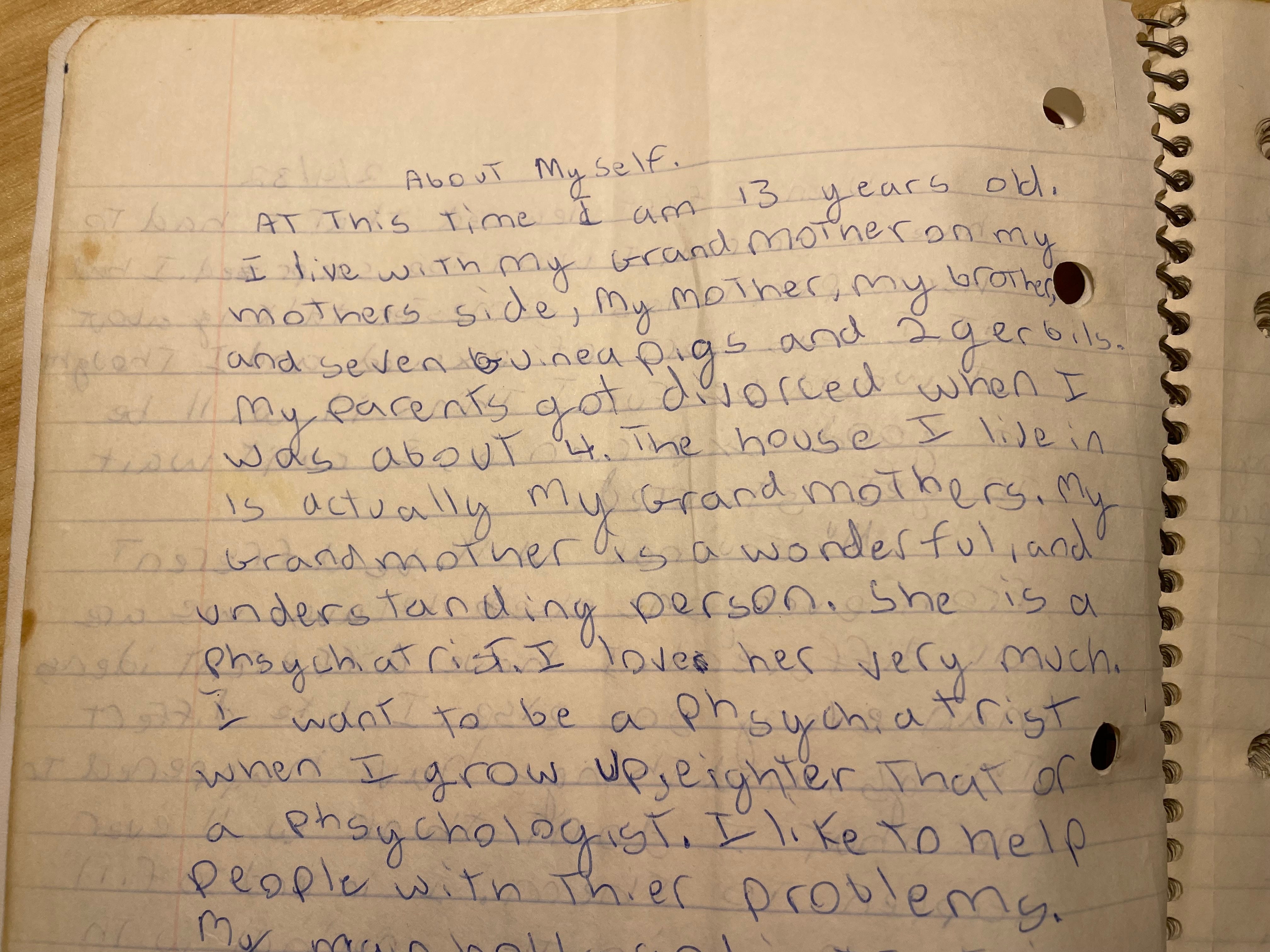
I had an 8th grade English teacher who wore skinny ties and loved the Ramones. I remember him singing I Wanna Be Sedated and dancing around as we took our seats. The whole semester we were in his class we had to keep a journal and let him read it each week. The only rule for the journal was that we had to write in it. He didn’t care about spelling, punctuation or grammar. He didn’t care what we wrote about. What he cared about was that we made writing a practice. We could write about our day. About how much we hated having to write in the journal. We could make things up.
He wanted us to be writers. And writers write
So I wrote. At first it was awkward, but before long, I was pouring my heart and soul into that journal, telling my poor skinny-tie-wearing, punk-rock-loving, probably fresh-out-of-college English teacher way more than he ever wanted to know about my life. But it wasn’t him I was writing to. It was the notebook itself: an 8 1/2 x 11, college-ruled, spiral bound with a white plastic cover. I was recording my life: Funny things my grandmother said. Arguments with my brother. My obsession with my first love. I even wrote some spooky fiction.
I still have that first journal. The truth is, I have many of my journals. Not all, though. Some, I burned at different times, not wanting anyone (including myself) to ever see what was in them. Some have just been lost over a lifetime of moves, left behind in an old tomato box in a dorm basement, perhaps. The notebooks that have survived are more than a record of my life: they’re a record of my journey as a writer. They’re a record of my loves and fears, the terrible things I’ve survived and the beautiful things I’ve seen. I’m so grateful that teacher helped me make writing a habit. At times in my life when I felt I had no one who truly got me—when I was the freak girl, the monster girl, when I felt broken and alone and like nothing in the world made sense— I picked up my pen and I wrote. And it has always helped, at least a little.
I’ve written in all sorts of notebooks: fancy hard-backed diaries, leather-bound journals, steno pads, wire-bound notebooks with cute kitty-cat pictures on the front. But my favorite, the one I go back to again and again, is composition books. Specifically graph-ruled ones, because I have a thing for graph paper. I love it for journaling, making lists, doing quick sketches—something about the neat little grid of boxes feels more flexible than college-ruled lines.
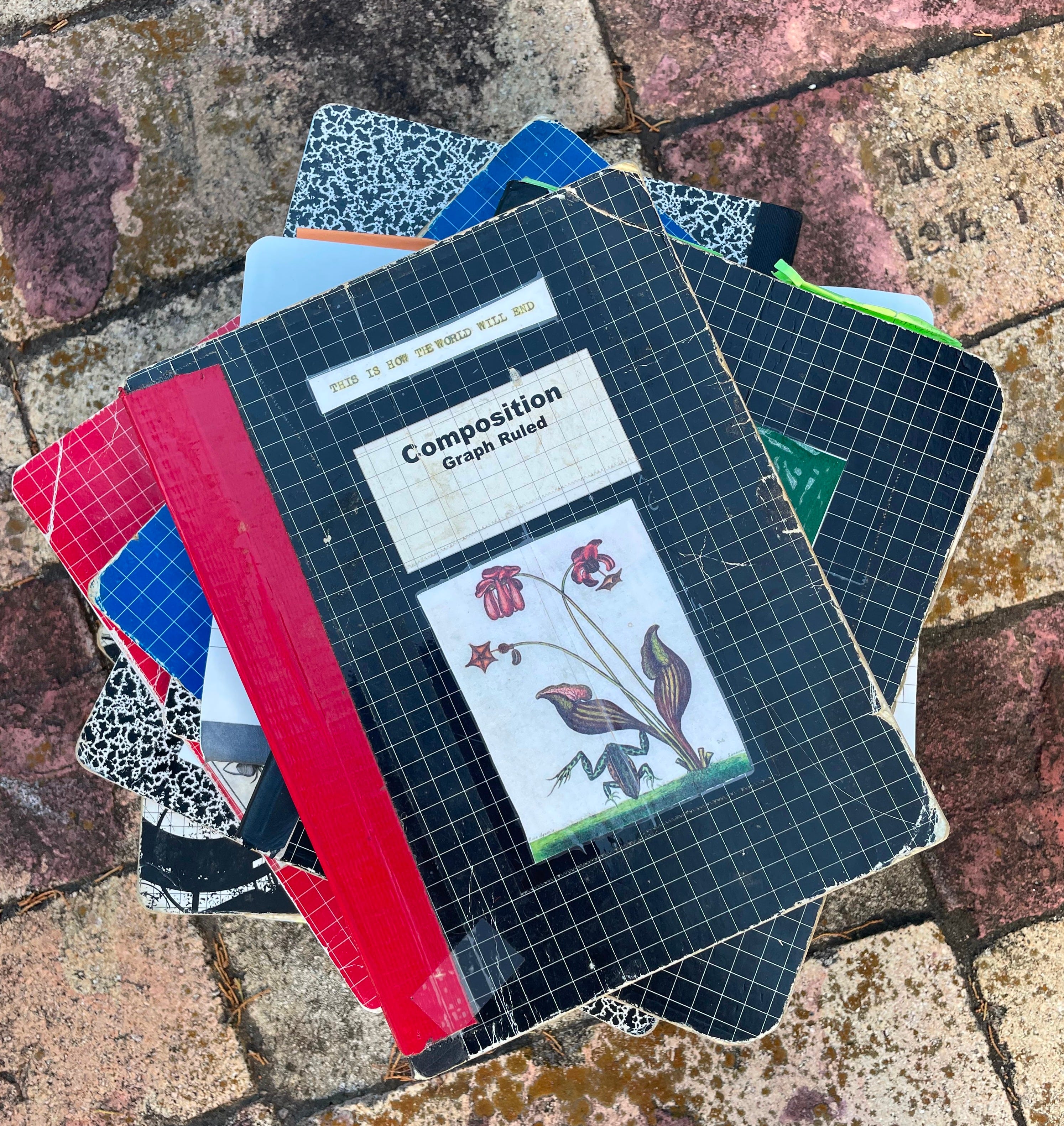
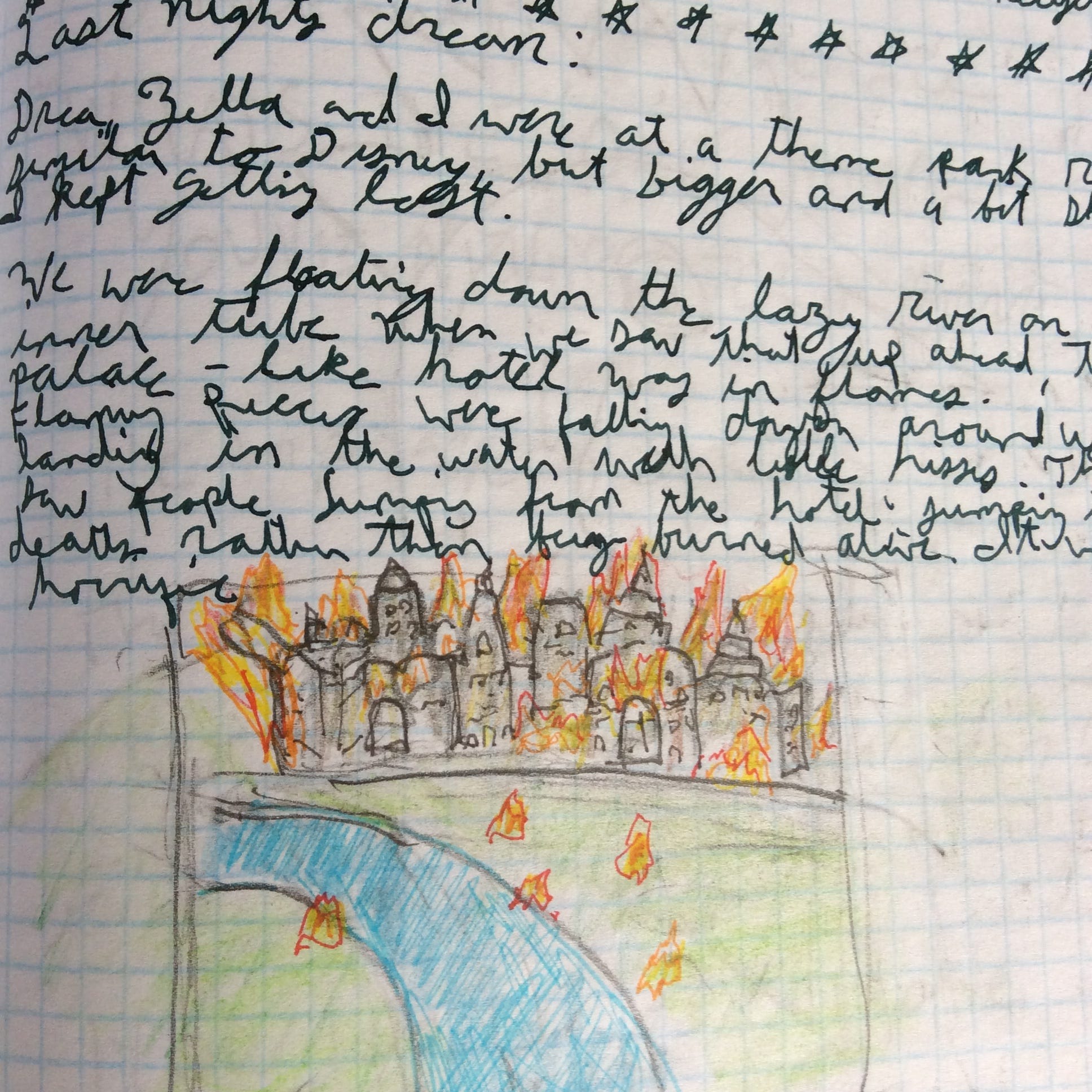
Composition books are cheap. They don’t fall apart, and the pages don’t easily come out. They’re utilitarian and unassuming, not intimidating like a fancy, expensive journal which seems to demand fancy, worthwhile thoughts and my neatest handwriting. But with a cheap composition book, I can write anything, no matter how trivial or stupid. I can scribble, misspell, ignore punctuation. Doodle or draw silly pictures. I can play hangman with my daughter on a train. I write and draw in my notebooks with fountain pens, pencils, crayons, markers, watercolors — whatever I feel like. I tape newspaper clippings, index cards, and ticket stubs to the pages. I jot down my dreams in it, make shopping lists. Things that happen that I don’t want to forget.
I use my notebook to write down story ideas—even just little kernels. I write down words I love. Names for future characters. Street signs that catch my eye. Crazy things I hear on the radio. I rough out scenes and chapters. I interview my characters and use my notebooks to journal in their voices. I wrote a good part of my first published novel, Promise Not To Tell, out longhand in notebooks. At the time, my partner Drea and I were living way back in the woods in a cabin with no electricity or running water. I would rough out chapters longhand, then type them up with my laptop while sitting at a cafe in town.
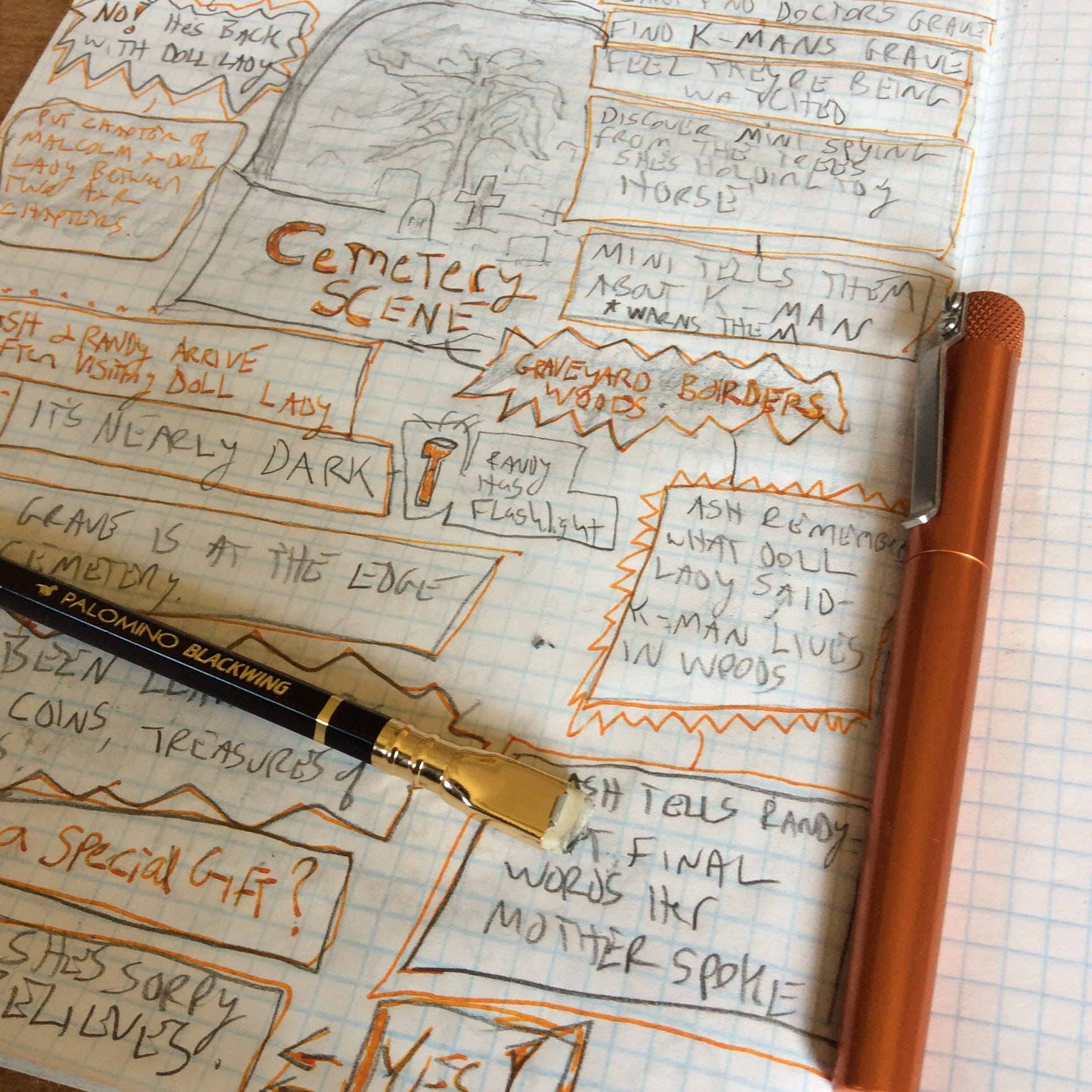
I meet a lot of folks who say they only write on a computer. Computers are great! I love them and couldn’t do what I do without them. But trust me, if you’re a writer, go out and get yourself a cheap composition book. Maybe decorate the front of it. Gather a handful of writing tools to keep nearby—pens, pencils, crayons. Open up your book and write or draw something right away on that first page. Write the first thought that comes into your head. Trace your hand and turn it into a monster. Write down your favorite word. Just get that first mark in there.
Make it a goal to write something in it each day: a half-remembered dream fragment, the way the song you heard on the car radio reminded you of something that happened years ago, a bit of conversation you overheard on the street. You can even write about how much you hate having to write in it. Give yourself permission to be messy, to not edit, to use your notebook as a brain dumping ground. Yes, you’ll end up with a lot of junk in it, but there will be some wonderful stuff, too — little sparks of pure inspiration, little bits of truth
.
No posts
Comments
Nothing yet. Say the first thing.
Sign in to join the conversation.