
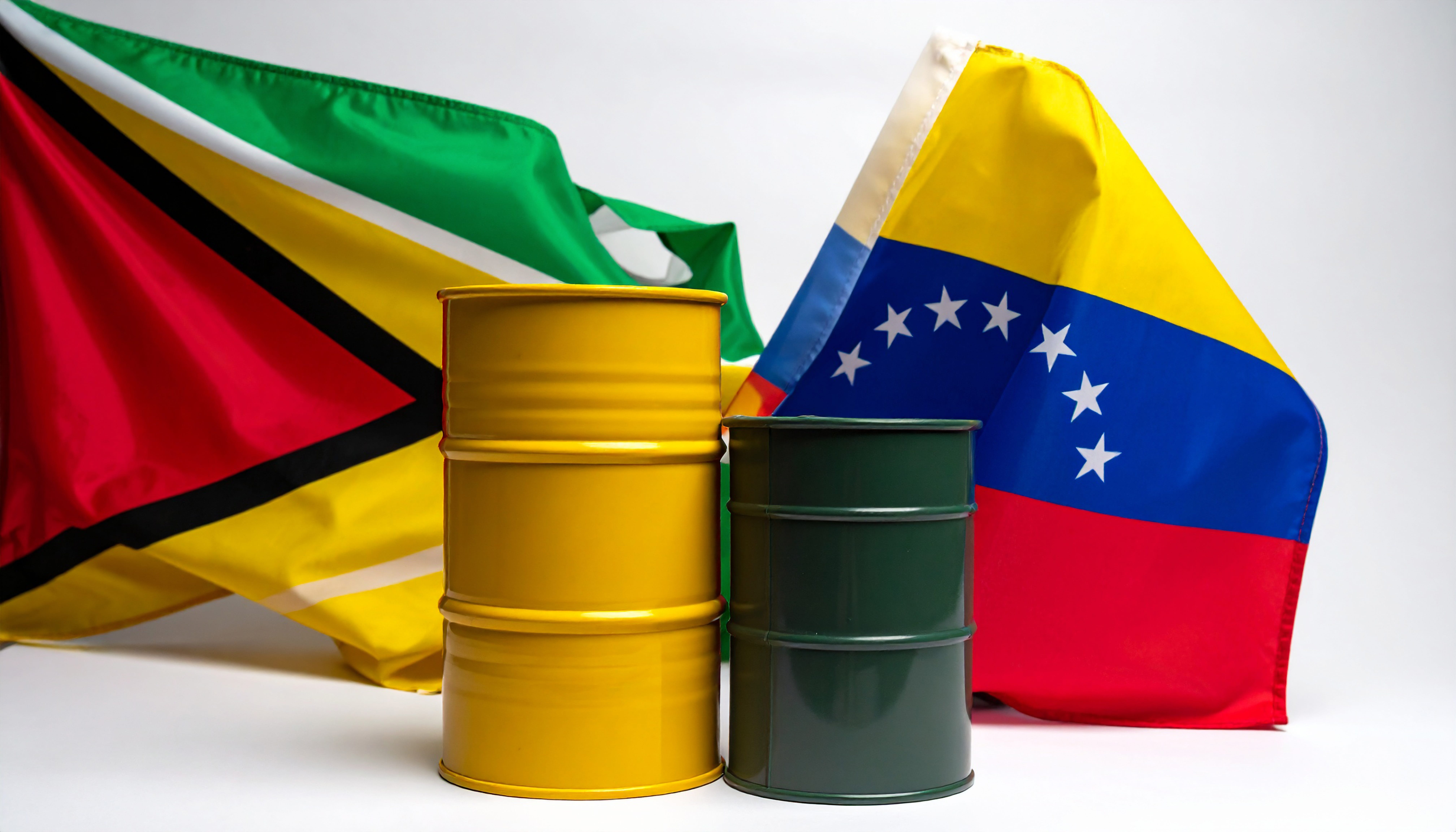
For most of the world, the border dispute between Guyana and Venezuela feels distant, technical, and strangely old-fashioned. The legal foundations trace back to an 1899 arbitral award. The maps look like relics from another century. The arguments invoke colonial officials, forgotten diplomats, and handwritten memoranda from imperial archives.
At first glance, it can seem like one of those geopolitical disputes that survives mostly because nobody has fully figured out how to end it.
But after this week’s hearings before the International Court of Justice in The Hague, something more important became visible.
Venezuela is not merely challenging a border.
It is challenging the legitimacy of the international order that produced the border.
During the final round of oral arguments Monday, Venezuela framed the 1899 arbitral award not simply as a flawed legal decision, but as the product of imperial coercion, elite bargaining, and geopolitical pressure masquerading as law. Its legal team repeatedly emphasized that the arbitration reflected the realities of late nineteenth-century power politics more than any neutral application of legal principle. Britain wanted strategic depth and territorial access. The United States wanted regional influence and stability. Venezuela, weak and internally divided, lacked the power to resist either.
The rhetoric was striking because it moved beyond the normal language of territorial litigation. This was not simply an argument about treaty interpretation or cartographic precision. It was an argument about whether historical power imbalances can permanently harden into unquestionable legal reality.
That places the Court in an uncomfortable position.
International law depends heavily on continuity. Borders cannot become endlessly negotiable every time historical grievances resurface. States rely on stability because the alternative is permanent uncertainty. Much of modern international order rests on the assumption that even imperfect settlements eventually become settled.
Guyana understands this perfectly. Its legal strategy reflects that reality. Georgetown has consistently framed the dispute as a test of whether international law protects smaller states against revisionist territorial claims. From Guyana’s perspective, the issue is straightforward: the border was settled more than a century ago, Venezuela accepted it for decades, and reopening the issue now threatens the basic stability that international law exists to preserve.
That is not a weak argument. In fact, institutionally, it is probably the argument the Court feels most comfortable with.
But Venezuela’s position taps into something deeper that extends far beyond South America.
Increasingly, states across the Global South are revisiting foundational international arrangements created during periods of overwhelming imperial asymmetry. Sometimes those challenges concern borders. Sometimes they concern debt, trade, resource extraction, sanctions, intervention, or maritime control. The underlying question remains similar: how much legitimacy should international law grant to systems built under profoundly unequal conditions?
That broader tension helps explain why the Essequibo dispute has attracted growing international attention despite its outwardly archaic appearance.
This case arrives during a period when many governments no longer fully accept the moral neutrality of the postwar international system. Institutions once presented as universal increasingly face accusations that they merely froze earlier power structures into legal permanence. In that environment, Venezuela’s argument carries resonance even among states that may not support Caracas politically.
The irony, however, is that Venezuela also faces a major credibility problem of its own.
The government presents itself internationally as a victim of imperial injustice while simultaneously alarming neighboring states through military signaling, nationalist rhetoric, and increasingly aggressive territorial claims tied to major offshore oil discoveries. That contradiction weakens Venezuela’s ability to position itself purely as an anti-colonial actor seeking historical correction.
And yet the legal and historical questions raised in The Hague do not disappear simply because the Chavista government remains controversial.
In some ways, this is what makes the hearings so fascinating.
Both sides are arguing from positions that contain genuine internal logic.
Guyana’s position reflects the practical necessity of stable borders. Venezuela’s position reflects the uncomfortable reality that many supposedly “final” international settlements emerged from systems saturated with coercion and unequal bargaining power.
The Court now finds itself balancing two competing fears.
One fear is that revisiting century-old territorial settlements could destabilize the international system itself. The other is that refusing to interrogate how those settlements emerged risks turning international law into little more than the permanent legal fossilization of imperial power.
That tension extends far beyond the Essequibo region.
The deeper issue lurking beneath this case is not whether every old border should suddenly become negotiable. Few serious observers want that world. The deeper issue is whether international law possesses any meaningful framework for addressing historical legitimacy claims without threatening the stability on which the system depends.
The ICJ probably will not answer that broader question directly in its eventual ruling.
But the hearings this week demonstrated that the question is no longer confined to academic debates.
It is now sitting openly before the world’s highest international court.
No posts
Comments
Nothing yet. Say the first thing.
Sign in to join the conversation.