
The new cartel doesn’t just sell cocaine. It owns shipping terminals, launders gold, bankrolls politicians, and enforces its own law. It issues death sentences with impunity, posts propaganda on social media, and—if needed—places its own people in public office. This is not your uncle’s cartel. This is a transnational conglomerate with a flag, a following, and leverage for days.
According to a recent Financial Times report, organized crime in Latin America has metastasized. The PCC and Comando Vermelho in Brazil, Tren de Aragua in Venezuela, and United Cartels in Mexico now operate across borders and industries. They have moved into human trafficking, illegal mining, and weapons smuggling. Once-immune countries like Costa Rica and Uruguay are no longer sanctuaries. Some of the region’s most stable democracies now confront a dangerous convergence: powerful criminal economies growing inside hollowed-out political systems.
At the same time, populist leaders across the region are using the threat of crime to consolidate personal power—eroding institutional checks in the name of security. Corruption, meanwhile, serves as both catalyst and consequence. We are witnessing a feedback loop: cartels exploit weak states and buy impunity; elected leaders respond with authoritarian measures that deepen institutional decay; and the rule of law collapses into a performance of control.
Crime Without Borders, Power Without Limits
The transformation of Latin America’s cartels into multinational criminal enterprises follows the same logic as any successful company: diversify, expand, dominate. In Paraguay, cartel-linked groups control strategic border crossings. In Peru and Bolivia, they tax coca growers and move product through informal airstrips. In Ecuador, they’ve turned port cities into trafficking hubs. And in Mexico, they kill candidates—over 30 this year alone—while buying local mayors, judges, and police.
What makes this wave different is not just the scale of violence. It’s the sophistication. Cartels now build influence the way political machines do: through patronage, fear, and services the state fails to provide. In some places, they fix potholes and fund festivals. In others, they charge for water and electricity. Where the state retreats, the criminal fills the vacuum—not just with bullets, but with bureaucracy.
This criminal penetration of the public sphere erodes the core functions of democratic governance. Institutions lose credibility. Citizens disengage. Cynicism takes root.
Authoritarianism in the Name of Order
Enter the strongman. In El Salvador, President Nayib Bukele has declared war on gangs by suspending due process, jailing tens of thousands without trial, and rewriting the constitution to eliminate presidential term limits. Polls show overwhelming public support. But at what cost?
In Ecuador, President Daniel Noboa invoked states of emergency, proposed permanent U.S. military basing, and has adopted a rhetoric that blends anti-crime urgency with democratic erosion. These leaders argue that only decisive, unconstrained action can rescue the country from criminal capture.
But authoritarian shortcuts rarely fix the underlying disease. Instead, they disarm the very institutions that might resist cartel influence in the long run. Courts become tools. Legislatures become rubber stamps. Civil society becomes a threat. And the public learns to equate safety with submission.
Corruption as the Keystone
Corruption is not the residue of this process. It is the keystone. Cartels thrive where officials can be bought. Politicians ascend where oversight is weak. Law enforcement becomes a transaction. In Mexico, some regions now refer to cartel-backed candidates as “narco-politicos”—not as a slur, but as a structural reality.
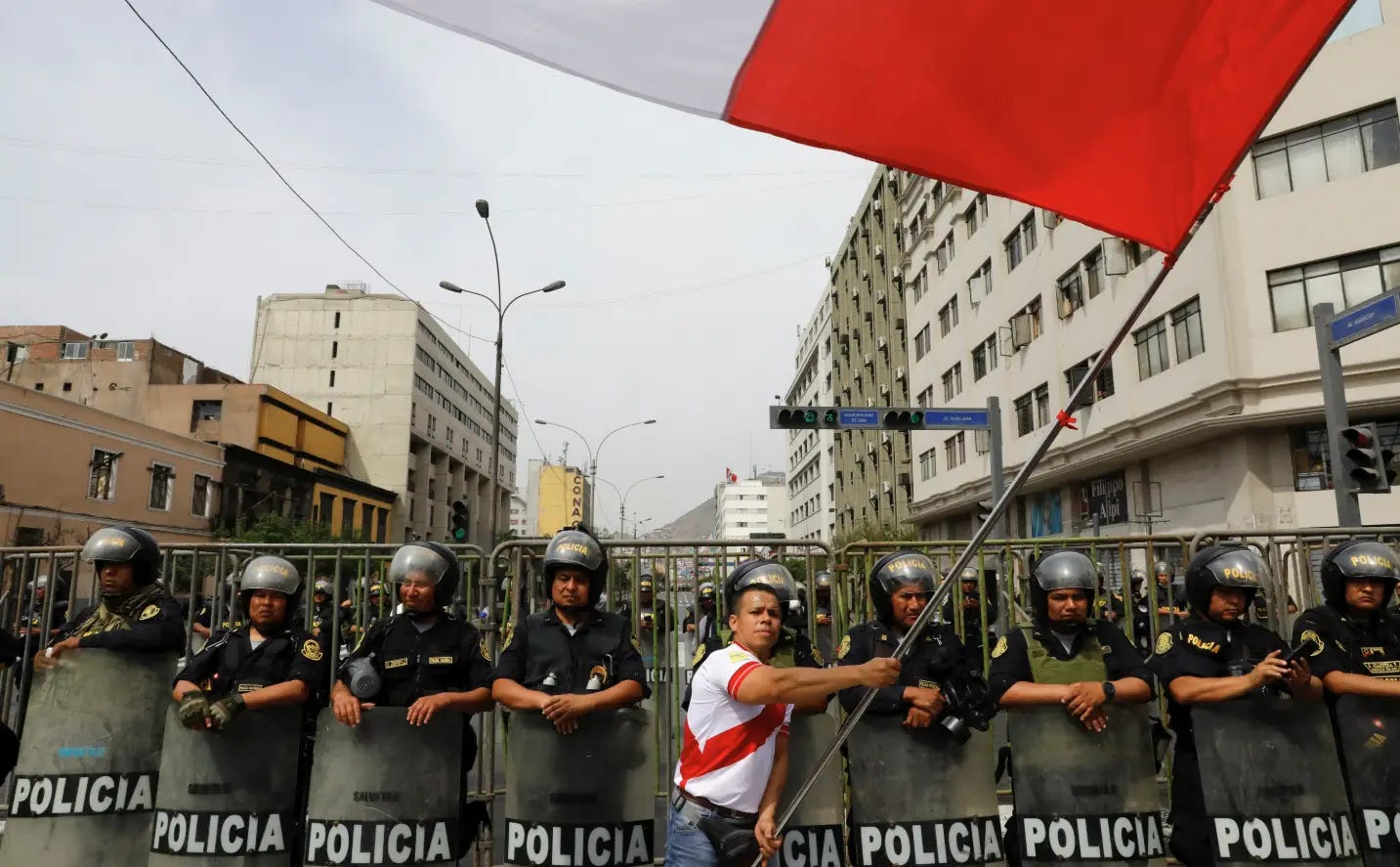
In Honduras and Guatemala, anti-corruption commissions were dismantled when they began targeting political elites. In Peru, presidents cycle through legal scandals as fast as they cycle through cabinets. These are not isolated cases. They are symptoms of a system in which accountability is optional, and the price of doing business is silence.
Corruption allows cartels to become governors. It allows presidents to become emperors. And it allows democracy to become theater.
The Dangerous Feedback Loop
What emerges is a recursive logic of decay:
Cartels destabilize institutions and co-opt officials;
Governments respond with strongman tactics that centralize power;
Those same tactics weaken checks and balances, allowing cartels to grow bolder;
Citizens, disillusioned with democracy, embrace authoritarianism—until it fails too.
This isn’t just a regional concern. It is a cautionary tale. Latin America is not suffering from a crime problem alone. It is suffering from a crisis of governance—one where the lines between state, syndicate, and strongman are blurring.
Why This Matters
For the U.S. and other external actors, the temptation is always to support whoever promises “order.” But military assistance and intelligence sharing do little when the rot is internal. You can’t drone-strike a patronage network. You can’t jail your way out of institutional collapse.
Instead, external engagement must focus on reinforcing anti-corruption bodies, funding independent journalism, strengthening electoral oversight, and protecting civil society. Security without democracy is not stability. It is surrender.
The region’s next decade will not be decided by tanks or treaties. It will be decided in courtrooms, ballot boxes, community councils, and newsroom investigations—if those still exist.
No posts
Comments
Nothing yet. Say the first thing.
Sign in to join the conversation.