
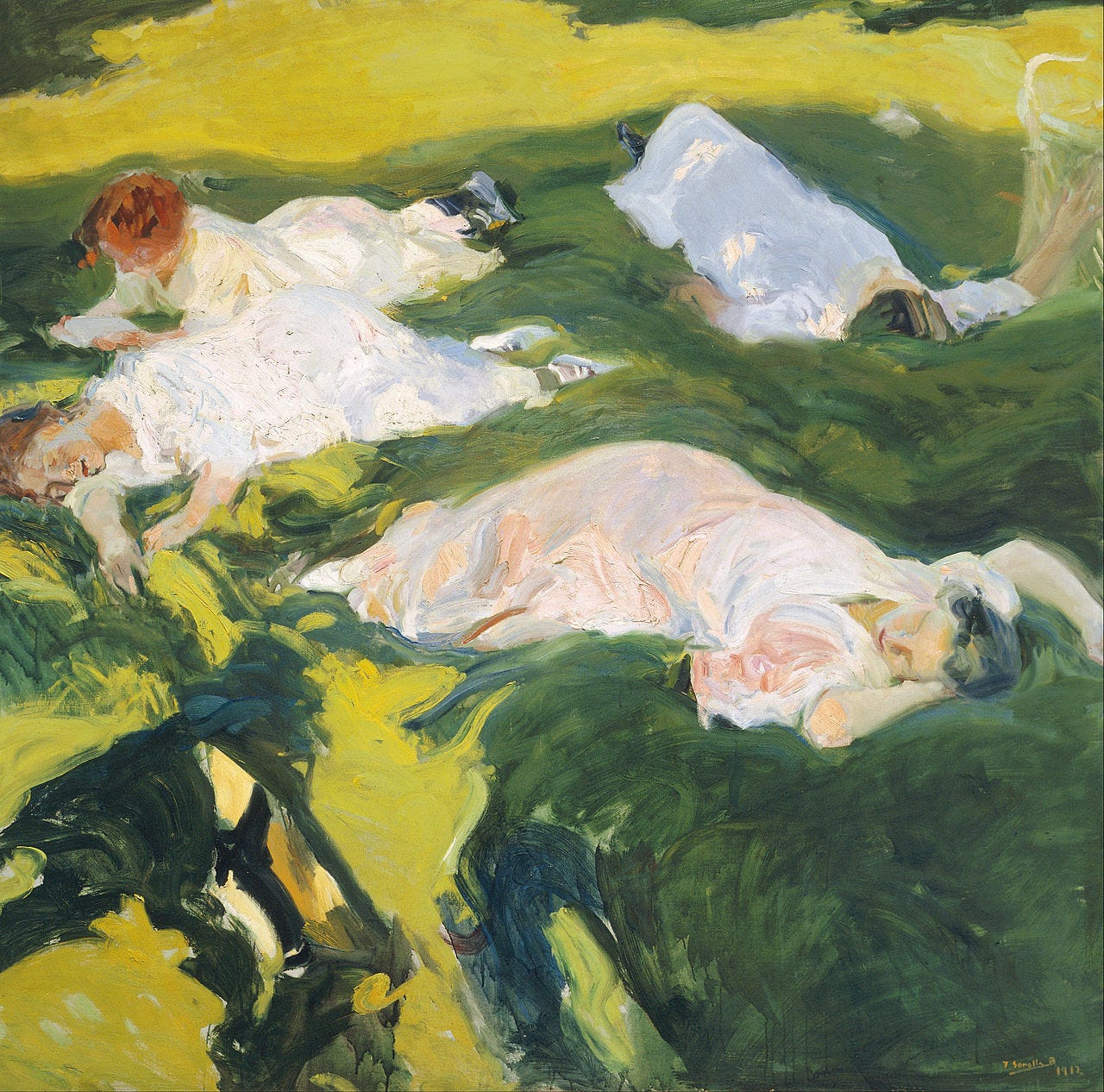
Some people live in grand houses; others live in humble ones, while many of us live in modest apartments. But what almost of us have in common is the desire to have what the lawyers call “quiet enjoyment” of our homes. 1
It’s not always easy to remain undisturbed in this noisy world, but the problem is not a new one. Writing almost exactly two hundred years ago, the English essayist Charles Lamb bemoaned the disturbance of that quiet enjoyment in plangent terms. 2
*
There is yet another home, which we are constrained to deny to be one. It has a larder, which the home of the poor man wants; its fireside conveniences, of which the poor dream not. But with all this, it is no home. It is—the house of the man that is infested with many visitors.
*
Judging from the evidence of film and television, in some cultures people seem to drop in on eachother a lot (the latest example was in the drama The Boroughs). My life has never been much like that. As a child on the farm, interruptions were few. People would have had to travel a considerable distance just to get to the front door (which was never locked). And besides, the expectation on a dairy farm was that everyone was always busy. So casual visitors were few.
My period as a student – especially my first year – was probably the most sociable time of my life in that way. In the first year at least, not only friends (always welcome) but also acquaintances would drop in for tea and biscuits – the essential ingredients of socialising as a student. But even then the quiet and solitary enjoyment of my own room would gradually become more welcome as the day turned into evening.
*
May we be branded for the veriest churl, if we deny our heart to the many noble-hearted friends that at times exchange their dwelling for our poor roof! It is not of guests that we complain, but of endless, purposeless visitants; droppers in, as they are called. We sometimes wonder from what sky they fall. It is the very error of the position of our lodging; its horoscopy was ill calculated, being just situate in a medium—a plaguy suburban mid-space—fitted to catch idlers from town or country.
*
One of the most famous interruptions in the history of English literature was that experienced by Lamb’s close friend, the poet Samuel Taylor Coleridge. The now-legendary Person on business from Porlock (a town near where he was living) supposedly disturbed the poet from his trance-like state (probably a drug-induced trip) while he was writing that magnificent poem, Kubla Khan. As a consequence, or so the story goes, the poem was never finished. Lamb would surely have heard the tale from Coleridge himself.
Some cultures appear to tolerate casual interruption more than others. In Ecuador, I used to observe that people would feel quite entitled to drop in unannounced, especially in the coastal city of Guayaquil. And I remember my Chinese teacher, just before I went to live in Shanghai, unnerving me when he told me that Chinese had no word or concept for privacy. 3
Perhaps one thing I enjoy about living in Tokyo is that social visits to homes are rare and unplanned social visits – even here in what Lamb would call “a plaguy suburban mid-space” – are almost unheard of. Here, people meet frequently in public spaces, restaurants, cafes, and hired facilities. But usually not at home.
*
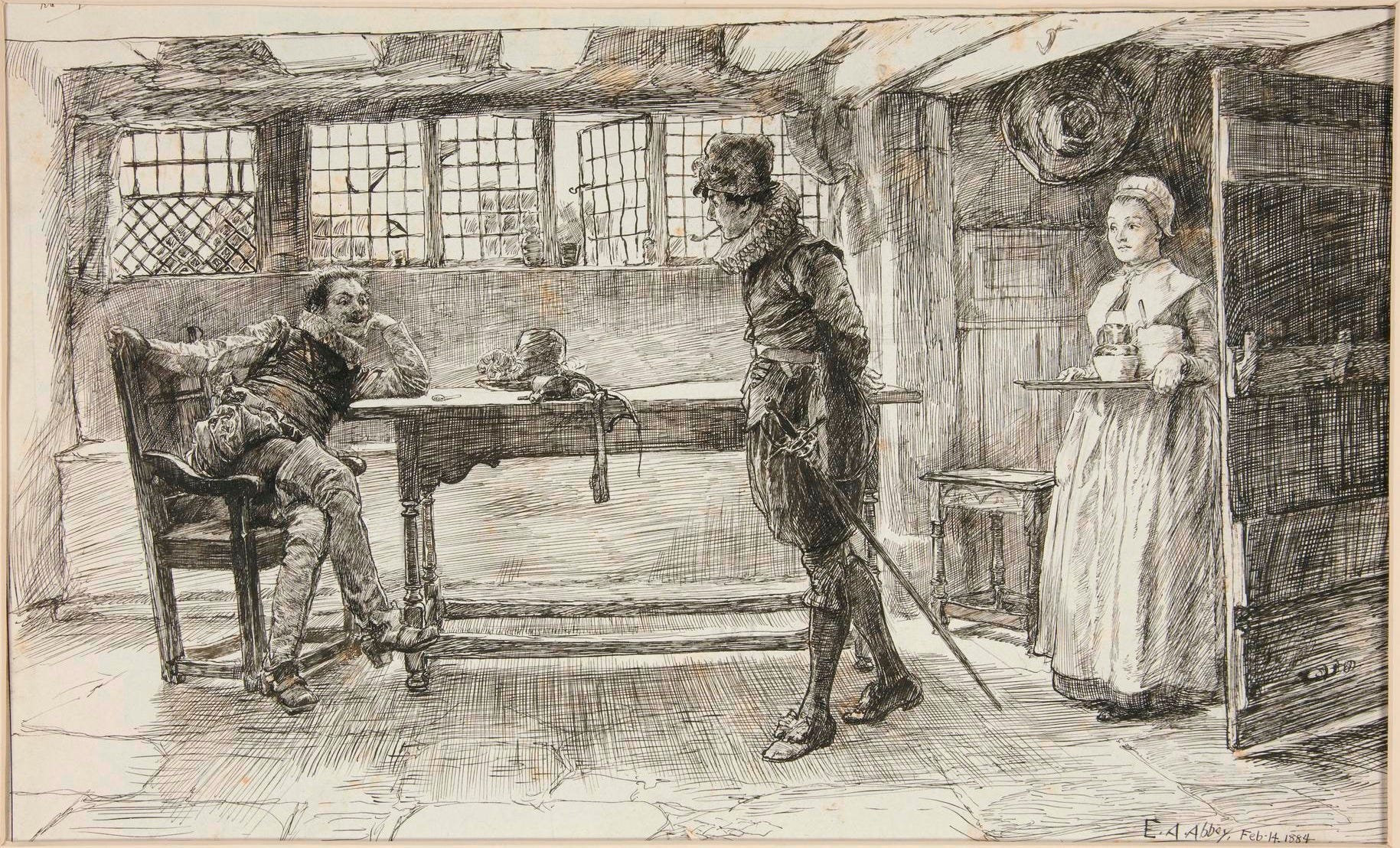
We are older than we were, and age is easily put out of its way. We have fewer sands in our glass to reckon upon, and we cannot brook to see them drop in endlessly succeeding impertinences. At our time of life, to be alone sometimes is as needful as sleep. It is the refreshing sleep of the day. The growing infirmities of age manifest themselves in nothing more strongly, than in an inveterate dislike of interruption. The thing which we are doing, we wish to be permitted to do. We have neither much knowledge nor devices; but there are fewer in the place to which we hasten. We are not willingly put out of our way, even at a game of nine-pins. While youth was, we had vast reversions in time future; we are reduced to a present pittance, and obliged to economise in that article. We bleed away our moments now as hardly as our ducats. We cannot bear to have our thin wardrobe eaten and fretted into by moths.
*
As I move into my mid-sixties and there are noticeably fewer “sands in the glass” left to me, I can certainly understand Lamb’s feelings that, as he got older, his spare time became more precious to him, and so he resented interruptions more.
Lamb was clearly happy to be in his own company. Perhaps he was also given to philosophical reflections when alone, something that Bertrand Russell, writing a century later, claimed would “enlarge our interests as to include the whole outer world” and take us away from the constant strife of “the private world of instinctive interests”. 4
I’m not sure I am much given to philosophical reflection of the kind suggested by Russell, but I’m relatively comfortable with being alone. When I was much younger, I was called – and it was almost an accusation – “self-sufficient”. I’m not sure that’s true. But I never much liked a crowd and preferred to choose my moments for socialising rather than having them thrust upon me. And these days I can certainly appreciate these words: “At our time of life, to be alone sometimes is as needful as sleep”.
*
Re-reading his essay made me wonder how Lamb, who worked for 33 years without a single promotion in the East India Company, in what he called his “official confinement”, dealt with disturbances at work. I doubt that he got much time during the day for solitude or philosophical contemplation.
When I worked in open-plan offices, I struggled to cope with interruptions and even to fend them off. I did manage, however, to perfect a slightly pained expression when turning to address a casual inquirer, which seemed to acquire a modest deterrent effect.
On those occasions when I was granted the luxury of an office to myself, I felt more at ease. My policy was to keep the door open so that anyone could come in and talk if they wanted or needed to. A closed door meant, obviously enough, “do not disturb”, though I rarely closed it except when in meetings.
Now that I work remotely, all that has changed. It’s made life simpler in a way. But the rise of remote work has created almost the opposite issue for some. According to this article, a result study suggested that “remote work is not simply a labour market innovation. It is a large-scale removal of an unpriced social good.” That social good is the company of others.
The article goes on, “Sociologists have long recognised that work structures time, generates shared purpose, sustains social contact, and anchors collective identity... The German sociologist Georg Simmel described a related phenomenon that he called ‘sociability’ – the low-stakes, unplanned encounters that sustain social life without explicit purpose, such as a conversation with a stranger in a hallway.”
I don’t miss working in an office any more than Lamb did when, to his great relief, he was finally able to retire. But for younger generations of workers, I can see the force of the researchers’ argument.
*
We are willing to barter our good time with a friend, who gives us in exchange his own. Herein is the distinction between the genuine guest and the visitant. This latter takes your good time, and gives you his bad in exchange. The guest is domestic to you as your good cat, or household bird; the visitant is your fly, that flaps in at your window, and out again, leaving nothing but a sense of disturbance, and victuals spoiled. The inferior functions of life begin to move heavily.
*
The telephone was the great interrupter in the early to mid-20th century. I well remember the tyranny of that loud ringing, unsilenceable apparatus in the corner of the room or the hall that would simply not allow you to ignore it. It had to be answered, and yet (in those days) we had no idea who would be at the other end. A good friend, an annoying acquaintance or just a wrong number?
These days, I basically ignore phone calls (my phone is on silent mode permanently). If you need to get hold of me, you’ll just need to find another way.
*
Over the years, some of the most persistent visitors I have received have been from missionaries or other people selling their versions of salvation. This seemed to happen most often in Guayaquil in Ecuador. The country is (or was) almost entirely Catholic, but Mormon missionaries, whose creased short-sleeved white shirts stood out almost as much as their blond hair and light-coloured eyes in the tropical city, would call from time to time. 5
At other times, it would be Jeohovah’s Witnesses who would call and try to trick me into a conversation. My only defence to their wiles was either to ignore the doorbell (as insistent as an unanswered phone) or feign inability to understand what they were saying (a trick known locally as “hacerse el sueco”).6
These days the role of the unannounced visitor is often performed by the emissaries of the attention economy – social media, especially. The unsolicited message, the eye-catching headline, the clickbait – they all lie in wait for us as we pick up our phones.
I struggle with these distractions at times, as the shiny screen of my phone glares at me from the corner of the room while I’m reading. But by keeping my phone on silent and almost entirely avoiding social media, I manage to keep the buzzing flies of Big Tech at bay, much of the time.
*
We cannot concoct our food with interruptions. Our chief meal, to be nutritive, must be solitary. With difficulty we can eat before a guest; and never understood what the relish of public feasting meant. Meats have no sapor, nor digestion fair play, in a crowd. The unexpected coming in of a visitant stops the machine. There is a punctual generation who time their calls to the precise commencement of your dining-hour—not to eat—but to see you eat. Our knife and fork drop instinctively, and we feel that we have swallowed our latest morsel. Others again show their genius, as we have said, in knocking the moment you have just sat down to a book. They have a peculiar compassionating sneer, with which they “hope that they do not interrupt your studies.”
*
When replying to Mr. Troy Ford’s kind request last year for me to write about a favourite book, I chose a book by that eternal solipsist, Samuel Beckett. It’s a collection of stories called More Prick Than Kicks (1934), and one of my favourite scenes in it depicts the furious rituals of someone who is desperate to remain uninterrupted as he prepares his breakfast.
In the story Dante and the Lobster, the central protagonist, Belaqua, is fixated on his vision of a pungent and semi-cremated version of a cheese sandwich involving a nearly putrid hunk of Gorgonzola when he pops out to buy the main ingredient.
Now the great thing was to avoid being accosted. To be stopped at this stage and have conversational nuisance committed all over him would be a disaster. His whole being was straining forward towards the joy in store. If he were accosted now he might just as well fling his lunch into the gutter and walk straight back home. Sometimes his hunger, more of mind, I need scarcely say, than of body, for this meal amounted to such a frenzy that he would not have hesitated to strike any man rash enough to buttonhole and baulk him, he would have shouldered him out of his path without ceremony. Woe betide the meddler who crossed him when his mind was really set on this meal.
For me, dinner is sociable. Lunch can go either way. But breakfast, as for Belaqua, needs to be quiet. If it is not alone, silence is preferred.... *
Though they flutter off the next moment, to carry their impertinences to the nearest student that they can call their friend, the tone of the book is spoiled; we shut the leaves and, with Dante’s lovers, read no more that day. It were well if the effect of intrusion were simply co-extensive with its presence; but it mars all the good hours afterwards. These scratches in appearance leave an orifice that closes not hastily. “It is a prostitution of the bravery of friendship,” says worthy Bishop Taylor, “to spend it upon impertinent people, who are, it may be, loads to their families, but can never ease my loads.” This is the secret of their gaddings, their visits, and morning calls. They too have homes, which are—no homes.
*
These days we are besieged by the figuratively homeless – above all via social media, as mentioned above, but also by the whole structure of the world today that demands our attention; the relentlessly shifting news cycles, and the demagogues who bray at us from TV sets. And here in Japan, not a few loudspeakers from passing vans disturb our daytime peace, warning of online fraud, selling their political party or just announcing that their vehicle is turning left... Then there are the voices accompanying the never-ending sirens....
And there’s another feature of our online world that can bring interruptions to our day. As I was writing a draft of this essay at the end of a busy working day, relishing a few minutes after work and before dinner, I was interrupted by a delivery man from Japan’s iconic KuroNeko, or Black Cat, delivery service, bringing a package I’d ordered online (and then, of course, forgotten about).
I am not Coleridge; I wasn’t writing a great poem, and the interruption didn’t last long. Little harm was done.
But still, it was an unwelcome interruption of my solitude. Like Lamb, I often long in vain for quiet, for freedom from all disturbance and, above all, to be left alone in that sweet, refreshing sleep of the day.
One definition is here: “Quiet enjoyment is the right to inhabit or use certain property without disturbance.”
This “duet” is a kind of braided essay, which uses words by Charles Lamb, the famous essayist who was writing around two hundred years ago, and my own.
I am quoting paragraphs from the second half of Charles Lamb’s short essay, from Popular Fallacies, “That Home is Home though it is never so Homely”. It was first published in March 1826. You can find it here.
The first part of Lamb’s essay is unusually tough reading. It’s about how a poor man’s house is made unpleasant by poverty, so that, essentially, he clears off to the pub, leaving his family to get along without him. It contains some wretched scenes, and although Lamb’s pity for the plight of all concerned just about comes through, that part of the essay is far from being Lamb’s most tender or humane piece of writing.
In the second half, Lamb abruptly changes tact and considers how his life is plagued by the casual visitor. That’s where this essay begins.
This wasn’t really an issue in my time in the city. I generally went undisturbed, perhaps because I was a foreign diplomat and therefore best kept at a safe distance beyond formal settings.
The memory of such vexing interruptions did at least increase my enjoyment when I saw the musical The Book of Mormon in London many years later.
“To act dumb”, in the translation of the Collins dictionary. Literally, it means “to pretend to be Swedish”.
Comments
Nothing yet. Say the first thing.
Sign in to join the conversation.