
COVID was a bewildering and divisive time. Health became politicized like never before. Institutions lost trust. And the underlying conditions of American health - or the lack of it - were laid bare.
Whatever one believes about the vaccine, most of us can agree on one thing: America did not fare well.
More than 1.2 million Americans have died with COVID-19 listed as a cause of death. Excess-mortality analyses suggest the true toll is even higher. When adjusted for population size, the United States ranks among the top 20 countries globally for the COVID death rate. How did a wealthy nation with extraordinary medical resources end up in such a sorry state?
Early in the pandemic, one pattern was unmistakable. Severe COVID was strongly correlated with age and with metabolic conditions like obesity and diabetes. A JAMA paper published in April 2020 (barely a month after lockdown) demonstrated that the virus disproportionately harmed older adults and those with preexisting metabolic disease.
Then came the vaccine. When Trump launched Operation Warp Speed in 2020, the initiative received broad bipartisan support. But as the months unfolded, the vaccine - especially the mRNA Pfizer and Moderna varietals - became a political and cultural fault line. According to the Kaiser Family Foundation COVID-19 Vaccine Monitor, 91% of Democrats reported receiving a COVID vaccine, compared with only 66% of Republicans.
As the virus mutated, the vaccine (given that it was engineered for the ancestral strain) became less effective at blocking infection and transmission. Side effects such as myocarditis captured public attention. This led to growing vaccine skepticism on the political right.
At the same time, the overwhelming weight of evidence continued to show strong protection against hospitalization and death. The Biden Administration and liberal media dug in their heels in support of the vaccine. Increasingly, this cleavage became more and more profound and intractable – leading to arguably the deepest political schism since civil rights.
Trying to keep up with the shifting ground, I found myself returning to a simple instinctive hypothesis:
What if the people at the highest metabolic risk were also the least likely to get vaccinated?
What if these two vulnerabilities - biological and behavioral - overlapped?
And what if that convergence shaped America’s pandemic outcome?
That question sent me down a long data rabbit hole. I pulled state-level data from the CDC and other official sources to create a four-tab spreadsheet:
COVID mortality rate
Obesity prevalence
Vaccination rate
2020 presidential vote share
(I eventually also look at median household income by state)
I used Excel to plot the data on a series of maps. The maps and correlations I created do not represent an epidemiological study. They don’t establish causation, control for confounders, or assess individual-level risk. This project is a descriptive, population-level exploration meant to surface patterns and generate better questions.
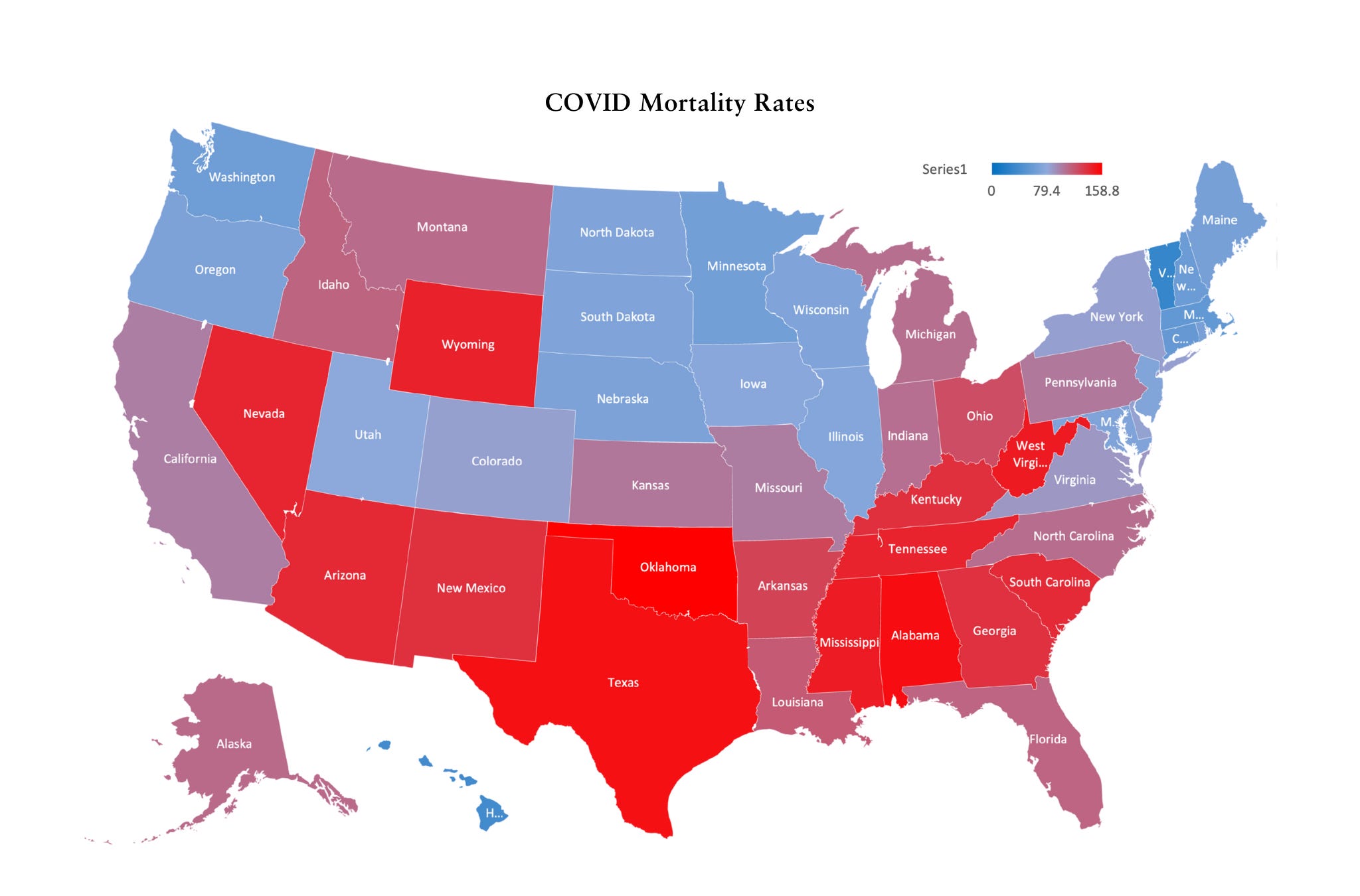
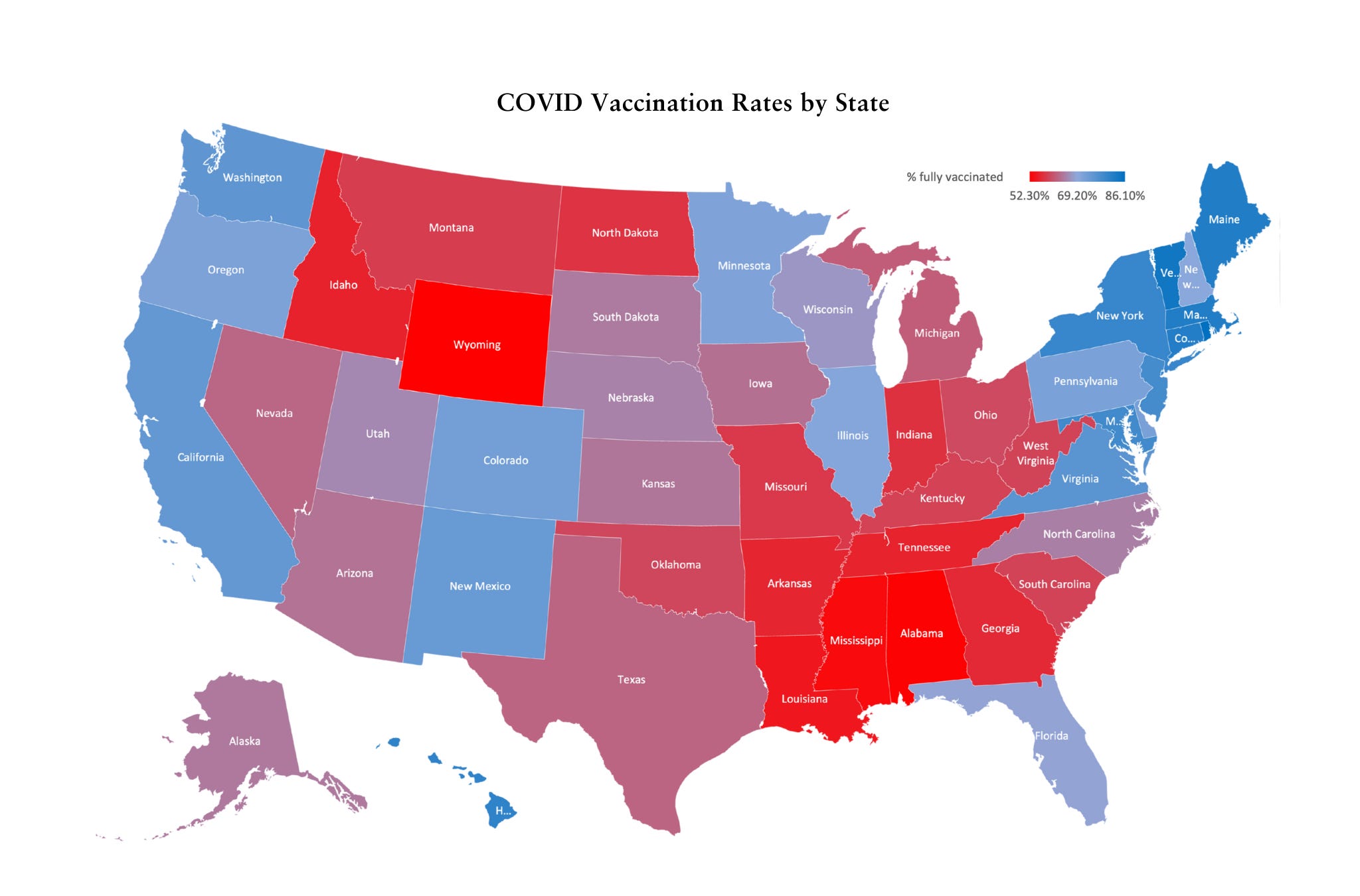
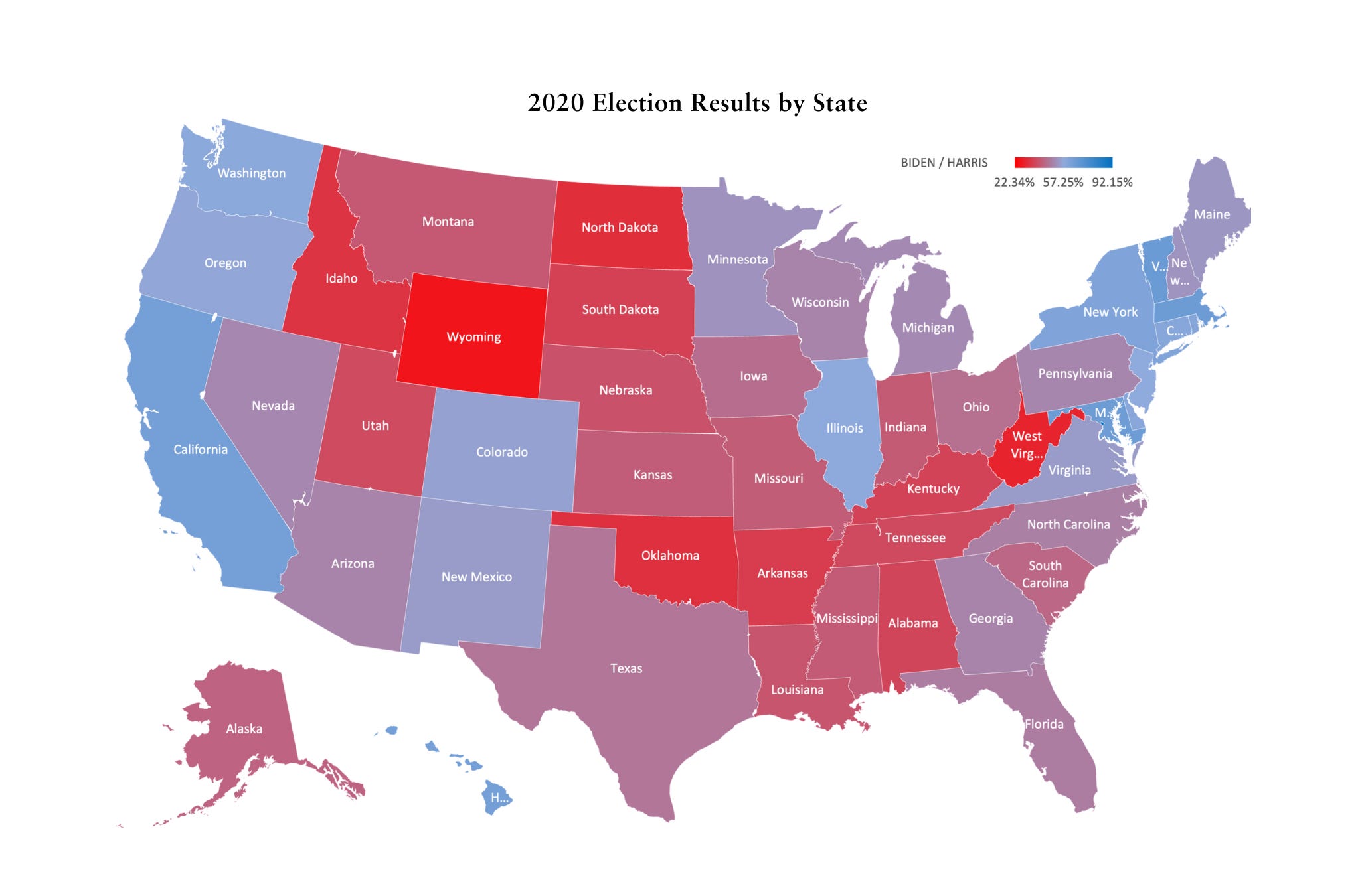
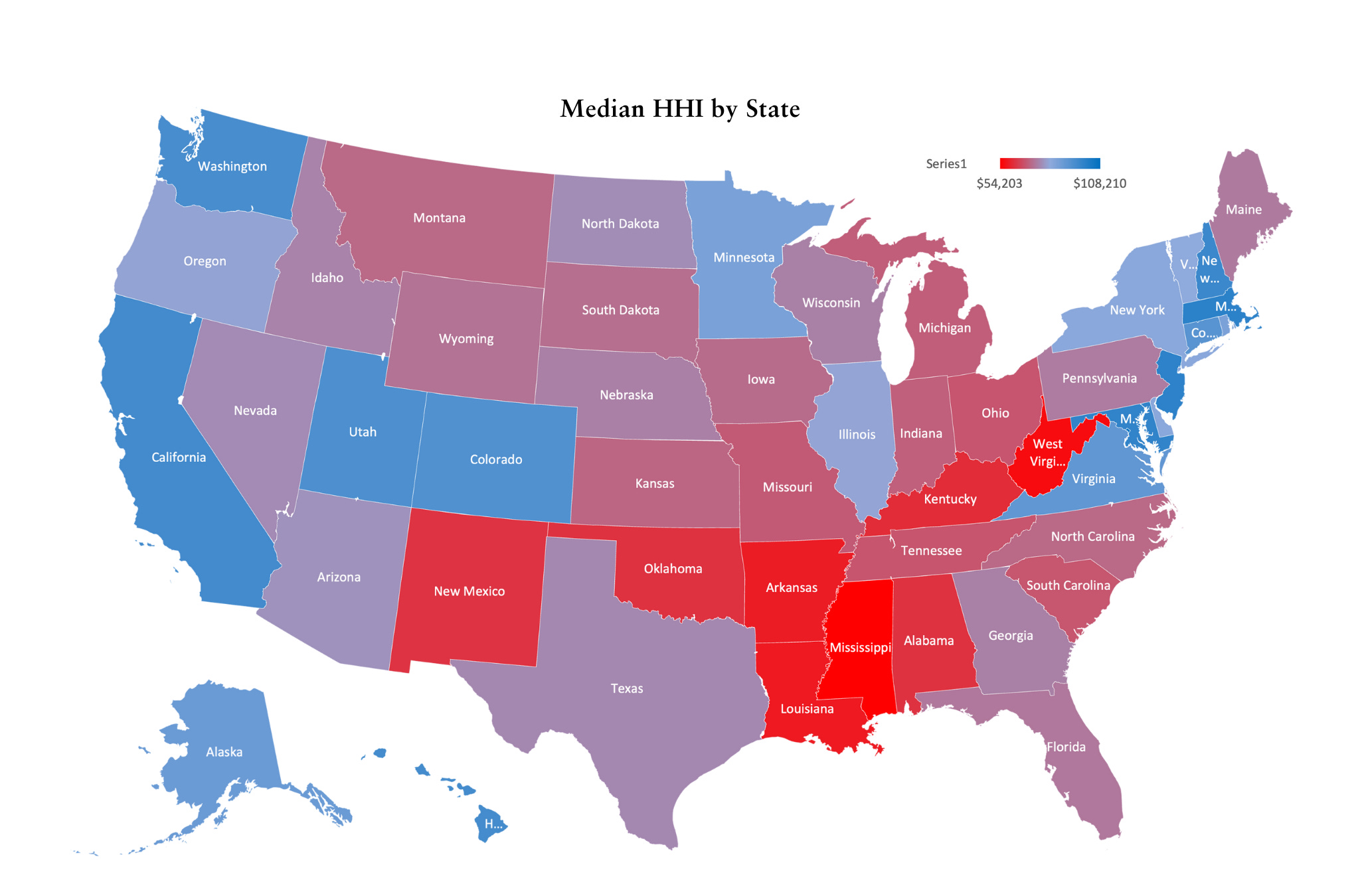
1. Higher vaccination rates are associated with lower COVID death rates. States with greater vaccine uptake tended to see fewer deaths per capita.
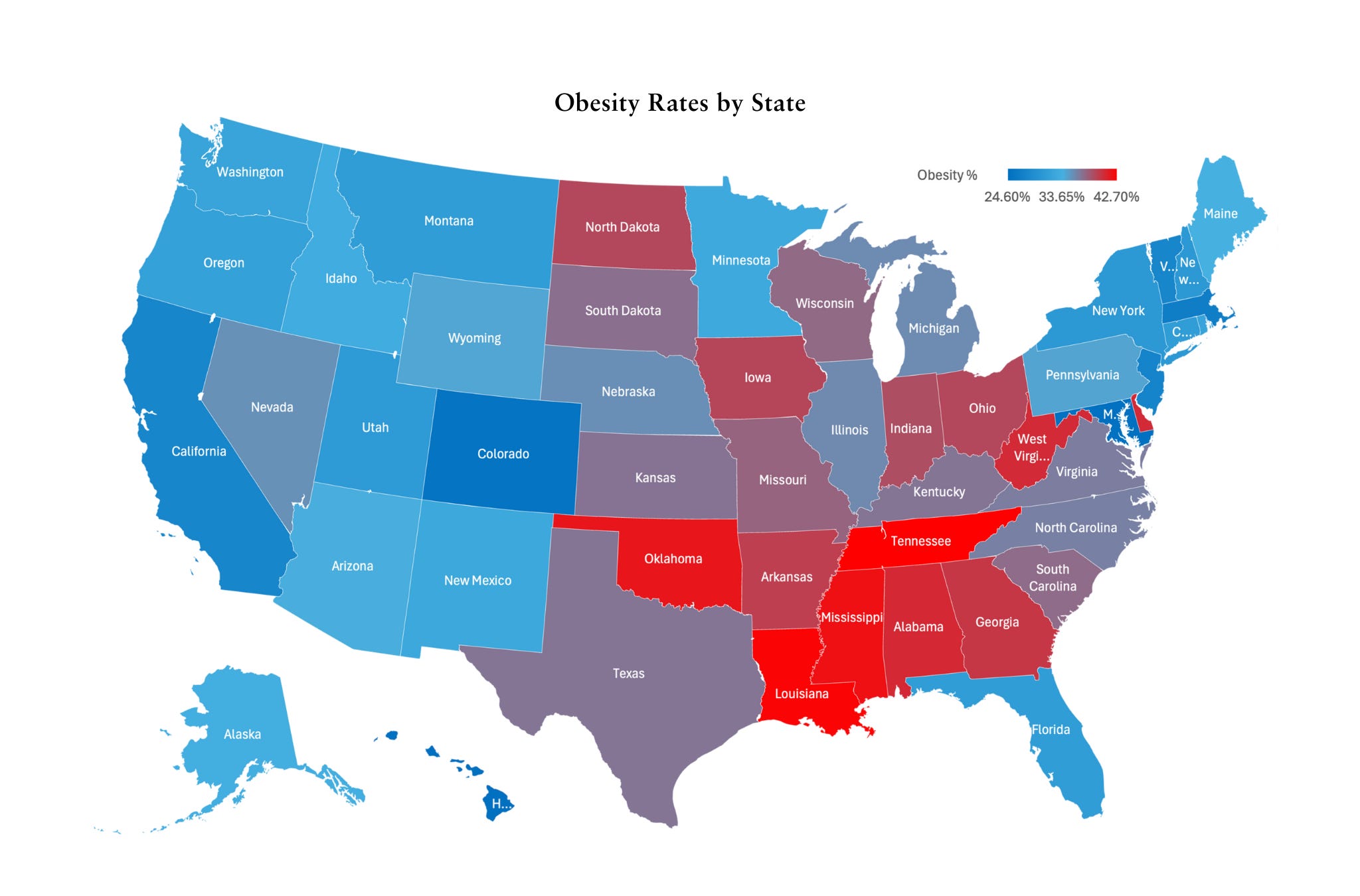
2. Lower obesity rates are associated with lower COVID death rates. Leaner states fared better.
3. Higher obesity rates are associated with lower vaccination rates. The most obese states were often the least vaccinated.
These relationships don’t exist in isolation. They sit inside layers of culture, behavior, and policy.
Obesity, vaccination, and COVID mortality are not independent variables. They’re downstream of deeper forces, including long-standing health behaviors, trust in institutions, access to healthcare, socioeconomic stress, political identity, and media ecosystems.
Many of the states with higher obesity rates are more politically conservative, and those same states had lower vaccine uptake. This consilience resulted in devastating results in the Southeast, including Tennessee, West Virginia, Alabama, Mississippi, and Louisiana, as well as Oklahoma and Wyoming.
Politics didn’t cause obesity. Politics didn’t cause COVID. But political identity strongly influenced health behavior during the pandemic, especially around vaccination.
During COVID, vaccination became a proxy for trust, a symbol of autonomy vs. authority, and a cultural signal as much as a medical intervention. Those cultural forces shaped vaccine adoption, which then interacted with underlying metabolic risk.
The takeaway isn’t that one factor explains COVID outcomes. It’s that biology, behavior, and belief systems are aligned in ways that make some populations far more vulnerable than others.
COVID didn’t just expose a virus problem. It exposed a metabolic health problem, a trust problem and a cultural coherence problem - all at once.
One of the most frustrating aspects of COVID, for me, was that we squandered a historic opportunity to teach basic virology to the public. Anyone familiar with evolutionary biology understands that a vaccine built for the ancestral strain would become less effective over time because respiratory viruses mutate quickly. Yet this simple, foundational point was rarely communicated.
We also missed a chance to improve the underlying conditions of American health. From the very beginning, we knew that COVID disproportionately harmed people with metabolic dysfunction, but there was no large-scale governmental effort to strengthen metabolic resilience or to promote lifestyle interventions. Instead, some of the most visible incentives—like Krispy Kreme’s free-donut campaign for the newly vaccinated—ran in the opposite direction.
In some ways, SARS-CoV-2 created an imperfect storm for public health: a virus with a relatively high reproduction rate but a relatively low mortality rate. In practical terms, it infected many people while killing a comparatively small percentage of them. That dynamic left many individuals, including myself, feeling less urgency around vaccination. My concern is that this complacency sets the stage for a far more dangerous epidemic.
We now have a population with significant metabolic vulnerability and a growing distrust of medical interventions, distrust that is increasingly tied to political identity. What happens if a virus arrives with a 20 percent mortality rate?
That is the question that should keep us up at night.
🎧 You can also watch The Commune Podcast, where I speak with a wide range of luminaries, including Andrew Huberman, Marianne Williamson, Matthew McConaughey, and Gabor Maté about purpose, health, and human potential. Listen ad-free with a paid subscription.
The Middle Way is a Buddhist concept rooted in the avoidance of extremes. It is the place where healthy systems thrive. Call it equilibrium, homeostasis or centeredness.
Across biology, physiology, psychology and economics, resilient systems rarely survive at the poles. They continually adjust, rebalance and return toward the center.
The same is true of politics.
Welcome to the Middle Way, where we resist the gravitational pull of polar extremes and explore the more tenuous, complicated and often more truthful terrain in between.
If you’re new here, subscribing gets you everything, including this series. If you already get my Tuesday emails, go to your account settings, find The Middle Way, and choose what sections you’d like in your inbox. Takes about ten seconds.
Everything in this series so far is below. If this made you think of someone who’s also trying to find steadier ground, send it to them.
If today’s essay resonated, you’ll love my Cultivating Inner Peace course—available to all paid Substack subscribers. 10 powerfully simple meditations for navigating turbulent times.
👉 Become a paid subscriber to unlock the course and more.
If you’re already a paid subscriber, you can start the course!
My Writing & AI
I want to apply Windex to how I use AI as part of my writing process.
When I’m scrawling my personal essays about parenthood, love or grief, I shun Uncle Claude. Those pieces come directly from/through me.
When I’m tackling subjects that require extensive research, I use AI as an assistant to synthesize scientific literature and organize information more efficiently. I also often dictate concepts into my phone and use AI to transmute those spoken thoughts into clean prose.
The ideas, arguments, opinions, and conclusions are my own. Every piece is edited by me before publication. AI doesn’t replace my thinking. It accelerates parts of the process that are mechanical rather than creative.
Comments
Nothing yet. Say the first thing.
Sign in to join the conversation.