
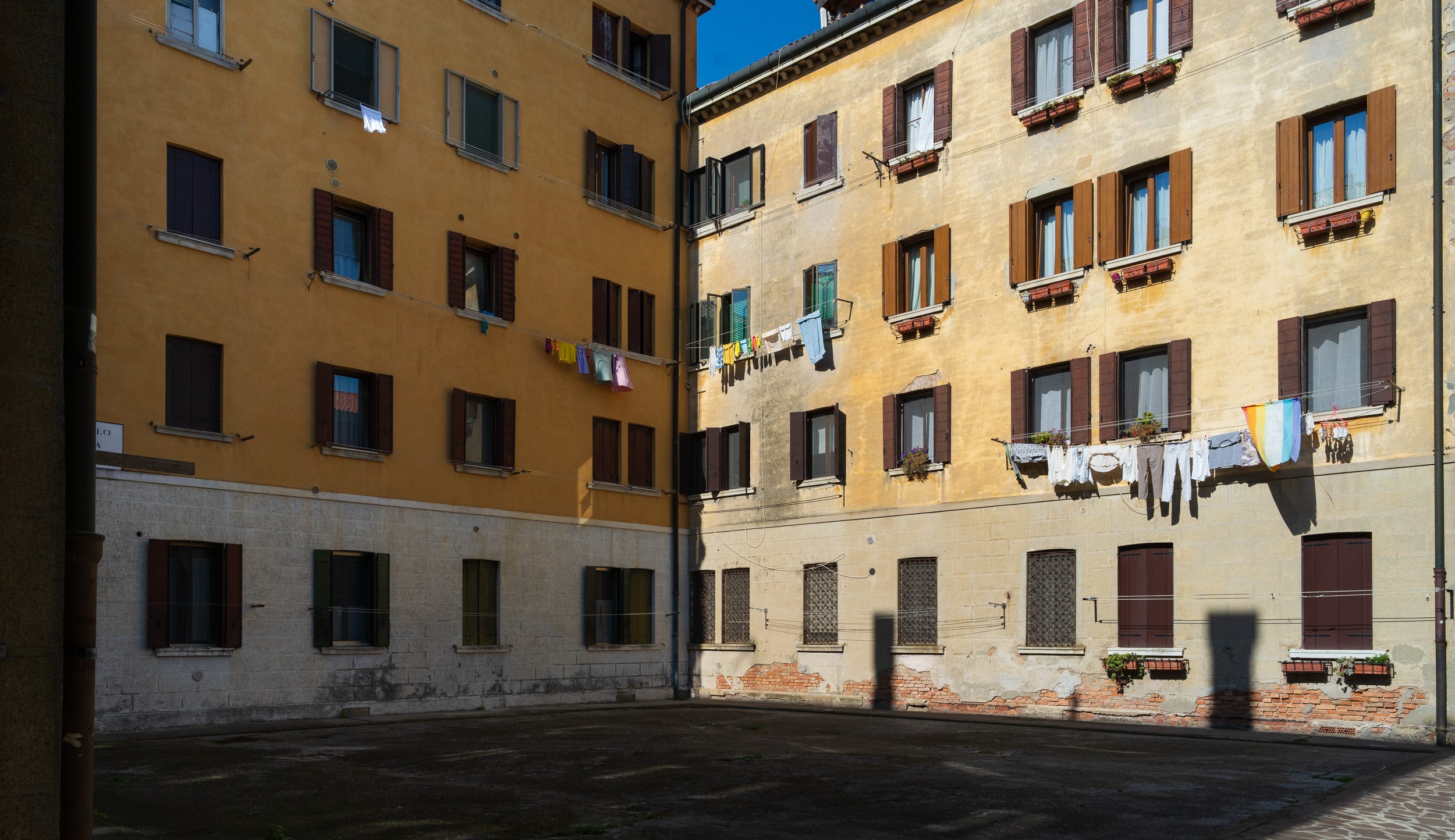
One of the things that sometimes surprises my students – whether in a workshop or while I’m teaching for the University of Georgia’s Studies Abroad program in Cortona – is hearing me say, “Photographers aren’t creators. They’re editors.”
This has become one of the central ideas in my own photographic practice. Unlike painters, who begin with a blank canvas and add marks until they are finished, photographers begin with the whole world in front of them. The viewfinder becomes an editing tool, drawing a box around the world’s visual excesses until one subject becomes the picture.
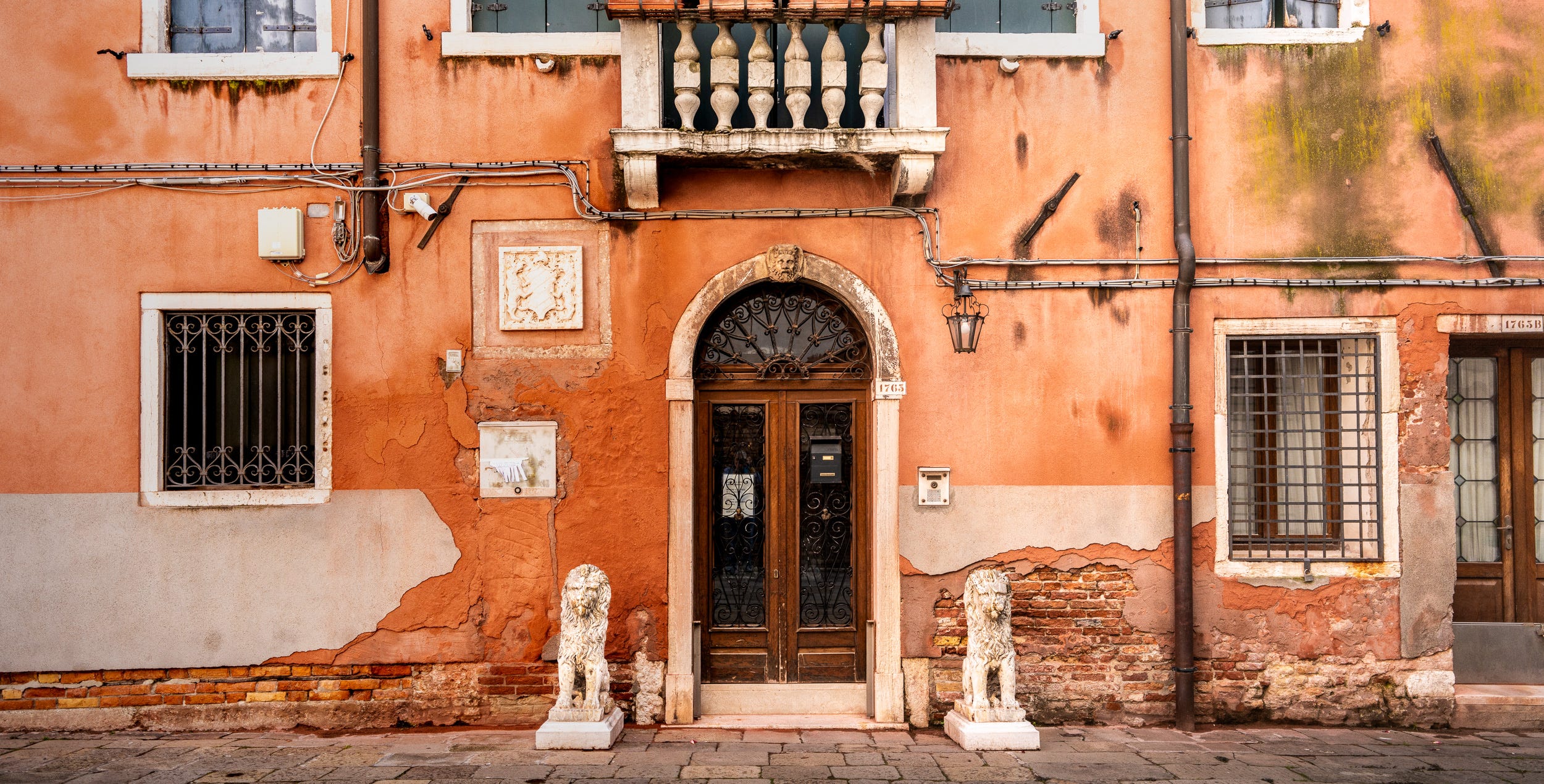
Photographers learn to compose around a center, and viewers instinctively search for one because most photographs teach us that there should be one. Changing the viewfinder on my camera to a wider panoramic format while photographing Venice quietly dismantled that expectation.
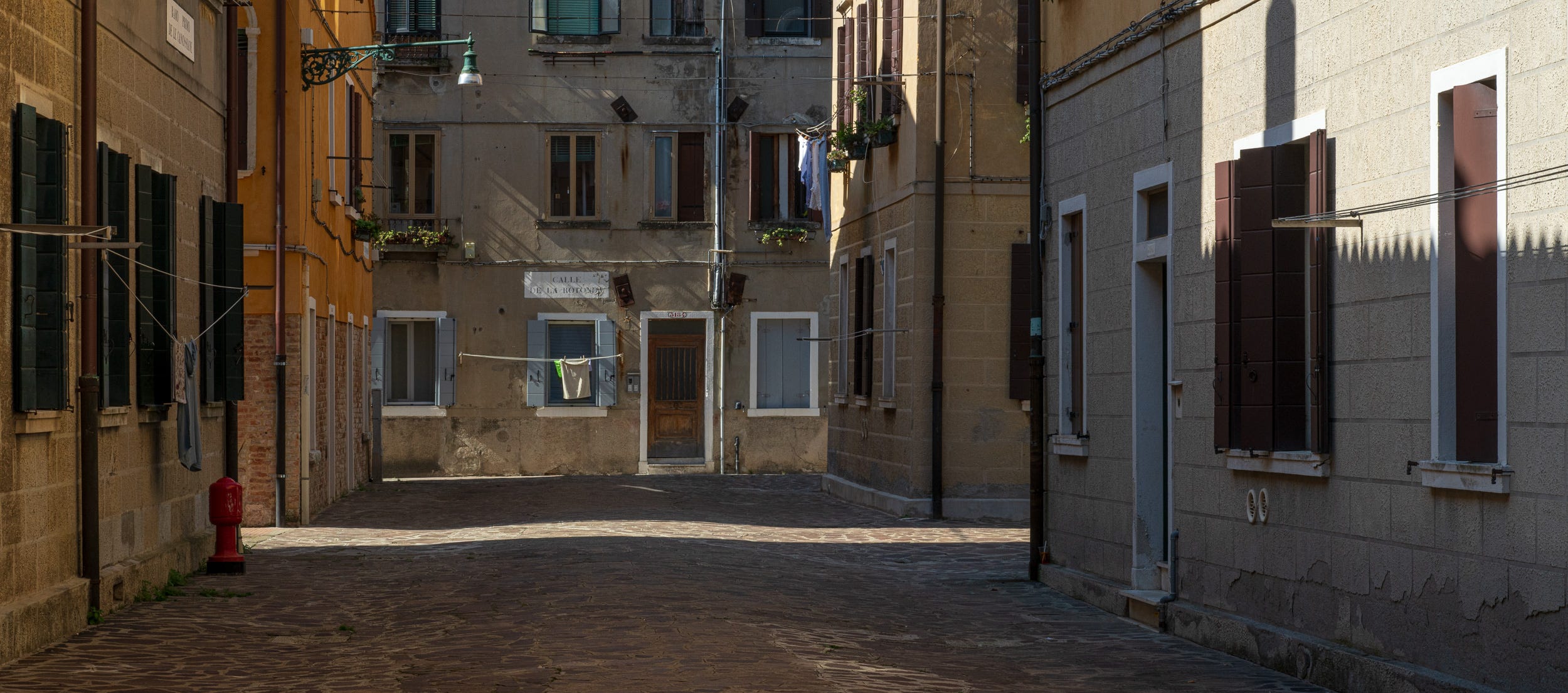
Looking through a viewfinder that was almost twice as wide as normal, Venice didn’t simply become wider. It became harder to simplify.
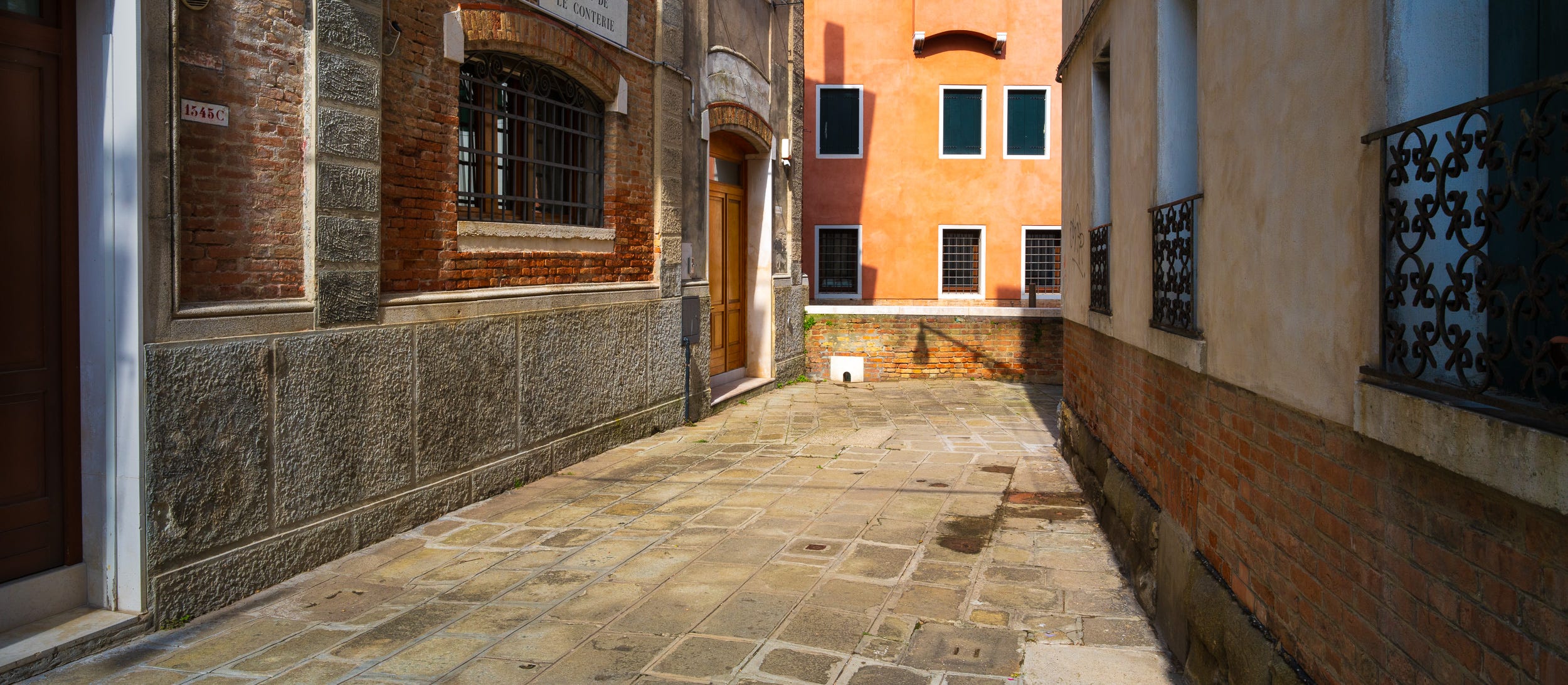
The longer frame refused to isolate anything. A weathered doorway was no longer just a doorway. It belonged to the cracked plaster beside it, the windows above it, the electrical wires stretched across the façade, the laundry hanging between buildings, and the empty pavement waiting below. The photograph stopped being about an object and became about relationships, with the eye moving sideways instead of inward.
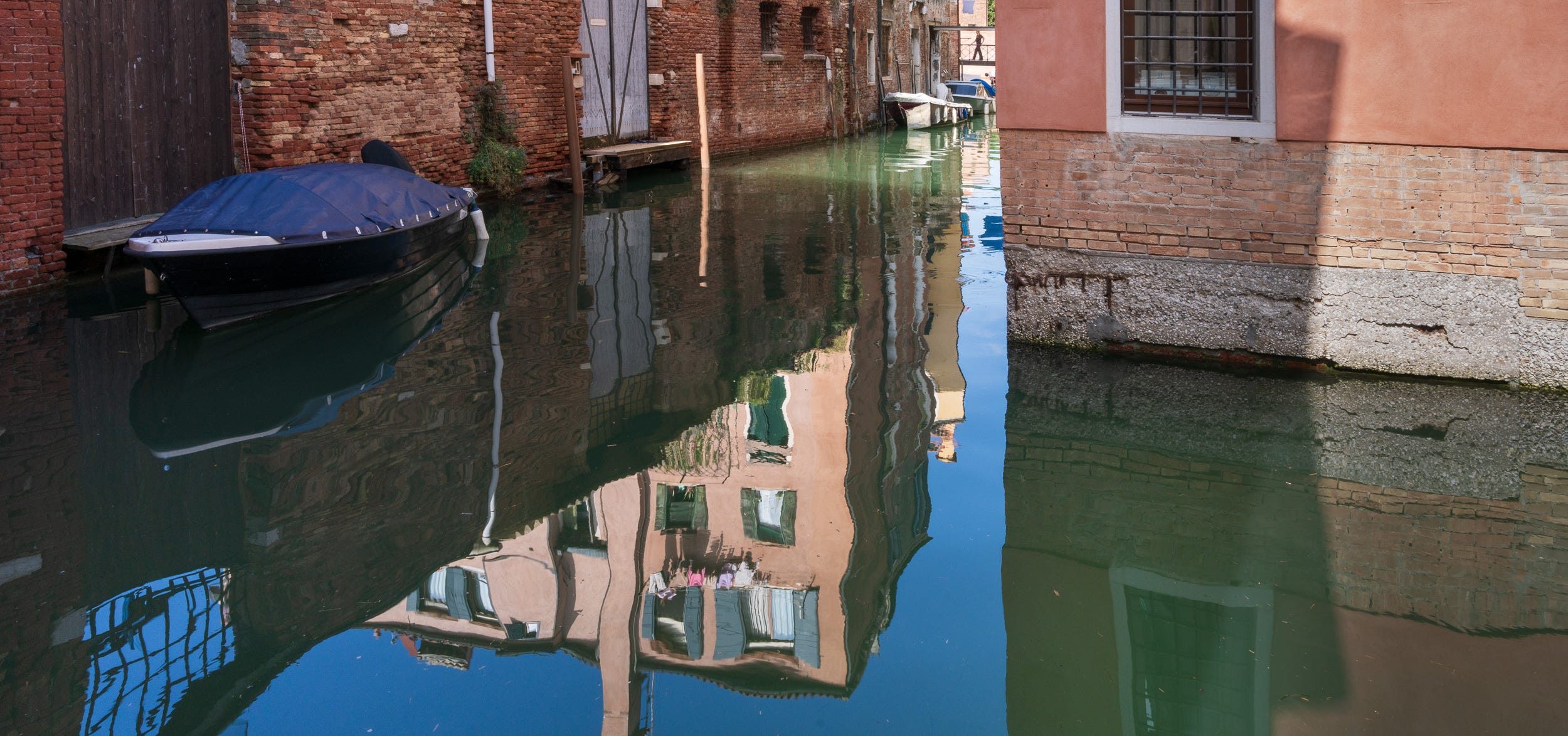
The panoramic frame seemed especially appropriate in Venice, a city built on continuity rather than separation. Tiny vicoli open unexpectedly into campi before narrowing again, and even the smallest passage feels like part of something larger, as though every wall quietly continues into another street you cannot yet see. It’s a city that encourages wandering rather than arriving, and the wider format echoes that experience. The panoramic frame isn’t less selective; it delays the moment when one thing becomes more important than another.
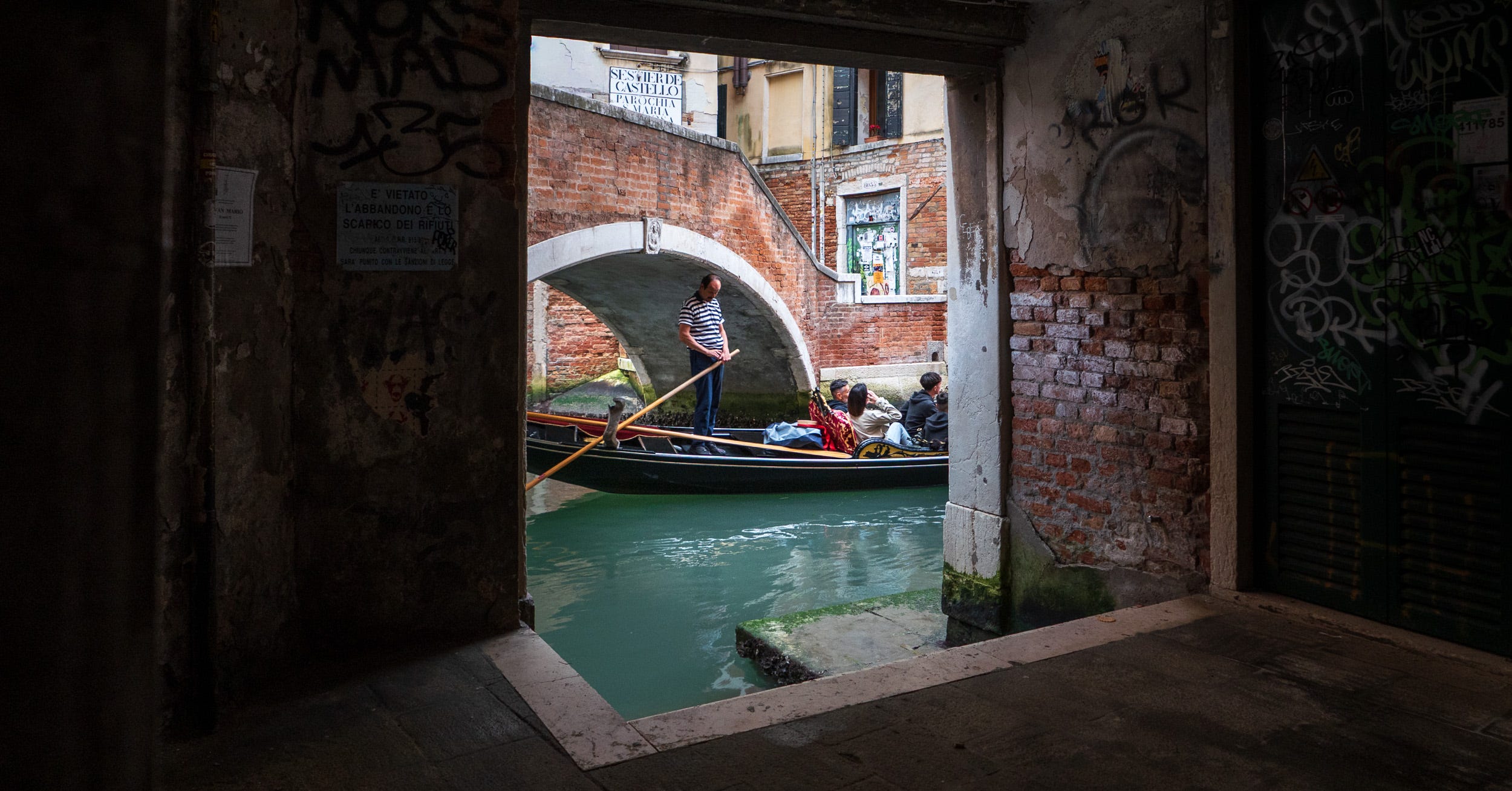
Viewing the city this way helped me notice rhythm more than composition. Windows repeat until one is open. Laundry interrupts a wall of ochre. Like a gondola gliding briefly through a dark opening before disappearing beyond the edge of the frame, the eye doesn’t settle on a single subject so much as drift through the photograph, discovering one small event after another.
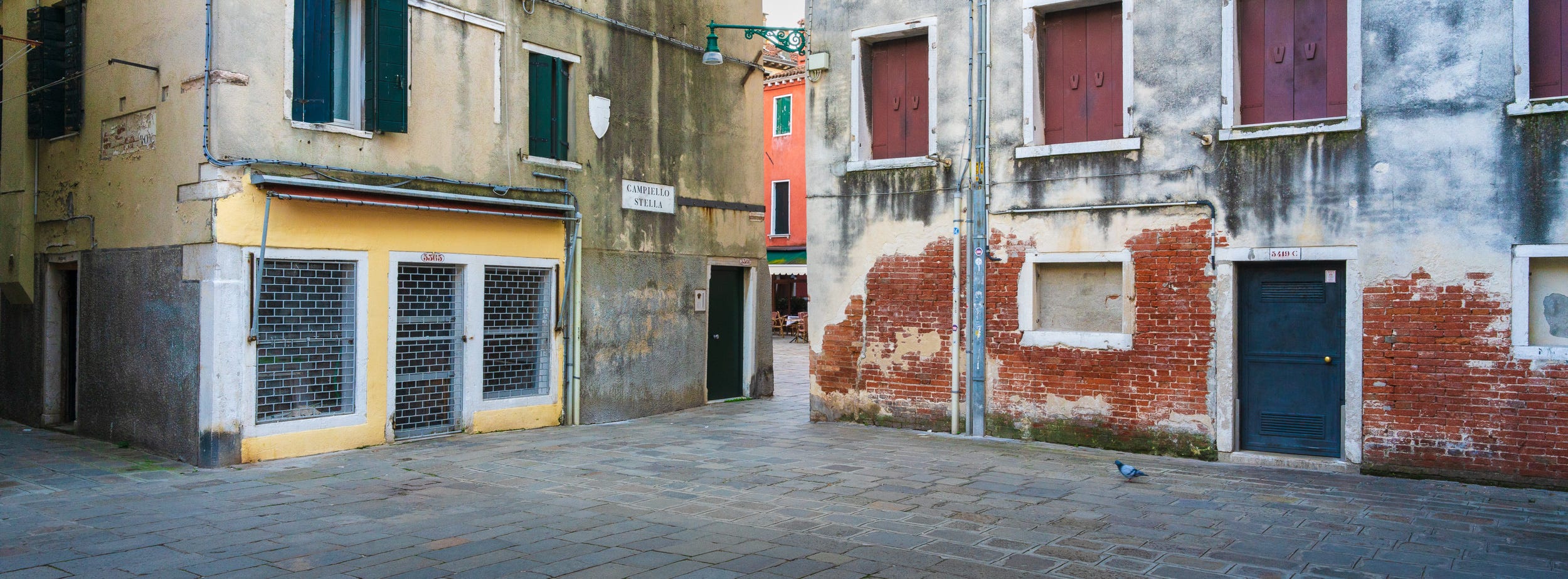
I’ll admit the format also flatters the city’s absences. Most of these frames are empty – a pigeon in an otherwise vacant campiello, two distant figures who exist mostly to give the stone something to measure itself against. Whether by luck or by choice, the wide frame keeps finding the gaps between the crowds. I don’t think that’s dishonest, exactly, but it’s worth acknowledging as a choice rather than a discovery. A ruthless editor might ask whether I’m photographing Venice or simply photographing my own preference for it to be uncrowded.
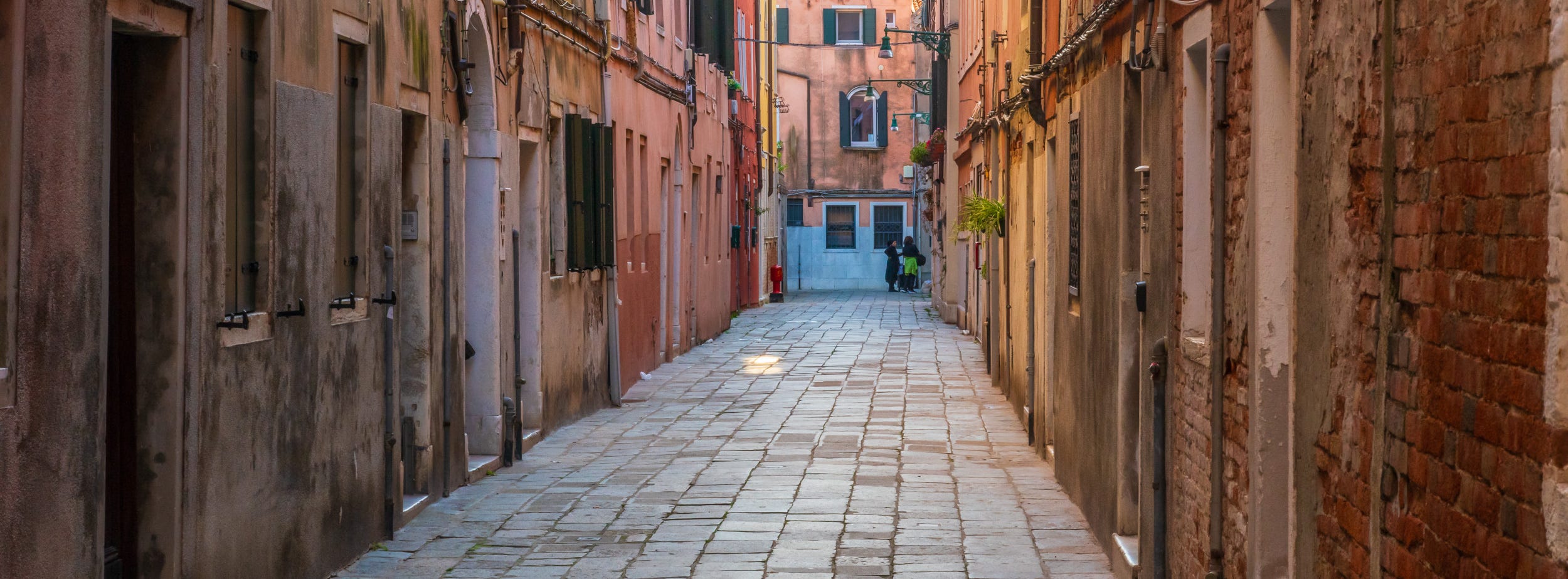
Perhaps that’s why these photographs feel slower to me than my others from Venice. They don’t deliver their subject immediately. They ask for time. You enter through one edge, travel across the picture, and eventually arrive somewhere else. The frame becomes less like a window and more like a walk.
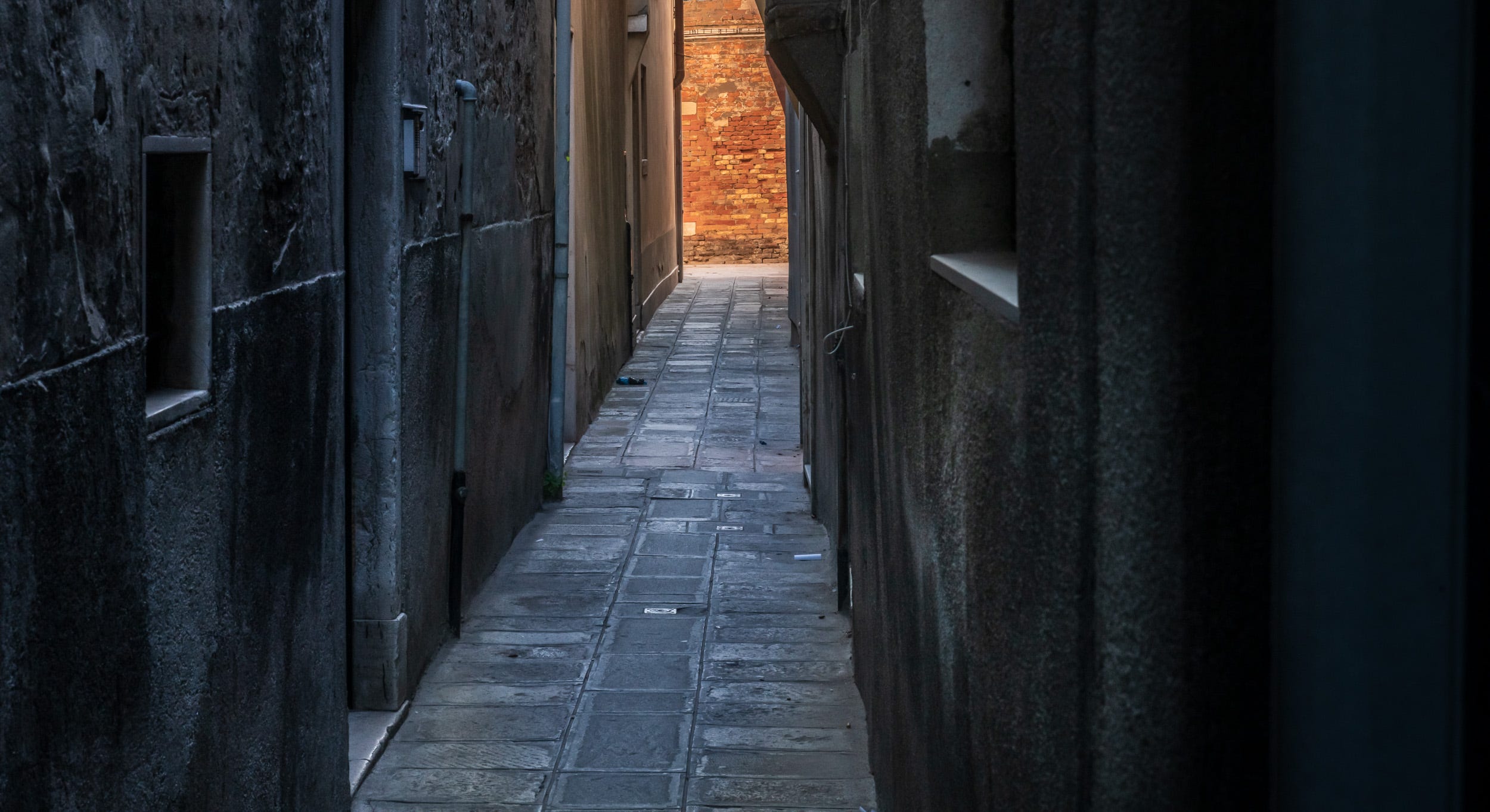
Venice has always rewarded those who slow down enough to notice how one place becomes another. The panoramic viewfinder didn’t change the city. It just encouraged me to see the continuity Venice has been quietly offering all along.
I post my photographs and thoughts here to show that there is still beauty in the world and to promote the idea that there is grace, positivity and inclusivity in the everyday.
Throughout history, goodness most always wins, and the arts can lead the way in reflecting the good all around us. There is still light in the world.
Comments
Nothing yet. Say the first thing.
Sign in to join the conversation.