
Jeremiah Ferwerda dropped out of mechanical engineering studies a dozen years ago, to focus on experimental clean-energy technologies.
His attention was caught by Tesla’s “Boundary Layer Bladeless Turbine.” It converts waste heat, from ordinary sources, into electricity.
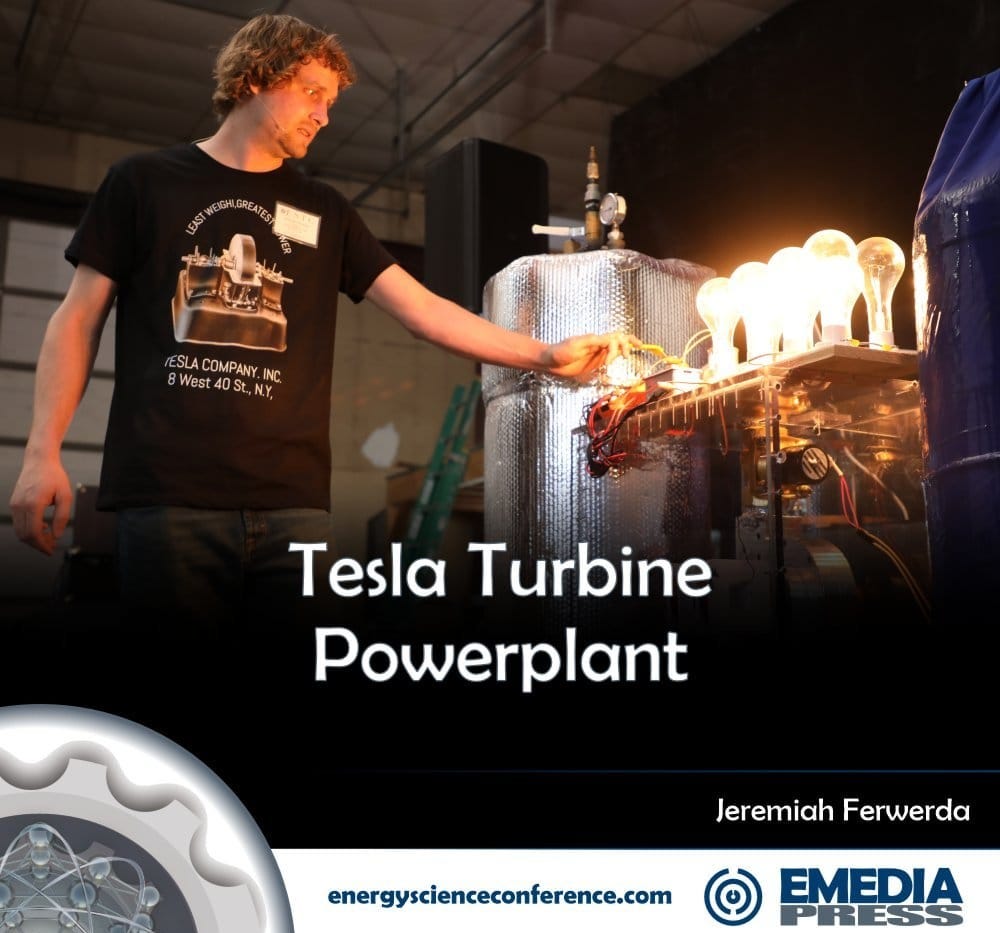
Jeremiah is now preparing to demonstrate his latest Tesla turbine model at the 2026 Energy Science & Technology Conference (ESTC) in Spokane, Washington state, June 24-28.
He was excited about the output results when his multi-stage model was tested this spring.
“This is what I wanted, what my Dad wanted! He only uses about 500 watts of power, to charge his batteries when he runs his generator…”
Jeremiah’s father lives off-the-electrical-grid and relies on a wood-burning stove for heat in cold weather.
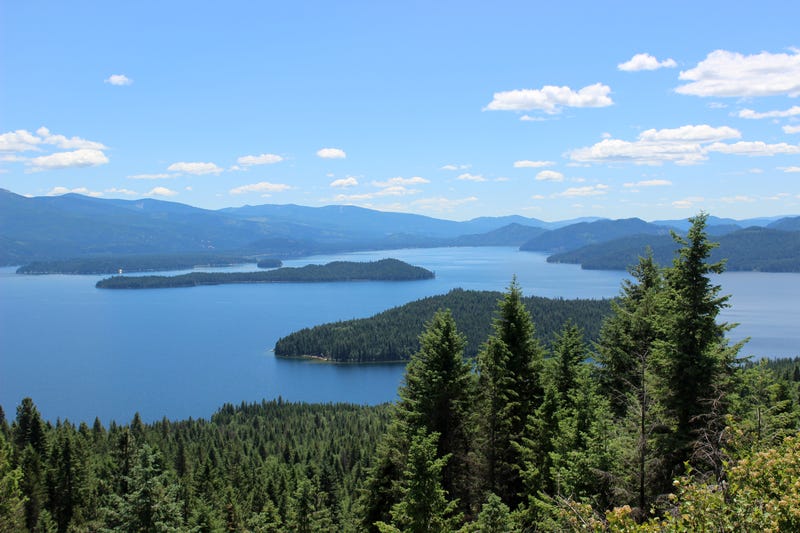
In rural areas such as northern Idaho, such stoves do double-duty, for heating a cabin and for cooking on. Other than removing excess ash and annual chimney-cleaning, those stoves and furnaces don’t need much except a supply of wood. Just find some dead trees and stock the woodshed before winter.
As kids, my siblings and I piled the scrap wood that Dad dumped on the driveway of our dairy farm. He hauled loads of free slabs from the local sawmill for our wood-burning stove.
For electricity we were lucky; the farm wasn’t in the wilderness and was on the grid.
Even today in remote areas, electricity isn’t as cheap and easy as woodpiles.
Yet back-to-land folks want to power their electronics or larger equipment, light their home and maybe a greenhouse.
They learn that combinations of batteries, solar panels and/or fuel-burning generators are expensive and have limitations.
When clouds block the sunlight for many days, you need a backup source for power. Ideally that wouldn’t be a big propane or gasoline tank.
So Jeremiah Ferwerda’s father shares his enthusiasm about Nikola Tesla’s bladeless turbine as potentially a solution.
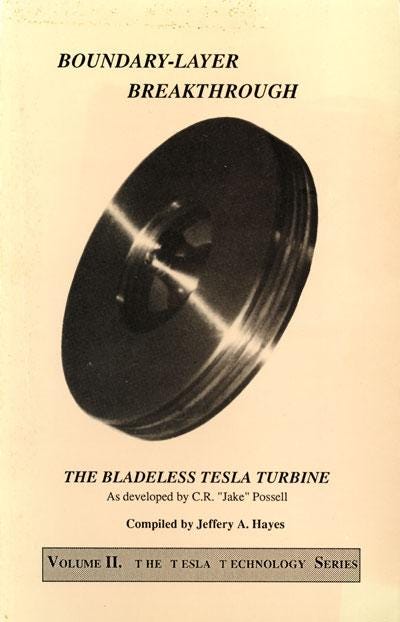
With the help of crowd-funding and colleagues such as Aaron Murakami, it became the basis of a project to build more efficient and compact experimental energy systems.
To reach Jeremiah’s Patreon link click here.
The goal is to provide how-to information, to homeowners and small businesses, about Tesla’s “prime mover” invention.
Progress has been slow because Jeremiah had to take on other work for his living.
He plans to sell kits to support further development of his multi-stage system. The kits would contain basics for builders to experiment with Tesla bladeless turbines.
The machines also can be made to work as pumps.
Unlike ordinary propellers, Tesla’s pumps and turbines don’t require the violence of high pressure pushing on blades.
His working principles are entirely different. Tesla had learned about the relation of viscosity (the tendency of fluids to resist separation) and adhesion in relation to the spinning discs.
Water or steam enter at the outer part of the thinly spaced flat discs, then exits through the discs’ holes onto a central shaft.
Tesla turned “skin friction” (that slows the speed of ships) into an advantage so that it enhances the turning of the shaft.
Why resurrect an old invention?
Nikola Tesla foresaw incredible applications for his compact, lightweight and powerful engine—including propulsion for aircraft. That probably won’t happen, yet a range of other practical uses for the Boundary Layer Bladeless Turbine should be developed.
Problem was, he was too far ahead of his time with that invention. His inspiration arrived before materials science was advanced enough for it.
However, now is the time. Modern industries provide metal alloys for making parts that hold their shape and strength, even while thin metal discs spin at extreme speeds.
Shortage of home-power breakthroughs
In contrast with Jeremiah’s project, larger teams of scientists and engineers are steering their own research & development efforts toward megawatt power plant or industrial markets. That’s where the big money awaits.
Jeremiah’s system isn’t competing at that level. Yet it holds much promise for a DIY person with practical skills and an ongoing source of waste heat—whether from storing solar power in sand or from firing up a woodstove.
There will be additional presentations at June 24-28 ESTC 2026 helpful for off-grid and self-sufficient lifestyles.
Speakers will reveal other electrical power options
I’ve already written posts about Al Francoeur’s inventions. He’ll give a news update and explain his off-grid system.
Another presentation I’m looking forward to watching and hearing will be Peter Lindemann and a homesteading couple he’s been advising.
The conference in-person seats are sold out, but you can buy a virtual ticket here and watch at the time and/or afterward.
Comments
Nothing yet. Say the first thing.
Sign in to join the conversation.