
The relationship between the microbiome and medications is bidirectional and clinically meaningful in HT recipients. The microbiome modulates immunosuppressant pharmacokinetics, altering drug efficacy and toxicity, while immunosuppressants shift microbiome composition, contributing to their immunomodulatory effects. Elucidating this interplay is essential for personalizing immunosuppressive regimens and improving HT outcomes.
Tacrolimus. The calcineurin inhibitor (CNI) tacrolimus is the foundational immunosuppressant for HT recipients. Its narrow therapeutic window and high pharmacokinetic variability pose clinical challenges, risking underimmunosuppression and rejection, or overexposure and toxicity. The gut microbiome contributes to this variability through direct drug metabolism (Figure 4A). Common gut microbes, including Faecalibacterium prausnitzii, metabolize tacrolimus to less potent metabolites that crossreact with standard immunoassays, confounding therapeutic monitoring (167). This phenomenon can lead to overestimation of biologically active drug concentrations, potentially masking subtherapeutic immunosuppression. Clinically, higher abundances of Faecalibacterium prausnitzii and related Subdoligranulum have been associated with increased tacrolimus dose requirements in KT and HT recipients, respectively (168, 169).
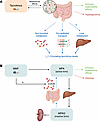
Bidirectional interactions between the gut microbiome and commonly used immunosuppressants after HT. (A) Gut microbes metabolize tacrolimus into its less potent metabolite, in addition to affecting transport of tacrolimus among the gut lumen, epithelium, and circulation. The gut microbiome affects expression of liver-metabolizing enzymes, which may also affect systemic tacrolimus levels. (B) MMF is converted by the host to its active form, mycophenolic acid (MPA). MPA is modified by the liver into inactive MPA-glucuronide (MPAG), which is either excreted by the kidneys or delivered back into the gut lumen, where gut microbes, via the β-glucuronidase (β-GUS) enzyme, metabolize it back to active MPA. MPA mediates MMF-related immunosuppressive effects as well as intestinal inflammation and diarrhea, common MMF side effects that are entirely absent in germ-free animals. MMF also alters gut microbiome composition by stimulating growth of microbes that produce β-GUS. Blue lines denote effects on drug metabolism. Green lines signify immunosuppression-related effects. Red lines refer to adverse effects.
The microbiome also modulates host metabolism, affecting tacrolimus disposition. Antibiotic-induced microbiome shifts increase mouse gut epithelium ABCB1 transporter expression, suppressing tacrolimus recirculation and reducing systemic tacrolimus levels (170). Gut microbial metabolites, particularly SCFAs, function as epigenetic regulators altering hepatic cytochrome P450 expression, influencing drug clearance. Additionally, microbiome-produced indoxyl sulfate modulated host CYP3A4 expression with interindividual variability and context dependence (171).
The microbiome-tacrolimus interaction is bidirectional. Tacrolimus increases gut permeability, potentially facilitating microbial product translocation that influences systemic immunity (172–174). In mice, tacrolimus enriched Allobaculum, Bacteroides, and Lactobacillus, shifting SCFA production (26). Critically, these changes mechanistically contribute to tacrolimus pharmacodynamic effects. For example, combination of low-dose tacrolimus and FMT from high-dose tacrolimus-treated mice fully recapitulated the high-dose tacrolimus treatment effects by expanding Treg populations, reducing pro-inflammatory cytokines, and prolonging skin allograft survival (26). These landmark findings established a paradigm wherein the gut microbiome is not a passive bystander but an active intermediary in the drug’s mechanism of action.
The microbiome also mediates tacrolimus adverse effects like post-transplant diabetes mellitus (PTDM) (175). Specific gut microbiome signatures are associated with PTDM risk in liver transplant and KT recipients (176, 177). Preclinical studies have demonstrated that tacrolimus upregulates bacterial β-glucuronidase (GUS) activity, alters bile acid metabolism, activates ileal farnesoid X receptor, and suppresses glucagon-like peptide-1 secretion, impairing glucose homeostasis (178). Importantly, inhibiting bacterial GUS with vancomycin or by supplementing the SCFA butyrate ameliorated tacrolimus-induced hyperglycemia in preclinical models (179, 180).
These studies highlight a complex triad involving tacrolimus, gut microbiome, and host immunity and metabolism. Defining these interactions in human cohorts is critical for optimizing the efficacy and safety of this essential immunosuppressant.
MMF. MMF, another key post-HT immunosuppressant, demonstrates bidirectional microbiome interactions that profoundly affect its efficacy and toxicity (Figure 4B). Host tissues metabolize MMF to active mycophenolic acid (MPA), which undergoes hepatic glucuronidation to inactive MPA-glucuronide (MPAG). MPAG is renally excreted or undergoes enterohepatic recirculation, where gut microbial β-glucuronidases reactivate it to MPA, accounting for 30%–40% of circulating MPA (181). Critically, MMF selectively expands GUS-expressing bacteria, creating a feed-forward loop that increases MPA levels (182).
These interactions have profound clinical consequences. In mice, colonic inflammation, diarrhea, and weight loss occur only in MMF-treated conventional but not germ-free animals, establishing that gastrointestinal toxicity, one of the most common MMF side effects, is entirely microbiome dependent (183). Multiple mechanisms contribute. First, MMF-mediated expansion of GUS-expressing bacteria elevates colonic MPA levels; in mice, vancomycin selectively eradicates these bacteria and prevents gastrointestinal toxicity (182). Second, MMF reduces α-diversity while enriching pathogenic Escherichia and Shigella, enhancing microbial endotoxin biosynthesis and increasing its fecal and circulating levels, driving severe colonic inflammation (183). Third, MMF reduces gut and systemic SCFA levels (184), with potential consequences for alloimmunity and metabolic homeostasis.
Clinical studies corroborate these preclinical findings. Among 139 KT recipients, MMF was the dominant driver of microbiome dysbiosis, causing α-diversity loss, depletion of antiinflammatory Actinobacteria and SCFA producers, and expansion of pro-inflammatory Proteobacteria (185). In 97 KT recipients, elevated fecal GUS activity was strongly associated with prolonged post-transplant diarrhea (186). Clinical microbiome-targeted interventions remain unexplored, though proof of concept exists in octyl gallate, a food additive with antioxidant and GUS-inhibitory properties, which prevents MMF gastrointestinal toxicity in mice (187). Whether MMF-mediated microbiome shifts contribute to other MMF adverse effects, including myelosuppression (188), warrants investigation.
Corticosteroids. Corticosteroids, another integral post-HT immunosuppressant drug class, demonstrate reciprocal microbiome interactions through active microbial metabolism and microbiome alterations. Gut Clostridium steroidoreducens expresses steroid reductases that inactivate exogenous steroids and reduce their bioavailability (189). One clinical study associated steroid treatment with gut enrichment of Streptococcus salivarius, typically an oral commensal, potentially signaling gut dysbiosis (190). However, human data on steroid-induced microbiome changes remain limited.
Mouse models provide mechanistic insight. Steroid treatment increased Anaerobacterium while depleting Eisenbergiella, Alistipes, and Clostridium XIVb, predicted to diminish SCFA production and compromise immune regulation (191). Comparative analysis in mice revealed the most pronounced microbiome shifts with prednisolone, characterized by reduced Bacteroidetes and expanded Firmicutes (192). This was accompanied by decreased gut antimicrobial defensins Reg3γ and IL-22, Escherichia coli overgrowth, and colonization with its uropathogenic strain. Notably, these microbiome effects appeared dependent on baseline microbiome profiles (192).
Intriguingly, some corticosteroid immunosuppressive effects may be microbiome mediated. In a lupus mouse model, prednisone’s systemic immunomodulatory effects were comparable to those elicited by FMT from prednisone-treated mice (193). These findings highlight critical knowledge gaps and raise questions about whether baseline microbiome profiles may influence steroid efficacy and toxicity.
mTOR inhibitors. Sirolimus (rapamycin) and everolimus, mTOR inhibitors, are frequently used post-HT to reduce malignancy risk and feature prominently in CNI-sparing regimens to mitigate renal dysfunction.
Multiple preclinical studies demonstrate that mTOR inhibitors profoundly alter gut microbiome composition with functional immunologic consequences. Sirolimus induces dysbiosis characterized by increased pro-inflammatory Proteobacteria and decreased antiinflammatory Akkermansia, with associated shifts in microbiome lipid metabolism and immune pathways (194). Sirolimus also compromises gut barrier integrity, increasing gut permeability and circulating pro-inflammatory cytokines (194). Time-dependent sirolimus-induced microbiome shifts include reduced α-diversity and increased Bacteroides/Firmicutes ratio with elevated gut luminal amino acid availability, paralleling early pro-inflammatory to protolerogenic transitions through modulated lymph node architecture and Treg distribution (195). mTOR inhibitor–induced shifts in Firmicutes, Acidobacteria, and Bacteroidetes correlated with Peyer’s patch and splenic T cell populations, some associated with prolonged lifespan (196).
The microbiome also mediates the metabolic complications associated with mTOR inhibitors. In mice fed high-fat diet, sirolimus induced microbiome alterations, worsening gut inflammation and glucose intolerance, which were mitigated by natural polyphenol antioxidant resveratrol (197). Similarly, probiotic Lactobacillus rhamnosus HN001 alleviated sirolimus-induced systemic inflammation, dyslipidemia, and insulin resistance (194), suggesting potential microbiome-targeted therapeutic interventions for managing mTOR inhibitor–associated metabolic toxicity in HT recipients.
Implications of gut microbiome–immunosuppressant interactions for HT. Immunosuppressants are indispensable after HT, yet emerging evidence reveals that they function within a tripartite drug-microbiome-host system. The microbiome actively determines immunosuppressant pharmacokinetics, pharmacodynamics, and toxicity.
These insights suggest translational opportunities for precision immunosuppression management to optimize allograft protection while minimizing adverse effects. However, current evidence is derived predominantly from preclinical models and non-HT populations, necessitating dedicated studies in HT recipients to validate these associations and establish clinical utility. Microbiome profiling, including quantifying gut Faecalibacterium prausnitzii (167–169) or GUS activity (186), could facilitate therapeutic drug monitoring and mitigate adverse effects. Targeted microbiome modulation offers a strategy to decouple efficacy from toxicity. Preclinical proof of concept includes the findings that butyrate supplementation prevents tacrolimus-associated hyperglycemia (180), GUS inhibition mitigates MMF-related diarrhea (182, 187), and probiotics ameliorate sirolimus-related metabolic complications (194). As noted above, FMT from tacrolimus-treated mice recapitulates immunosuppressive effects at lower drug exposure (26), suggesting microbiome-targeted therapies might enhance allograft tolerance while reducing drug burden and associated infectious and malignant complications.
Comments
Nothing yet. Say the first thing.
Sign in to join the conversation.