
As a designer, I’ve always valued understanding how others think and the process they follow to bring ideas to life. I want to share some of the research and ideas that have shaped my work, offering insight into how design can be applied.
For the first instalment of Layers Beneath , I’m sharing the research and concepts behind the visual identity for Sustainable Challenge 2024. MODA-FAD, the client, centred this year’s Challenge around Decolonialism. Below are the thoughts & research that led to the final design.
Dismantling systems of oppression.
Healing. Justice.
Indigenous Ceremony?
Economic, cultural, and psychological liberation from colonial influences.Reclaiming Identity:
Represent diverse voices and perspectives.
Challenge Eurocentric narratives of design.
Critiquing and rethinking dominant theories and frameworks:
Structural changes and shifts in consciousness.
Traditional knowledge systems.
How to challenge Eurocentric design?
How to challenge Eurocentric design through indigenous folklore?
Resist the homogenisation of Western practices.
Traditional narratives and rituals significantly strengthen community identity and cohesion. These are imbued with cultural and spiritual values, resonating deeply with community members and reinforcing self-perception and unity. This resilience is crucial for resisting the homogenising effects of colonialism.
Looking at the world through a prism?
The purpose of colonialism was the extraction of resources for use in the capitalist economy of the home nation.
What is decolonisation?
To put resources back into the world?
Decolonisation aims to dismantle extractive and exploitative systems established during the colonial era, allowing formerly colonized peoples to regain control over resources, economies, and political systems.
How can we make the design question:
“How diverse are we?”
What if we actually tried to call ourselves out?
Asking: Is this “Wokefishing”?
Who is benefiting?
Are we just cleaning up a guilty image?
Deconstruct down to the smallest individual parts, so something new can grow.
Base ideas on the following concepts [taken from Wokefishing by Beatrace Angut Lorika Oola]:
Redefine
Reclaim
Reimagine
Revolutionise
The first step to being anti-racist:
Analyse one’s own behaviour and workforce.
Do we need more?
How can we make less?
Perpetual challenge of norms:
Discover who you are through design, work, craft, and creating.
Break systems that oppress identity.
Celebrate uniqueness and culture through community.
Design and communication that break Eurocentric norms:
Break the poster.
Break the grid.
Break the type.
Break the harmony.
Create new forms to celebrate uniqueness.
Move away from homogenisation.
Squash flattened culture through new perspectives:
How can we create a language that isn’t based on Eurocentric writing systems?
Group concepts organically and unstructured.
Break sentences apart into concepts.
Use concepts instead of sentences.
Create images through the composition of elements.
String letters together to create symbols and ideas.
Rituals and Sound:
Rituals around the “m”?
Decolonisation through sound?
Drone music: Tibetan, Indian.
Alternative to Western rules and structures.
Constant sustained sound.
Connection to nature.
Ecological sustainability and spiritual harmony.
How to make it non-formative, personal, and expressive?
Fragmented and collage-like?
If the opposite of uniformity is chaos, could fragments of ideas be chaotic?
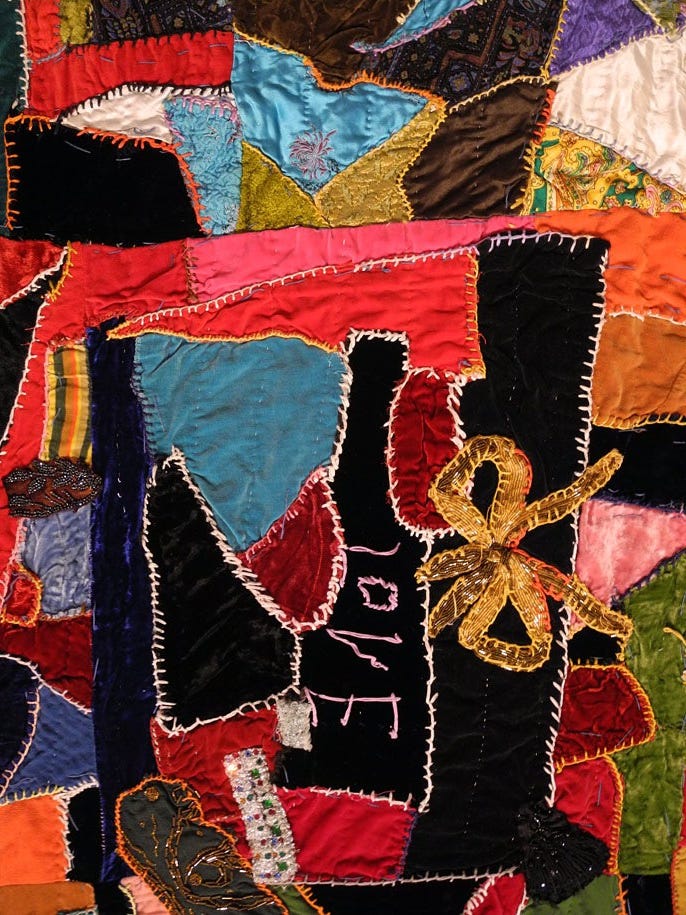
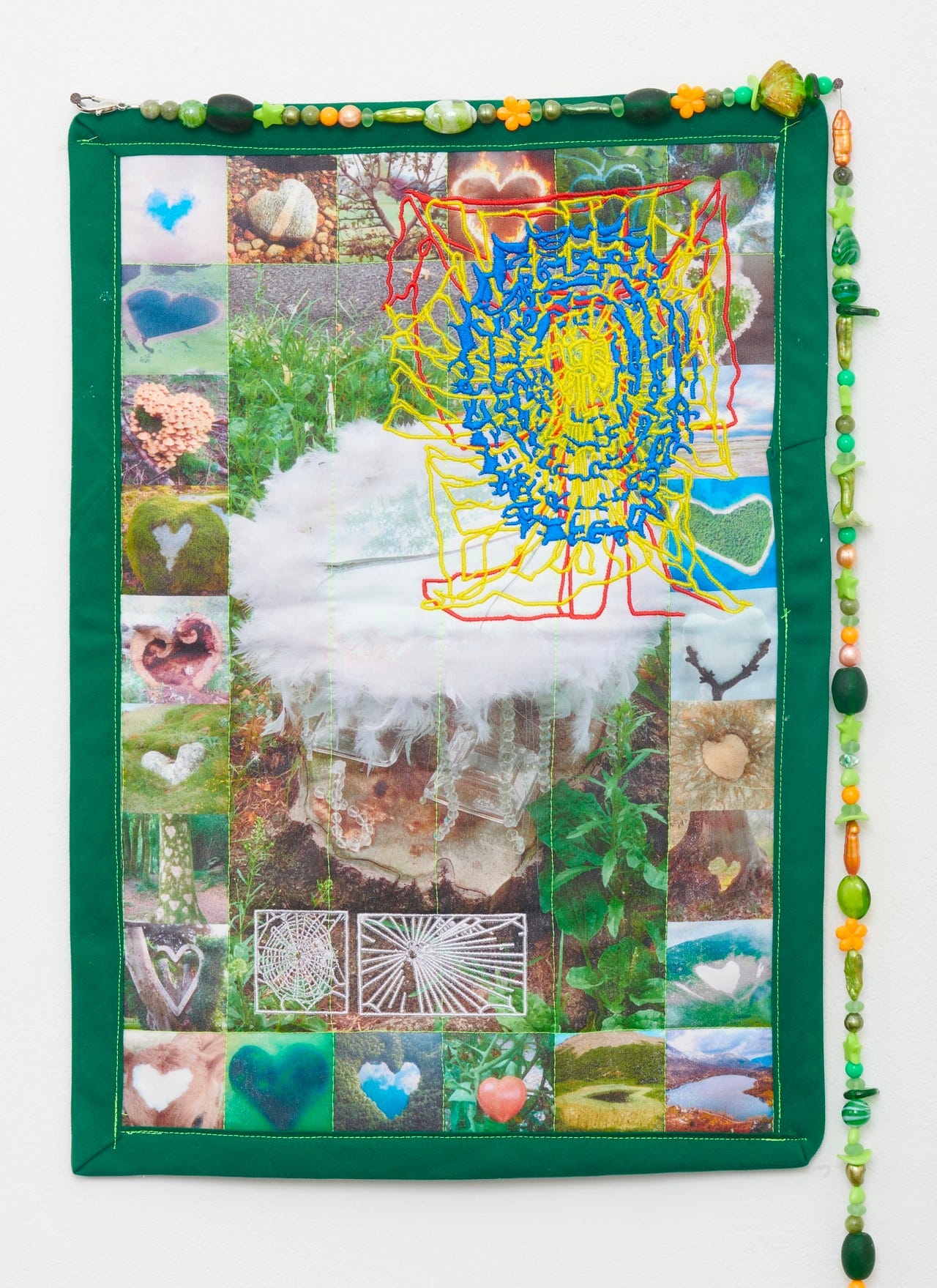
Patchwork:
Patching together different backgrounds to create something new.
Material modification to challenge and provoke.
Design as critical mass?
Reflect nature and its systems.
Humanity’s connection to nature.
Abide by nature’s rules.
Fluidity in design:
What does it mean to be fluid?
Incorporate expansive and subversive elements.
Position the self in a fluid manner.
Call design’s intentions and outcomes into question.
Deconstruct exclusionary and oppressive modes.
Continuously re-politicise design.
Every inclusion is someone else’s exclusion (or persecution).
Interpret the historical, political, and material aspects of identity discrimination.
Contextualise them within larger power structures.
We were asked to create a campaign for decolonisation by an organisation composed entirely of white people.
The FAD is mostly made up of white people.
Load the here-and-now with:
Anti-hegemonic, intersectional, and decolonial discourses.
Make it even “messier.”
Amalgam:
A mixture. A blend.
Blend Eurocentric type to create pictorial icons.
Repurpose type.
How could we work with non-European scripts: Asian, African, …?
Write in non-standard ways:
Divide syllables.
Explore new uses of type.
Patchwork:
Deconstruct and remake.
Create a patchwork of communication.
Visualise through messy, chaotic beauty.
Draw on Indigenous, Pagan, and Folklore traditions.
The mystical world: Rituals, non-rational approaches, and connections to deeper cultural meanings.
Take Mr. German Man’s rules of design and go against them:
Good design is innovative → What if it’s not?
Good design makes a product useful → Challenge usefulness.
Good design is aesthetic → What if beauty is subjective?
Good design makes a product understandable → What if it’s intentionally cryptic?
Good design is unobtrusive → What if it disrupts?
Good design is honest → What if it critiques honesty itself?
Good design is long-lasting → What if it embraces temporality?
Good design is thorough → What if it’s incomplete?
Good design is environmentally friendly → How can we redefine “environmentally friendly”?
Good design is as little design as possible → What if it’s maximalist?
What are the systems of oppression within the fashion industry?
Is fashion a colonial power?
Who benefits from the exploitation in fashion (and other industries)?
Transcript:
Dismantle systems of oppressions through design.
We want to challenge Eurocentric narratives of design.
By critiquing and rethinking dominant frameworks.
Resisting the homogenising effects of colonialism.
“In Africa… the movement has embraced a much more holistic understanding of sustainability: Redefine, Reclaim, Reimagine and Revolutionize”
Wokefishing by Beatrace Angut Lorika Oola
Folktales from cultures around the world teach us the profound and multifaceted relationship between human societies and the natural world.
And reflects a deep connection between human societies and the natural world.
Something we’ve lost with the extraction and exploitation of resources for the capitalist economies of the colonial nations.
Design is a vehicle of capitalism. We wanted to find ways of critiquing it.
Design history interrupted. A queer-feminist theory.
“…post-colonial-queer-feminist scholars more recently stressed that gender-based oppressions cannot be tackled as long as they are not seen as part of a colonial project strongly tied in with westernization, modernism and capitalism—which are the 'fathers' of design.”
Essay by Ece Canlı
The secret communication among African American slaves, using quiltmaking terminology as a message map on their escape to freedom.
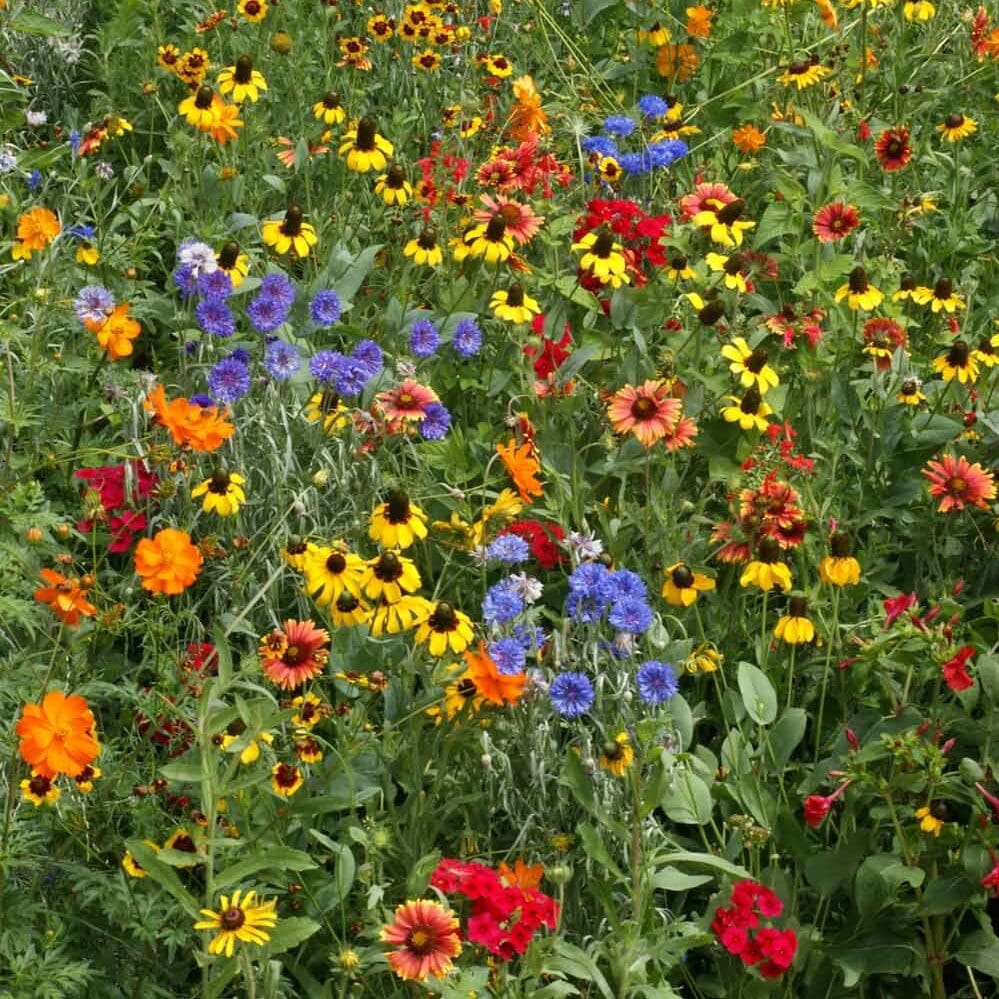
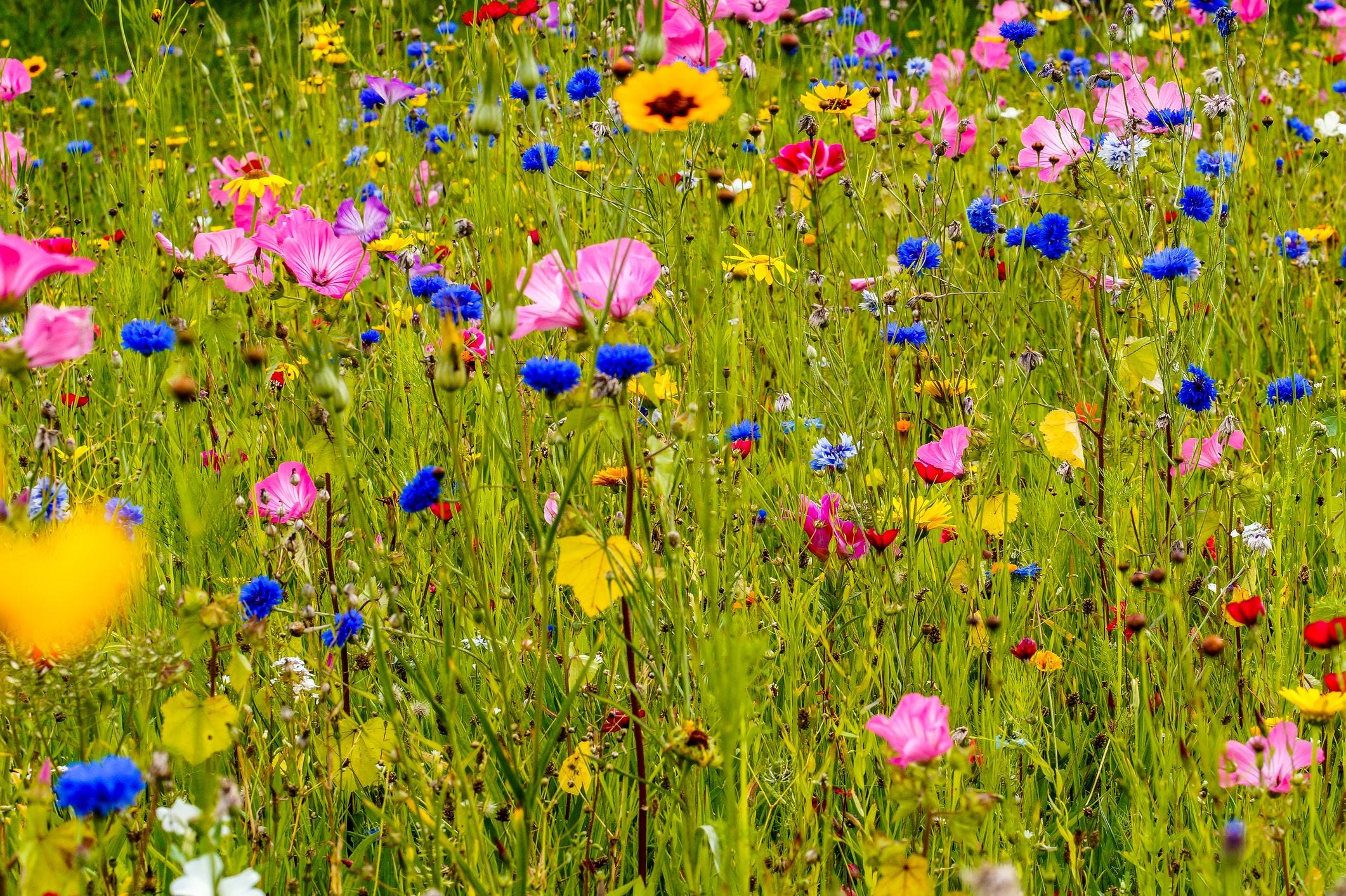
How to weave nature into the art direction?
Thinking about Wildflowers. Appear disorganised to human eyes but are highly adapted to their environment.
Respect and importance of being in harmony with other lifeforms.
https://decolonizeallthethings.com/learning-tools/race-ethnicity-racism/
https://www.gabrielmaher.xyz/storm/p5jhoz9jyvblrkgmeud1ve1f6z46d8
https://shxeilastudio.us/ [https://sheilastudio.us/img/takeabreak-04-cushions.jpg]
https://www.mesaartscenter.com/index.php/museum/art/exhibits/faith-ringgold
https://www.interviewmagazine.com/art/vibrant-introspective-quilts-rosie-lee-tompkins
https://observer.com/2020/11/american-quilts-exhibition-art-of-revolution-toledo-museum/
https://www.are.na/rosen-eveleigh/re-thinking-design-history
https://www.pinterest.co.uk/itsnicethat/thread-of-inspiration/shamma-buhazza/
https://docs.google.com/spreadsheets/d/1ZiA-eCUbUoEYsauFgHKoFeWiBL5p9tHj16uYl7jjdtc/edit
No posts
Comments
Nothing yet. Say the first thing.
Sign in to join the conversation.