
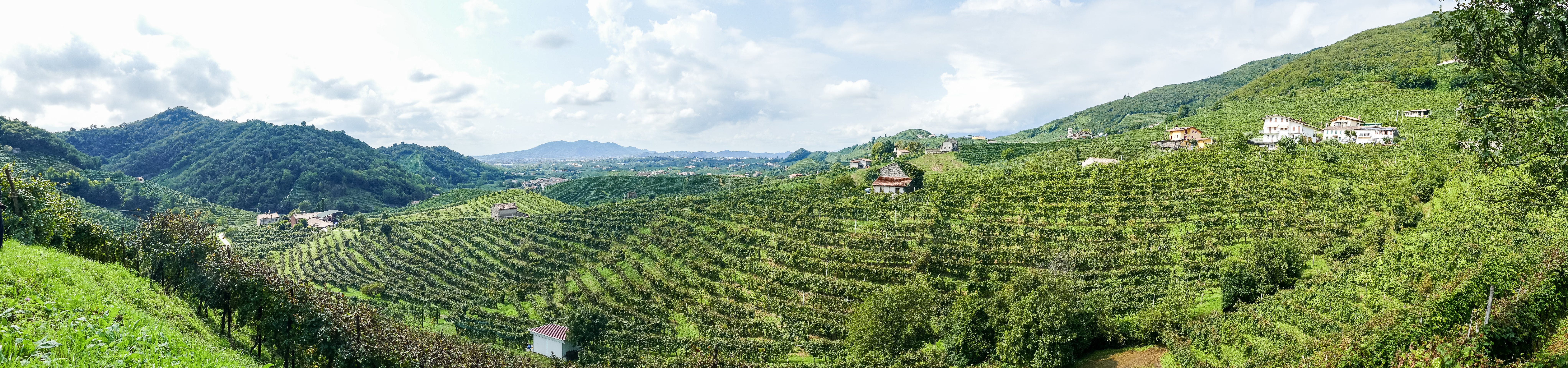
I moved to Italia without a steady gig. The runway for finding one is ample, but not endless. Less than forty hours after that bike-packing trek, I traded cycling kits for sport coats and headed east toward Treviso on business. I’d scored a plum invitation as the lone photojournalist to a wine region intensive for industry pros: vineyard visits, expert education, and portfolio tastings on rinse and repeat, sunup to sundown for a week in the heart of Prosecco Superiore. I jumped at the lucky chance to absorb regional Italian flavor, engage with growers in a warren of stunning hilltops, and better understand sparkling wine, which makes up about 25% of all Italian wine exports in volume, and closer to 30% in value.
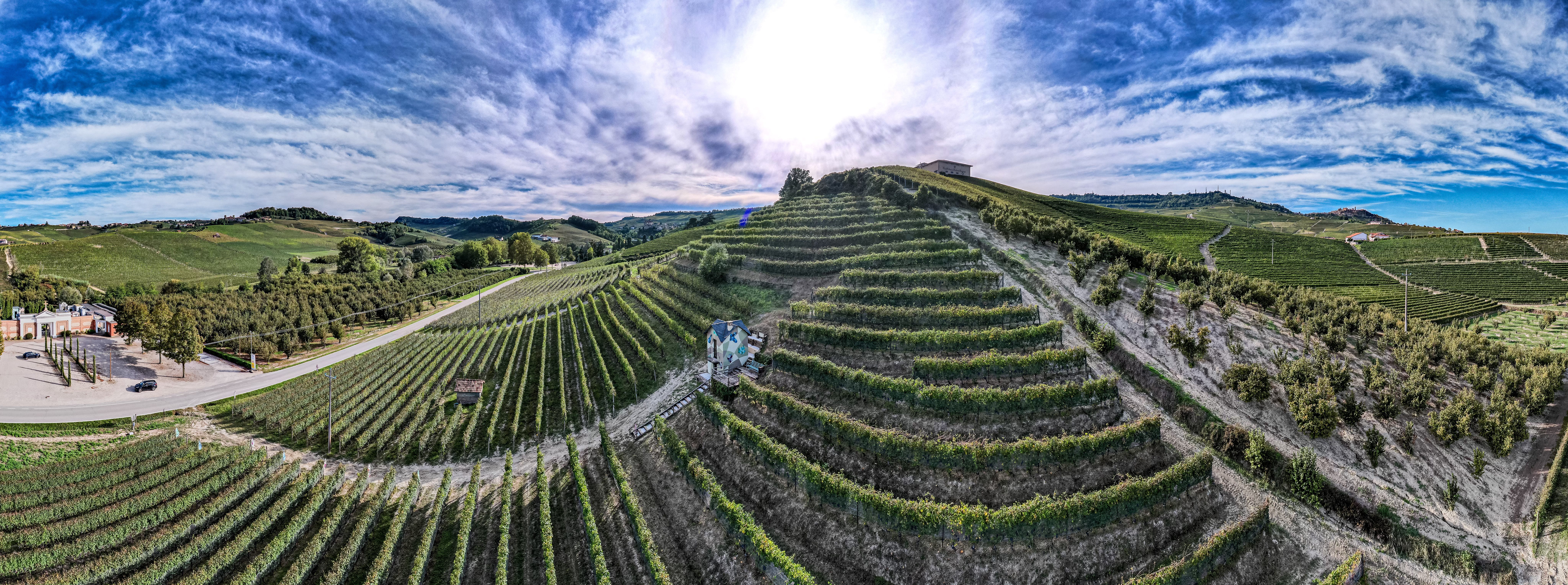
Italy is my first wine love, yet I’d never even heard of Conegliano Valdobbiadine Prosecco Superiore DOCG1. The region’s full name, said one representative, “is like a train of words.” True, but this metaphoric train is a sleek engine leading a column of elegant Pullman cars up impossibly steep mountains that can only be harvested by hand. Fiat vs Ferrari isn’t quite an apt comparison, but suffice to say that this ain’t your bottomless mimosa or junior prom Prosecco. It’s the kind of place that makes you learn phrases like: ti toglie il fiato2 (it takes your breath away), è pazzesco (it’s crazy beautiful), and ti lascia a bocca aperta (it leaves you speechless).
Our blitzkrieg of bubbles ran smack through crush. Harvest is typically off-limits for visitors, but this group of Americans included Michelin-starred wine directors and a Master Sommelier, ambassadors who move needles in the world’s largest wine market. Since I speak the language, our hosts kept seating me next to local dignitaries. What a privilege to have this backstage pass Wonka ticket during such a critical moment in both craft and trade. After so many bottles, I began hearing that train name like locomotive rhythm in a poem: Coh-neel-YAH-noh Vahl-doh-bee-YAH-dee-nay.
My shortcut mnemonic for this cellar-worthy sparkling: wine for beyond today.
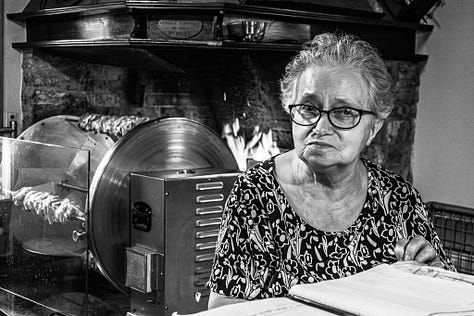

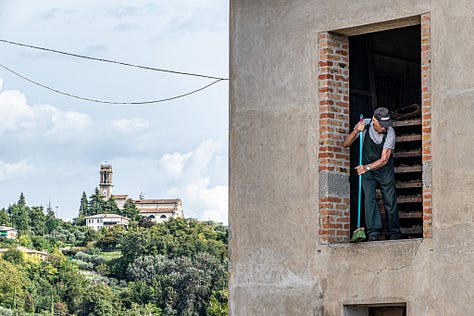
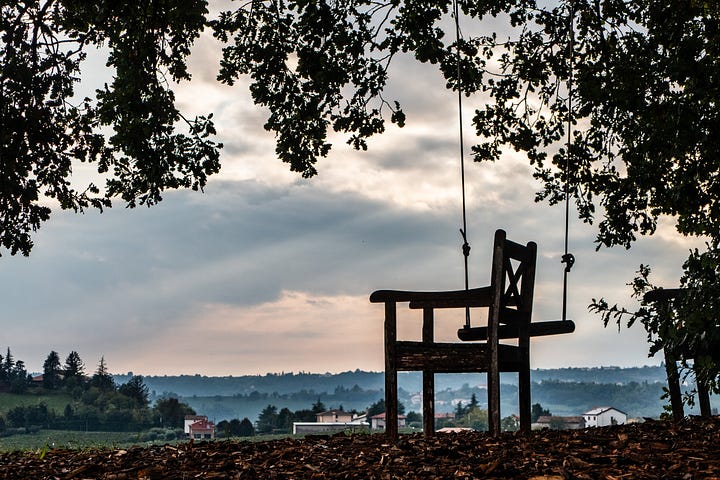
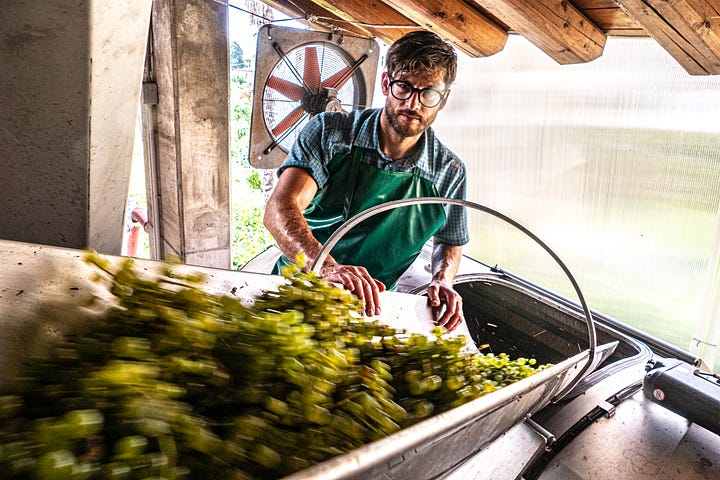
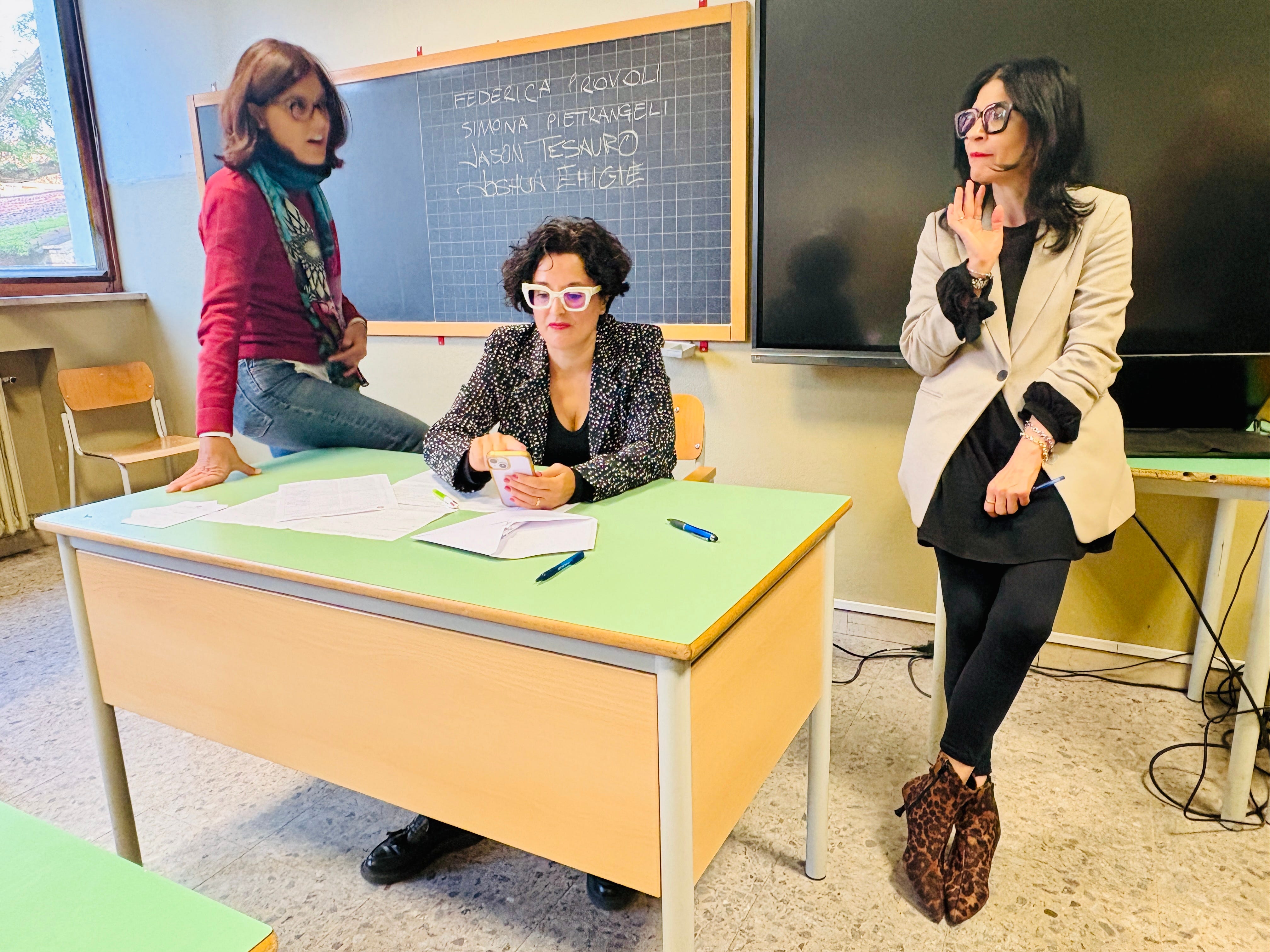
I returned home with a full memory card and fistful of contacts to whom I sent a wave of biglietti di ringraziamento (thank you notes) with fingers crossed for follow-up work. Being away, however, meant missing Julian’s first day of Italian public middle school. To get back in the game, I started running point on scuola secondaria books, bureaucracy, and logistics. In no time, I found myself at the meeting to select class representatives. Throughout Italy, once the kids are designated to a class, they stay together for all three grades before high school. Seeing the same faces year after year, families really get to know one another. We’d already started a WhatsApp thread for parents and I’d been especially active and amiable, knowing I’d be keen on this crew’s counsel to get acclimated. At our meet-up calling for nominations, I kept hearing “papà di Giuliano, papà di Giuliano,” and next thing I knew, my name was on the blackboard. Ballots were passed and voting commenced.
Back in Richmond, Virginia, the PTA was mostly an impenetrable clique of the neighborhood’s upper crust and even after putting five kids through public school, I never really cracked the code to land a meaningful role. I considered this as I voted for some no-nonsense, super-stylish Veronese women, veteran moms who know the ropes. Naturally, they won. And then they announced my name as the fourth representative! Last week, we met with teachers and afterward debriefed over aperitivi. Sitting in a locals-only bar munching cicchetti (snacks) is already my kind of fun, but doing so while resolving administrative snags, spilling middle school tea, and planning field trips made me downright giddy.
A few days later, one of the ladies pinged me to make plans. “Ciao. Sabato sera siete liberi? Facciamo qualcosa insieme?” (Hi. Are you free on Saturday night? Shall we do something together?) More giddiness! Making friends. Building community. The adventure is working and being in the country long enough to catch La Bella Italia letting her hair down is revelatory.
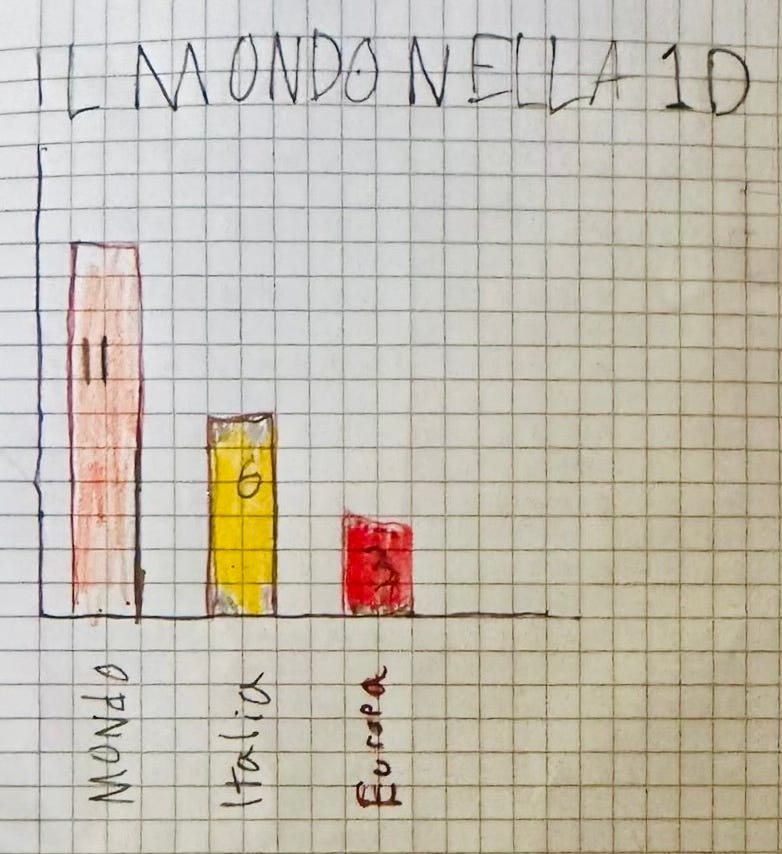
That first day, the children made a chart to show the world in class 1D. Berlin, Brussels, and Barcelona all claim immigrant populations of 20-30%. The province of Veneto, which includes Venezia and Verona, hasn’t reached that level of European melting pot, but it boasts Italy’s highest number of foreigners and the youngest population. Verona, though known as an insular city, has grown from 1% in 1990 to 15% in 2025. Julian’s class is a multi-continental, multi-lingual, multi-cultural rainbow of families from Sri Lanka, Nigeria, Venezuela, China, and elsewhere. Fittingly, this group’s great equalizer is yet another tongue. Italian proficiency varies greatly among them, but in sixth grade, students begin learning a second foreign language (English is first). Class 1D is composed of the kids who selected German. I elicited a hallway smile from one teacher when I launched into my best “eins, zwei, drei…” to show her how much Julian practiced counting to twenty.
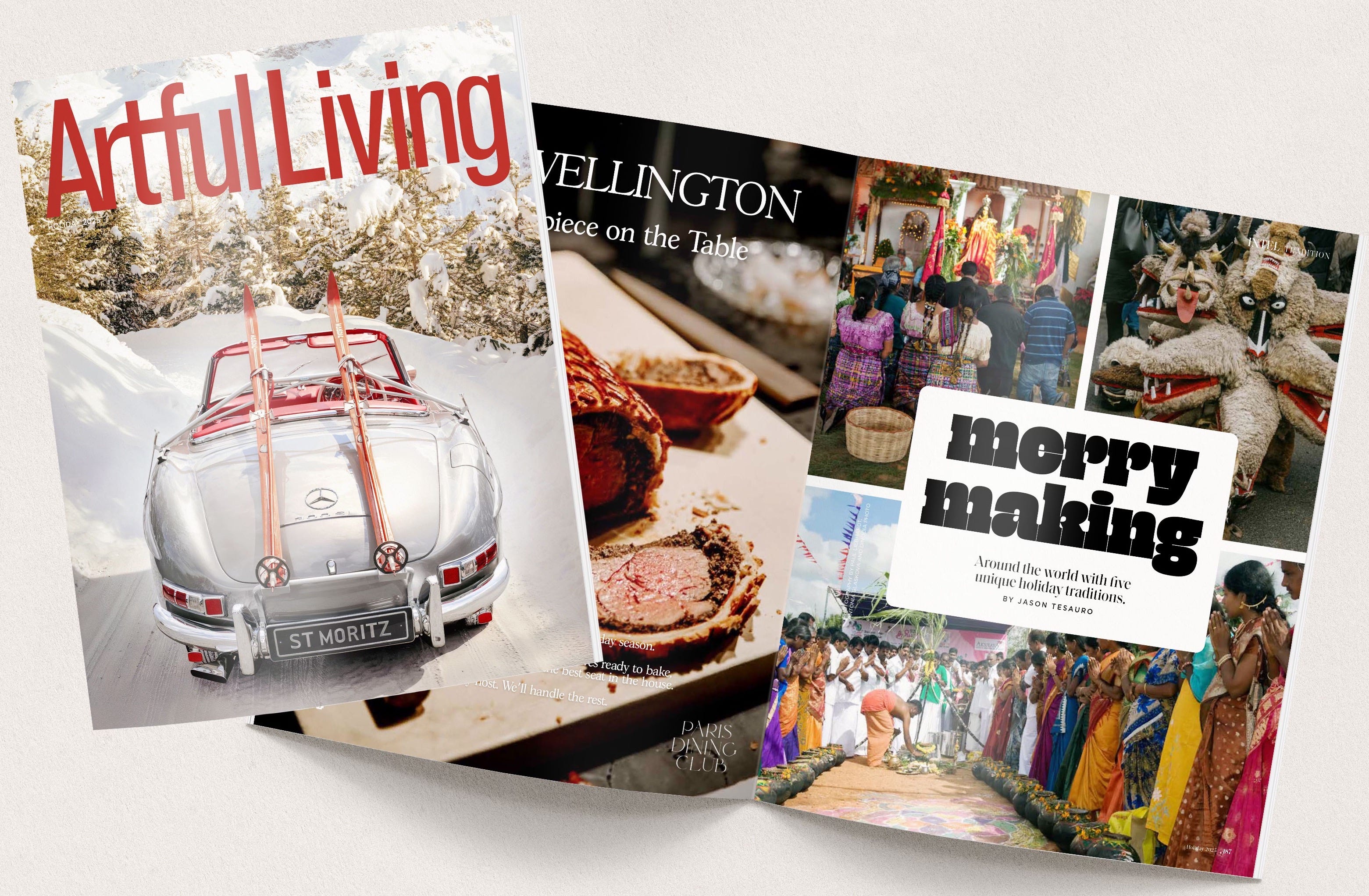
Between PTA happenings and my current role as casalingo (house husband), I’ve also landed a few freelance gigs. Check out the 2025 holiday issue of Artful Living magazine and my feature, "Discover 5 Lesser-Known International Holiday Traditions.” Are you familiar with La Quema del Diablo, fufu, kukeri, and Pongal? I wasn’t, so this piece afforded an opportunity to play off of class 1D’s globalism and spotlight culture in Guatemala, Liberia, Bulgaria, India, and Italy.
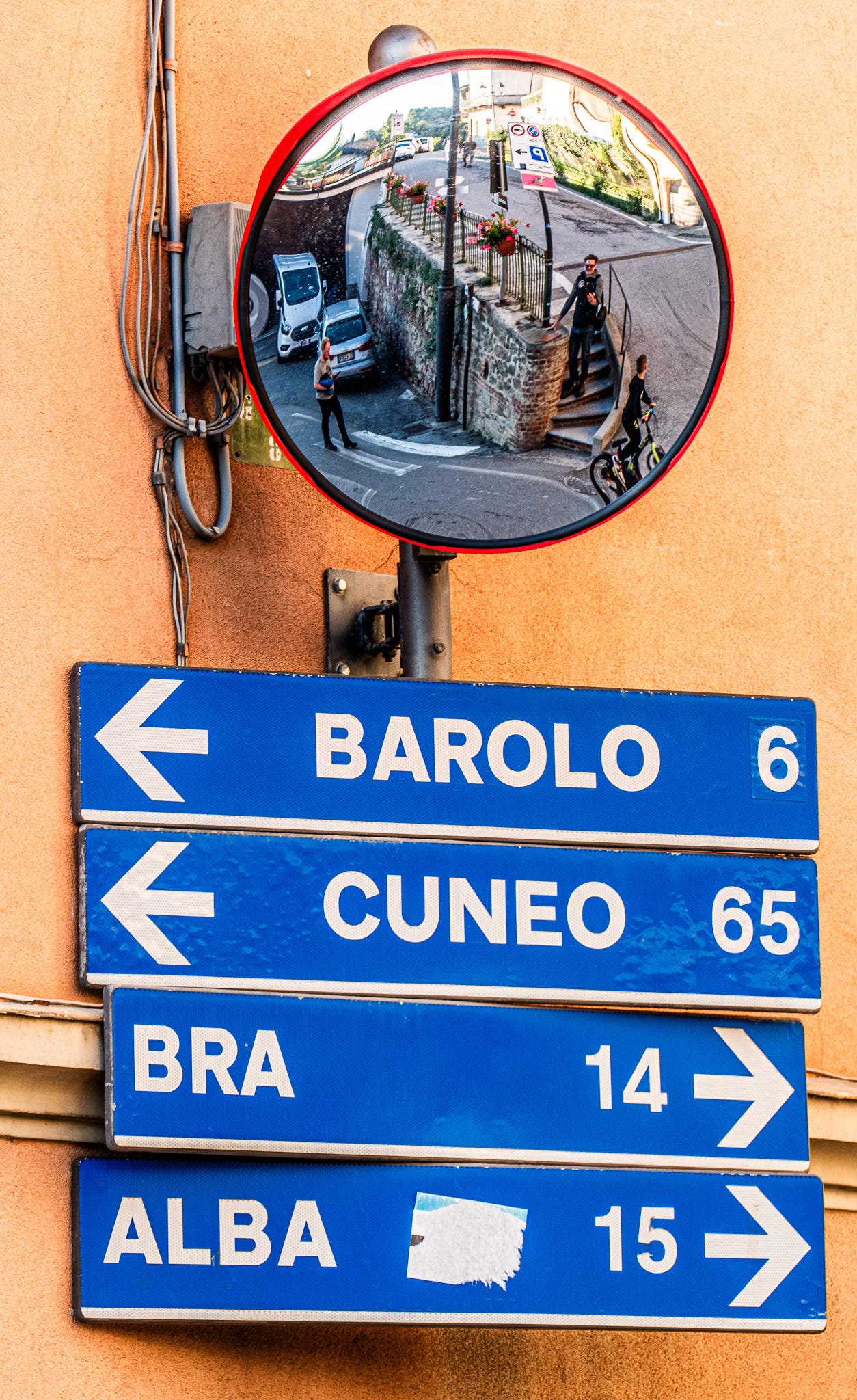
Next, I spent four days on assignment for Decanter magazine sniffing around Alba and Barolo. After decades of admiration from afar, to finally step onto hallowed ground in Nebbiolo’s historic villages felt electric. Instead of rehashing old stories about the region’s blue bloods, I aimed to add something new to the conversation. “Three Barolo Producers Having a Breakout Moment” goes live this week.
I found a 1975 Olivetti Lettera 35 macchina da scrivere (typewriter) and as soon as it’s back from a tune-up, I’ll resume clacking personal correspondence. I regularly video chat with my children back in the States, but it’s the analog essentials – walks, letters, postcards, paper snowflakes, vinyl records – anchoring me here. That little bit of restraint to forego so much fast-n-easy digital contact reset my priorities, boundaries, and accountability. Those who’ve felt the clarifying benefits of a disciplined detox or fast understand this. It’s hard to be firmly here if you keep defaulting to there.
More from Robin Wall Kimmerer’s Braiding Sweetgrass:
“After all these generations since Columbus, some of the wisest of Native elders still puzzle over the people who came to our homes. They look at the toll on the land and say, ‘The problem with these new people is that they don’t have both feet on the shore. One is still on the boat.’ They don’t seem to know whether they’re staying or not.’”
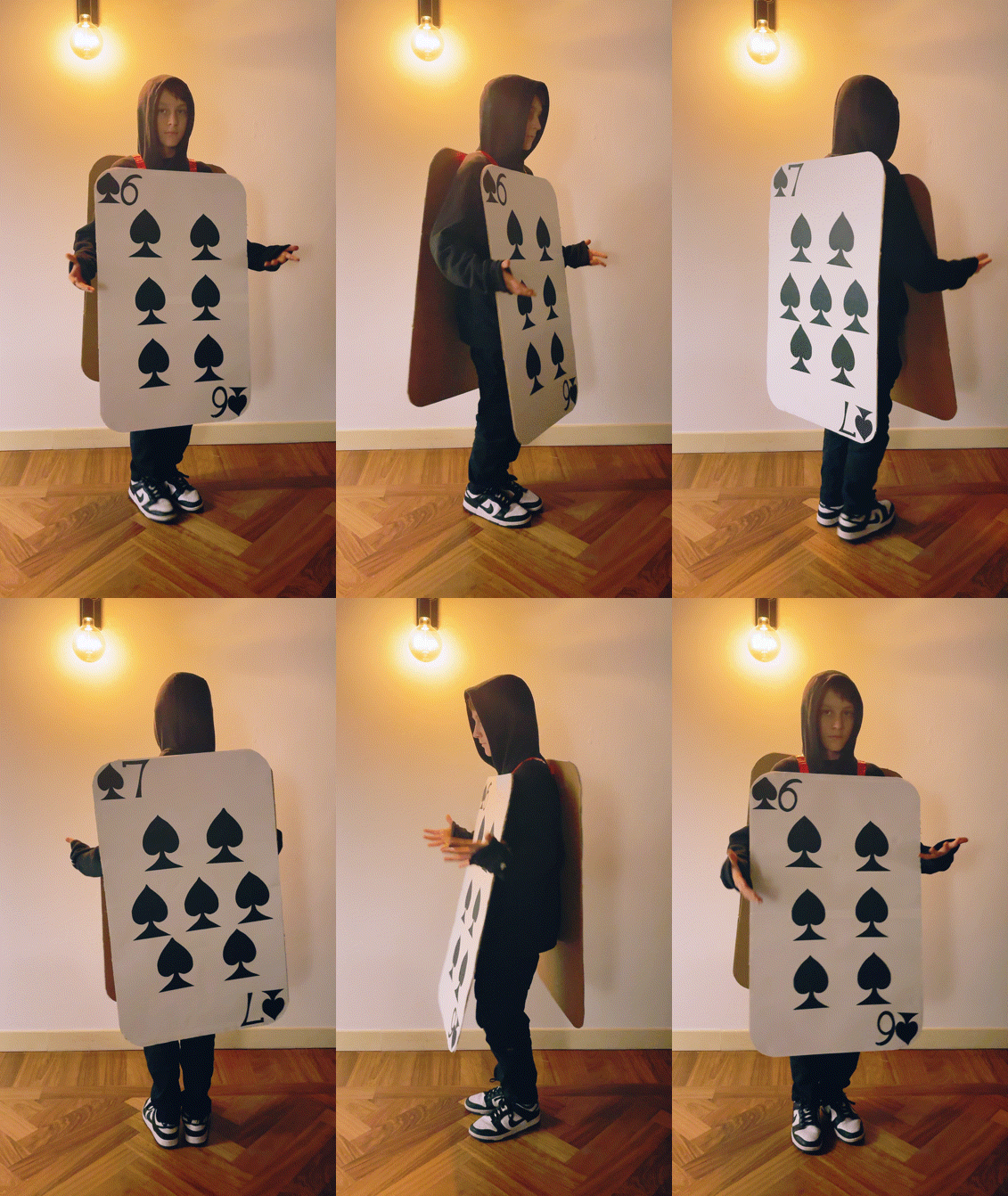
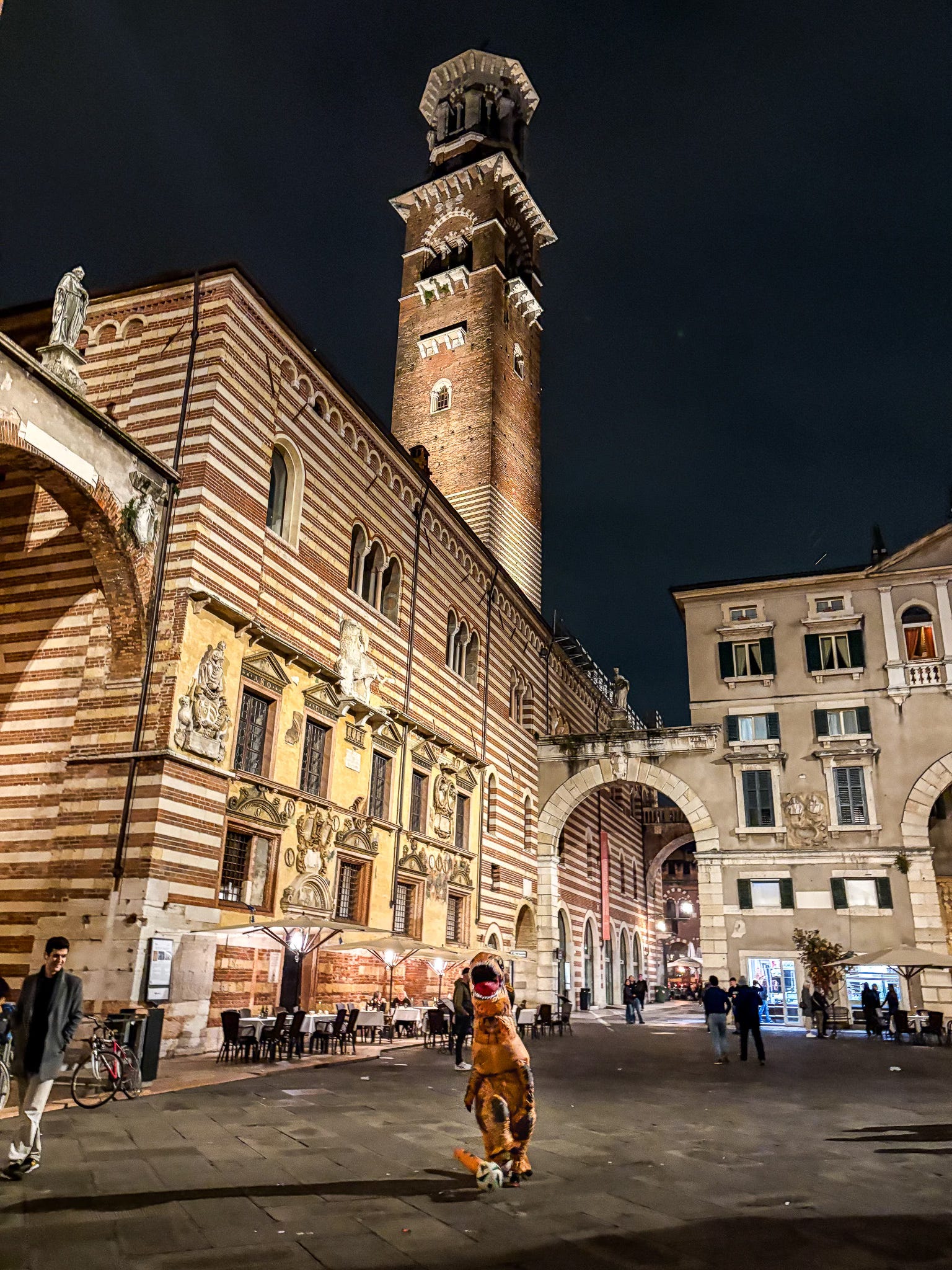
This really hit home on Halloween. Team Tesauro always goes for it, but Halloween’s just not a big thing here. Kids dressed up and roamed the city saying, “Dolcetto o scherzetto!” yet, marooned far from the familiar, we missed our posse of trick-or-treak pals. Instead of pulling out to call friends and lament, I stayed present and embraced what we’ve discovered more than what we’ve lost. Despite an obvious dearth of Almond Joy and Reese’s, there’s something remarkable about seeing in a 14th-century piazza some little Italian in a giant dinosaur costume kicking the soccer ball around a monument to Dante.
124 days in.
I think I’ll stay.
DOCG (Denominazione di Origine Controllata e Garantita) is the certification for the tippy-top of Italy’s quality pyramid. DOC (Denominazione di Origine Controllata) is the tier below.
Literally: ti toglie il fiato = it cuts the breath, ti lascia a bocca aperta = it leaves you with mouth open
No posts
Comments
Nothing yet. Say the first thing.
Sign in to join the conversation.