
Despite ambitious notions of unpacking and immediately launching into spritz-fueled trattoria reviews and golden hour glamour shots of antiquities, I am humbled by the realities of going native and finding my way. Plus, that’s not why I’m here. Thankfully, as I’m sitting with these ideas, I’m also reading Braiding Sweetgrass: Indigenous Wisdom, Scientific Knowledge, and the Teachings of Plants.1
Two hundred pages in, I reached a chapter titled: “In the Footsteps of Nanabozho: Becoming Indigenous to Place.” Author and Native American botanist Robin Wall Kimmerer, writes about her tribe’s2 beliefs that the Creator handed down instructions to the first man.
“Nanabozho’s first work: to walk through the world that Skywoman had danced into life. His instructions were to walk in such a way, ‘that each step is a greeting to Mother Earth.’”
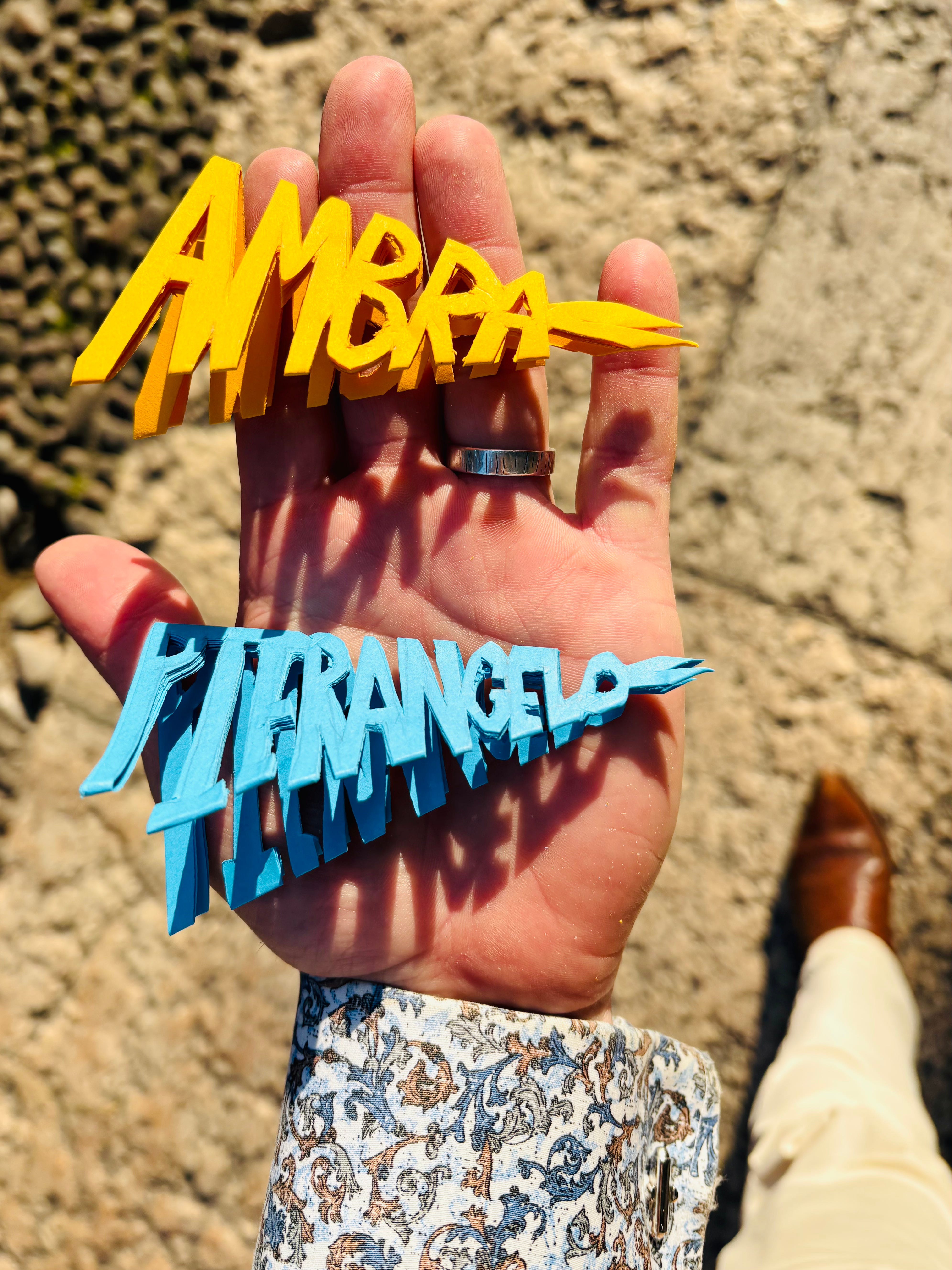
His second work: learn the names of all beings. These are now my tasks, too. In this new world, I’ve made it daily practice to walk with wonder and learn the names of people along my block and frequented routes. To kickstart rapport at the luxe eyewear boutique just below my living room window, I scissored personalized paper snowflakes for the shopkeeps.
Kimmerer addresses a grim alternative.
“I think it would be a little scary – like being lost in a foreign city where you can’t read the street signs. Philosophers call this state of isolation and disconnection ‘species loneliness’ – a deep, unnamed sadness stemming from estrangement from the rest of Creation, from the loss of relationship.’”
Leaving behind that mayor-like status where everyone knew my name, I understand this ‘species loneliness.’ It is a little scary to be an immigrant. Beautiful and intoxicating, too, yet it’s disorienting to be the foreign other who can approach but never reach true belonging. When introducing myself, I’ve noticed how ‘Americano’ feels in my mouth. It’s become a sticky word and the hard truths of happenings Stateside catch in my teeth like soft candy. I’ve tried taking the edge off by saying ‘Italo-Americano’ or ‘un nuovo italiano,’ but I can’t deny what America means lately to the world or in perpetuity to me. One candid local said that maybe my children’s children’s children will be Italian.
Another excerpt from the same chapter:
“Immigrants cannot by definition be Indigenous. Indigenous is a birthright word. No amount of time or caring changes history or substitutes for soul-deep fusion with the land. …Strive to become naturalized to a place, to throw off the mind-set of the immigrant. Being naturalized to a place means to live as if this is the land that feeds you… To become naturalized is to know that your ancestors lie in this ground. Here you will give your gifts and meet your responsibilities. To become naturalized is to live as if your children’s future matters….”
Hence the radio silence. It stems from going deep deep into the land. Here I am coming up to periscope depth to take an English breather and report-in, but my great-grandfather Angelo Tesauro couldn’t Google Translate his way through Ellis Island or FaceTime his mamma Teresa to let her know he’d arrived safely in 1904. Heck, Marconi had just sent the first transatlantic telegraph only three years prior. Mio bisnonno threw himself into New York City and thus have I with Northern Italy.
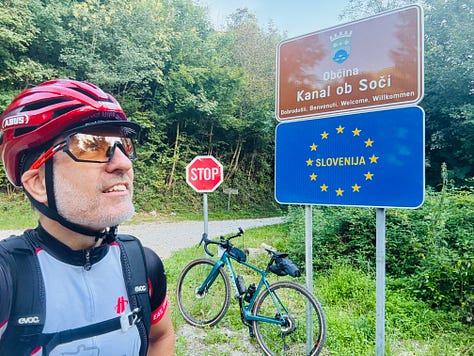
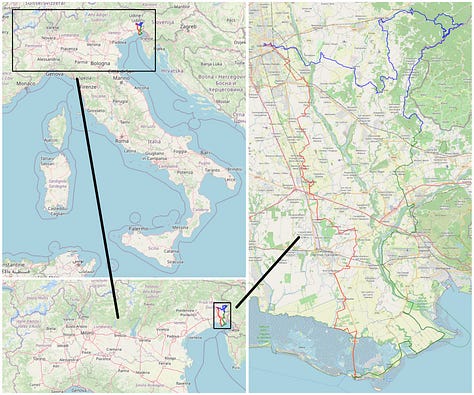
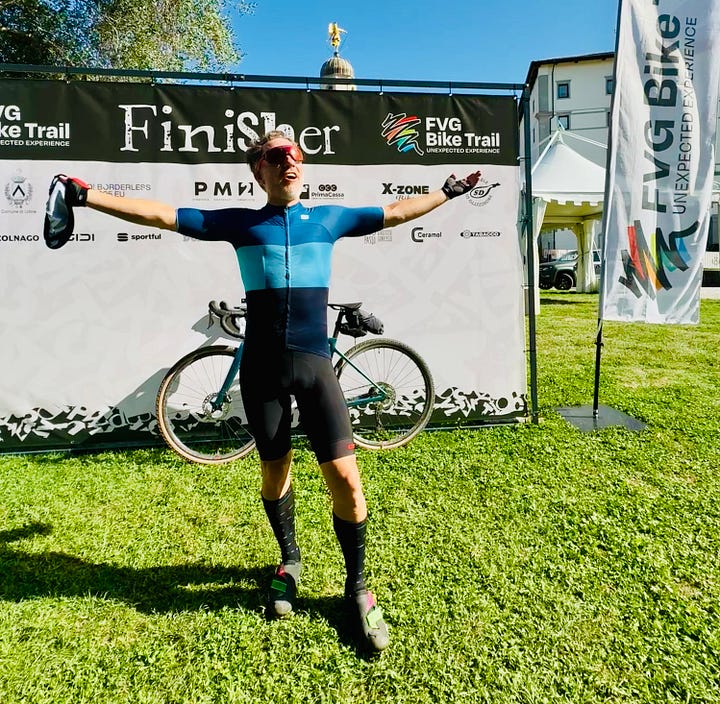
In early September, I signed-up for FVG Bike Trail, a bike-packing adventure across Friuli Venezia Giulia. I cycled 240km (150mi) and climbed 2,057m (6,750ft) in three days. Somehow, six weeks into Italian life, I even ended up on the regional TV news.
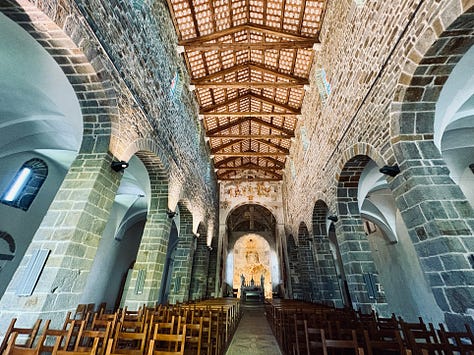
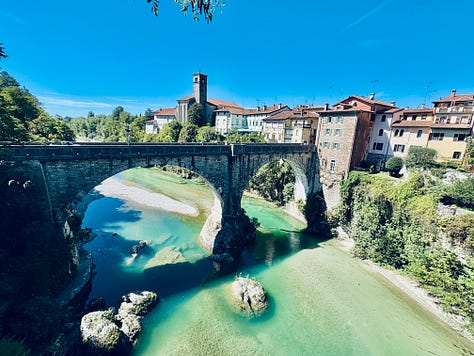
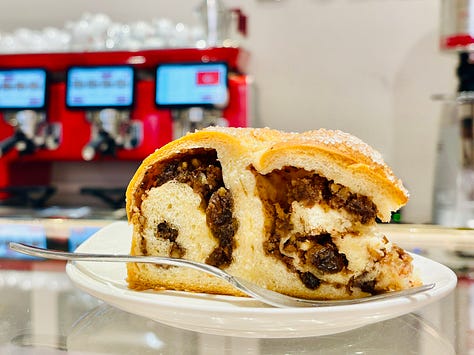
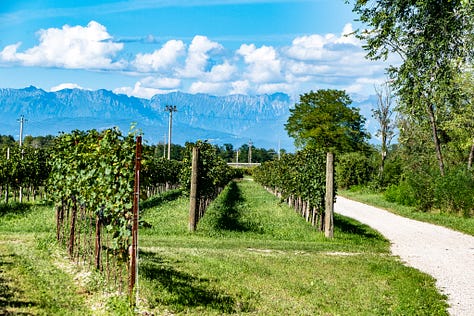
Beyond a spectacular gravel bike ride, that trek provided a sumptuous survey of Italy’s green and gorgeous northeast, granular understanding of pre-Alpine terroir, and a moving mediation in solace punctuated by moments nel gruppo (in the group) learning the lexicon of an Italian peloton: macchina dietro (car back), buco (hole), a sinistra (on your left). In my own rhythm, I biked through the city of Udine and encountered wine fields of Friulano and Ribolla Gialla in Manzano, paid respects at the Abbazia di Rosazzo church, and paused in Cividale del Friuli to recharge on frico and grappa-soaked gubana3. Then, across Ponte Del Diavolo and up to Castelmonte (which opens the drone video below). I’ll never forget that brutal climb, especially since I missed a gira destra (right turn) on my Italian GPS device and ended up on a punishing detour that led me up, up, up the mountain a second time. Once back on course, I dipped into Slovenia’s Golo Brdo and lush vineyards laden with fruit in the Brda wine region.

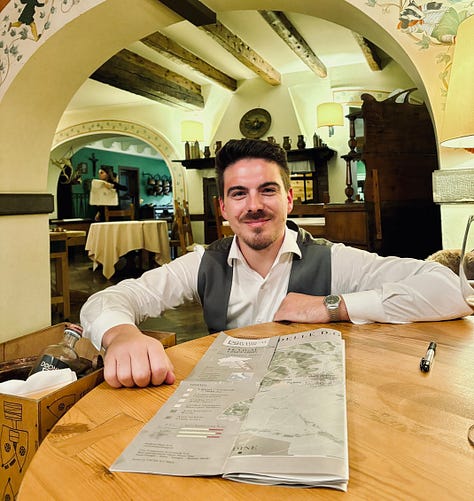
Near broken after sundown, I rolled into the hillside town of Cormons. As the fates would have it, that FVG route landed me on the doorstep of La Subida, a magical sanctuary tucked into the countryside. A giant tub in the middle of my glass-walled room beckoned a restorative soak against the wooded backdrop. Then, I stepped into their Trattoria al Cacciatore, an unexpected and overachieving Michelin one-star for which I would’ve summited that backbreaking Castelmonte a third time. Sommelier Carlo Minin, after reading my wilted frame, did something marvelous. He unfolded a map, and as I plotted the day’s journey, he paired the menu with a degustazione of wines from districts I’d pedaled through hours earlier. That’s somewhereness.
Note to self: despite some epic video, do NOT attempt to Sherpa a drone and camera over mountains on your back next time.
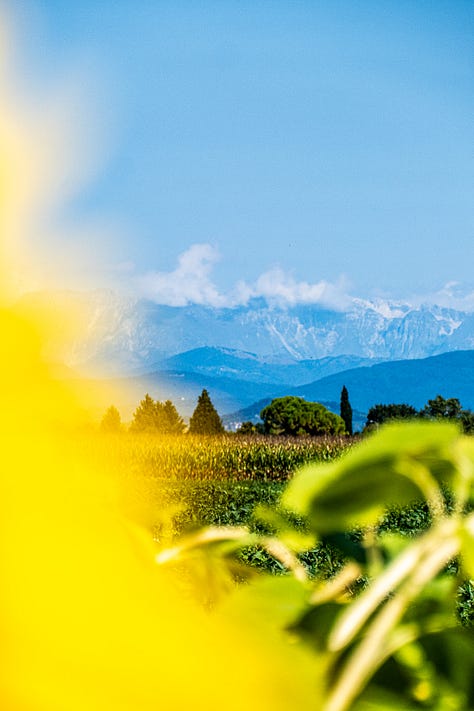
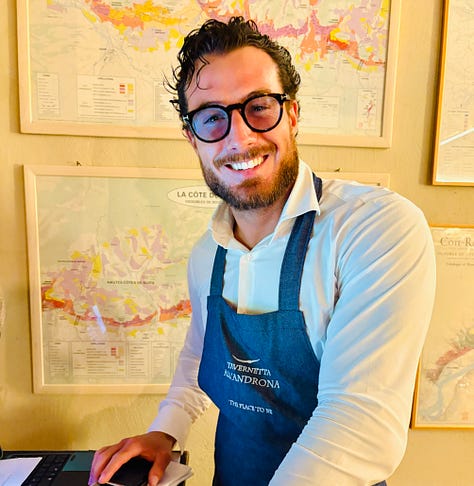
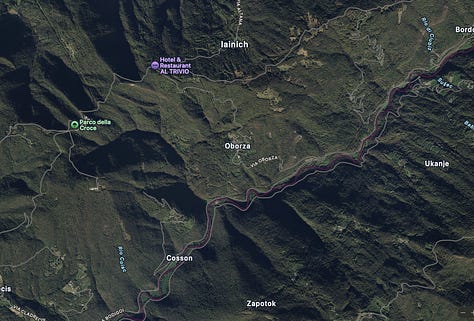
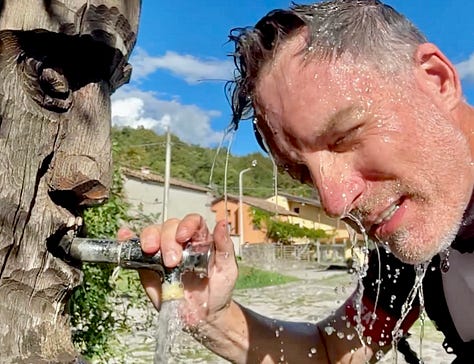
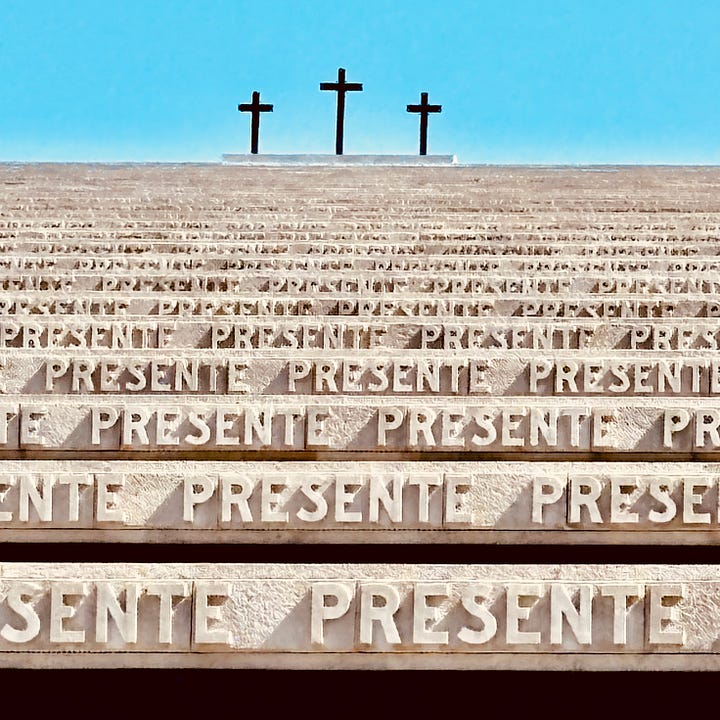
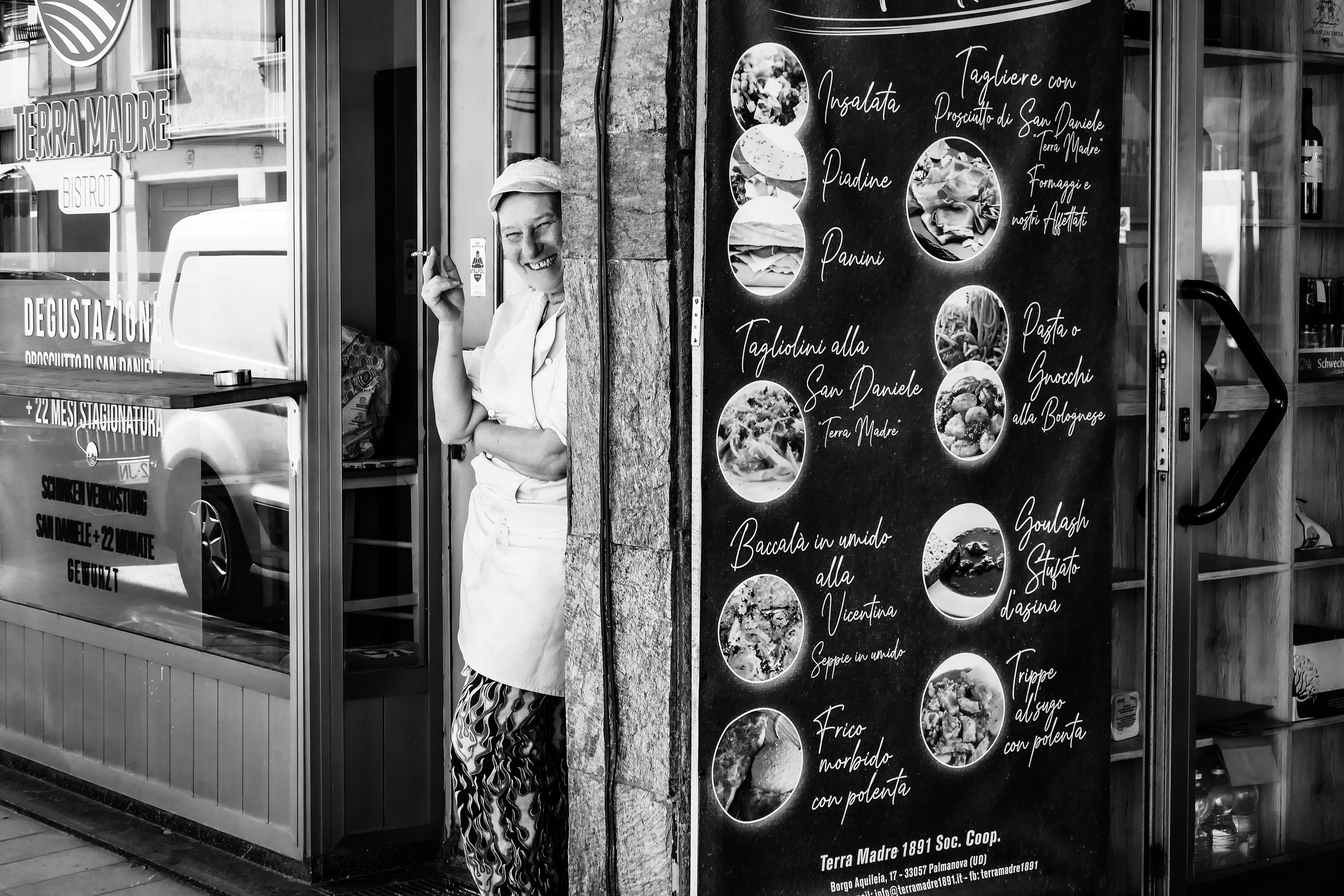
All from that elegant blue beast of a Colnago gravel bike, I drenched myself at an anthropomorphic fountain in middle-of-nowhere Oborza, admired ruins in the ancient Roman city of Aquillea, saluted the World War I shrine in Redipuglia, stood amongst towering sunflowers in Ruda, and fell in love with Prosciutto San Daniele at Ristorante Terra Madre 1891 in the star-shaped Renaissance fortress city of Palmanova. My southernmost point included a dip into the Gulf of Trieste and a feast of fresh fish on Isola di Grado at Tavernetta all’Androna featuring Henry Cavill’s Italian twin and the best octopus I’ve had outside of Galicia, Spain. The following day, I returned north, crossed the finish line at Casa della Contadinanza, and crushed a couple of cold Birrificio 620 Passi in the shadow of Castello di Udine before catching a Trenitalia home.
Forgive me for not reaching out sooner, but it’s been like that. A complete surrender to la vita italiana.
A friend nudged me – as many of you have – with a simple quip: “You’ve been offline a while, Tesauro.” His suggestion of returning from the quiet with a double album was a good one, so I’ll be back with more in your inbox later this week. Cross my Italian-American heart.
Ciao for now from day 117 in Verona.
This brilliant book should be required reading for every non-indigenous person living on a plot of earth they don’t farm themselves. If you enjoyed The Overstory by Richard Powers, think of this as the non-fiction teacher’s guide.
Kimmerer is a member of Citizen Potawatomi Nation, a tribe of Potawatomi people located in Oklahoma. As an Anishinabekwe scientist, she refers to a group of indigenous peoples that range from the Canadian Great Lakes to the US Great Plains.
Two iconic dishes of the region. Frico is a freaking delicious omelette-like dish of cheese and potatoes served with baked polenta. Gubana is a snail-shaped swirly cake filled with walnuts, raisins, pine nuts, sugar, and lemon peel. You can order it with or without a hit of grappa, which I learned, is best spilt directly into the pastry.
No posts
Comments
Nothing yet. Say the first thing.
Sign in to join the conversation.