
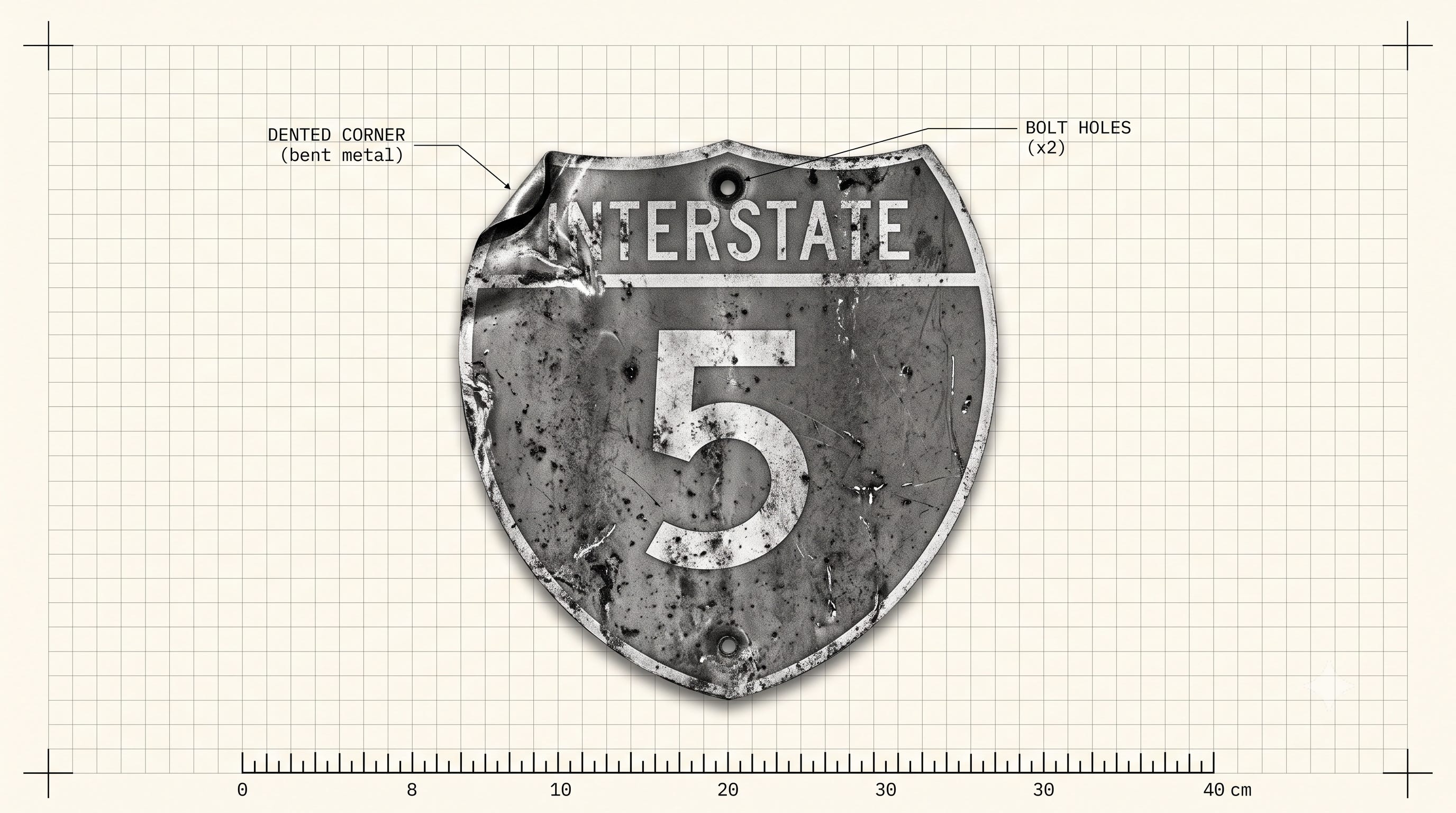
For years I commuted on I-5 through Tacoma.
If you’ve driven it, you already know the stretch I mean. Going in, coming out, doesn’t matter. The brake lights come on at the same place every single day, and after a while you stop being surprised by it. You just leave earlier and accept it as part of your life.
Nobody blames the drivers.
Different cars every morning. Different people, different jobs, different amounts of coffee, and the backup shows up anyway, right on schedule, in the same half mile of road. So eventually you quit thinking about drivers and start thinking about the on-ramp.
Then you get to work, somebody misses a deadline for the third month running, and the first thought in your head is why can’t they get this right?
Sometimes that’s the right question. Maybe they don’t care. Maybe they’re in the wrong seat and everyone but them can see it. I’ve said that out loud about people I liked, and I was right.
But I ask something before I get there now, and it costs me every time I ask it honestly.
Is the constraint in the person, or in what’s built around them?
That question has kept me from being unfair to people who didn’t deserve it. It has also forced me to look at things I’d rather hang on somebody else’s name.
From ten feet away, lazy and unclear look identical. So do uncommitted and buried. So do incapable and never once given the authority to decide anything.
And some days, if I’m honest, it’s easier to make a person the problem than to admit I’m the reason the traffic stops.
Here’s how I do it.
Somebody on my team brings me something. A problem I would have walked right past — honestly, I’d have forgotten it existed by Thursday. They caught it. They brought it to me.
And then my brain lights up.
I start seeing the whole thing. The angle, the version that would actually work, the three moves I’d make first. So I start talking. Framing it. Being creative at them. I don’t think I’m assigning anything, I think I’m helping. By the time I stop, I’ve walked them through my entire approach to a problem they found, and I’ve said the thing I never actually said out loud: this is how I want it done.
Then they go do it. And they do it my way, slightly worse than I’d have done it, because it was never theirs. Some part of me quietly files that away as evidence about them.
What I should have done was hand the whole thing over. Let them build it, including the parts they’d get wrong. And save every creative idea I had for the conversation after it was finished, where it would have landed as coaching instead of instruction.
You can’t ask someone for ownership and then hover. I know that. I’ve said it in meetings. I still do it.
It’s rarely dramatic. Mostly it’s boring.
It’s the salesperson staring at two hundred leads with no idea which one matters, so she works the easiest one. It’s Marcus, who runs nine people and gets the same Slack message from three of them at 4:15 every afternoon — quick question, which of these is the priority? — and answers all three, because he’s good at answering, and has been answering for eleven months. It’s the guy who learned in year one that every call he made on his own got reviewed, softened, or reversed. So now he waits.
Waiting is a skill. People get good at it.
If hiding a mistake is cheaper than surfacing one, mistakes go quiet. If agreeing with you costs less than correcting you, everybody agrees with you. Then we call them passive. Dependent. Low ownership.
They’re driving the road we paved.
One person struggling could be the person. Could be the role. Could be one relationship that’s gone bad and nobody’s said so.
Four people struggling at the same handoff, in the same week of the month, with the same confused look on the same call — that isn’t four people problems.
If everybody asks the same question, the expectation was never clear. If nobody decides without checking, the authority was never real. If dates keep slipping, something upstream is broken and no one has been willing to name it. If your strongest people leave tired, resilience isn’t what failed.
Sometimes it isn’t the employee. Or the software, or the market, or the process.
Maybe I:
changed the priority twice in one week and only told half the team
answer every question so fast nobody builds the muscle to answer it themselves
step in at the first sign of imperfection and call that standards
say I want initiative and then go quiet in a way everyone reads correctly
have become the approval line, and the line is forty minutes long, and I’ve been describing it as being available
That last one is hard to admit, because you can’t solve it with a training budget or a new tool or another policy doc. It means changing how I run the room. Getting clear enough that people know what good looks like without asking me. Getting patient enough to let somebody think in front of me. Getting secure enough to watch someone make a decision differently than I would have—and not rush in to take it back.
That last part I have written down. My brain moves faster than the room, so the affirmation I have says: keep your mouth shut, Jason.
Before I decide the problem is the person, I try to slow down and look in nine places: skill, clarity, information, capacity, authority, fear, the handoff, the role itself, and me.
Pick the one you’d least like to be true, and check that one first.
The answer may still be the person. Some people avoid responsibility. Some do not have the skill and will not build it. Some are in the wrong role, and dragging that truth out becomes its own kind of cruelty.
But that should be where an honest look ends up—not the first thing that arrives when something breaks at four on a Friday.
Before you write their name in the box, check whether yours fits.
No posts
Comments
Nothing yet. Say the first thing.
Sign in to join the conversation.