
Hello everyone:
I was surprised to see so little response to last week’s piece, “Positive and Negative,” about the problem of PFAS “forever chemicals” in the batteries that underpin the renewable energy revolution. It’s not a fun or lyrical essay, but I so think it’s a vital and little-discussed story about a crucial environmental tradeoff that we shouldn’t be making, and about solving the problem before it causes too much harm. If you haven’t read it yet, I encourage you to take a look.
As always, please remember to scroll past the end of the essay to read some curated Anthropocene news.
Now on to this week’s writing:
What do Greenland sharks, box huckleberry, cinnamon ferns, Galapagos tortoises, and giant sequoias have in common? What forms the ancient and intricate architecture of glass sponges and black corals in the darkness of the cold deep sea, and builds the rugged branches of bristlecone pines and baobab trees in the desert glare and heat? The answer is the same that Bilbo provided for Gollum’s fifth riddle in The Hobbit:
Text within this block will maintain its original spacing when published
This thing all things devours;
Birds, beasts, trees, flowers;
Gnaws iron, bites steel;
Grinds hard stones to meal;
Slays king, ruins town,
And beats mountain down.
With all due deference to Tolkien, though, the riddle I have in mind is about time as giver rather than destroyer. The handful of long-lived species I listed above are a few fluttering flags of a far greater truth: Life is often lived on a scale that dwarfs our own. A 100-acre box huckleberry clonal colony in Pennsylvania might be 13,000 years old; glass sponges and bristlecone pines may live 15,000 and 5,000 years, respectively; sequoias can live for a few millennia, cinnamon fern roots can persist for centuries, and Galapagos tortoises and Greenland sharks might outlive us by the same margins with which we outlive our cats and dogs.
Talking about time takes time, which always leads to me wondering why I’m talking at all. Silence is, after all, the truest path to feeling the full heft of existence, and our own existence is how we measure time. (We’re surrounded by artificial clocks, but we’re still animals whose sense of time is rooted in the passage of our days and in our ticking sense of mortality.) Still, though, I’m here talking about time, so let me narrow my parameters.
I’m not here to commend the abiding virtue of setting aside time in our hyperscheduled lives, to slow down and read a book, practice meditation, or take long forest walks. Nor am I here to summon up my quasi-spiritual experience of the emptiness of Antarctica to remind you that the faceless clock of timelessness - marking continuity rather than increments - is our deepest reality. No, what motivates me here is a desire to recognize that we are cultural mayflies in a world of ecological longevity.
This graphic provides an interesting selection of long-lived species:
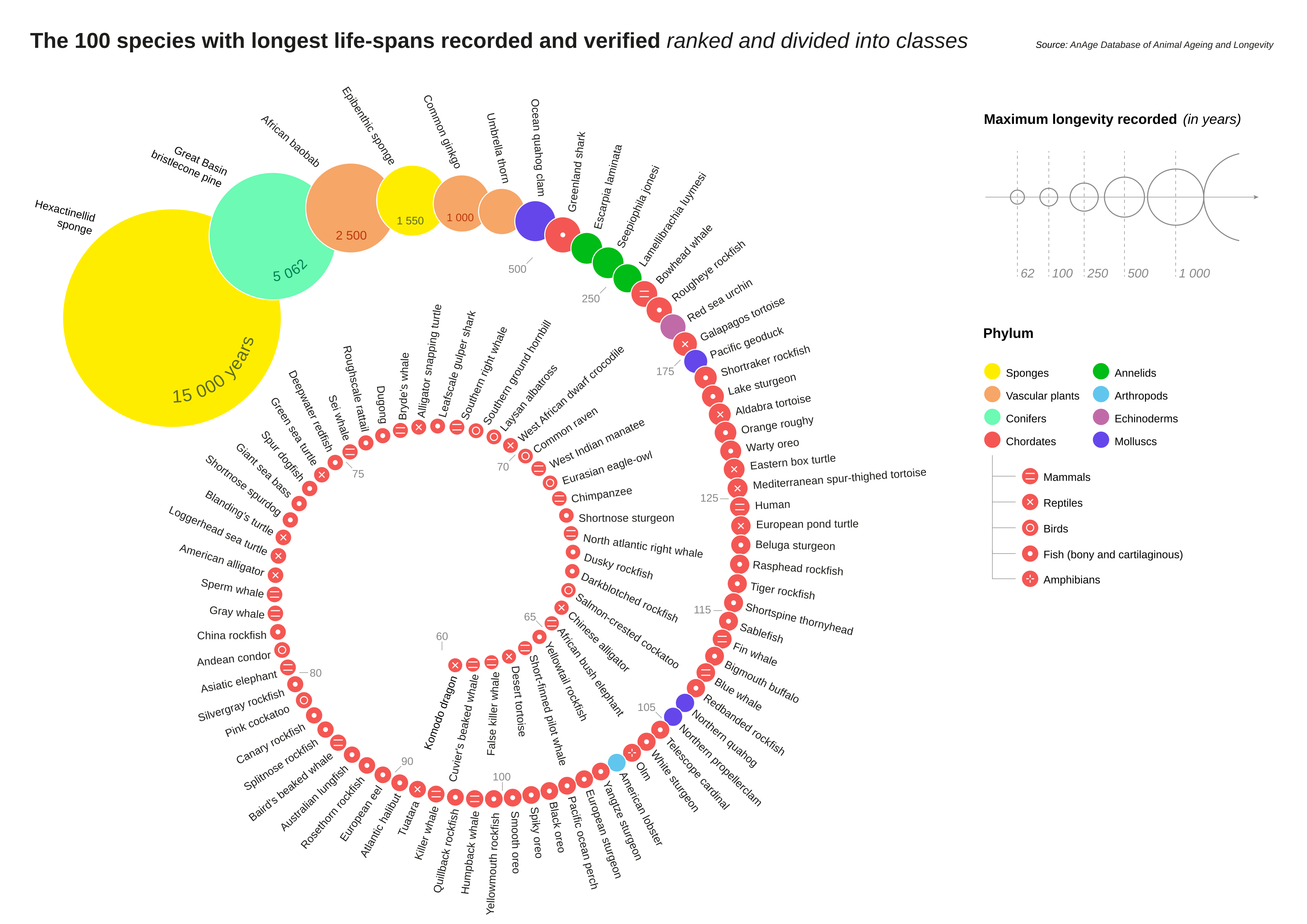
Human lifespan today is about 73 years, on average. It ranges, country by country, from 86 years in the wealthy enclaves of Monaco, San Marino, and Hong Kong to 54 years in Nigeria. Note that the list of species in the graphic above begins with Komodo dragons, who live for 60 years, which is already more than the 300 million humans in Nigeria and a half dozen other nations. (More accurately, it’s the men in those nations, and several others, who live the shortest of lives.) In 1950, human lifespan averaged only 45 years, a tiny fraction of the full life of a common ginkgo tree.
For some reason, there is a dearth of common long-lived trees in the spiraling list above. I think we all know that every forest in the world is full of tree species who, if left alone by disease, storm, and chainsaw, would live far longer than any human. Here in coastal Maine, it’s not unusual to find a few oaks, ash, and pines that survived the vast cutting of the 19th and 20th centuries and are still thriving today 150 years after their seed sprouted. They’re surrounded by the young recovering forests that have since reclaimed the once-bare farmland.
I’d guess that most people would first mention trees when asked about long-lived species. We conjure up images of old-growth remnants, giant sequoias, ancient figs and baobabs, and the mother trees who (like Tolkien’s Ents) shepherd their woody flocks. Trees and forests, for us, carry the weight of silence and time, and invite us in to feel that weight.
Perhaps we’ll remember, too, that whales can lead lives as long as or longer than our oldest citizens. You’ll see fin and blue whales, for example, at about the 110-year mark in the spiral. Elephants walk beside us on a similar mortal path. Many species of turtles and tortoises, despite running a slower race than humans, can run a much longer one. Who else comes to mind for you?
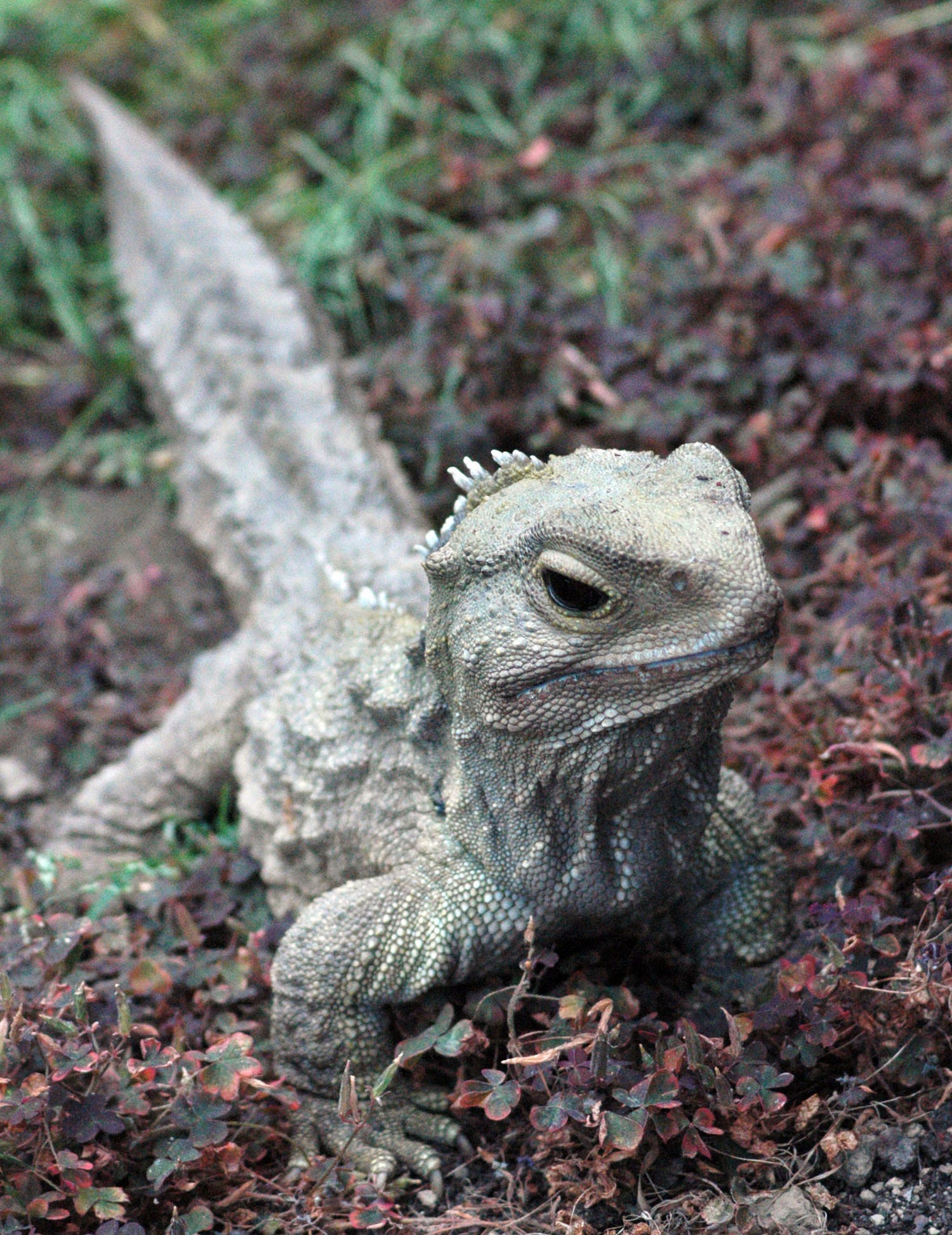
The long-lived species we’re probably not thinking of are all around us. The Maine lobster I ate recently might have lived for more than a century. Geoducks, a saltwater clam, can live 150 years, while the endangered freshwater pearl mussel of Europe and eastern North America might live to 250. The spiral list above is rife with small fish species most of us have never heard of - e.g. warty oreo and rougheye rockfish - many of them living for a century or two. Tuataras (an ancient species of reptile) in New Zealand and sulphur-crested cockatoos in Australia have been known to live well over a hundred years. The list goes on and on.
And then there’s the astonishing and strange longevity of clonal organisms, where what appears to be a forest or ecosystem is a single creature, spreading over great distance and time. Here in North America a few examples include the box huckleberry colony in Pennsylvania I mentioned above, the ~13,000-year-old Jurupa oak colony in California, the ~8600-year-old and 35,000-ton “Humongous Fungus” in Oregon’s Malheur National Forest, and Pando, the 106 acre (43 hectare) and ~47,000 stem quaking aspen tree estimated to have first sprouted 16,000 years ago. Massive clonal colonies of seagrass in Australian and Mediterranean waters are at least several thousand years old, as are many species of deep ocean corals, glass sponges, and tubeworms. More-than-human longevity is everywhere we look.
Meanwhile, in places we cannot see without the special eyes of science, there are microorganisms whose experience of time is far, far beyond our perception. Tiny endolithic lichen eke out quiet thousand-year lives in microscopic spaces of the stone they occupy. Dormant bacteria found in ancient Antarctic ice (from 100,000 to 8 million years old) have been revived in a lab. In two examples of bacteria pulled from cores drilled beneath the ocean floor, some might have persisted for 101.5 million years and others seem to be only reproducing every 10,000 years. Even more bizarrely, bacterial spores locked away in 250 million-year-old salt deposits have been revived, making them the longest-living organisms we know of.
To surpass such mind-boggling longevity, you’d have to live forever. Which brings me to the immortal jellyfish. Most jellyfish are the end-form of a typical lifecycle: egg, larva, polyp, jellyfish. But the immortal jellyfish, only about 4 millimeters across, has the astounding ability to revert back to its polyp stage if damaged or stressed. Hypothetically, they can reincarnate endlessly, like a butterfly returning to the caterpillar stage whenever conditions are difficult enough to require it.
They are also exquisitely beautiful.
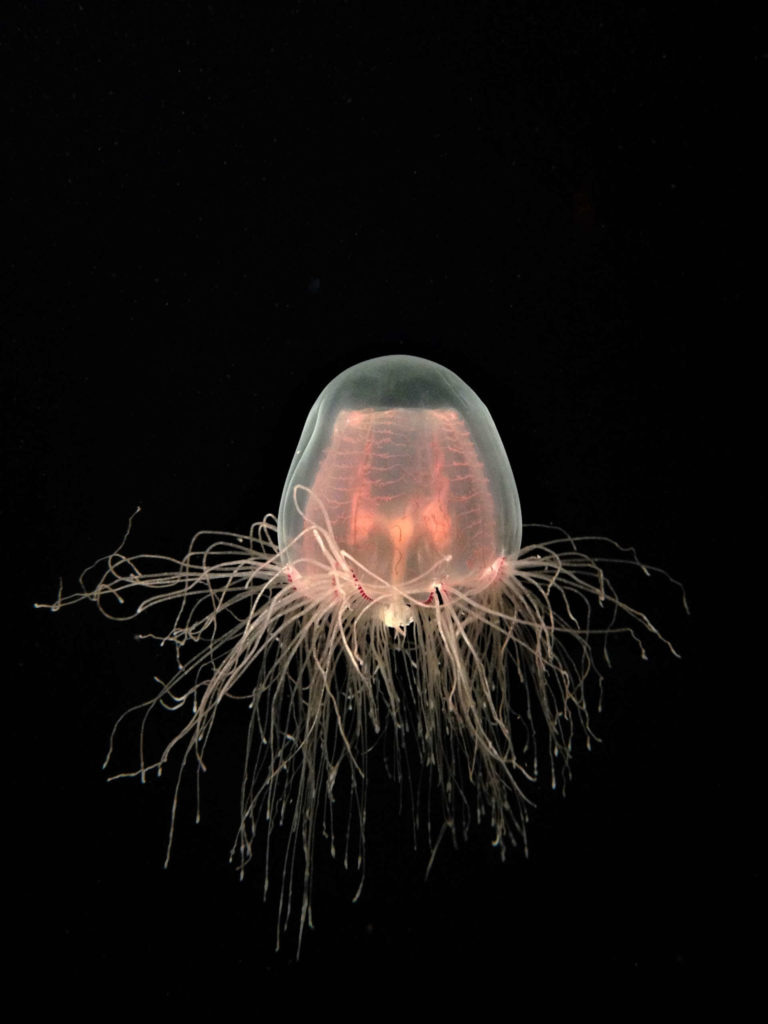
There is an irony in the unsleeping work of science reminding us, amid our busy lives, of the longevity of sharks and sequoias. I can’t decide if the revealed wisdom here is being reduced to noise, or is emerging in a way that brings us back to our once-intuitive sense that we’re motes in the river of time.
In the frenetic, clearcutting path of our exploitation culture, we’re also surrounded by species living much shorter lives, and that’s what we mostly think of as nature: livestock born to die young on our plates, bacteria reproducing endlessly despite the flood of antibiotics, mosquitoes buzzing against summer screens, annual flowers we plant again and again in our gardens, squirrels flattened on the road, daisies blooming and withering, minnows and chickadees frolicking in their brief moment under the Sun. We see/feel/taste all this brevity and nod at its parallel with our bustling, boxed-in lives, obsessed with the tick of the second hand.
I don’t want to say too much here about our cultural shortsightedness, but I will reiterate that the problem of the Anthropocene is a problem of time. Change is natural, but not at this pace. Only an asteroid has changed conditions for life on the planet faster than we are now. We (and the rest of life) suffer from our inability or refusal to grasp as a culture the extraordinary speed with which we are altering the Earth - especially by heating the atmosphere - in ways that both short- and long-lived species cannot properly adapt to. This era is defined by humans being the one species on Earth which does not live according to the slow, evolutionary sanity of Earth-time.
Examples are literally everywhere, from politics to poisoned farmland to the unthinking purchase of pets like parrots and turtles whose lives are as long as our own. There’s the planned destruction (for short-term profit) of deep sea habitats by mining mineral-rich polymetallic nodules, which literally anchor much of the life in the abyssal plain, and which grow at an estimated rate of a centimeter every million years. And there’s the problem of today’s billionaires whose half-witted obsession with longevity we have to put up with while watching their corporations accelerate the mortality of all life. We live in a culture defined by short-term thinking that largely denies most citizens, animals, and plants their right to live full lives.
I’m reminded of a line from this week’s truly brilliant post by Adam Mastroianni at Experimental History. In the post, Mastroianni argues persuasively (and with good humor) that most of us don’t think very clearly or develop a resilient set of ethics because we don’t take the time to do either. We’re comfy in our unresolved selves until something rattles our cage:
Our value systems are flimsy for the same reason our scientific reasoning is flimsy: we don’t fix our mental models until something tells us that they’re broken.
I’m here to say our mental model of time is broken. And that there are consequences: If we do not make space for time, time will eventually deny us the space to live.
I think it’s worth questioning the scientific assumption that the “universe” is an unthinkably large place in which time occurs. Perhaps the foundation of all that exists is time, with its paradoxical blend of cause-and-effect and circularity, and space is merely a feature. Maybe the varieties of consciousness, from the perception of pain to the spiritual grasping after awe, are simply ways of processing the mystery of time, in which all things change within a context of nothing changing. Energy is neither created nor destroyed as it shifts between light and matter. Life and death curl around each other like soil and seed. Maybe what we call “space” is just our peculiar map-making minds, devoted to territory and ownership, giving time a geography to play in.
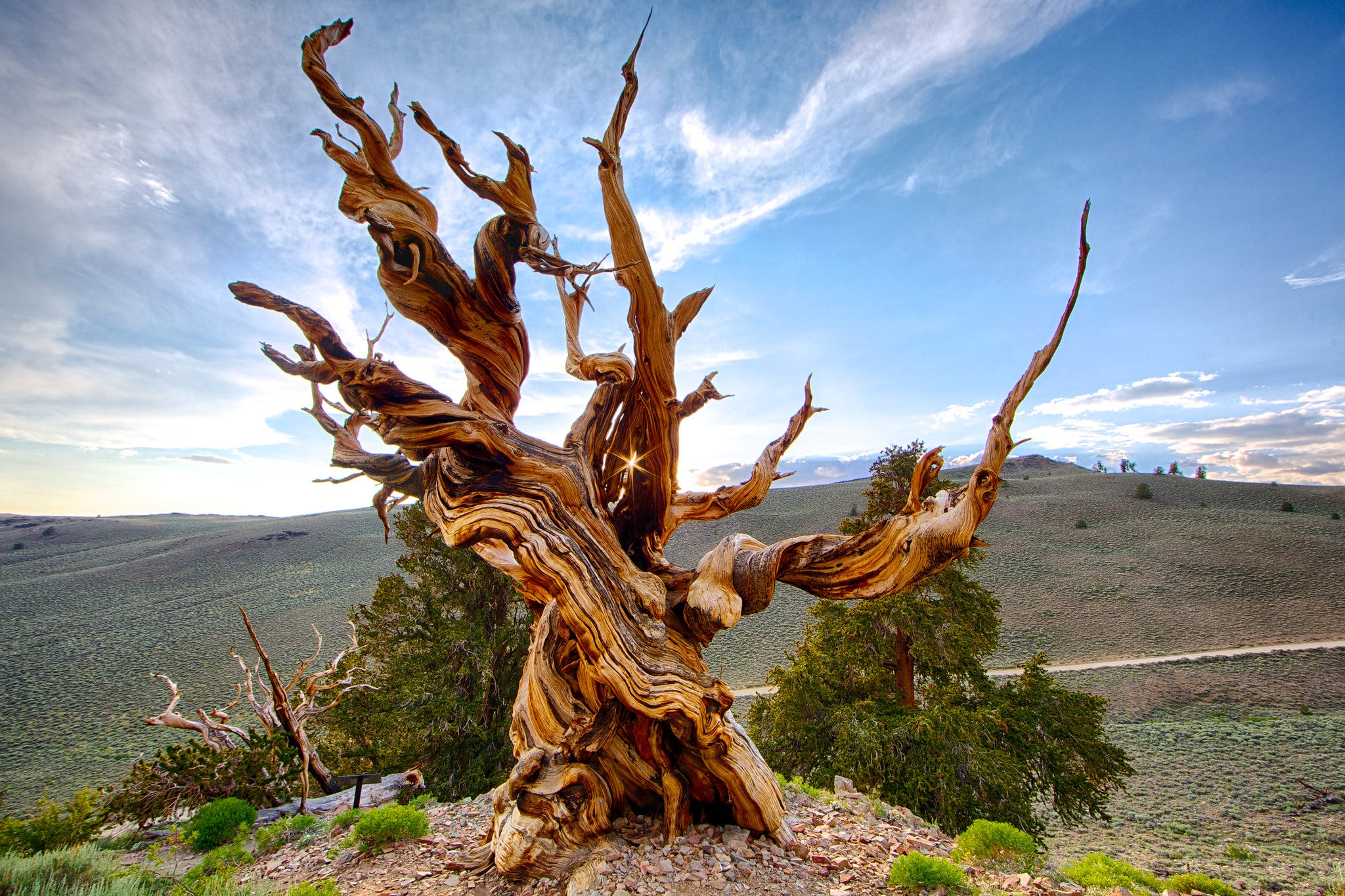
Or not. My point, I suppose, is that we should recognize that the time spun up into a twisted bristlecone trunk and a spiky tuatara’s tail is the same time that ticks between our neurons. We should be far more devoted to the care of long-lived species than we are, because all this more-than-human life that precedes and exceeds our little human lives literally embodies the substance of the magic of existence.
Of course, many of us do honor ecological longevity. Citizens and governments go out of their way to protect the vast clonal organisms, for example, or the oldest and most magnificent trees. I was reminded of the heroic tree-sitters who tried to protect ancient trees from the chainsaws when, this week, protesters occupied the last of the three “Grandmothers,” a trio of 200+ year old cottonwood trees on the U.S./Mexico border. The other two have already been knocked down by excavators driven by contractors building the unnecessary, cruel, shortsighted, and ecocidal border wall.
And some of us are truly invested in long-term thinking, like those behind The Long Now Foundation, whose projects include building a 10,000 year clock inside a mountain in West Texas. It’s part of their mission to inspire this mayfly culture to “operate on the timescale of civilization” and to take “the long-term past and long-term future seriously.” In doing so, they write, we
would plan differently, decide differently, build differently, and imagine differently. This world would run on a culture of expansive thinking — across timescales, across sectors, and across traditional lines of thinking.
Everyone in this world would find themselves in the middle of the story of civilization.
Everyone in this world would understand themselves as someone else’s ancestor.
Everyone in this world would remember that they are part of something larger than themselves.
Together, they — we — would form a civilization of good ancestors.
Needless to say, such a world would by definition be more attuned to the long-term needs of long-term ecology. In that spirit, then, I’ll close with a description of cinnamon fern from the excellent Northern Woodlands magazine, which is a wonderful resource for becoming ecologically aware in this part of the world:
Contemplating the cinnamon fern in our woods, I see in one glance the spores ripening over spring and summer, the creep of a rhizome over centuries, and the hundreds of millions of years of a lineage that has watched the dinosaurs come and go.
Cinnamon ferns have watched us arrive too, like an asteroid. How long we’re here, and how brightly we burn, will depend on how we spend our time.
Thanks for sticking with me.
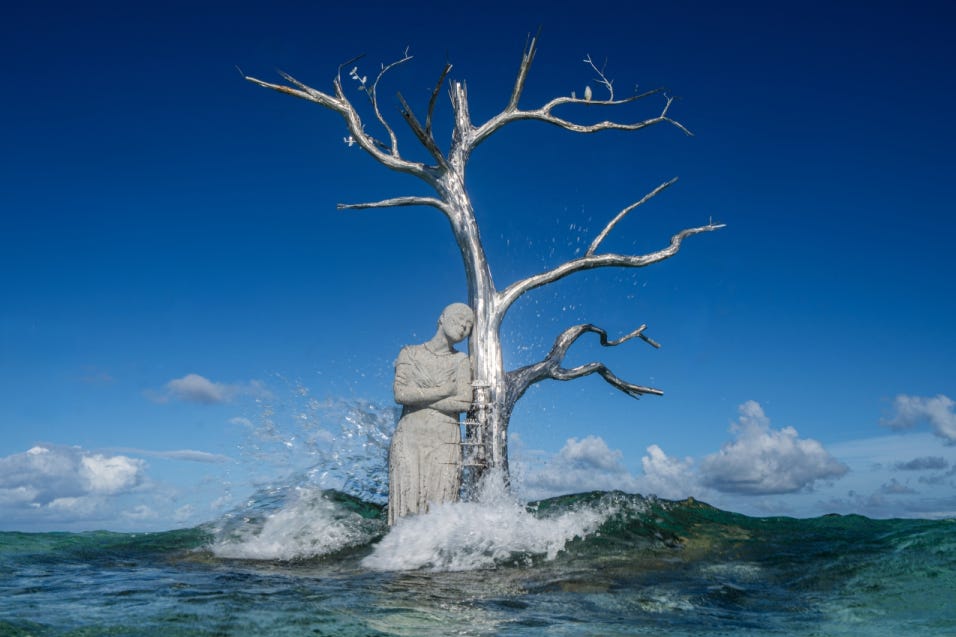
I just discovered the beautiful underwater environmental sculptures of Jason deCaires Taylor and encourage you to take a look at his full body of work, which is both lyrical and poignant. In some, human forms stand on the seafloor, reminding us of our impacts. I read about his most recent piece, “The Solomon Siren,” in the New Scientist. It portrays climate activist Gladys Bartlett and a leafless tree placed in a tidal zone that is all that’s left of her Solomon Islands home, Kale Island, which has been erased by rising seas. The sculpture is submerged with every tide.
From Bryan Pfeiffer and Chasing Nature, “A Dragonfly Without Borders,” another great natural history essay from Bryan, this one about Wandering Gliders (Pantala flavescens), a remarkably successful and cosmopolitan dragonfly species:
Insects invented flight about 400 million years ago, dragonflies mastered it, and Pantala has taken the idea great distances. Its wide hind wings, wider than those on other dragonflies, make for efficient aerodynamics — more glide, less flap on the winds of the world.
And Pantala rides those winds like few other insects. Most notable in its globetrotting is an autumn migration from India to Africa across the northern Indian Ocean. The flight coincides with prevailing winds (tailwinds for a dragonfly) and monsoon rains, both of which play an outsized role in Pantala’s success on Earth.
From Reasons to Be Cheerful, “Meet India’s Four-legged Wildlife Detectives,” a good-news story about the remarkable success of super-sniffer dogs in tracking down the perpetrators of environmental crimes.
From Michelle Nijhuis and Conservation Works, “Building a Science of Recovery,” about the necessity of shifting the work of conservation biology from “a crisis discipline” that mainly documents biodiversity loss to “a science of recovery” that focuses on what works in helping species rebound and thrive.
From The Overpopulation Project, “Two Prominent Economists Talk Up Population Decline,” a brief summary of two recent publications that both dismiss concerns about a shrinking population, finding plenty of evidence that economies have benefited and will continue to benefit from gradual population decline: “Rather than being feared, [low fertility] should be celebrated as the hallmark of a prosperous society where people are free to decide how to live their lives.”
It’s vital that we keep a geological perspective on the heating planet, and “Earth is heating up faster than at any time in its history,” a short essay in the New Scientist, is an excellent reminder of how insane and unprecedented our current path has become. Please, read this for the reminder, and pass it on:
Perhaps barring the immediate aftermath of the dinosaur-obliterating asteroid impact 66 million years ago, atmospheric carbon dioxide levels have never risen as quickly as they have in the last couple of centuries. Even worse, nowhere in the geological record is there evidence for the average temperature of our world climbing as quickly as it is now. This means 10 times faster than during the Palaeocene-Eocene Thermal Maximum, which marked extreme hothouse conditions 56 million years ago, and at least 20 times faster than at the end of the last glacial period.
From the Guardian, a wily feral grey tabby cat in New Zealand nicknamed “Nine Lives”, known for killing dozens of endangered pāteke (brown teal) has finally been caught and killed. Nine Lives wiped out 1% of the entire pāteke population over a few years, erasing much of the progress being made to protect and reintroduce the species. I bring this story to your attention not to celebrate the cat’s death, but to remind you of how much carnage feral cats cause in the wild. You can read my two-part essay, “Cruel to be Kind,” about the extraordinary work being done in NZ to eliminate the invasive predators (cats, stoats, possums, etc) that have decimated the country’s native species.
From my wife Heather Hardy and A Nest of Songs, “I Am a Bird,” a beautiful and sad song written from the point of view of a terribly neglected parakeet Heather met many years ago and is still haunted by. The good news is that the song is now being used in promotional material by the Lockwood Animal Rescue Center in Los Angeles, which takes in and cares for a wide variety of animals, from wolves to parrots. Lockwood also has a wonderful innovative program that pairs up traumatized veterans with traumatized captive wolves and wolf-dogs, to the benefit of both. Check Lockwood out and support them if you can. And be sure to listen to Heather’s song, which Lockwood’s founder was very excited to put to use.
From Yale e360, an excellent, lucid but ominous essay about the likely consequences of the Trump administration’s removal of habitat protection from the Endangered Species Act. If you haven’t yet read up on this brutal effort to gut the ESA, this is a great piece to be educated by:
Under its 50-year-old definition of “harm,” the ESA has prevented 99 percent of listed species from going extinct. That’s because federal agencies were legally mandated to protect and restore critical habitat. They didn’t have a choice. If the new harm rule stands, no such mandate will exist.
From the NSF Inouye Solar Telescope in Maui, never-before-seen close-up video footage of “whirlpools” on the surface of the Sun. This is the first time scientists have been able to visualize how the turbulence caused by magnetic energy powers solar flares. But I include it here just because the video is beautiful. Enjoy.
Comments
Nothing yet. Say the first thing.
Sign in to join the conversation.