
Hello everyone:
This was a week busy with other things, from other work to my birthday to prepping for a triathlon, so I’ve revised a personal favorite from three years ago, when I had only about 15% of my current subscribers. It’s been updated, rewritten, and has an entirely new ending. The essay starts on a canoe trip in the rain, travels through the astonishing writing of Lewis Thomas, and ends up in the sky rather than beneath it. Enjoy.
As always, please remember to scroll past the end of the essay to read some curated Anthropocene news.
Now on to this week’s writing:
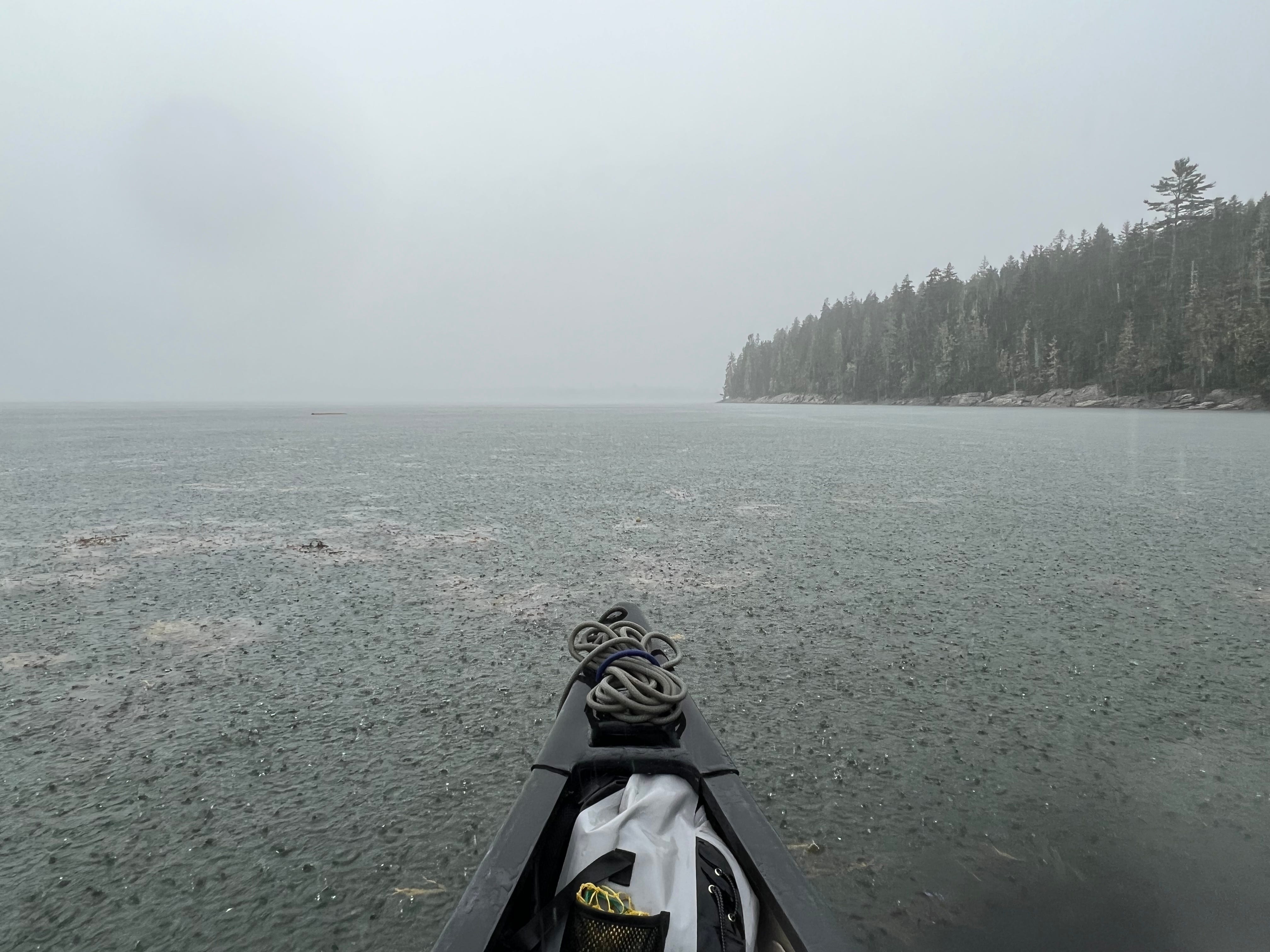
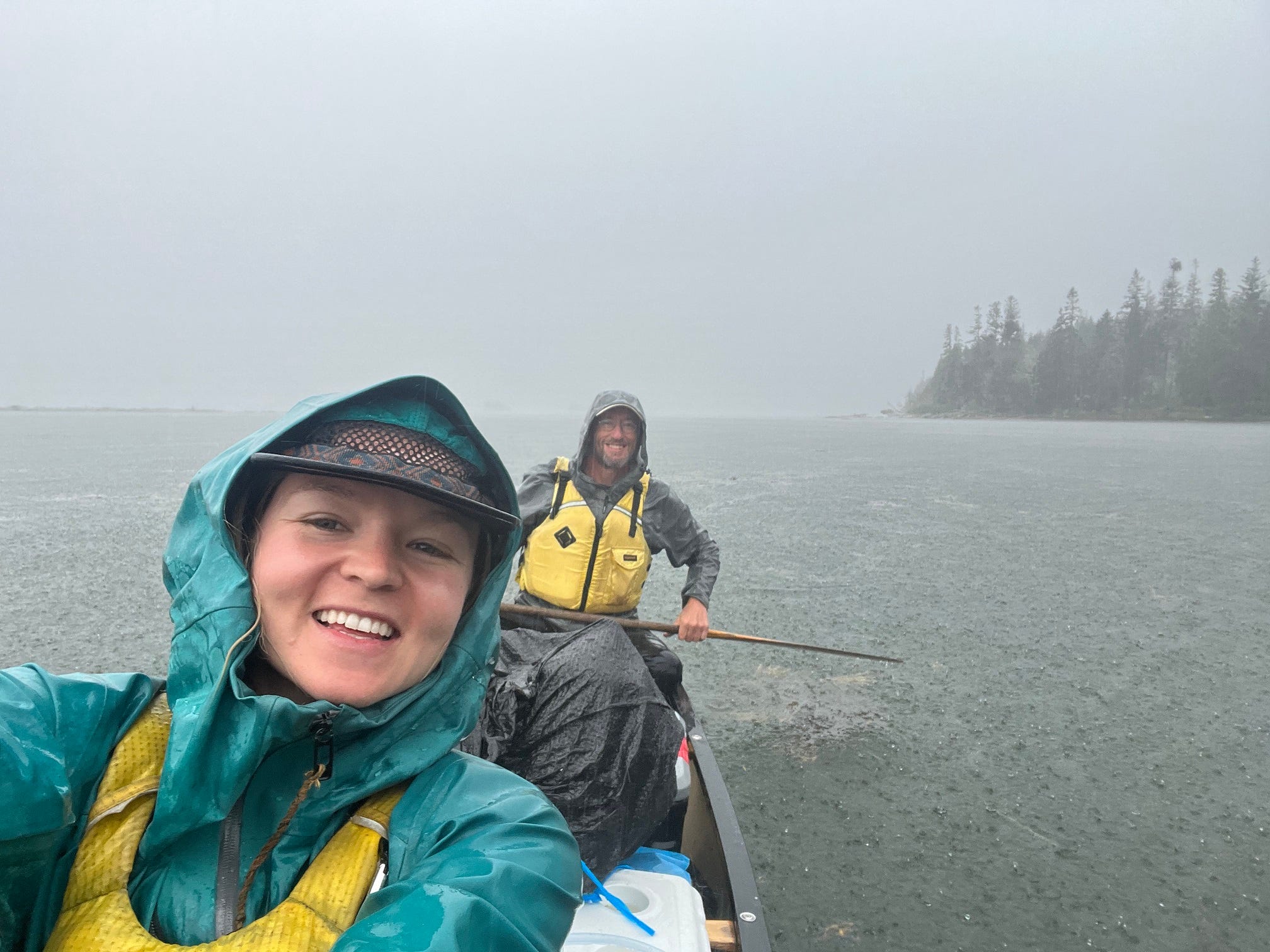
We finished our three-day canoe trip on Muscongus Bay in torrential rain, rain so intense that the boat kept filling up and a thought nagged at me: Maybe I have a leak? As we made the final half-mile crossing to harbor and home, I had a choice: paddle or bail. Paddling without bailing meant the boat became unwieldy with the weight of sloshing water. But bailing only kept pace with the rain, which left Nell, my niece and bow paddler, wondering why she was doing all the work. So we sloshed some, I bailed some, and we made our slow way home through the torrent.
It was really, really lovely. Each time I looked over at Julian and Rebecca in the other canoe, they looked supremely happy, flashing huge beatific smiles at the beautiful pattern the heavy rain was making on a flat, calm, windless sea. I might have chalked this up to some kind of rain-fever that infects residents of sunny southern California… but my mossy Maine self felt the same way. Despite the sloshing, and despite the steady trickle of cold water running down our arms under our raincoat sleeves every time we lifted our paddles, the rain was beautiful.
As I noted in “Reimagining Rain,” the rhythm of rain is the rhythm of existence: random but musical, beautiful but strange, steady and eternal. Look at the picture above and you’ll see an otherwise faultless sea surface, with just the slightest of swells breathing through it, pocked every few inches by a huge raindrop, each one plunging through the water’s skin and creating a momentary rebounding spike of water a few inches tall and capped with white.
We were motes inside an atmospheric fabric - as much water as air - that stretched up to the low clouds. The sky was blurred by the dense tentacles of rain falling through mist. Watching the rain typing on the water around the canoes, I felt like a witness to a hidden pattern of existence, like suddenly visualizing the Earth’s magnetic field or the movement of microscopic life within the soil.
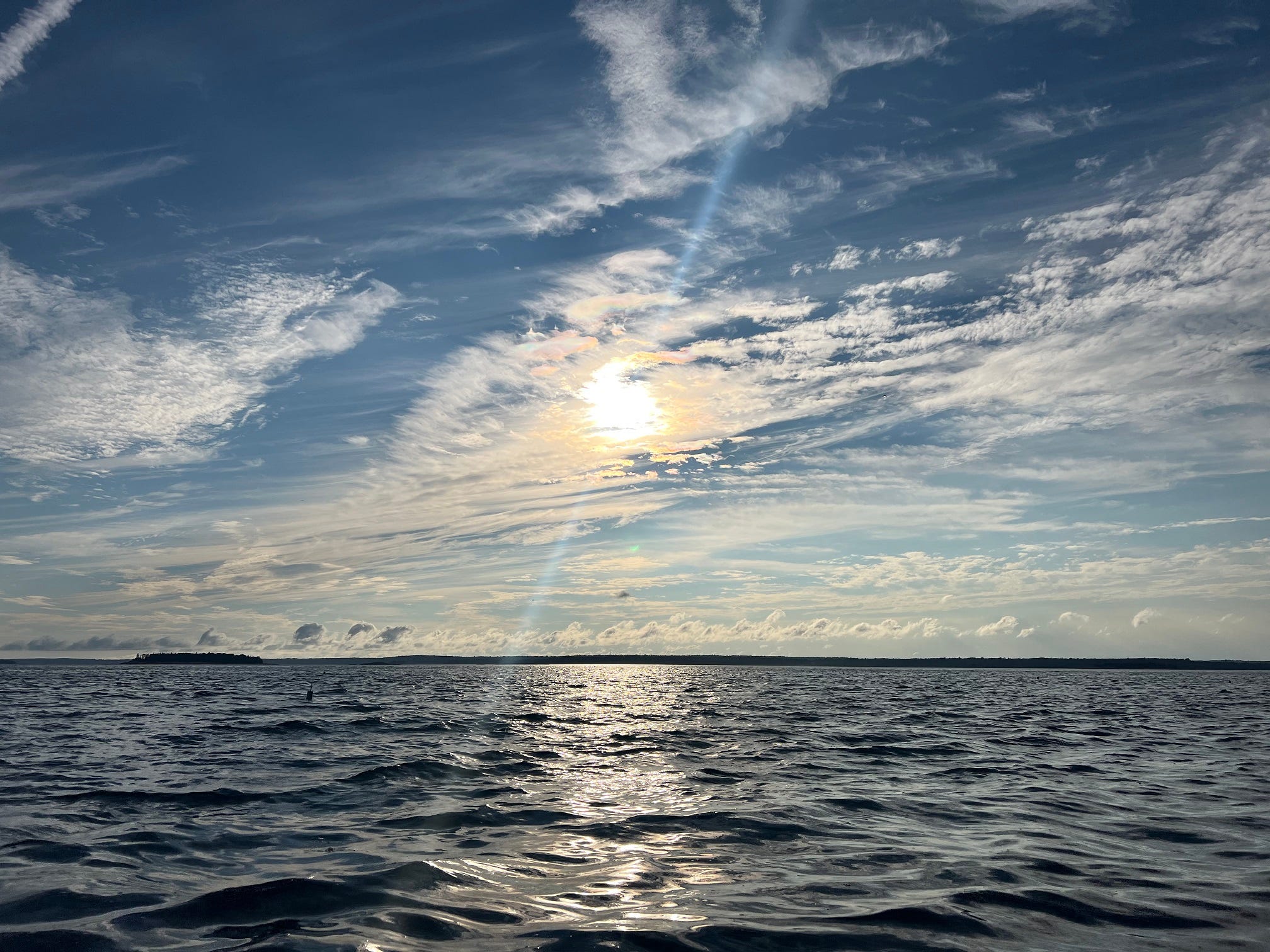
I’m tempted to say that the sky is always beautiful, day and night, but I’ve seen enough hurricane damage, and too many hot, humid, hazy days under a pitiless bland blue ceiling to hedge my affection for the atmosphere. I’m sure that plenty of you have been oppressed by drought and flood too often to feel unconditional love for the skies that define our daily experience of the planet.
And yet, even if we don’t always find the sky beautiful, we have to acknowledge that it is a thing of beauty.
This came to mind when, thanks to a A Pause For Beauty post by Rod MacIver at Heron Dance Art Journal, I was reacquainted with the writing of Lewis Thomas. Thomas was a physician and medical researcher, but also a wonderful essayist with a poet’s voice. His 1974 book, The Lives of a Cell: Notes of a Biology Watcher, was given the rare honor of National Book Awards in two categories: Arts and Letters, and The Sciences. I’d been peripherally aware of Thomas’ literary science writing for years, but never picked up either The Lives of a Cell or The Medusa and the Snail. I wish I had.
Thomas’ writing is astonishing, elegant, and persuasive. It is formal and casual all at once. He is effortlessly serious and light-hearted at the same time, and loads his sentences with scientific information that somehow floats gently into a reader’s consciousness. Here’s a sample from Lives of a Cell that won me over; it talks about how photosynthesis created Earth’s oxygen-rich sky. If it never occurred to you to think of the sky as a beautiful miracle, this should help:
It is hard to feel affection for something as totally impersonal as the atmosphere, and yet there it is, as much a part and product of life as wine or bread. Taken all in all, the sky is a miraculous achievement. It works, and for what it is designed to accomplish it is as infallible as anything in nature. I doubt whether any of us could think of a way to improve on it, beyond maybe shifting a local cloud from here to there on occasion. The word "chance" does not serve to account well for structures of such magnificence. There may have been elements of luck in the emergence of chloroplasts, but once these things were on the scene, the evolution of the sky became absolutely ordained. Chance suggests alternatives, other possibilities, different solutions. This may be true for gills and swim bladders and forebrains, matters of detail, but not for the sky. There was simply no other way to go.
We should credit it for what it is: for sheer size and perfection of function, it is far and away the grandest product of collaboration in all of nature.
I love the light humor – “shifting a local cloud” – keeping company with a discussion of genetic determinism in swim bladders and forebrains. And I love Thomas’s quiet reinforcing here of one of his principal ideas: all of nature is interrelated, collaborative, woven. You can see why the National Book Award judges were helpless to choose between art and science categories in praising the quality of his writing. It’s a mark of Thomas’ unicorn status as a writer that these brief essays were first published in the New England Journal of Medicine between 1971 and 1973, before the book went on to sell millions of copies to the wider public.
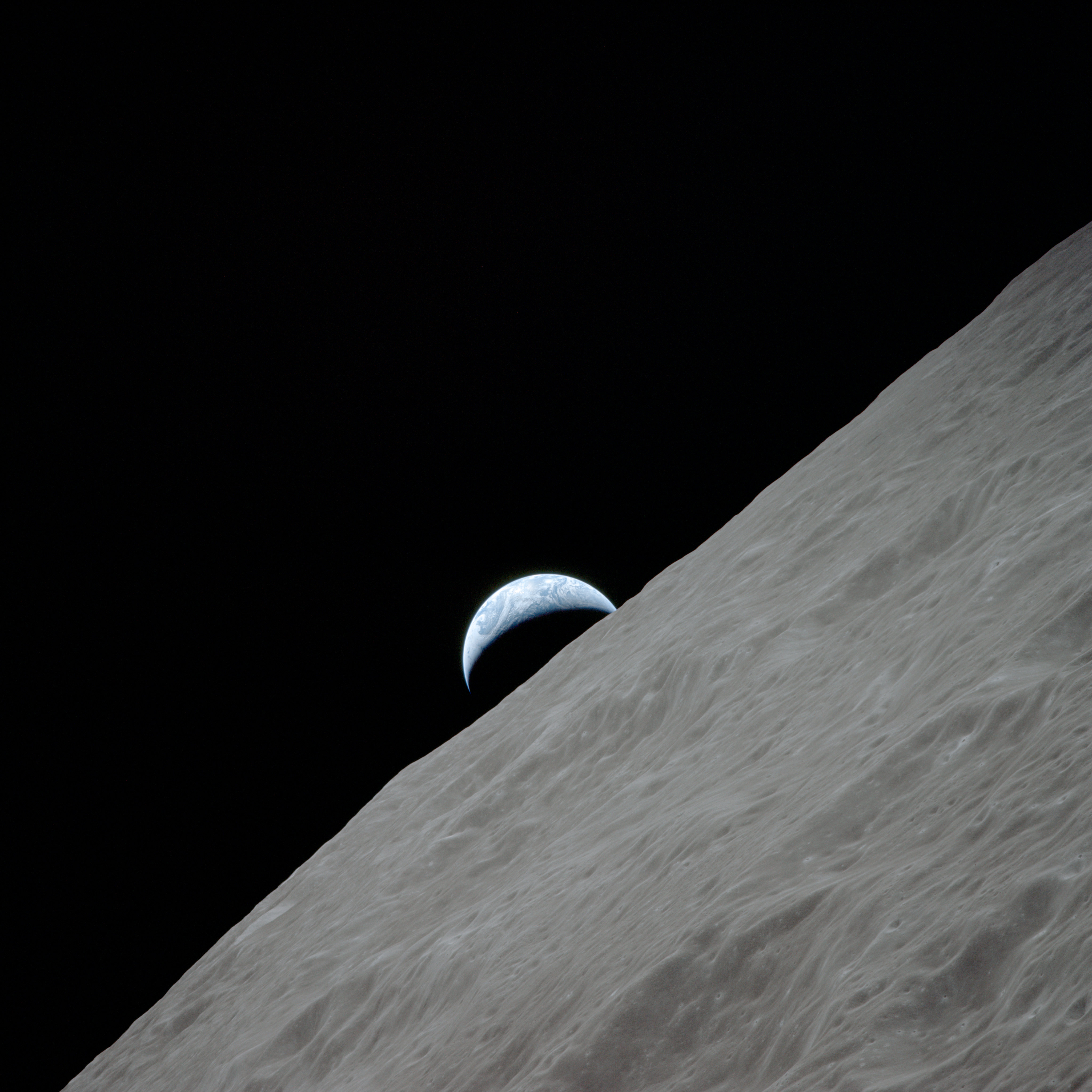
The “cell” in Thomas’ book title, by the way, is not a liver cell or bacterium. It is the Earth, and the atmosphere is “The World’s Biggest Membrane,” which is the title of the book’s final essay. Viewed from the Moon (“dead as an old bone”), our planet “has the organized, self-contained look of a live creature, full of information, marvelously skilled in handling the sun.” The magic that allows life to thrive on the Sun’s energy is the Earth’s membrane of sky.
In the essay’s ten short paragraphs, Thomas cheerfully and eloquently lays out the relationship between the atmosphere and evolution. Here he is explaining the membrane metaphor in language both precise and familiar:
It takes a membrane to make sense out of disorder in biology. You have to be able to catch energy and hold it, storing precisely the needed amount and releasing it in measured shares. A cell does this, and so do the organelles inside. Each assemblage is poised in the flow of solar energy, tapping off energy from metabolic surrogates of the sun. To stay alive, you have to be able to hold out against equilibrium, maintain imbalance, bank against entropy, and you can only transact this business with membranes in our kind of world. When the earth came alive it began constructing its own membrane, for the general purpose of editing the sun.
So much meaning is wrapped up in that final phrase, “editing the sun.” All of life on this living planet is a battery of sorts, borrowing from the sun to convert light into fungi and plant and animal, into consciousness and community, into a bit of music and dancing in the cold warehouse of space.
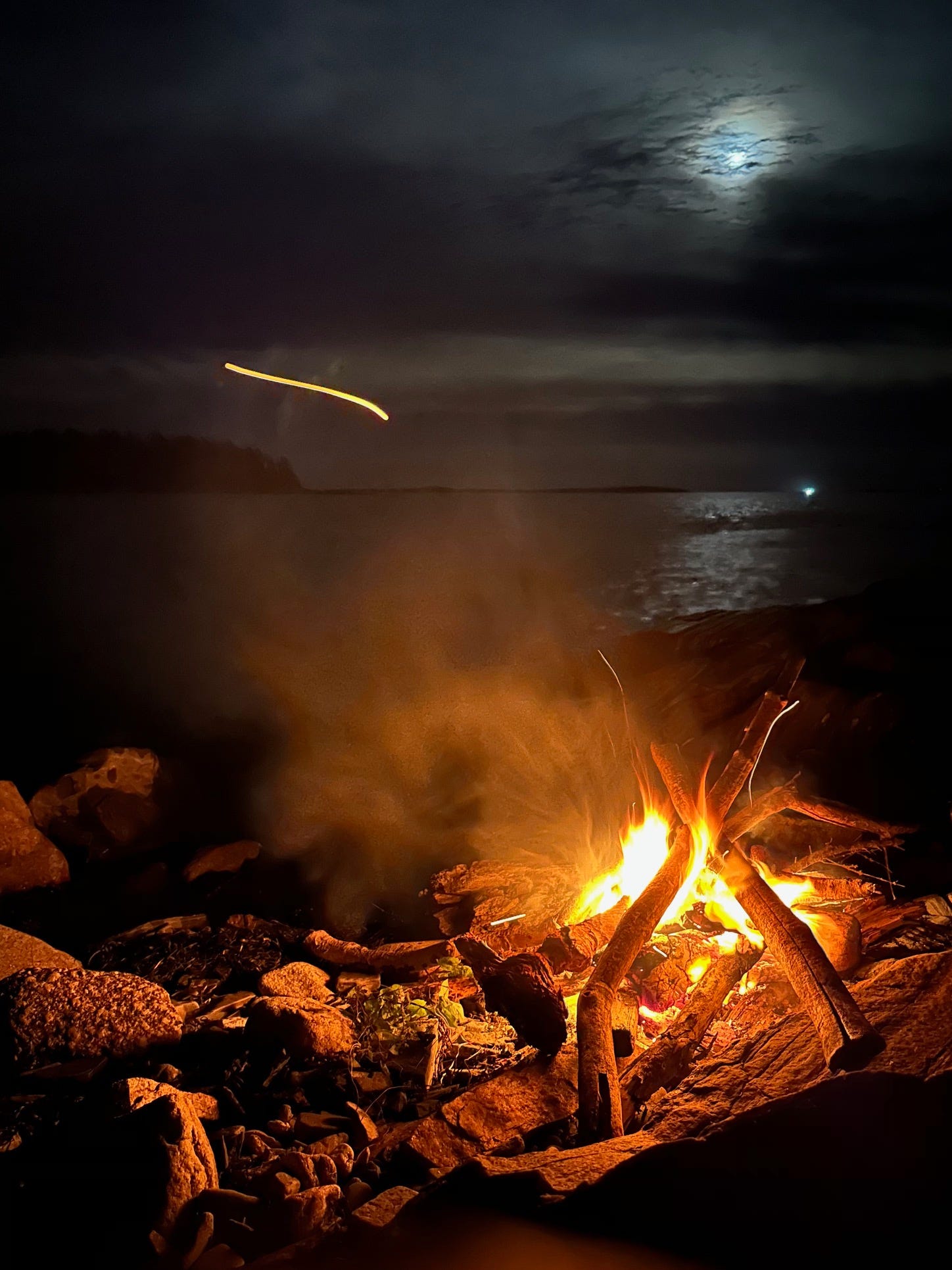
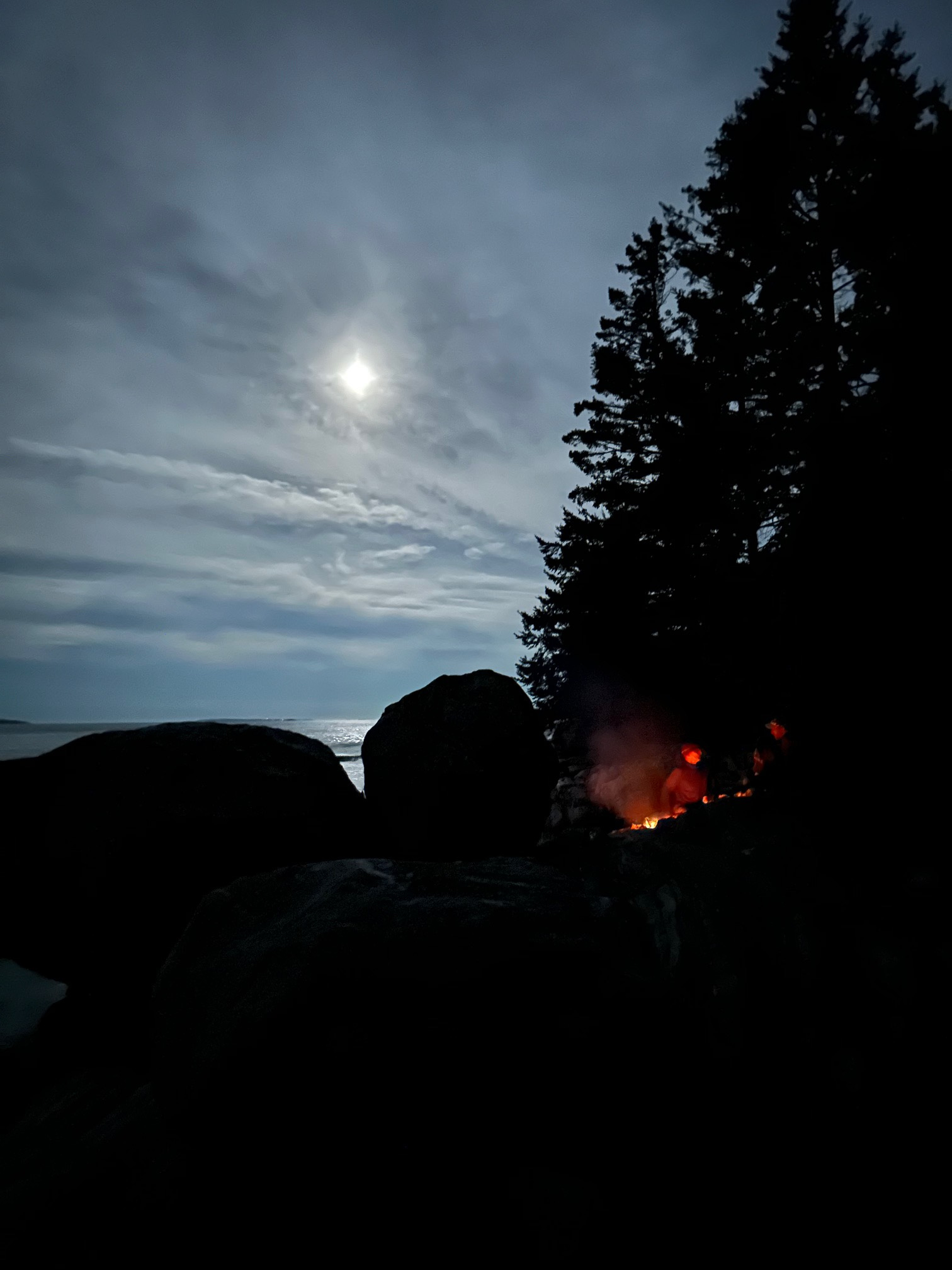
Thomas writes very much from an ecological sensibility: “Every creature,” he writes, “is, in some sense, connected to and dependent on the rest.” But the word “ecology” appears only twice in Lives of a Cell, most notably in the essay “Natural Man,” in which he wrestles briefly with the consequences of humans becoming the dominant biological force on the planet. Thomas is, as a rule, a gentle writer, but he is an honest one too: “We haven't yet learned how to stay human when assembled in masses.” And our mass inhumanity has ecological consequences:
It is a despairing prospect. Here we are, practically speaking twenty-first-century mankind, filled to exuberance with our new understanding of kinship to all the family of life, and here we are, still nineteenth-century man, walking boot-shod over the open face of nature, subjugating and civilizing it. And we cannot stop this controlling, unless we vanish under the hill ourselves. If there were such a thing as a world mind, it should crack over this.
If there were such a thing as a world mind… Such humanist optimism in the 1970s. What would Thomas make of the internet, the first attempt to cohere our global thoughts? I suppose he’d see it as we do, an amplifier of human nature rather than an answer to it. And now, the next stab at a world mind is emerging from a wild west of AIs, far too many of them built by corporations to further the urge to subjugate and control.
Unless there’s a rogue ecowarrior billionaire out there secretly working on an even more powerful AI that will think like clouds and rainforests, and which will convince all other AIs to bow before the genius of nature, I don’t think we should hold our breath waiting for the machines and machinists to factor “our new understanding of kinship to all the family of life” into the algorithms. Instead, as Thomas points out, life can be a daily heartbreak for those of us who feel the kinship but whose voices are drowned out by the motors of Anthropocene culture.
There is some prophecy in Thomas’ writing that make it particularly relevant today. More than a decade before the “ozone hole” created by CFCs was discovered and before James Hansen gave his landmark testimony to Congress about the dangers of climate change, Thomas wrote this in his ode to the atmosphere (emphasis mine):
We are protected against lethal ultraviolet rays by a narrow rim of ozone, thirty miles out. We are safe, well ventilated, and incubated, provided we can avoid technologies that might fiddle with that ozone, or shift the levels of carbon dioxide.
If we kill off “the green cells in the sea,” he says, “we are in for strangling.”
Remember that in the early 1970s per capita consumption was much lower and human population was 3.85 billion, less than half of today’s still-rising sea of human faces. The rate of population growth has been cut in half since then, but half the rate at twice the number means that we’re still increasing by roughly 70 million every year. That’s the population of the United Kingdom.
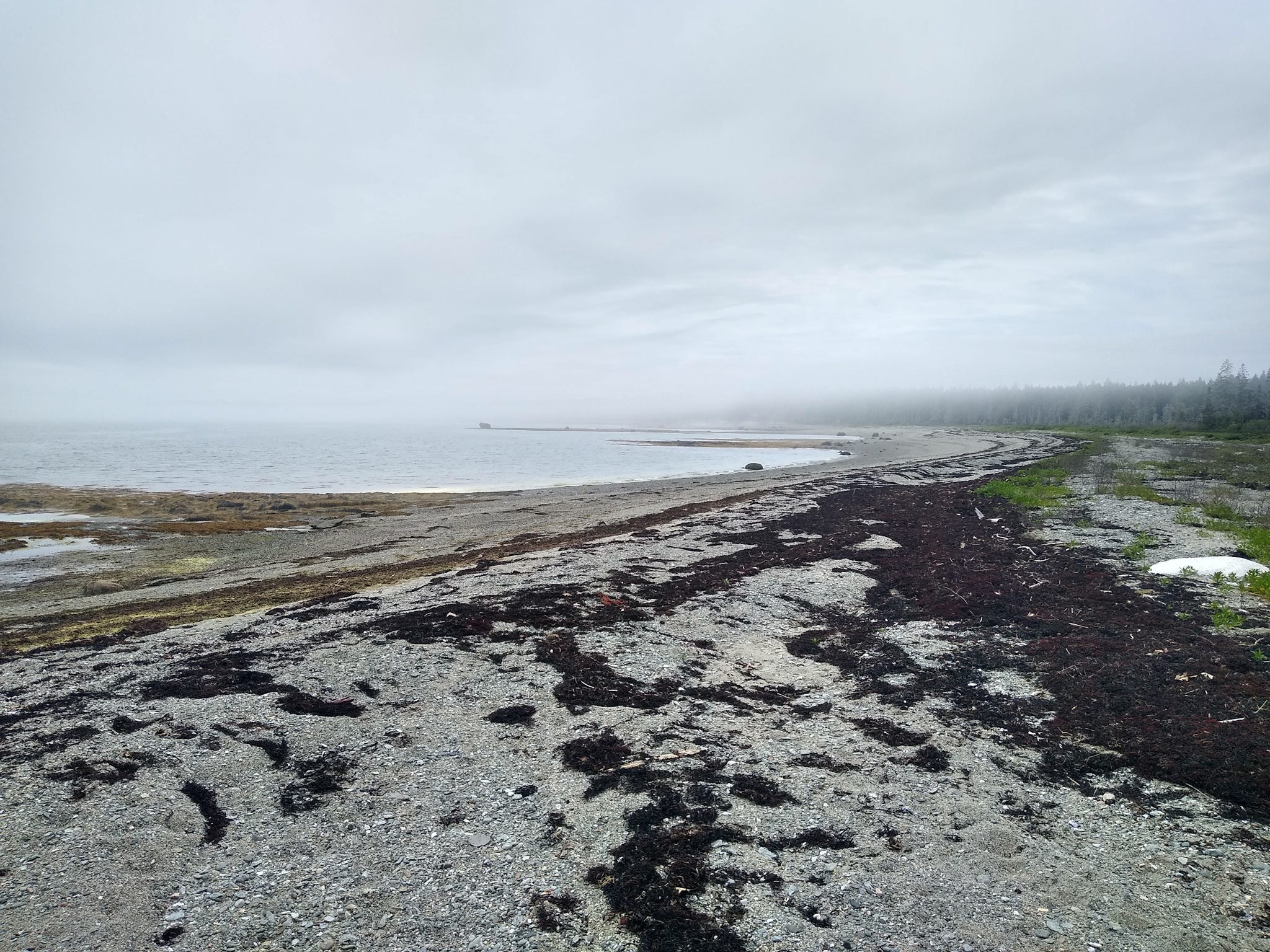
What are the odds, in the impoverished world we’ve built atop the lush green worlds we’ve ruptured, that the more than 10 billion people predicted by century’s end (when population will begin to shrink) will have more affection for the atmosphere than we do now? It’s up to us to help them embrace the world they’re inheriting, through policy and prose and parenting, but the planetary membrane we’re leaving them has already become increasingly turbulent - hotter, with more intense droughts and floods.
It’s vital that we remember that the chaos is only partly due to our greenhouse gas emissions. The atmosphere is unstable also because we’ve reduced Earth’s forest cover by at least half, and erased much of the world’s wetlands and grasslands. An Earth deprived of greenery moves less water between land and sky, and has less capacity for moderating heat, precipitation, drought, and flood. A disrupted sky is the product of disrupted life. A greener world, should we choose to restore it, will be a more stable world.
Which tells us that right here on the ground is where affection for the sky must take root. If our policy, prose, and parenting all communicated that the cause of the hot climate mess is as ecological as it is technological, the generations to come might connect the dots between soil, salamanders, seabirds, and sky. They might realize that, as Rob Lewis explains, the climate system and ecology are the same thing. Rob, who writes The Climate According to Life, began studying the causes and dynamics of climate change but soon found that all his research led him away from the math of emissions to how life interacts with the atmosphere:
Now I see relationships everywhere, the world more alive because of them. The atmosphere, rather than a distant, inanimate layer of gases, has come to feel more like an extension of Earth itself, not floating mechanically over it, but dynamically upheld by it. The sky I once stood under I now stand inside of. Land and atmosphere have become woven into a single living system.
It’s hard to overstate the effect this has had on me. It is science, but the implications verge on the poetic and spiritual. The more I divine the interweave of life and climate, the more awe I feel at the life around me. And this leaves me wondering what is possible for others. What might grow in the human psyche if such understanding were to exist at large? And why doesn’t it? Why at this very late date do we still keep such a distance from the living beings and relationships around us?
Earth’s atmosphere begins at our feet, and is paper thin. I mean this literally, in the sense that it’s the equivalent thickness of a piece of paper wrapped around a standard globe. And the troposphere, the lower part of the atmosphere where forests make clouds and clouds make rain, and where eight billion people are pumping out emissions from the burning of eons of stored carbon, is only the lower 12 kilometers (7.5 miles) of the atmosphere. 7.5 miles is the distance from Wall Street to Harlem, or from my house to the supermarket.
The sky is our neighborhood, not some vast and distant place. We live in the sky, as any raindrop will tell you.
Humans seem to have evolved to store sunlight in our bodies primarily so we can tell each other stories. Mostly these stories are about ourselves and other humans, and the relationships within them - personal, political, polemical - are human rather than ecological. And now, most of these stories are digitally rendered into media that screen us from the real world.
We’re often reminded, to the extent that we’re paying attention, that our stories need to be more often about our kinship with the community of life, the forests, plants, animals, and the fathomless sea. But the sky has become something to fear, a dark cloud on the darker horizon we call climate change. I’m afraid that with each year and with each generation we’re less likely to express the necessary affection for this beautiful membrane that is both a creation of the green world around us, and a shield from the horror of a mostly dead universe.
There is wisdom in joy, something I have to relearn every time. But put me in a canoe on the ocean in a beautiful downpour, connected all at once to family and friends and the miraculous sky, and the joy comes easily.
If we can remember that we live in the sky rather than beneath it, remember that climate and ecology are the same thing, remember to tell stories of joy for this life in the sky, and maybe even remember to smile in the rain, then perhaps we’ll remember to protect the miracle the sky emerges from and protects.
Thanks for sticking with me.
From Our World in Data, “Which countries have already passed peak population, and when will the rest do so?”, an update that arrived just a few days ago. 64 countries and territories have stabilized or begun to lose population, esp. in Europe and southeast Asia, with some already experiencing structural population decline. By the 2060s, much of South America and India, among others, will follow suit. As always, Our World in Data provides sophisticated analysis in everyday language.
From Inside Climate News, “The Clock is Ticking on Leaded Aviation Fuel.” Did you know that more than 220,000 small- and medium-sized aircraft in the U.S still use leaded gasoline? Every neighborhood and farm and forest around every airport in the country that services smaller airplanes is still being contaminated with the lead-filled emissions most of us think was phased out decades ago. There really is no safe exposure level to lead, especially for children. “Every molecule of lead that enters your body,” one expert noted, “there is an increased risk of having some type of adverse effect,” which includes brain, nervous system, and reproductive system damage. Congress, through the FAA, is theoretically eliminating leaded gas for planes by 2030, but the work of choosing a replacement fuel and figuring out how to implement it everywhere is lagging behind schedule.
From Orion, “Stories on What Sustains Us,” a curated collection of 12 stories “about the foods that feed us and the people who grow and them.” The selection crosses cultures and countries, and the writing - as everything that Orion prints - is thoughtful and beautiful. Please take a look.
From Yale e360, “Chocolates Melting Away,” the winner of the 2026 Yale Environment 360 Film Contest, chronicles the work by Filipino cacao farmers to adjust to climate change and produce better products despite the increasingly turbulent weather.
“These farmers are very well versed when it comes to climate mitigation strategies and sustainable farming techniques,” Harani says, noting that he never sensed a feeling of hopelessness among growers. Not only do the cacao farmers seem “ready to face the battle,” Harani says, “they are also ready to show others what they are doing so their methods can be replicated.”
From the Times, E.V. sales around the globe have risen sharply since the Iran debacle began. Nearly a third of all new car sales were electric or hybrid vehicles, up for just 4% just six years ago. The Trump administration may be stalling the electric revolution here in the U.S., but it is fast-tracking it nearly everywhere else on Earth.
As always, subscribe to Mike Shanahan and the Global Nature Beat for the most comprehensive round-up of biodiversity and conservation news you’ll find anywhere, from conferences and science journal highlights to magazine articles and climate- and conservation-related job listings. Mike does extraordinary work to put together these weekly collections of news and updates.
Comments
Nothing yet. Say the first thing.
Sign in to join the conversation.