
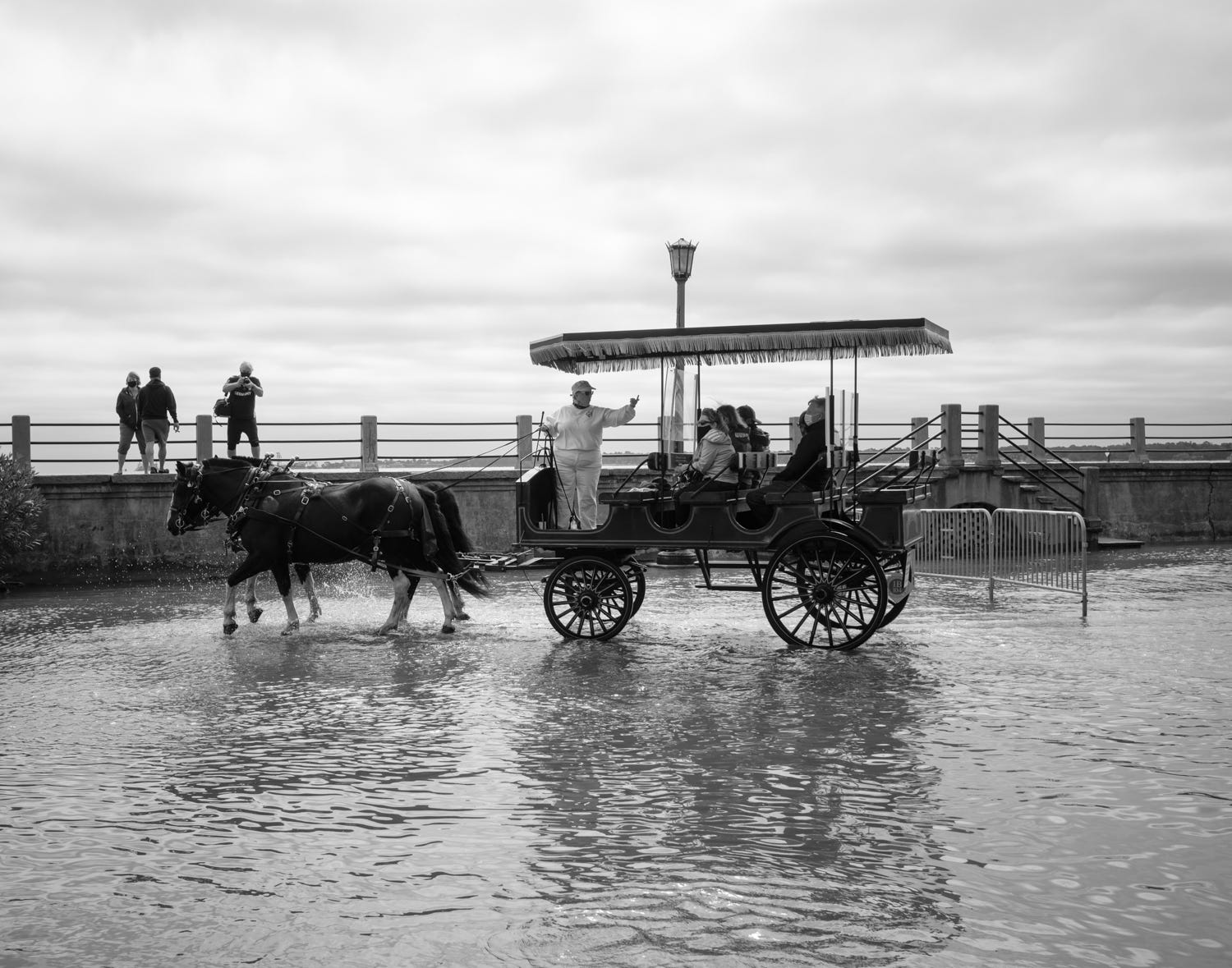
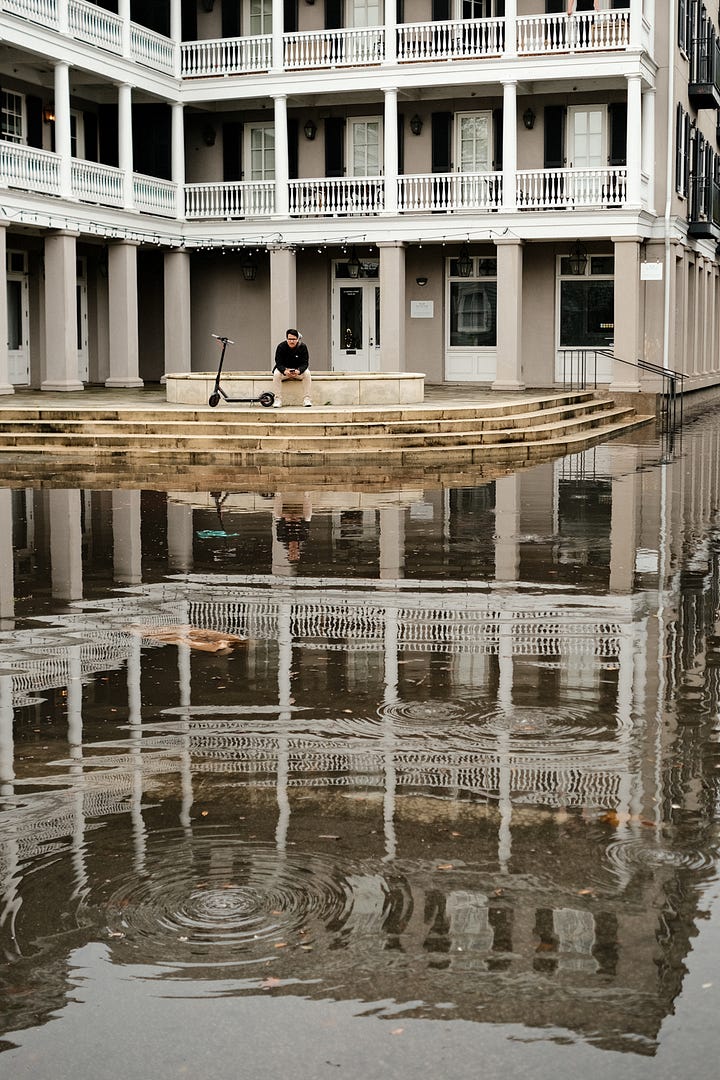
Charleston’s streets are the connective tissue that keeps the city alive. They are how we move and navigate the city. They have a profound influence on our urban experience and how we perceive what’s beautiful (or isn’t). And during floods, they become conveyances, acting as creeks, filling with water. That’s a brief summary of what Andrea Ostrodka, Christian Sottile, and I discussed during Historic Charleston Foundation’s annual Advocacy Forum last week, which focused on ‘stitching together growth and opportunities’ on the Peninsula.
HCF does incredible advocacy work in the region, and I’ve attended many of the prior forums. It was an honor to serve as a panelist for this year’s forum. HCF brought us together to discuss the growth pressures, the affordability crisis, and the increasing flood risks Charleston faces in light of the generational projects that are on the horizon, including Project 3500, the Lowline, Union Pier Terminal, and the Battery Extension. If we want to uphold the historically high standards of Charleston’s urbanism, we must integrate these projects into a cohesive vision so that future generations can look back on our legacy with pride. My charge to the panel was that for all of our decisions to persist, we must ground them in the water that’s been here, the water that is here, and with an ability to adapt to the water that will be here.
I’m not going to dive deeply into the urbanism or mobility opportunities for the City - that’s not my area of expertise. But I do want to pose a thought that occurred to me during the panel discussion. I walk a lot. I spend much more time on the street than in parks. Why don’t we treat our streets as parks? By thinking and reimagining them as parks, can we make them more resilient in the process?
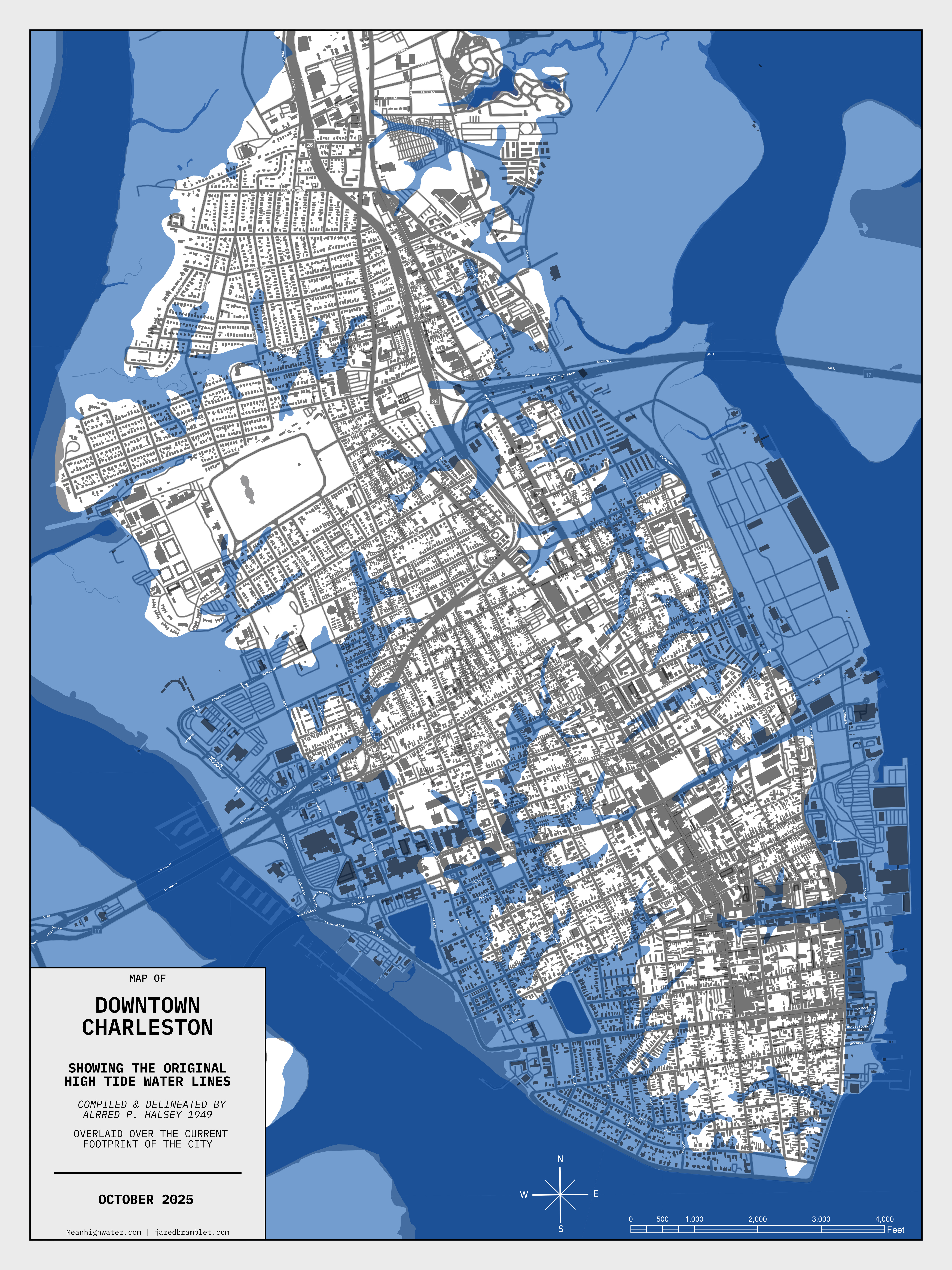
We need to look back to the ghost creeks that once ebbed and flowed across this Peninsula — as shown above, based on information from the Halsey Map — to inform our future resilience strategies. These ghost creeks haunt us during stormwater floods, tidal floods, and storm surges. How can we better accommodate water in these urban corridors?
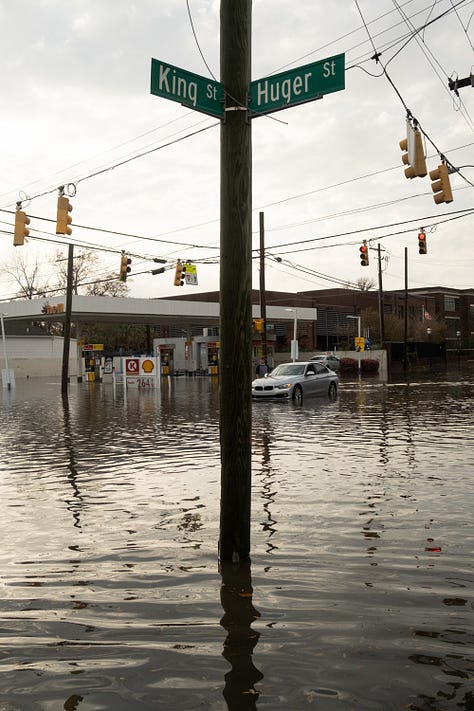
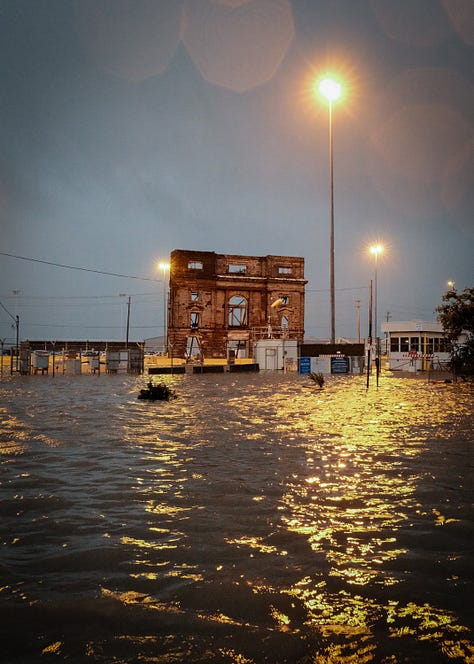
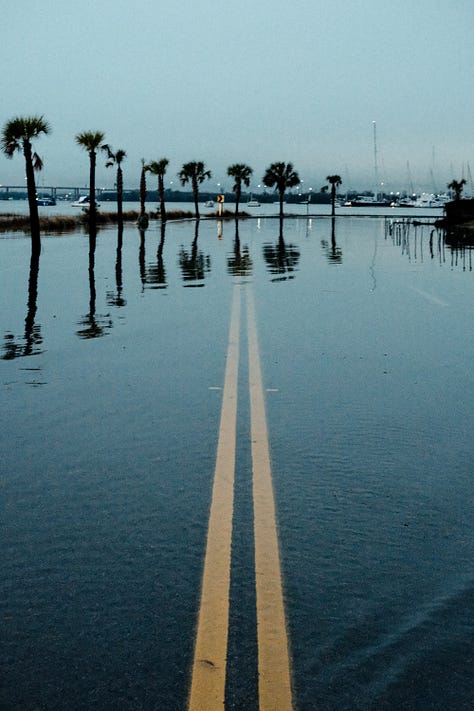
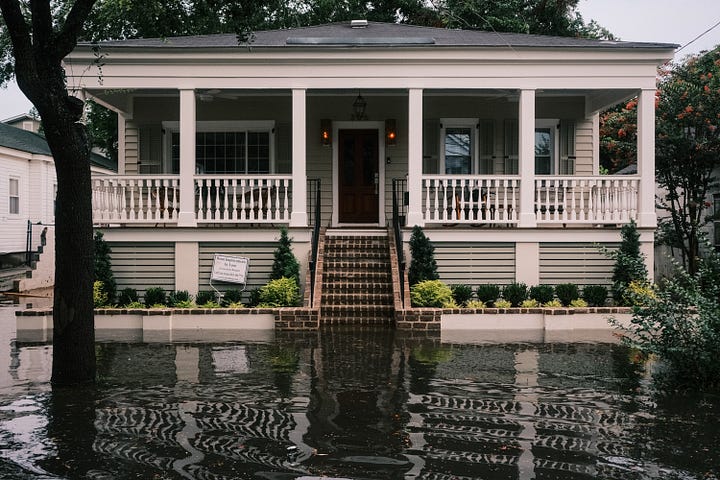
Renaturalizing creeks will be challenging and expensive in many locations due to emergency access, underground utilities, parking, and other constraints, but it could produce genuinely interesting urban places. More likely, raising sidewalks and ground-floor commercial spaces in new buildings, retrofitting existing buildings to stay dry during heavy rain, and planning for periodic street flooding are realistic ways to begin weaving water back into the urban fabric. We can then dream about what the streets can become.
The ghost creeks are still there. Our streets are already carrying them. The question is whether we design for that honestly — or keep ignoring the drainage pathways buried beneath our city.
HCF featured me in the most recent advocacy newsletter. I encourage you to subscribe. Here’s a recap of my responses.
What is your connection to Charleston and preservation?I moved to Charleston in the summer of 2007. It's hard to believe I've been here for almost 19 years. My work is in flood resilience and coastal adaptation, and I've done a lot of work centered on the Peninsula. Preservation is woven through all of it. You can't talk seriously about protecting Charleston from water without talking about what you're protecting and why it matters.
What do you enjoy most about Charleston?
I
t’s the urban form that drew me here, and it’s what I love most about it. The random alleys, the walkability, the proximity to the water, and the scale of our urban core.What does “preservation” mean to you?Preservation isn’t just protecting and restoring our historic buildings. It’s protecting the stories, the neighborhoods, the opportunities for future generations to fall in love with the urban form as I did.
What is the most important thing we can do to protect our shared history?Learn to live with water. Charleston's history is inseparable from its relationship to the water that surrounds it, and that relationship is changing. If we want to protect what's here, we have to stop treating water as a liability and start treating it as something to design around, plan for, and even embrace.
Why do you support Historic Charleston Foundation?HCF has been a key part of how this city thinks seriously about its future, not just its past. For me personally, the Dutch Dialogues were a turning point. That process fundamentally changed how I approach water and cities, and it continues to shape the work I do today. I'm glad to support an organization willing to ask that kind of question.
No posts
Comments
Nothing yet. Say the first thing.
Sign in to join the conversation.