
There’s a lot of competition for the title of the most pretentious habit in American book publishing. You might go with its tendency to label promising writers “the voice of a generation,” which was fading well before Jay McInerney qualified for Medicare six years ago. Or you might pick the practice of describing any book with a pulse as “propulsive,” a favorite cliché of the New York Times Book Review. But my vote goes to the pomposity of calling every first novel a “debut,” as though its author were a young Mozart conducting the premiere of Don Giovanni in Prague in 1787.
I first realized that others also disliked the term “debut novel” when I was the book editor of a newspaper and my counterpart at another large daily forwarded to a few of us a memo sent by a Washington Post copy editor to the staff of Book World. The copy editor, in effect, banned the phrase from book reviews in the Post. I didn’t save his memo, but gist of it was: We don’t need to use a fancy French word like “debut” when the phrase “first novel” will do. My colleagues and I cheered.
The Post abandoned its unofficial ban long before it killed Book World earlier this year. But how did the literary world come to adopt the stuffy phrase in the first place?
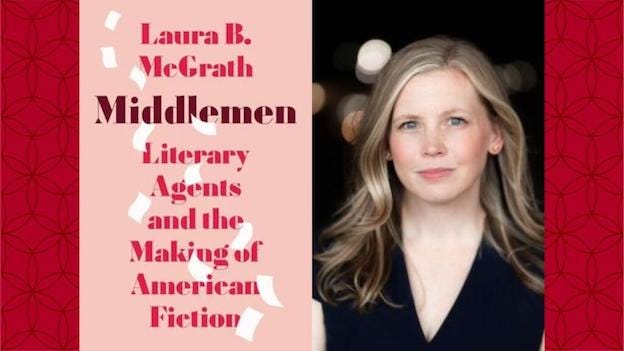
A partial answer emerges in Laura B. McGrath’s scholarly but brisk Middlemen: Literary Agents and the Making of American Fiction (Princeton University Press, 2026). McGrath, who teaches at Temple University, doesn’t try to offer a comprehensive history of literary agents. She focuses instead on signal moments when, as she sees it, influential agents made a difference to American fiction: among them, Sterling Lord’s dogged advocacy for Jack Kerouac’s On the Road and Andrew Wylie’s then-unprecedented efforts to develop an aggressive global strategy for clients like Philip Roth rather than trust their publishers to do it.
Each directional shift gets a chapter in Middlemen, and the most enlightening is “The Debut,” about first novels, which annually comprise 15 to 25 percent of the fiction marketplace. It will surprise no close observer of book publishing to hear that fiction writing has become an up-or-out affair. Novelists increasingly have one chance to strike gold before publishers cut them loose, and it’s an industry cliché to lament the disappearance of the so-called midlist for talented authors who haven’t “broken out.”
What explains this change? Why are publishers less likely to treat novelists like buy-and-hold stocks and more like hot-or-not IPOs?
Comments
Nothing yet. Say the first thing.
Sign in to join the conversation.