
There is no way of denying it: We still live in a fossil fuel economy. The cars that we drive largely run on petrol and diesel, the buildings we inhabit are heated with oil and gas, and the factories that make the goods we consume still run mostly on oil, gas, and coal. Together fossil fuel supply around 80% of global energy.
That number gets cited constantly as proof that replacing fossil fuels with clean energy is a) not happening and b) unrealistic. Renewables, the argument goes, are simply added on top of a growing amount of fossil fuels. The apparent logical conclusion drawn is that we are not in an energy transition but in an energy addition with little chance of ever phasing out fossil fuels.
The claim has serious voices behind it. In a prominent Foreign Affairs piece called ‘The troubled transition’, Daniel Yergin and co-authors point out that the fossil fuel share of primary energy fell only from 85% in 1990 to about 80% today, while fossil fuel demand keeps growing. Their conclusion from these trends is that what we’re seeing is a clean energy addition, not an energy transition. And the chances for that changing in the future are presented as slim. Widely-read energy analyst Vaclav Smil argues that replacing a system supplying more than 80% of the world’s energy within decades would be an energy transition of unprecedented speed, something never done before in history. Others go further still, calling the idea that wind, solar, and batteries can replace fossil fuels pure fantasy because the scale of demand is too great and renewables lack the density to power modern civilisation.
At first glance these arguments may seem very compelling and I see them every day on social media. Let me be clear: the scale of the challenge is huge and it is real. Pretending otherwise would be very naive and no serious energy expert disputes this. It is also true that for most of history, clean energy has scaled far too slowly to replace fossil fuel demand also because energy consumption kept growing driven by an increase in world population and economic activity. At the global level and in absolute terms, renewables have indeed been added on top of fossil fuels. One could, and many do, decide to call the discussion concluded at this point and simply accept that the energy transition is a futile undertaking.
I tend to differ. But look sectorally and regionally, and the picture changes.
I’ve written about example after example of energy systems already changing beyond recognition, whether that is electric vehicles in Norway, the rapid rise of batteries in places such as California, Pakistan’s bottom-up solar revolution, Spain’s successful phase-down of natural gas in power markets, and the shift to heat pumps in the Nordic countries and elsewhere. Looking only at global data obscures these remarkable shifts and leaves us with the impression that nothing has changed.
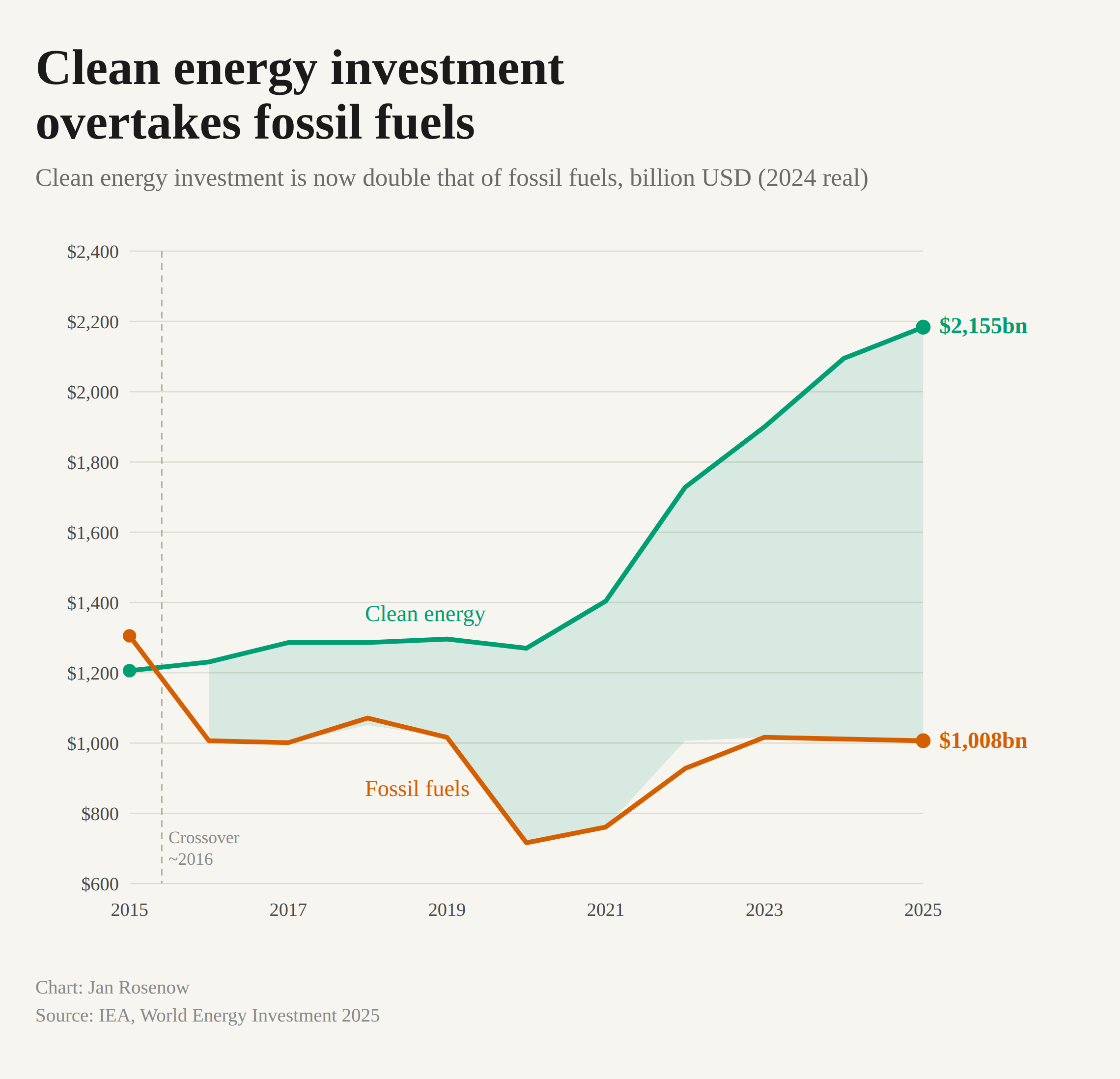
There are clear indicators of the energy system moving. Since 2016 more money is invested in clean energy every year than in fossil fuel technologies, today around twice as much.
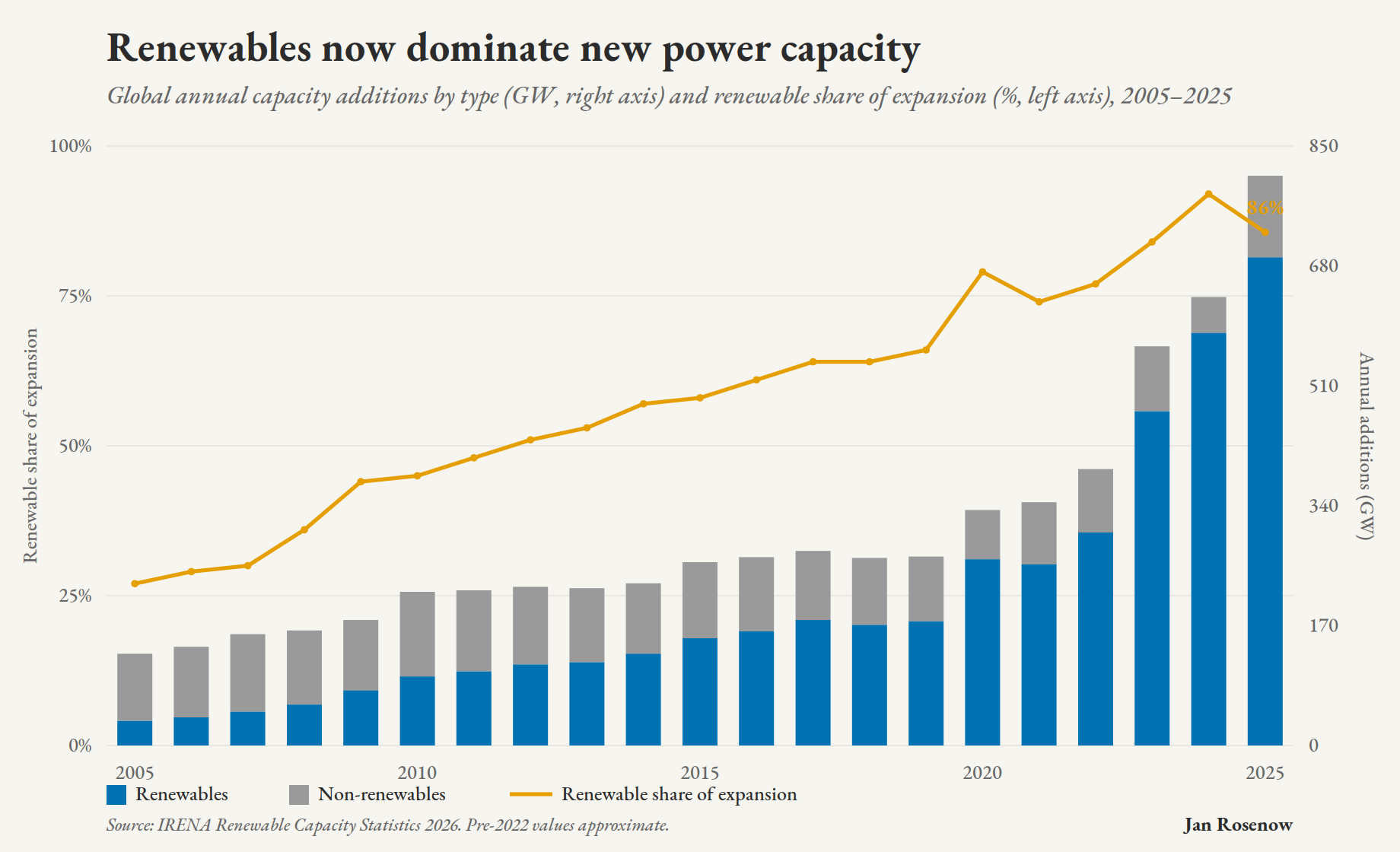
Roughly 90% of new electricity capacity is renewable.
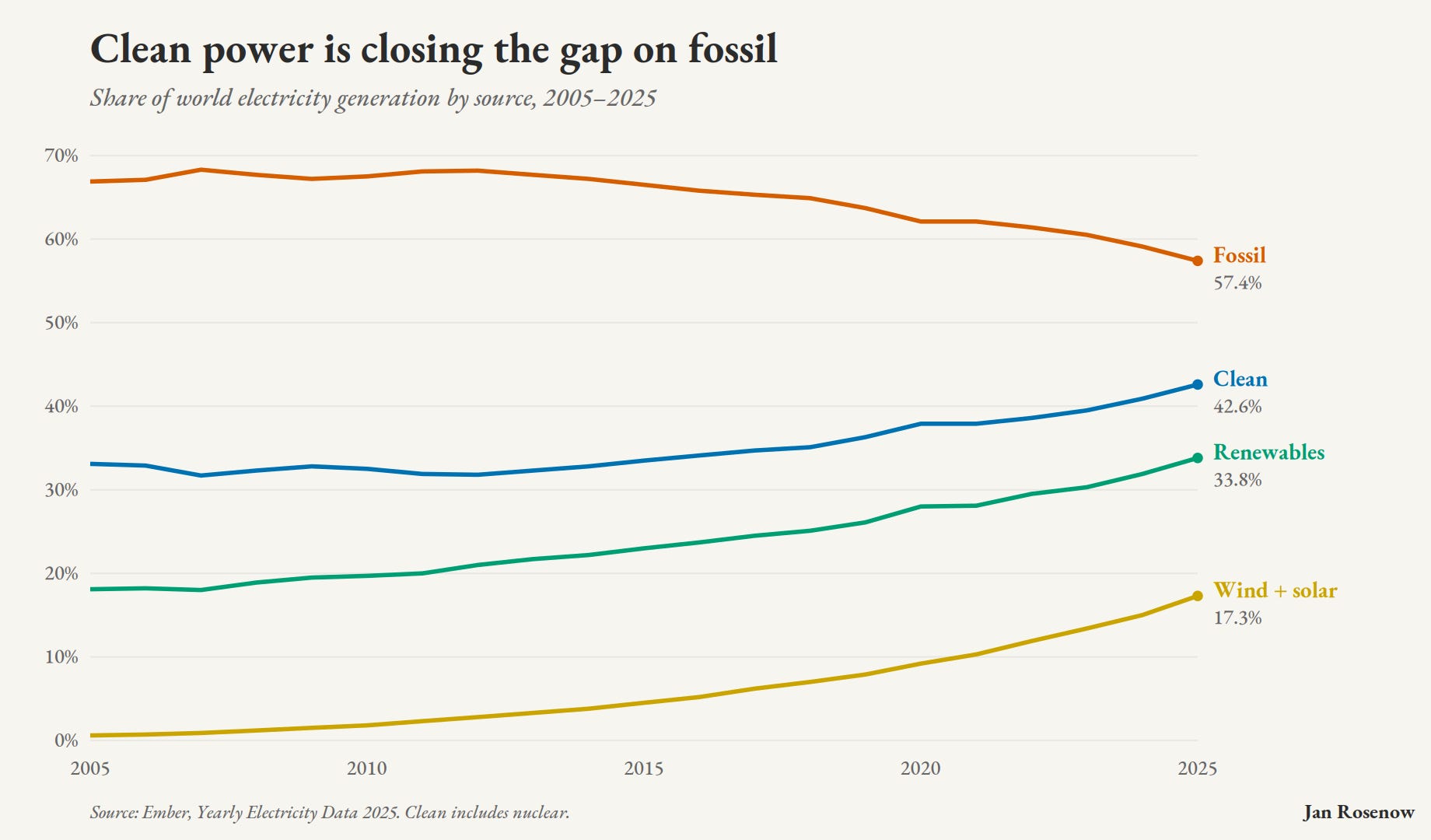
Of course capacity is not generation but generation also increasingly shows how fossil fuel-generated electricity is declining as a share of global electricity production.
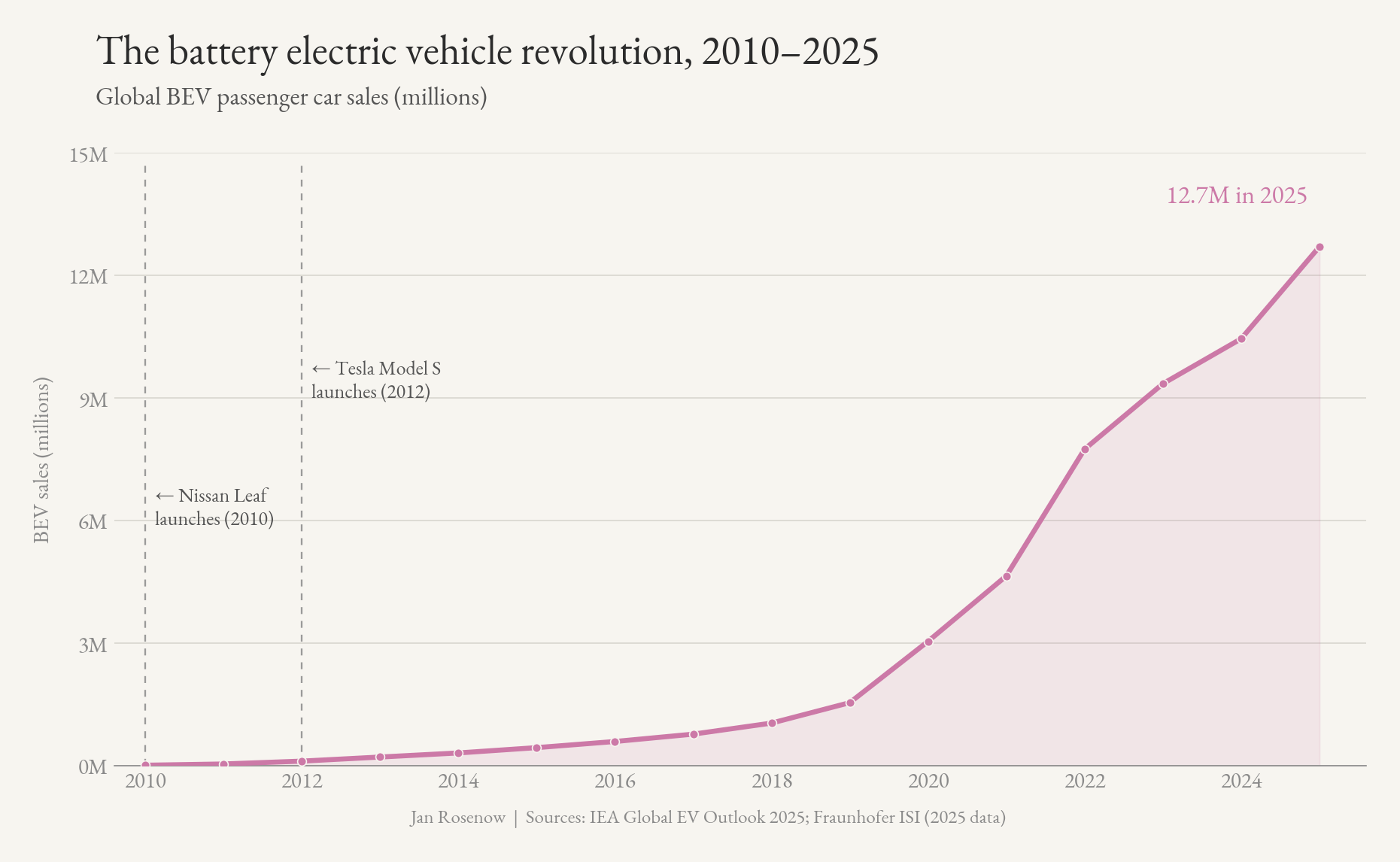
Another example is that the global car market has shifted with one in six cars sold last year being fully battery electric. And many markets in 2026 reported record growth in electric vehicles suggesting a further upswing is just around the corner.
Often overlooked but critical, feedback loops, which can be both positive and negative, mean change doesn’t happen linearly. Technology transitions often happen exponentially and unexpectedly, as I discuss with colleagues in Nature Reviews Clean Technology.
There’s a second problem with the “energy addition” case put to us. The claim that a large-scale shift is unrealistic because of the sheer scale of fossil fuel use overlooks fundamental differences in efficiency, conversion, and end use. The Canadian energy expert Paul Martin called this the “primary energy fallacy” and many including myself have written about it. This fallacy arises when comparing energy sources in primary energy terms rather than their end-use utility in terms of energy services. This is important, as around two thirds of global primary energy consumption is lost during combustion and conversion processes.
Primary energy represents the total energy content of natural resources before undergoing any conversion processes, including coal, oil, biomass, and renewable sources. The primary energy fallacy arises when high primary energy inputs are mistakenly equated with high energy services. Measuring energy systems solely in primary energy terms distorts comparisons. It inflates the perceived contribution of fossil fuels while underestimating the efficiency of renewable energy and the energy savings achievable through electrification. Michael Liebreich estimates that today clean energy sources contribute around 30% to useful energy (energy services) up from 10% in the 1970s. This is not shown in statistics on global energy demand.
And this isn’t just an accounting quirk or a subject of debate amongst energy nerds. This has practical consequences: policymakers may hesitate to support clean energy technologies if they incorrectly believe replacing fossil fuels is impossible. Likewise, certain policies focused on reducing primary energy demand (such as those promoting fossil fuel combustion efficiency improvements), rather than maximising carbon reduction, could inadvertently discourage investment in renewables and electrification.
Ultimately, the test whether or not the transition succeeds is straightforward. Can clean energy, electrification and efficiency drive sustained declines in global fossil fuel consumption? That remains to be seen. But the rapid transitions already underway across technologies, sectors and countries suggest that today’s energy additions need not remain additions forever. The past is a poor guide to technologies that improve exponentially, and for that reason I’m optimistic about the prospects a genuine energy transition.
No posts
Comments
Nothing yet. Say the first thing.
Sign in to join the conversation.