If you’re new here, welcome! I am so delighted you’re joining us. It’s because of you that I’ve reached 14.1 K views. God is doing a mighty work.
If you’re just popping in, consider subscribing so you get all the episodes.
0:00
-34:24
Listen to this episode here.
To watch: YouTube link is at the bottom of this post.
Friends, you’re in for a treat today!
My friend Cheryl writes books that you won’t be able to put down.
She’s my new favorite author!
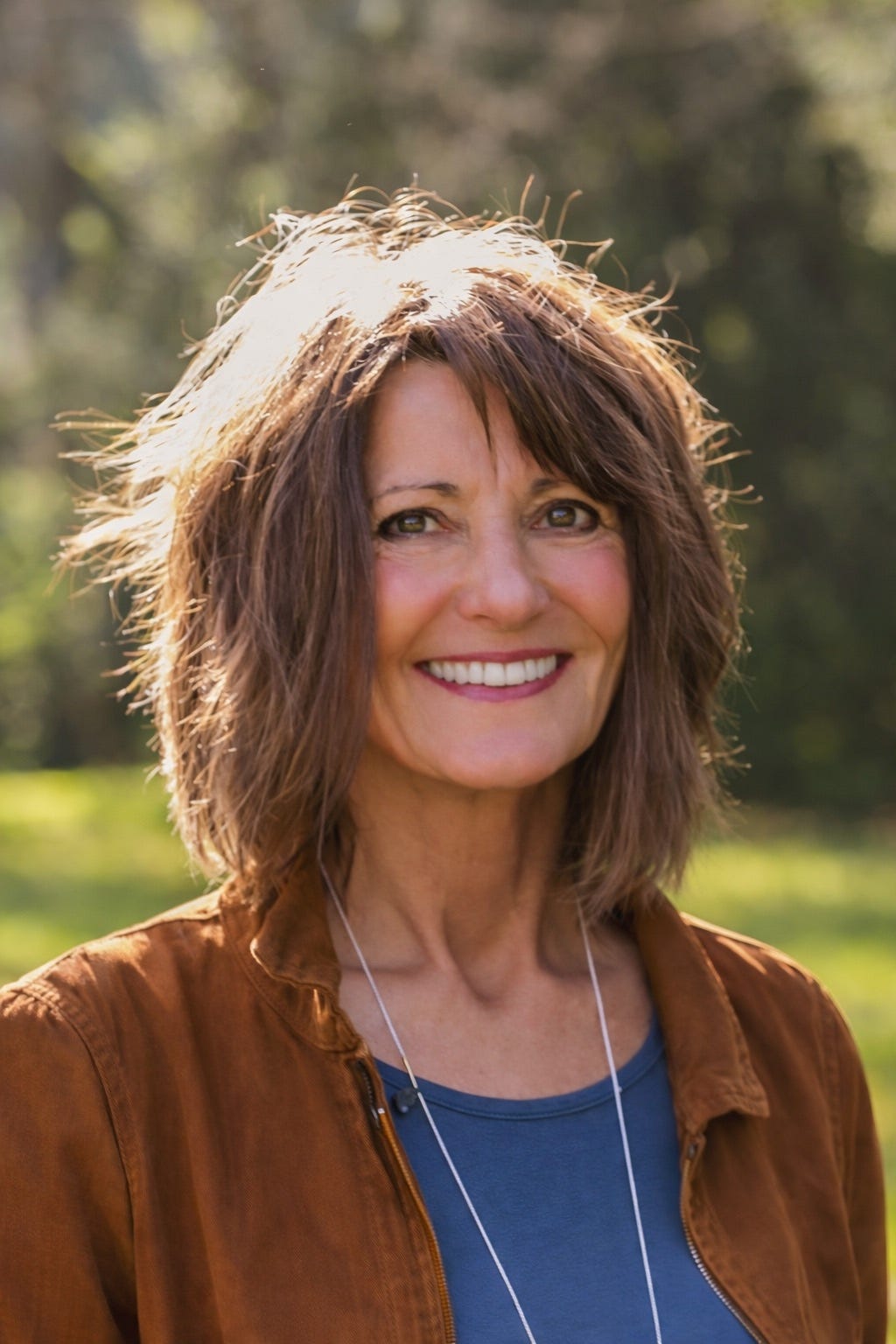
Some people tell you their testimony. Cheryl Grey Bostrom writes hers — one novel at a time.
She’s the eldest of five children born to a con man and a nineteen-year-old bride, hauled up and down the Pacific coast through poverty her father was unconsciously trying to outrun and instead recreated. And she’s also a Kirkus-starred novelist, a lifelong birder, a teacher who fell in love with the minds of her neurodivergent students, and a woman fifty years into a marriage she calls a gift she didn’t see coming.
This week on Just Talking About Jesus, Cheryl tells Jan and Marti how a grandmother’s hillside overlooking the Strait of Juan de Fuca became the place she first met God — long before she knew His name — and how everything she’s written since has been an act of finding the “lie makers” hidden in her own story and letting the light in.
Here’s her story, in her own words.
I want to begin the way Cheryl herself begins — not with the novels, not with the Kirkus star, but with the light and the shadow that made her a photographer of both long before she ever picked up a camera.
“As creative as He is, He allows,” she says. “And as a photographer, I spend a lot of time in light and dark and working with the presence of light in shadows. And so my story doesn’t start out easily.”
She’s the eldest of five. Her father was an Okie — a toddler when his own parents sold their mules, bought a jalopy, and rode Route 66 out to the migrant camps in California. Picture the world of The Grapes of Wrath. He spent his formative years working his way up the California coast through the crop camps, absorbing the same bias and prejudice minorities were receiving in that era, chastised and rejected at every stop. His family eventually landed in Port Angeles, on Washington’s Olympic Peninsula — which is where Cheryl herself was raised, a fifth-generation Port Angelite.
There, her father met her mother, the only child of a prosperous local businessman. She fell for him completely. Cheryl and her siblings have come to believe their parents’ tumultuous marriage was born of a con — that her father, in psychological terms, saw her mother as a way out of his poverty. Cheryl was conceived on their wedding night and born when her mother was nineteen. What followed was a childhood of being hauled up and down the coast while her father, without realizing it, tried to undo his own story and instead recreated it, trauma folding into trauma. Nobody in that family knew Christ — except her grandmother.
When Cheryl was four, her grandparents came to California, where the family was living in a rental with almost no furniture and all the children sleeping in one bed. Her grandparents brought her home with them to the Pacific Northwest, to a hill overlooking the Strait of Juan de Fuca, the Morse Creek Valley, and the Olympic Mountains. Both grandparents loved the natural world deeply. Her grandfather didn’t know Christ yet — he wouldn’t come to faith until he was seventy-three — but her grandmother saw the living God in creation itself, and through nature, she introduced Cheryl to Him.
“I developed a deep love for the natural world at that point,” Cheryl says. It would be fifteen more years before that love had a name attached to it. At nineteen, in college, a friend invited her to a “bring a friend” Bible study, and there she met — as she puts it — the God of the magnificent creation she already loved.
“I couldn’t believe it,” she says. “You mean He can be my friend? He can be my comforter, He can guide me, He can live in me and transform me and forgive me?” She was, by her own account, headed toward some of the same poor choices her mother had made. That Bible study changed the trajectory. “The rest is history,” she says — though she’s quick to add that surrender didn’t happen all at once. “I was a very compartmentalized child in that I believed in God from an early age. But once He got hold of my heart, there were pieces of me that I didn’t relinquish too easily. And sanctification is a long process.”
This year marks fifty years of marriage to her husband — a veterinarian she calls her rock, her guide, and her spiritual leader. “He gave me my partner, too,” she says simply. “That’s beautiful.”
Marti, co-hosting the conversation, put words to something that sat underneath everything Cheryl had described: the sheer unlikelihood of where she ended up. Cheryl was destined, by every pattern in her family, to repeat what her father and mother had lived. Instead, the Lord broke those chains — first through a relationship with her grandmother, and then through a relationship with Himself.
Before the conversation went further, Marti shared something she said she’d woken up with that morning: a scripture she believed was meant for Cheryl specifically.
Isaiah 30:21 — your own ears will hear Him right behind you, a voice will say, this is the way you should go, whether to the right or to the left.
Cheryl received it quietly. “Thank you,” she said. “I’ll trust that, straight from Him through you.”
What struck me most, listening back, is how naturally Cheryl moves from her own healing into theology without ever sounding like she’s lecturing. She talked about how well God knows us — not only who we are now, but who we’ll become down the road — and how, when He asks us to hand Him parts of ourselves, it’s because He already knows what those parts are for.
“There are places in Scripture where the Lord actually has laughter at difficulty,” she says, “because the things that level us are nothing for Him to handle. And when He says He’s going to work everything together for good, He means everything.” Not a placating gesture, not a kiss on the cheek for the trouble you’ve endured. “He says that when eternity comes, there’s not going to be any more crying. And death loses its sting.”
As generational strongholds have broken in her own life, and in the family she and her husband built together, Cheryl has watched death — meaning the death embedded in that early story of poverty, deception, and dysfunction — lose its power to redirect their lives. “It’s huge,” she says. “It’s huge.”
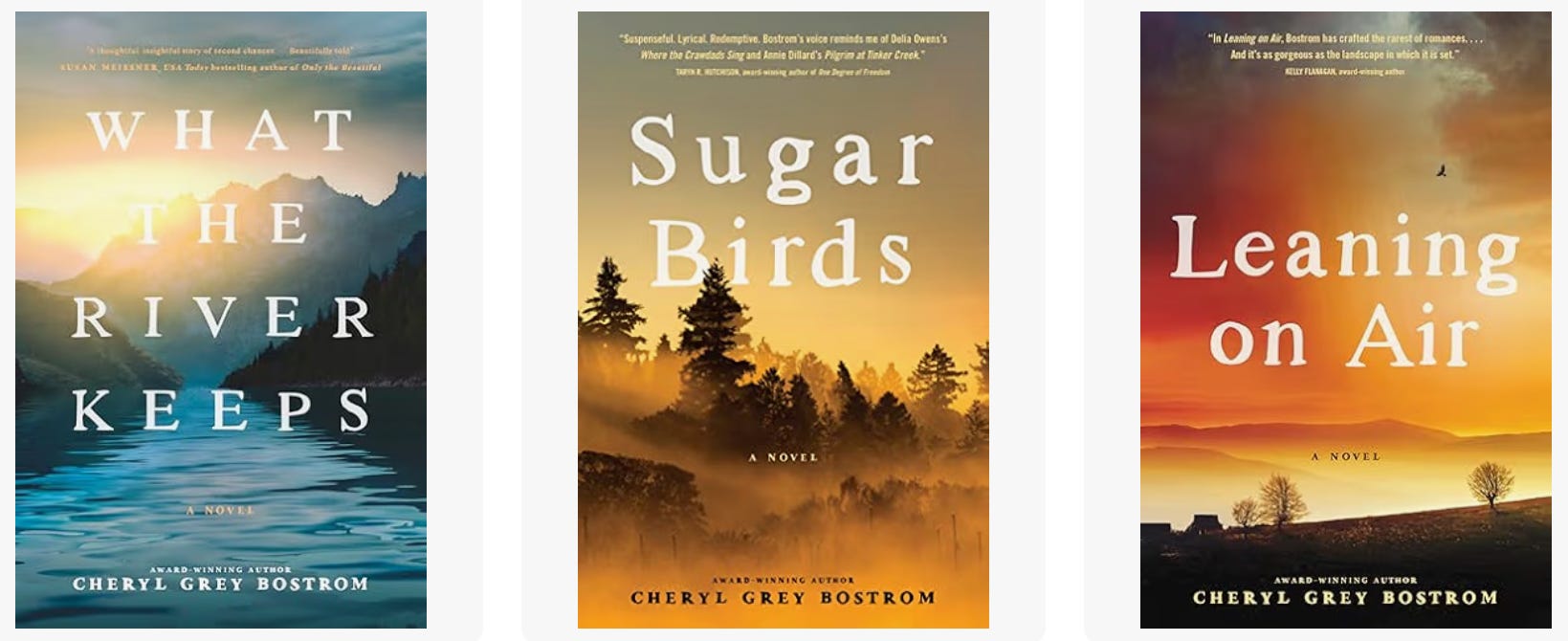
Cheryl didn’t set out to write therapy. She started writing Sugar Birds, her first novel, as a gift for her granddaughter — a sketch she turned into a long-form work of fiction almost by accident. But she’s come to understand the process itself as something closer to collaboration with God than composition.
Researchers, she points out, have tested whether stimulating the brain electrically can trigger abstract thought. It can trigger emotion. It can trigger physical sensation. It cannot manufacture abstract thought from nothing. “The longer I live, the more convinced I am that yes, human nature can generate thought, but by and large we are listening to voices — either the voice of the Holy Spirit, or we are listening to unholy spirits that direct us. And then, in our either God-driven will or our human nature, we obey and respond.”
Writing, for Cheryl, has become the place where that listening happens most clearly. “Through these characters, He’s instructing me as well as He’s instructing the story,” she says. “It’s just the coolest thing.” She and Marti landed on the same word for it independently, in that unplanned way conversations sometimes surface a truth: scribes. “We become scribes,” Cheryl says, “and as we’re inspired by the Holy Spirit, and as that wondrous act of creation is duplicated through our pen or our computer, we get to participate in that. I think it’s just a smidge of the taste of what God must have experienced at the creation of the world.”
She imagines the Trinity delighting in creation the way any maker delights in their work — spurring off each other, laughing, look what I made. And she carries that same sense of wonder into her theology of heaven: a pastor she once knew described it as a place of ever-expanding capacity, joy and creativity and beauty and light multiplying rather than settling into stillness. She thinks of the scene in C.S. Lewis’s The Voyage of the Dawn Treader where travelers approaching the edge of the world have to stop and eat a special food before they can bear the increasing brightness of the light. “For us who are looking through a glass darkly,” she says, “we can’t even conceive of it.”
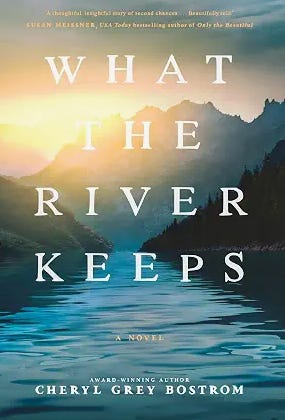
Her most recent novel, What the River Keeps, is the one that earned the Kirkus star — one of only two adult fiction titles named a Kirkus Reviews Best Indie Book for June 2025. It’s also the novel where the therapeutic weight of her own story surfaces most directly.
The book opens with its protagonist, Hildy, watching demons come off her uncle as he’s killed at the Elwha River Bridge. Hildy has returned to the Elwha as a fisheries biologist, helping with the river’s reclamation as its dams — dams no one thought could ever come down — are finally removed and the ecosystem begins to restore itself. She’s terrified to go back, partly because her mother is struggling with dementia, and partly because her own childhood was haunted by memories she’s been told aren’t real.
Hildy becomes, in Cheryl’s words, a hoarder of memory — keeping a diary-ledger of everything that happens to her, collecting rocks and feathers and tiny mementos, lining the walls and rafters of an old cabin with objects that testify to what she remembers, even though what she remembers contradicts everything she’s been told is true. She thinks she’s losing her mind. What she eventually discovers — with the patient help of a man named Otis, who has survived his own calamity — is that her anxiety, her hoarding, her whole exhausting inner vigilance will begin to resolve only if she can find what Otis calls her “lie makers”: the false beliefs, planted by dark spirits, that have been driving her all along.
“When people can uncover the lies in their lives which are planted by dark spirits,” Cheryl says, “they can heal psychologically, emotionally, spiritually.” Hildy’s process mirrors one Cheryl had to walk herself — tracing the lies her own parents believed about themselves, about life, about God, about truth, that drove them into such dysfunction. The river’s restoration and Hildy’s restoration run as direct parallels; the natural world, once again, becomes the place where Cheryl learns to see what’s actually happening inside a person.
She drew, with what she calls great gentleness and care, from her experience with her own mother’s mental illness in shaping the relationship between Hildy and her mother, Violet — not a direct retelling, she’s careful to note, but real experience transmuted into fiction. “As things heal in your own life, and as they’re no longer driving us,” she says, “they’re great writing materials. They’re just great.” As for the ending — she wrote it, and she still weeps when she reads it. “I believe in happy endings,” she says, “because I think if you haven’t reached a happy ending as a Christ follower, you haven’t reached the ending yet.”
Across three novels — Sugar Birds, Leaning on Air, and What the River Keeps — Cheryl has written neurodivergent characters with unusual care, several of them high-achieving autistic scientists. It comes, in part, from her years teaching school, where she had a number of mainstreamed, highly functioning neurodivergent students in her classroom. “I really came to love and treasure the different way of viewing the world that these people have,” she says. “For those of us who think that we’re normal and they’re the ones who need fixing — we need to rethink that.”
Her character Burnaby, who appears across two of her books, learns — as does his mother, and later his wife — that there are things he can do to mitigate the socially compromising aspects of his personality, whether through diet, learning, repetition, or exposure. But Cheryl is careful not to oversimplify.
She worked closely with an editor who had a high-functioning thirty-year-old autistic son and who had written extensively on autism herself, having her review the manuscript for accuracy. That editor steered Cheryl away from one moment that could have derailed the whole book — an instance where Burnaby is touched unexpectedly by a friend and doesn’t respond the way Cheryl had first written it.
“He can’t be touching him. He knows he can’t be touching him. He can’t be surprising him with touch,” the editor told her.
That correction became a thread running through Burnaby’s marriage to a passionate woman: incidental touch that isn’t wanted or announced can send him through the roof, and the two of them have to learn — together — what love actually looks like for the other person, rather than what love looks like in the abstract.
“It’s this process of becoming other-centered, Christ-centered, of dying to self,” Cheryl says.
She and her husband, a stoic, disciplined scientist, have walked a smaller version of that same process for decades — learning what makes each of them feel genuinely treasured, which turns out to be two different things entirely. “We learn,” she says simply.
Cheryl is now at work on a historical novel, unpitched and still developing, so she offered only the outline. It opens near her grandfather’s hometown of Wrangell, Alaska, on an island fox farm in 1919 — the boom years of Alaska’s fox farming industry, when the government leased islands for twenty-five dollars a year and a single silver fox pelt could be worth five times a laborer’s annual wage. Foxes released onto these islands decimated bird and shoreline populations before eventually being fed sea mammals and mash; it was, Cheryl says, “just crazy funny-money stuff.”
Her eighteen-year-old protagonist, Alice, lives on one of these farms with her mother and younger sister. She hates the fox farming even as she’s uncannily gifted with the animals — she understands them, helps them thrive, wants them wild, and yet watches them pelted every December, a contradiction that sits at the center of everything she believes.
When her younger sister turns up pregnant by the family’s hired man — a good man who has asked for her hand and been refused by their materialistic, ambitious father — the story turns violent.
The father discovers the pregnancy, confronts the younger sister on the beach, and is accidentally killed by her knife. A fisherman declares it intentional. The law gets involved. And Alice — the older sister — takes the blame sacrificially, fleeing south by steamship with two of the farm’s foxes to build a different life while a marshal hunts her and the clock runs out on her lie.
Cheryl describes nods to Les Misérables running throughout — giving her both spiritual depth and mainstream market appeal. Themes are already surfacing: what sacrificial love actually looks like, what you do when it isn’t returned, and a parallel thread about a mother and daughter separated by that same manhunt, writing letters to each other that a marshal is monitoring and that may never arrive.
Alice, notably, has a tongue-tie — and Cheryl is building the novel around questions of voice: how a woman finds hers in that era, and how you build a life with someone who knows you and hears you even when you can’t speak.
“I love the way these threads all dovetail,” she says, with more surprises ahead involving a lighthouse and mercury that she isn’t ready to reveal. She’s careful, too, about how she holds a story still this early. “I don’t want to get perfectionistic about it. I want to hold it with an open hand.” Her only real request of listeners: “If it crosses your mind to pray that I can pull it off — I don’t know.” She laughed saying it, but she meant it.
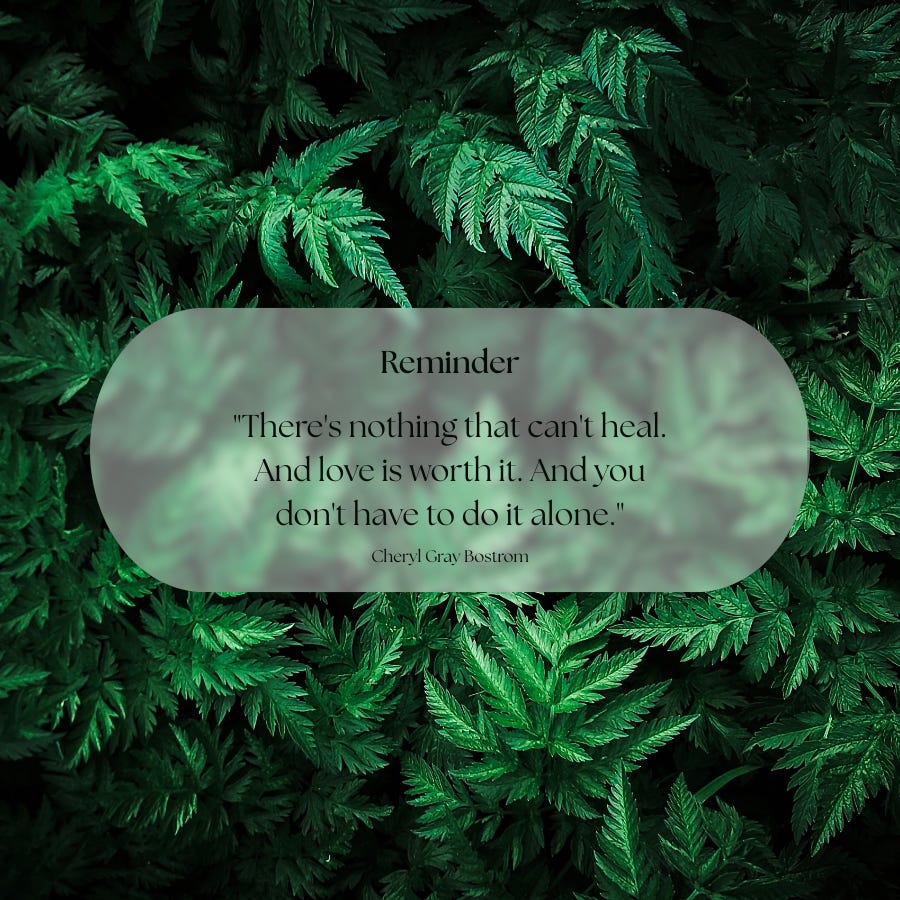
Asked what she wanted to leave listeners with, Cheryl didn’t reach for anything complicated. “No matter what you’re going through,” she said,
She circled back, unprompted, to the scripture Marti had offered her at the start of the conversation. “The Holy Spirit, as you trust Him, will show you the path,” she said. “He will guide you. He will guide you.”
It’s the same conviction running underneath every part of her story — the migrant camps her father grew up in, the marriage her parents never fully recovered from, the hillside where her grandmother taught her to see God in birds and mountains before she had a name for Him, the novels where her own healing keeps showing up disguised as someone else’s plot. Cheryl Bostrom didn’t set out to write a theology of restoration. She just kept writing what was true, and it turned out to be one.
Cheryl’s most recent novel, What the River Keeps, earned a Kirkus star and was named a Kirkus Reviews Best Indie Book for June 2025. Her earlier novels, Sugar Birds and Leaning on Air, have won more than two dozen literary awards between them. You can follow her nature photography and writing at her Substack, Birds in the Hand (cherylgreybostrom.substack.com), and find her books on her website.
Please think of 1-2 friends or family that you could share this episode with.

Comments
Nothing yet. Say the first thing.
Sign in to join the conversation.