
I’m just back from a great week in Ireland where (among other pleasures) I spent a morning discovering the thrills of falconry. Our group of four joined a charming falconer for a walk in the woods with two hawks. We learned how to release them to fly into the trees and lure them back to our gloved arms. Though well-trained, they are still wild creatures, so a couple of times the hawks dove into the underbrush to capture mice. Weighing barely a pound, they are sharp-eyed and perfectly designed for their task.
The experience reminded me of how powerful the body-brain connection is in both animals and humans. The hawks are hardwired to hunt, but they can also be taught and that combination explains their behavior. Similarly, we think our brains act as a big computer controlling our decisions, but our bodies play a big role, too.
The roboticist Rolf Pffeifer once used a Lego Mindstorms set to build and program four creatures. One that he referred to as crazy bird did wild flips when it was turned on. The others moved forward in a straight line. Everyone assumed he’d programmed them differently—but not at all. He had simply arranged the physical pieces differently on crazy bird. He thinks it’s an important message for humans too. Your brain can’t control everything—your body also plays an important role.
Back at the falconry center, we marveled at the many beautiful birds of prey—and only one appeared different, her posture stooped and unhappy. It turned out that all the others had been raised in the center, but this one had arrived after being found in a backyard, abandoned and possibly abused. My knowledge of hawks is limited to the hour or two I had just spent in the woods with them—but her appearance seemed to tell it all. If she had been human, I would have suggested she sit up straighter since you are more likely to feel positive when you are upright versus slouched. The resonance between body and mind works both ways.
It would be nice to believe that we each have some true inner self that has nothing to do with our outer shell but nothing in nature works that way. Our bodies and minds work together. Our falconer took great delight in the beautiful birds and we quickly shared his enthusiasm. These hawks are perfectly designed for what they are meant to do. It’s nice to think that we all are.
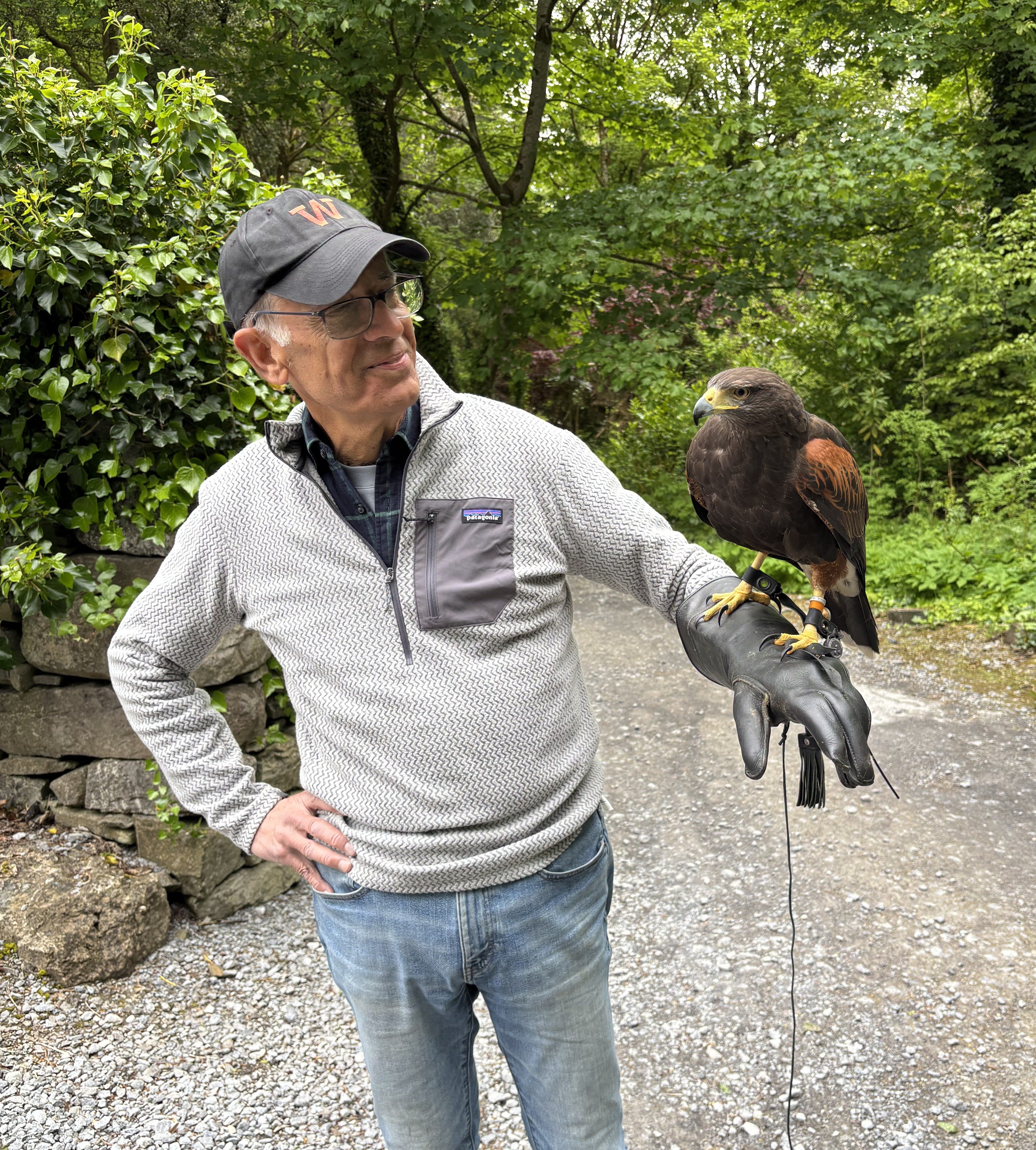
My husband and his new friend the Harris hawk
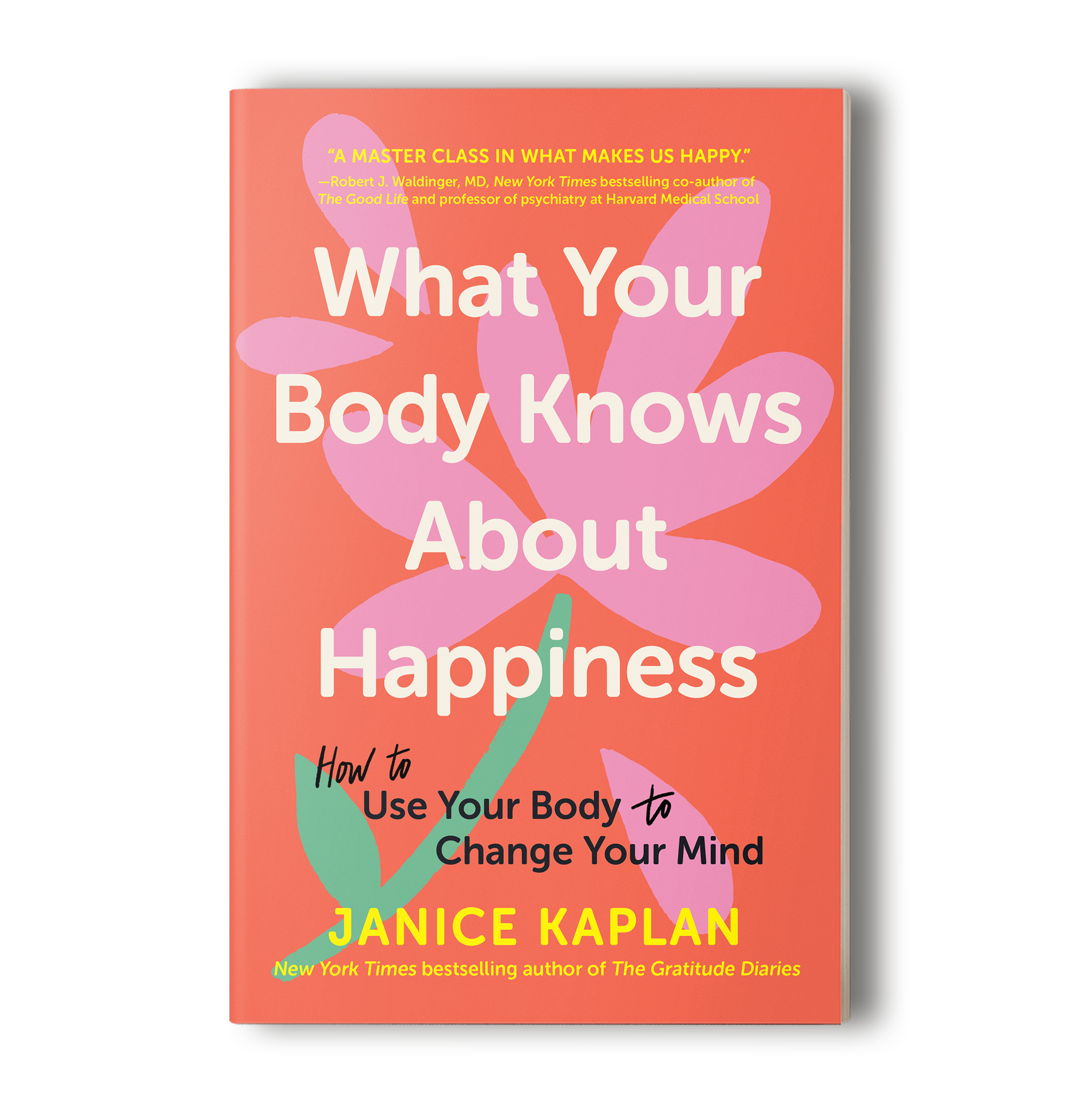
I’m absolutely delighted that my latest book will be available very soon with a completely new look.
When What Your Body Knows About Happiness first came out, the editor wanted the cover to reflect the research and science inside. Then a new editor took over and said that the book is also warm and fun to read. It’s about happiness, so the cover should make you smile.
Same content, different approach.
You’ve heard the adage “Don’t judge a book by its cover,” but the saying misses the bigger point. The physical world always affects us. When you’re choosing a book to read, you think you’re making an intellectual decision, but your body reacts first. Researchers say it takes just 100 milliseconds for you to be influenced by the visual input from the cover image and design .
The new cover feels warm and welcoming to me—and contains the same good research. I’d be very grateful if you’d pre-order it right now before the June 2 pub date. Or pick up the hardcover at a bargain. As an added bonus, either one will look nice on your shelf.
Thanks for being part of this newsletter. It’s always free—but I’d sure appreciate your buying a copy of the book. If you already have a copy, it’s a great gift for a friend.
Love, Janice
No posts
Comments
Nothing yet. Say the first thing.
Sign in to join the conversation.