
It is June, which means that May’s daily practice of writing microfiction has come to a close.
I also just finished reading Ulysses with a group from the Catherine Project last week: We’d been meeting every Monday since January to discuss the book. It was my second time reading it, with a ten-year gap in between.
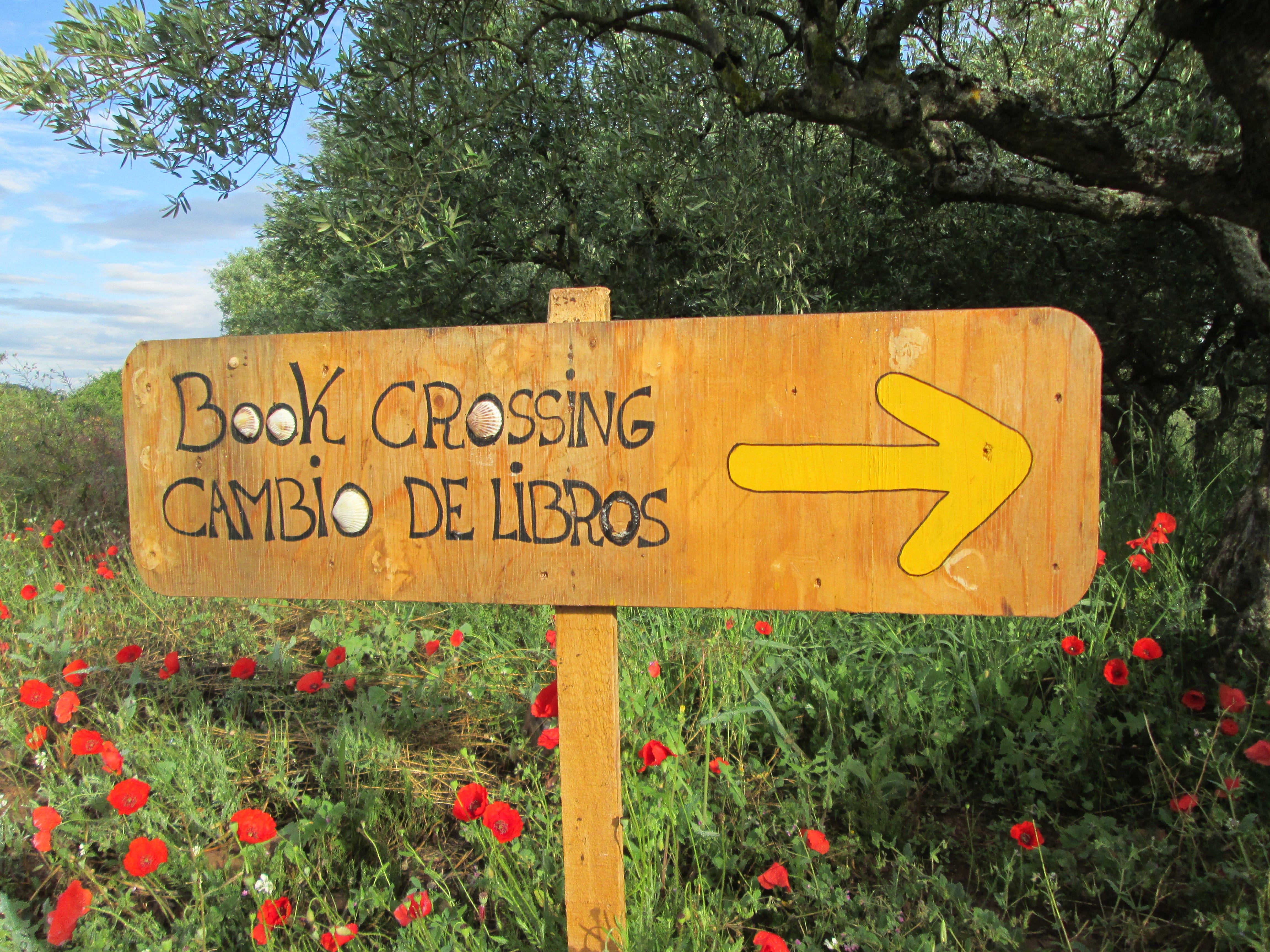
And then yesterday, a friend from Collegeville texted to say that she had returned from Spain, after walking the Camino de Santiago—a pilgrimage she has walked several times, one that I’ve walked back in 2018. I always swore that it was the kind of thing I would do only once, because it felt unrepeatable. But talking to multiple people about it again this year, I started to wonder whether I might want to walk it again someday.
I’ve been thinking, recently, about what it means to do something more than once, what returning to a place or a novel or a practice does to our experiences of them—both the present and the past.
I’m thinking about this in part because I expected this May to map pretty neatly onto the last—and, well, it just didn’t.
At the end of April, I packed up my things, said goodbye to my little apartment by the lake, did a quick walk in the arboretum, and drove down to the Twin Cities. I’ve been staying with my parents and substitute teaching for the past five weeks, during this little in-between time before my next move.
Last May, everyone in our writing group was in one place—Bowling Green, Ohio. The semester had just ended. The writing was new, and so was what was coming next. But the setting was familiar.
I thought this year would feel similar, even though I was writing away from the rest of the group. The same practice, and also very similar circumstances: I was at the end of one thing and waiting for the beginning of the next.
But this time, I came in with expectations about what microfiction would be and what it would yield. And though I have stayed with my parents between things before, the suburb where they live is not the one where I grew up, and my day-to-day was the definition of unfamiliarity and inconsistency. I was rarely the same classroom, rarely even the same school, sometimes not even the same city. Each day, I started at a different time, drove to a different place, with very little idea as to what it would look like until I got there and saw the plans on the teacher’s desk.
The writing I did—almost always at the very end of the day, almost always in a very short window of time—did not feel like it did last year. Or I did not feel the same, writing these stories. Or both.
During the same weeks, I was finishing the last few episodes of Ulysses, the ones that take place at the very end of the night, as Bloom and Stephen make their way home.
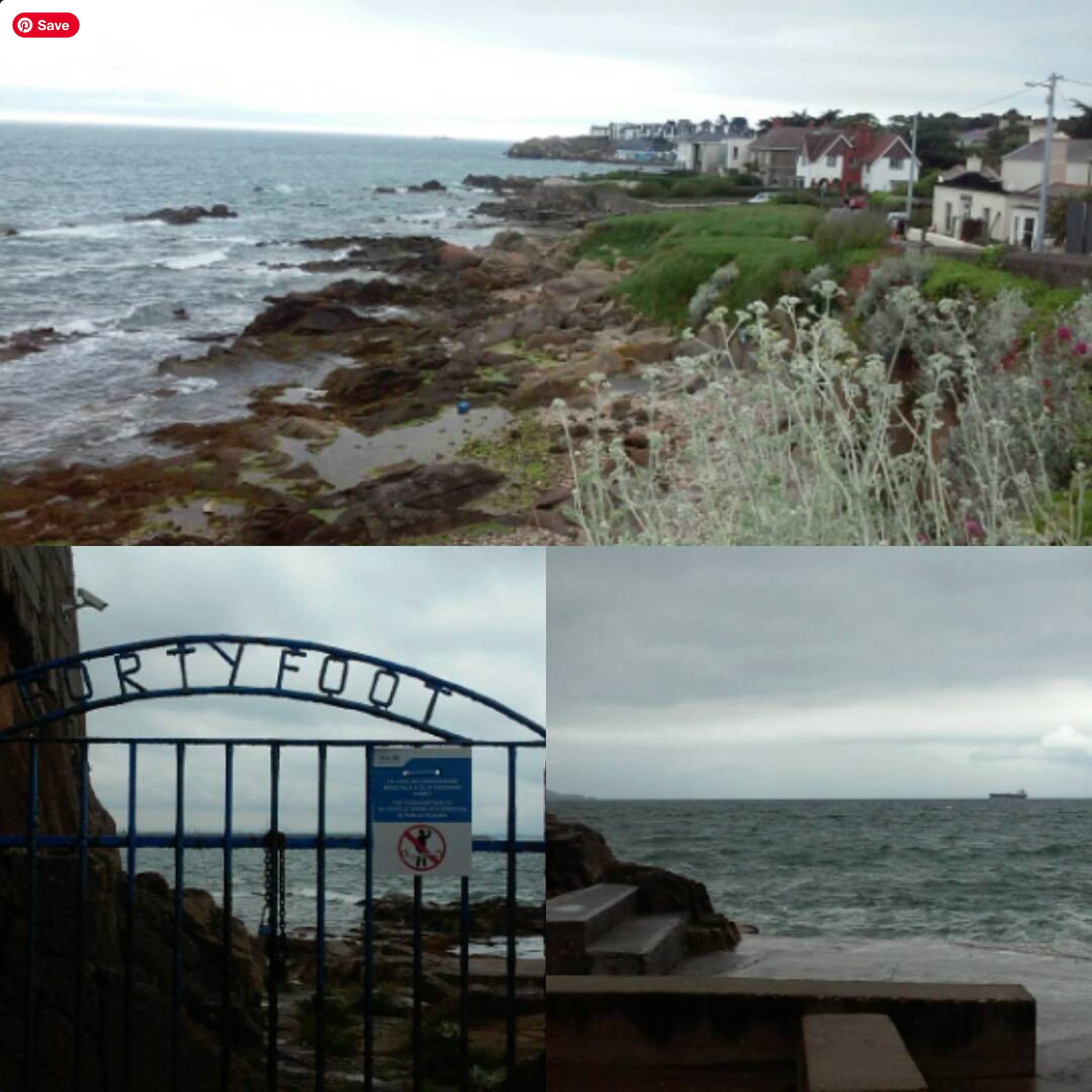
The first time I read Ulysses, I was twenty-five and in graduate school. I read it, during that year, one and a half times—first in South Bend, Indiana and then in Dublin and then in Indiana again. The pages are riddled with notes fixated on all the wrong things, mostly because I had decided that the best way to approach seminars was to choose, early on, what to focus on for the term paper, so that I could mull over my thoughts for as many weeks as possible.
I am a slow thinker and a slow writer, so this does make sense, in theory. But in practice, the best papers I wrote were the ones where I did not do this at all. The better papers came unexpectedly, an outcropping of thinking that I couldn’t have planned if I tried.
But I read Ulysses in my second semester of the program, where I didn’t trust myself to do this yet. The book is underlined in fading pencil and warped from the evening I threw it into my backpack with a bottle of cough syrup, thinking that I might have to accompany a resident in the dorm where I was working to the ER (I ended up not needing to go with her, but the book remained pinkish for a time after.)
So when I read Ulysses this year, I kept seeing myself ten years ago, tracking things I thought might be useful for a paper—the Irish language (which I did not write about) and cliches (which I did). I wrote a paper that was not very good at all, that for some reason reads it alongside Infinite Jest and tries to understand encyclopedic novels and the recycling of language. I am missing beautiful passages and not understanding basic plot points. But I am also sitting around a seminar table and getting deep into conversation and adding notes about metempsychosis and parallax and sometimes getting lost and sometimes getting closer to understanding.
Midway through reading the novel this May, one of the people in my reading group said that you can only ever reread Ulysses, that he wanted to form a rereading group so that we could turn around and start over when we got to the end. The story would only make sense, he said, once we could see the whole thing. The novel would agree with this assertion, I think—Ulysses is obsessed with time. The phrase retrospective arrangement is repeated multiple times: the idea that events are put in relation only when we look back on them.1
There, as in a retrospective arrangement, a mirror within a mirror (hey, presto!), he beholdeth himself.
The first time I read Ulysses was like most first times you read a book—I read it blind. I did not know where it was going.
When I read it this time, I did—though I had also forgotten a good deal of it and was reading with a lot of questions, so though I knew where the plot was heading, the book itself was still a mystery to me. I read it and I kept getting transported back to certain conversations and the way I was trying to understand it the first time. I was in Dublin and then the west of Ireland, and then at my grandparents’ house in Waterford, where my mother grew up, and then in Indiana, thinking about my relationship to family and home. I was talking to classmates about their papers and future plans.
This time, I avoided secondary sources until the very end, when I picked up my friend Sarah Coogan’s book Nostalgia and National Identity in the British and Irish Modernist Epic. It starts with a chapter on Ulysses. Actually, it starts with acknowledgements, which included familiar names—of professors and people I’d known in South Bend—and then an introduction on nostalgia. Followed by the discussion of Ulysses, which, aside from the specific arguments Sarah makes about nostalgia, made me nostalgic.
If you had asked me, at the start of the year, whether Ulysses was a novel that had sunken deep into my consciousness, I would have said no. I picked it for the reading group mainly because I wanted to understand it better and felt I hadn’t understood it enough the first time around. But reading Sarah’s chapter, I was surprised—alongside the parts of her argument that made me see it in new ways, there was so much familiarity. There were pieces she had already been thinking about back when we were in the seminar and Dublin together; there were citations to our two professors who had taught Ulysses and to other sources I recalled only upon seeing again now. Reading Sarah’s chapter was like being welcomed back into a giant conversation I’d forgotten, and then having that conversation expanded—by someone who had been thinking about the novel far longer and deeper than I had.
I am a little tempted to turn around and read Ulysses again right now, while both the memory of the first reading and my current one are still fresh in my mind. But I also don’t want to do this. I want to wait and let them stand and come back to the book after a little time. So that I get a new reading and this one and the first one as their own separate things.
I did not realize, when I started writing last month, that I was expecting a replication of the previous spring—but it became clear that I was when that replication obviously did not happen.
I wasn’t writing a draft early in the morning and letting it sit in my mind throughout the day, to either grow into something or be discarded in favor of a new idea. I didn’t have the space, during a school day (with sixth graders throwing crayons at one another or preschoolers crying or high schoolers trying to leave the classroom) to mull over an idea or image at length, the way I did during the inevitable dead time at the brewery before the lunch or dinner rush. Many of the pieces I ended up writing this time weren’t microfiction at all, but flash—I wasn’t able to contain the writing properly, and I would run out of time to edit it down or try something new.
Last year, being pressed for time often meant that something surprising emerged. This year, it usually meant that I took shortcuts: I wrote creative nonfiction (not easier to craft, but easier to start, since I didn’t have to invent anything.) And I fell back on old topics, old patterns.
I thought of an essay by Zadie Smith in which she grows tired of her writing voice, saying, “Sick of sound of own voice. Sick of trying to make own voice appear on that white screen.”
I was so tired of my own writing. Please (I thought) let me never again write in the collective voice or talk about the weather or give yet another version of this narrator who feels like pretty much the same character, just viewed through some other funhouse mirror.
Last year, writing microfiction was a bit like reading a book for the first time because I had known so little about it—the whole month was exploratory and exciting.
This year, it was not that.
But the practice did do something else: It kept me in touch with writing, during a time when my routine was otherwise in flux. The frustration of somedays writing what I did not want to write—a throwaway CNF piece, a story with an overused concept—clarified what I did. Writing alongside my classmates meant that on the days in which I was so tired of my own pieces, I got to read theirs and be excited for someone else. On the days my writing felt old, their pieces would appear—sometimes pleasurable in their familiarity, sometimes pleasurable in the way they surprised.
And from the overwhelming sameness of my own voice, a few pieces popped out that I actually did like.
So a good part of my experience with microfiction last month stemmed from the a change in context and the fact that a genre that was once brand new is now more familiar.
But I think part of it was wrapped up in a kind of nostalgia, in trying to repeat an experience so close in time to the original.
Because aside from the practice itself, last year’s microfiction, for me, was tied to people and place. Namely, the places in Bowling Green where my classmates and I spent writing and working, where the rest of them still are now.
I think that one of the reasons walking the Camino has begun to appeal to me again recently is because it has been so long since I walked it—I would no longer be expecting a replication of that first pilgrimage. Enough time has passed that I can feel the dual narrative that would emerge—the present alongside the rediscovered past, the pieces I already remember and the parts I’m sure I’ve forgotten—if I were to return.
It may seem strange to map that onto a writing practice, but practices are not divorced from the communities and places they emerge from. They have their own memory built into them, and—I was reminded this month—practices change when they are transported from one time or place to the next.
I thought back to that paper on cliches I’d written in my Ulysses seminar. The paper is a bit of a mess, but I can recall mulling over how fresh language hardens into form and becomes an object passed around like currency. The etymology of cliche comes from the printing press: The French clicher mimics the sound made when metal is struck to make a mold; the literal definition is “a cast obtained by letting a matrix fall face downward upon a surface of molten metal on the point of cooling.” Like a printer’s block, a cliche copies and recirculates language, but at a cost. The reproduced form loses the immediacy of the original.
None of this is to say I would not do such a writing month again in the future. (I am guessing that we probably will.) But I wonder if next time I might intentionally find some ways to make the old new again—or to preserve the newness of the old and let something else emerge alongside it.
Near the middle of May, searching for some quick way into a piece, I stole an approach I had already used the year before for a short memoir piece, “Tadpoles.”2 It begins from the point of view of the tadpoles, before shifting to the human narrator. When I first wrote it, I thought I’d written my first microfiction piece, before I began adding the sections of the human narrator. So I thought: What if I tried to mimic that first section, this time in fiction?
I was sure the resulting story would fall flat, because I have never found success with this approach. If a new voice works for you in one piece, it probably won’t in another. But I was just looking for a useable piece so I could go to bed; I didn’t really care about it working. So I wrote one section of the new story, “Frogs”—and then went a step further, returning to a microfiction from the previous year that I’d since turned into a short story. I didn’t like the resulting short story, but I wondered if one of the early scenes—a girl jumping into a community pool—might pair with the frogs?
I put them together. And was surprised to find the way in which they played off one another—and the way in which they made me look again at the earlier pieces they sprang from too.
The frogs story sat for a week or so. I took it to workshop, and then I edited it a little. I don’t think it’s quite done, but I do think it will be, though it might take a little time.
It shouldn’t have worked. I’m not sure why this, of all the pieces from the month, is the one I am happiest with, the one that is, by any definition, the most derivative of the lot. Maybe because it wasn’t trying to be either old or new, because it was just dipping seamlessly into the past and letting it bubble up to the present without trying to determine what the relationship between the two would be.
I did not finish my friend Sarah’s book this spring—I brought it with me to the Cities, but it came due at the library, so I drove back up to Collegeville midway through May to return it. I am suspended, right now, in the middle of her chapter on T.S. Eliot’s Four Quartets, which feels fitting. It’s a poem I read for the first time aloud with Sarah and some of our classmates one spring in a cute coffee shop before it changed owners and became a less-cute bar. I am thinking of Sarah’s introduction, where she calls nostalgia “yearnings for a past I do not believe has ever existed,” one that is bound up in “a sense of belonging that cannot be fully attained in this life.”3
I’m not sure that any of the pasts I’ve been musing about above exist in quite the way I’ve arranged them, either. I think this is what retrospection does—orders things in one form one day, to be rearranged the next. I haven’t finished Sarah’s book, but this is what her words make me think of here: of a nostalgia that aims at something just beyond the stories we tell.
Joyce, James. Ulysses, edited by Hans Walter Gabler. Vintage Books, 1986, p. 337. “Retrospective arrangment” appears four other times, on pp. 75, 198, 363, and 595.
Ponder Review, 10.1, 2026, https://www.muw.edu/ponderreview/.
I neglected to record page numbers in my hasty notes, but in my memory, this is on the last page of the introduction. Coogan, Sarah. Nostalgia and National Identity in the British and Irish Modernist Epic. Cambridge UP, 2025.
Comments
Nothing yet. Say the first thing.
Sign in to join the conversation.