
I’ve been spending a good portion of the year looking forward to the spring months. Not just because January dipped to colder temperatures than I recalled from my childhood in Minnesota, but also because I was anticipating a shift in writing with the warmer weather: Poetry in April. Microfiction in May.
My classmates and I had done this the year before and planned to do it again. Last year, it was a welcome change after defending and submitting the thesis, as well as some needed structure post-graduation. This year, I hoped to finish a second draft of the novel just in time for spring again.
Well, the second draft of the novel is suspended pretty much right in the middle—more on that another time. But as I prepared to finish the residency and move back down to the Cities, I found (as I suspected I would) that I wanted a shorter form in the midst of transition. So for the past month, I’ve been writing poems with my classmates again—and preparing for microfiction to start later this week.
The decision to do these challenges in April and May is somewhat arbitrary. April is National Poetry Month. Last year, recognizing a good thing, the fiction cohort in my program decided we wanted a month of writing too—and the alliteration was right there. The timing ended up being fitting, though. I find that I often feel antsy in spring—I want something new, but the weather, full of baits and switches in the Midwest, doesn’t let me do everything I want to quite yet. And here was something new. Exciting but small—something I could do.
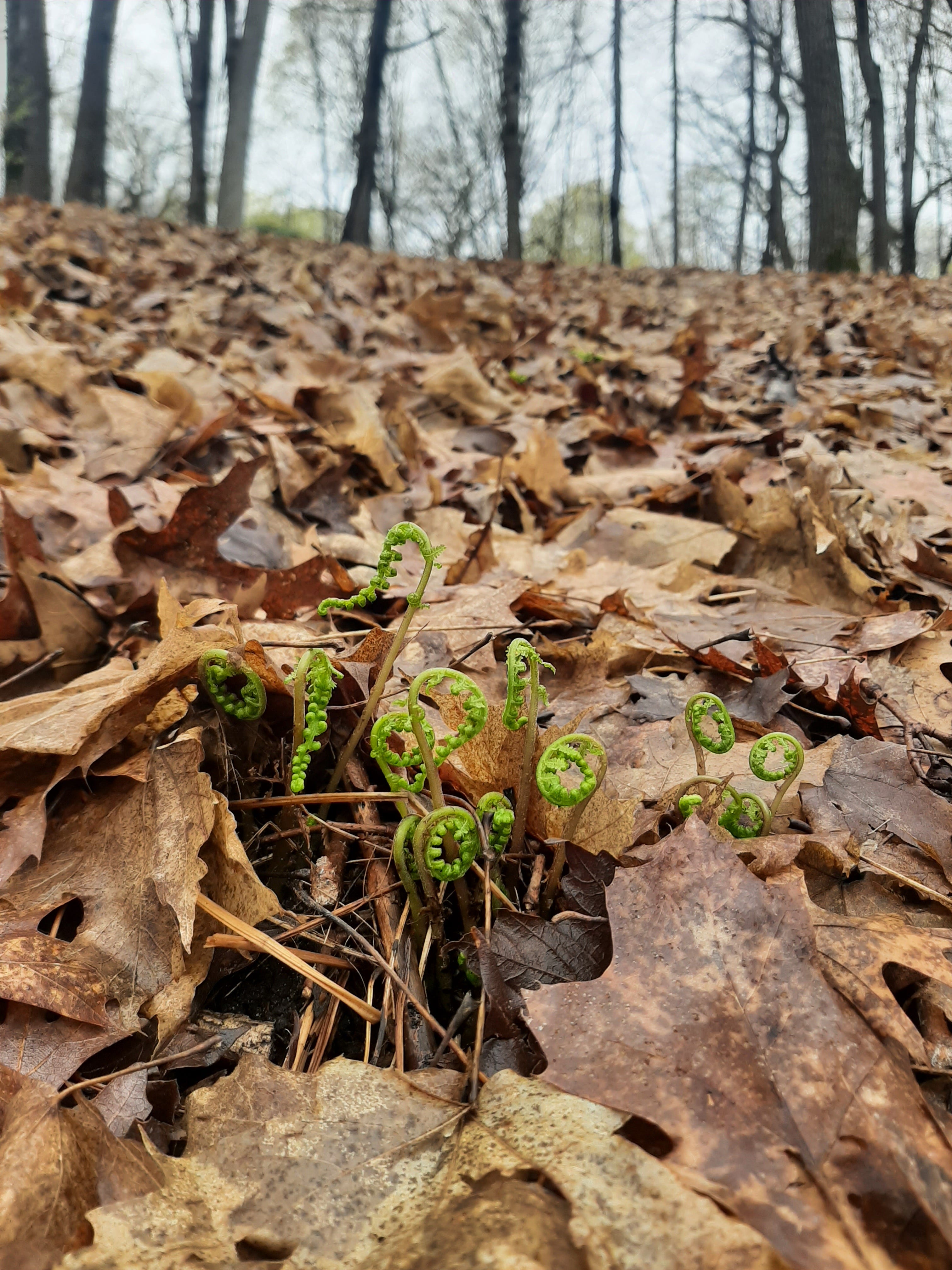
I’ve never attempted this kind of daily writing challenge as a high school teacher, but I’m remembering, too, how I often felt during these last months of the school year then: as though a store of writing was building up, like I was waiting for the summer to come so that I could finally let it out. There often wasn’t time, in the spring, to sit down and fully release it—or when there was time, my brain was too tired. So I wrote snippets of things on post-its on the podium during passing period and while I was proctoring tests. Or I typed a phrase or two into my phone while I walked the dog by the river in the evening. The days started to get longer, and some mornings I stopped to get coffee on the way into school to write for a half hour or so, the early hours no longer dispiritingly dark.
I was writing whatever fit into whatever time or space I had. Looking back, I think that spring tends to be a liminal space, suited to all kinds of short writing.
So I’d like to extend an invitation, this May, to anyone curious about microfiction, to try it out too. Below, I’ll describe the approach my classmates and I took, but it doesn’t have to look like what we did. Feel free to make it your own.
In a nutshell: really short fiction, typically under 500 words. (The word limit varies, with some places defining it even shorter—under 400 or under 300 words.) I wrote a post about microfiction here that goes into more detail and has some examples. In spite of the short length, microfiction still feels like a complete story.
What “complete” looks like varies from story to story. Part of what’s fun about a month-long challenge is getting to experiment and feel out what microfiction can be. Because microfiction can drift towards poetry, an ending might feel more like a poem than a story, relying on image and association to do the heavy lifting. But it can also keep the traditional craft elements of short stories—dialogue and character and plot—just distilled with incredible focus.
One of the ways to start thinking about microfiction is to read it. When my classmates and I started writing last spring, we were all fairly new to the form. I’ll speak for myself and say: Part of my writing was a bit blind. I knew what a longer story felt like, and so I just played around with what it could look like in a smaller space, with relatively little knowledge. And part of what I did was more intentional. I checked out a couple books of microfiction, began reading, thought about what the writers were doing, and let their approaches expand what I believed a short short story could do.
Both approaches were incredibly fun. A lot of microfiction is published online, so finding it is easy. Here are a few places to start:1
There are also print anthologies of microfiction if you prefer a book. The Best Microfiction series releases a new volume each year, as does Best Small Fictions (which includes both microfiction and flash). I started with New Micro: Exceptionally Short Fiction.
In any case, looking through a publication or an anthology quickly teaches you one thing: microfiction takes a wide range of forms. Which is why it’s so fun to play around with.
In its simplest form: write one microfiction a day for the month of May.
When my classmates and I set this up, we almost immediately decided on some rules and modifications:
500 word limit
No word minimum
Nonfiction allowed
Beginnings of longer stories/nonfiction pieces allowed
For #4, we recognized that we might start a microfiction—and then realize that it wasn’t meant to be contained to that space at all. The main point of the month was to be generative—and so if we ended up with something that didn’t quite fit, that was fine. But we also recognized that having some restrictions—the word limit, the daily commitment, 31 unique pieces—was important too.
We ended the month with a mix of things:
Microfictions
Micro-nonfictions
The opening scenes of short stories and memoir pieces
I wrote stories that I liked and stories that were forced and stories that were weird and stories that I won’t ever return to. Part of the practice is just that. To practice.
The other component that we incorporated was sharing and commenting on one another’s pieces. This is completely optional—you could certainly do such a challenge independently. But sharing each day added to the accountability and the sense of community. It was also helpful to see one another’s attempts, as we were figuring out what microfiction could be.
We set up a server on discord with two different channels: one for sharing the files with our micofictions, the other for sharing comments.
For the comments we adopted some shared guidelines:
No feedback (That is, we weren’t workshopping these pieces—so no critiques or questions to help the writer improve. After all, with this kind of challenge, who knew if we wanted to keep working on any given piece?)
No expectation to respond or read (The challenge was to write each day—reading and responding were always optional. In practice, we all ended up reading most days anyway, but only because it was fun and we had the time.)
Offer encouragement (Favorite sentences/passages, parts that stood out, things we loved. Oftentimes, our comment would simply be quoting the sentence we liked best.)
Discord worked well for our small group. But I’ve done simpler exchanges like this with friends over email too. Whatever suits!
Midway through May last year, I was stuck on a particular day. The first week of stories had come easily, but I’d been trying to write a piece centered around—of all things—apple varietals, and it wasn’t working. I’d switched to a bit about the moon, and it wasn’t any good either. I was working at the brewery that evening, drafting these ideas on my server pad, looking up facts about apples on my phone, trying to decide which concept to commit to.
One of my professors came in—he knew about the challenge because the poets had talked to him about it, and we ended up chatting about how it was going. Doing this kind of daily practice, he said, forces you to be less precious about a piece of writing. He was right, I thought—my shift would end in a few hours, and I’d close and go home, and I’d have to send whatever I had to the group by the end of the night, regardless of how good it was.
There is something about the simultaneous pressure of having to do this alongside the knowledge of a blank slate the next day that is incredibly freeing. I went home, and somehow, in the walk between the brewery and the apartment, a different image entirely sprung to mind. I wrote a new piece sitting in my bed and posted it right before midnight.
I got used to giving a piece what I could on a given day—and then letting go of it in the morning so I could move on to the next thing. (Or circling back to an idea that hadn’t materialized—I ended up returning to the moon the following day, though I never did make use of those apples.)
I went into the summer with the habit built up of writing each day, even if it that writing was tiny. I had a couple of short stories I was ready to work on—the few pieces that had turned out to be starts of longer stories. I had a handful of microfictions that I was interested in submitting for publication.
But more than that, I’d just spent the month immersed in story and language—my own and other people’s.
In June, we grabbed drinks at a brewery (not the one I worked at), toasted to the end of May, and shared which pieces we liked best.
My plan for this May, aside from joining my classmates virtually again, is to post a few microfiction prompts on the notes side of Substack, along with some favorite short fictions that I’ve read this year. In June, I’ll do a short post on how year two went—and I’d love to hear if anyone else tried their version too.
Cheers to a writing-filled May!
I selected these publications because they have separate pages/sections for microfiction specifically. Other publications known for publishing microfiction often also publish flash fiction (fiction under 1000 words) and/or poetry, so it’s harder to read them specifically for microfiction. But you can find a good list of journals known for featuring microfiction and flash by browsing the list of journals on Best Microfiction, Best Small Fictions, or the Wigleaf Top 50 (which features microfiction and flash.) Last year, I spent some time reading Flash Frog, HAD, and Wigleaf, among others.
Comments
Nothing yet. Say the first thing.
Sign in to join the conversation.