
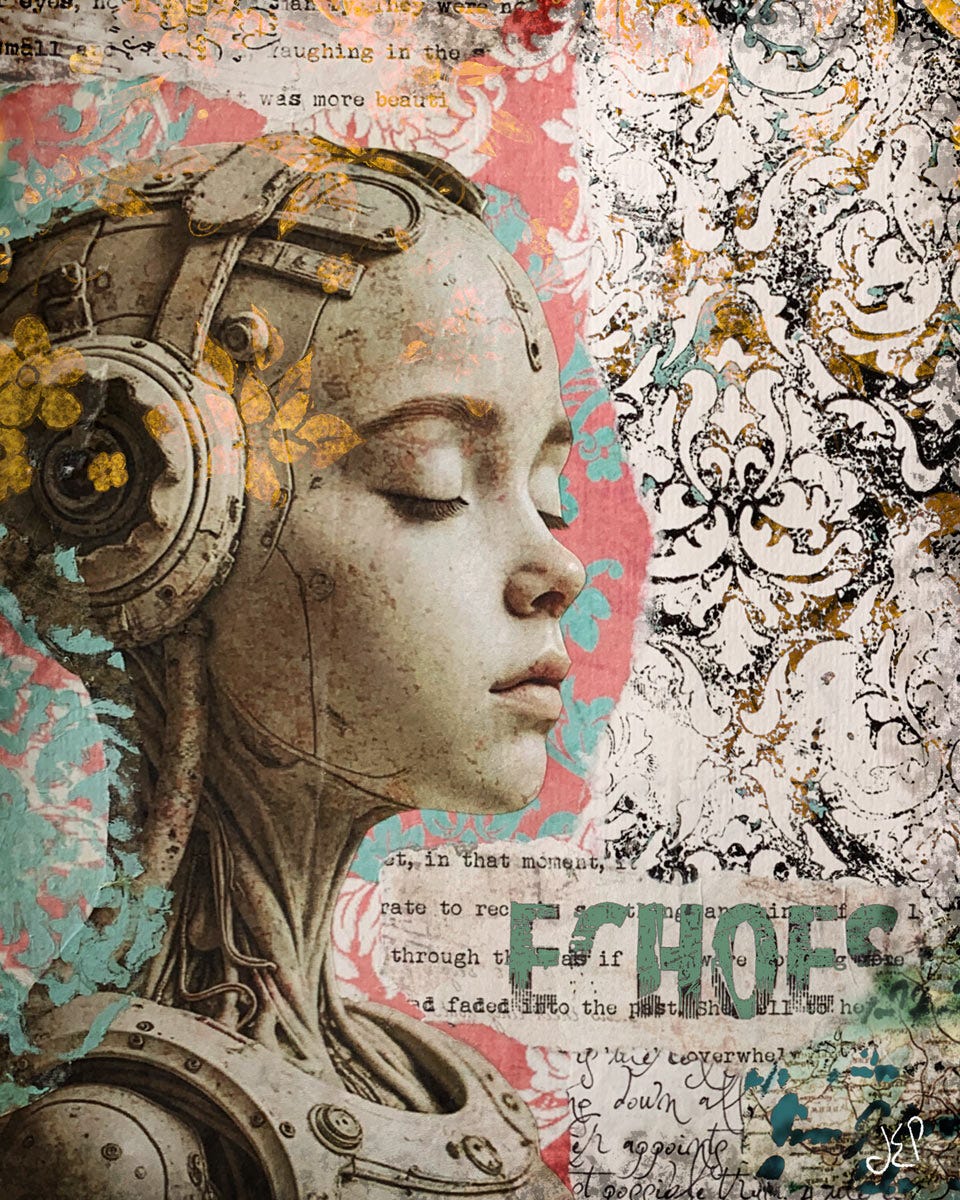
Imagine your mind as a vast library. Towering shelves brim with millions of books about you, your thoughts, feelings, and experiences. Some stories you wrote yourself, but many you did not. They are the old, dusty books penned in childhood, filled with early scripts, many now lost to memory.
Your happiest moments, wrapped in beautiful sleeves, float into your hands without persuasion, while entire volumes remain locked away, too frightening to uncover. It can be easy to believe these books represent an objective reality, a settled truth about who you are. But many of these volumes were absorbed because of your deep need for belonging. They are less about your true self and more about an adapted self, striving for survival in an unpredictable or frightening world.
From the first breath, our deepest need is to belong. Our words aren’t yet uttered, but feelings are fluent as we sense the values of ‘the tribe’ — our family.
Here we learn to believe who the heroes are, who the villains are, what is good, and what is bad. And with little conscious effort, our identity is formed. Within our omniscient tribe, a shared reality has been cultivated, giving air to things we just know.
In families, this knowingness becomes a kind of culture. What can be said and what must remain silent is imposed, emotions and actions tagged; some rewarded, others punished, according to the tacit rules of the family system.
If knowingness is the book we live by, conditioning is the author who penned it. Our beliefs and values did not arrive fully formed; they were prescribed over time in micro-doses. A raised eyebrow, the timbre of a comment, the absence of affection or a fleeting reward for our acquiescence. This is the essence of conditioning.
As children, we absorbed the emotional climate without question and quickly learned the lay of the land. If anger was met with anger, we learned to suppress it. If sadness was dismissed, we learned to swallow it. These were not conscious decisions, but adaptive methods of survival that became embedded and refined over the years.
These scripts laid down the psychological tracks that we tend to follow throughout our lives. Understandably, one might believe that childhood’s faded memories have little bearing on our adult self, but psychology and neuroscience tell us otherwise.
Long before we had words, our nervous system was transcribing. Each time we were soothed or dismissed, welcomed or shamed, our young brain adjusted. These impressions weren’t filed away or forgotten; they settled deeper, written into the body itself. And with repetition, the tracks grew more defined. A silence here, a sorrow-covered smile there, each one pressing the path a little further. Like a trail worn into the earth, we walk it still, not for its promise, but because it’s familiar.
We may not be aware that the body speaks when the mouth cannot. The wheezing child, starved of attention, becomes the breathless adult when life can’t be tolerated: the body expressing what could never be said, I want out!
And the child, once bedridden, fussed over and favoured, learned that love and illness are close companions. In her grown-up world, when attention is scarce or life feels too sharp, her body repeats the rhythm: When I am sick, I am seen.
These stories, of silence, of longing, of adaptation, are at the core of who we are. They live in our minds and bodies, drive our decisions, choose our partners and decide when we flinch or follow. What was once scribbled in haste now steers the pen. But a story isn’t static. It awaits the reader’s return, older, perhaps a little wiser and open to read between the lines.
And so we return to the library, the dusty old books remain unchanged, but we are not. Inside every one of us, there is still a child, and perhaps that child is ready to choose a different story. The volumes we feared may be a little less frightening. Our inherited stories more intriguing, and our desire to edit, more enticing.
The clock ticks.
The library waits.
Which books will you continue reading, and which will you finally set down?
Klaas, B. (2024). Fluke: Chance, Chaos and Why Everything We Do Matters. Hodder & Stoughton
No posts
Comments
Nothing yet. Say the first thing.
Sign in to join the conversation.