
How does it feel to do something you’re really good at?
To be in the act of accomplishing something other people find difficult, while knowing in your bones that you can do it?
If you have brains, talent and a tendency to get in your own way, this is probably not something you’ve spent much time thinking about.
Those of us in this boat usually focus on negative emotions associated with doing things well, like self-recrimination, regret, frustration, guilt, or even despair. We experience our skills primarily in terms of lack: lack of follow-through, lack of goals accomplished, lack of being the person we keep trying to be.
But in the midst of all that finish-line-driven, am-I-fixed-yet noise, we lose sight of the positive emotions that often got us so fixated on using our talents in the first place.

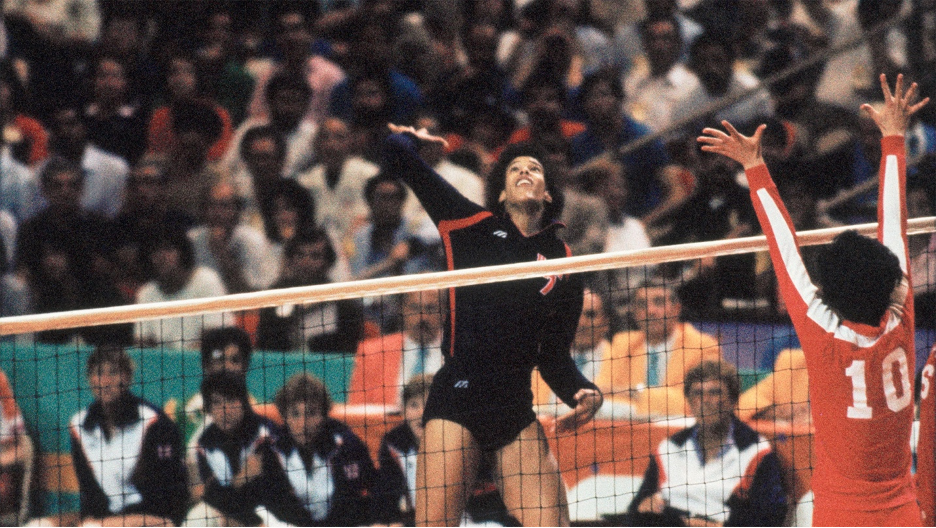
I was reminded of this fact recently when I was coaching someone struggling with self-doubt in her career. I asked her about how it felt when she was able to trust in her skills and know she could do what it takes, and she flashed back to her time as a high school volleyball star. “There was this feeling when a ball got served and it was flying toward me,” she said. “Like: I got this. This one’s mine.”
Although I still have occasional nightmares about being forced to play volleyball in gym class, I knew exactly what she meant. I’ve felt it in myself, when I’m halfway through writing something and I can sense the rest of the argument unspooling from somewhere inside me. Or when I’m teaching and I find myself creating a framework on the fly that I can tell is going to make everything fall into place for my students. There’s a sensation of sheer rightness in being able to execute at this level. It’s a sense of your skills rising to the bar while knowing they’re equal to the challenge.
Underneath all the self-recrimination and the desire to be fixed, I think this sense of rightness is a lot of the reason we don’t give up on using our talents. We have had this experience, even if it was years or decades ago. In many ways this experience is why we’re so sure we have more to give in the first place. The pleasurable rightness of doing something really well is so unmistakable and indelible that we can never entirely forget that it lives inside us.
This pleasure goes beyond pride, though it’s undeniably fun to be the person with the skills. The more you tune into the feeling of using your skills, the less pride is an issue, because the feeling quickly comes to seem bigger than you. The strange sense of something coming to fruition that can happen with high level execution doesn’t feel like possessing our talents at all. It feels more like becoming the properly shaped vessel for something powerful to move through you. Like the pool you’re drawing on is too bottomless to belong to any one person.

In retrospect, I was not surprised that my client thought of her volleyball days when thinking about this feeling. For many reasons, our culture deals with talent emotions primarily through stories about excellence in sport and music, two things that exist at the vexed intersection of inborn physical capabilities and extremely demanding practice. There’s a reason that so many people tear up while they’re watching the Olympics, whether they’re watching someone winning or losing. As an audience, we’re engaged in a mass negotiation of feelings and ideas about ambition, talent, drive, success and failure.
But I think with sport, there’s also something more elemental at work, which has to do with the more visible pleasure of movement. To take one example: in my town, there’s a young woman who runs on the sea front who is clearly a very serious runner. I can always tell it’s her even from a distance, because she’s not jogging—she’s just full out running, like a kid about to win the 50-yard dash. I always feel like I can sense her pleasure in her speed no matter how far away she is. It’s in the light way her feet land, in her long hair streaming behind her. It always makes me think of a line from the Bible I must have heard sometime in my Catholic upbringing and never forgot, which describes someone who ‘rejoiceth like a strong man to run a race’.
That kind of rejoicing is rarely visible to observers when the person experiencing it is just sitting at a computer or standing at a whiteboard or rehearsing a tricky scene or running a team meeting for the research lab. But that doesn’t make the pleasure any less real, or any less significant.
If you’re lucky enough to have felt it once, I believe it’s part of your birthright. That means there’s a future in which you tap into this feeling regularly, where it becomes a kind of guide. Where you know that you’re exactly where you need to be, because you have that pleasurable sense of something powerful moving through you, of your skills expanding to meet the moment. You’re not worried, you’re primed. As in: I got this. This one’s mine.
Comments
Nothing yet. Say the first thing.
Sign in to join the conversation.