
April on the Vineyard. One day it is cold, the forsythia bare with buds just barely showing. The next day the daffodils pop like corn out of a hot pan. And the following morning the yard is blanketed in frost, and those early risers seem caught off guard by the brutal chill with their stems bent, heads lying on the ground. But that’s not who they are. A daffodil is built for exactly this: the cold snap, the freeze that comes back just when you thought it was done. They don’t surrender. They know how to take a hit without breaking. Give them a warm afternoon and they straighten right back up and carry on. Spring warriors.
Meanwhile, the forsythia wait. They are not coming out until it is safe.
And then the garden calls, the leaves are pilesd at the edges, the sticks of last season need to be cleared, and we begin again. With a clean slate of the garden, there's a way April lets you stand at the edge of the beds and imagine everything at once. In a few months my garden will be wild, sprawling past the fences, producing more than I can use, baskets of greens, weeds everywhere, and the delicious problem of too much. Right now it’s the beginning, and the beginning is its own reward. I can be patient, I can be, I can be…
Last fall I had the soil tested, and the news wasn’t great; the potassium was very low. I called on people I trust: Caitlyn at Mermaid Farm and Mitchell at Allen Farm, and of course my family. My daughter in law, Faren who runs Kitchen Garden MV and I can call on her for all advice that has gardening, and my son for the tress and bushes.
All told me the same thing. Go ahead and plant. Amend with potash, potassium sulfat. Mitchell will guide me on amounts once I send him the test results. The compost will do the heavy lifting. So this morning I did exactly that: I asked my tractor-loving husband for a tractor bucket of compost. I will sift into the beds, and my back is already screaming…. and there will be peas and orkra this week.
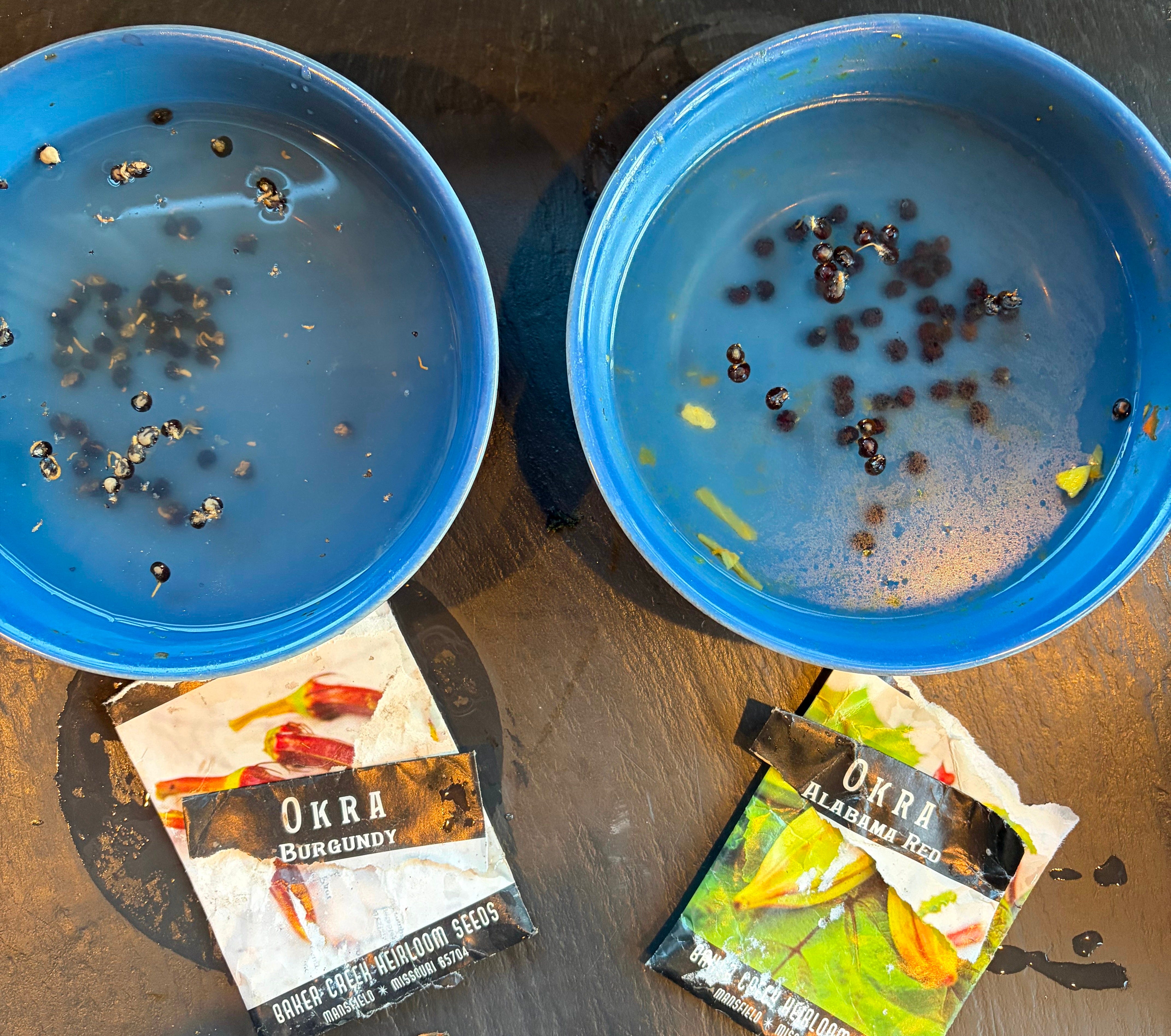
Peas first, which feel like the right place to begin. A little late, I know, but they will catch up. I hope. They are patient and forgiving, and they give me such pleasure: the tiny outstretched grappling tendrils, the beautiful flowers, and finally the peas themselves. Then there is okra; this is a newbie for me. Two varieties. Burgundy, whose name alone promises colorful abundance. And Alabama Red, though the package makes it look closer to gold, whichI don’t mind at all; a little mystery in a seed is not a bad thing. I’ve spent years being quietly envious when friends arrive with okra from their gardens, they are so proud of their okra and I want that too! I decided to stop watching and start growing. The seeds are soaking now. There’s something about seeds in water, swelling toward their own beginning, and this morning, overnight, they have grown tails. How is it possible they did that overnight?
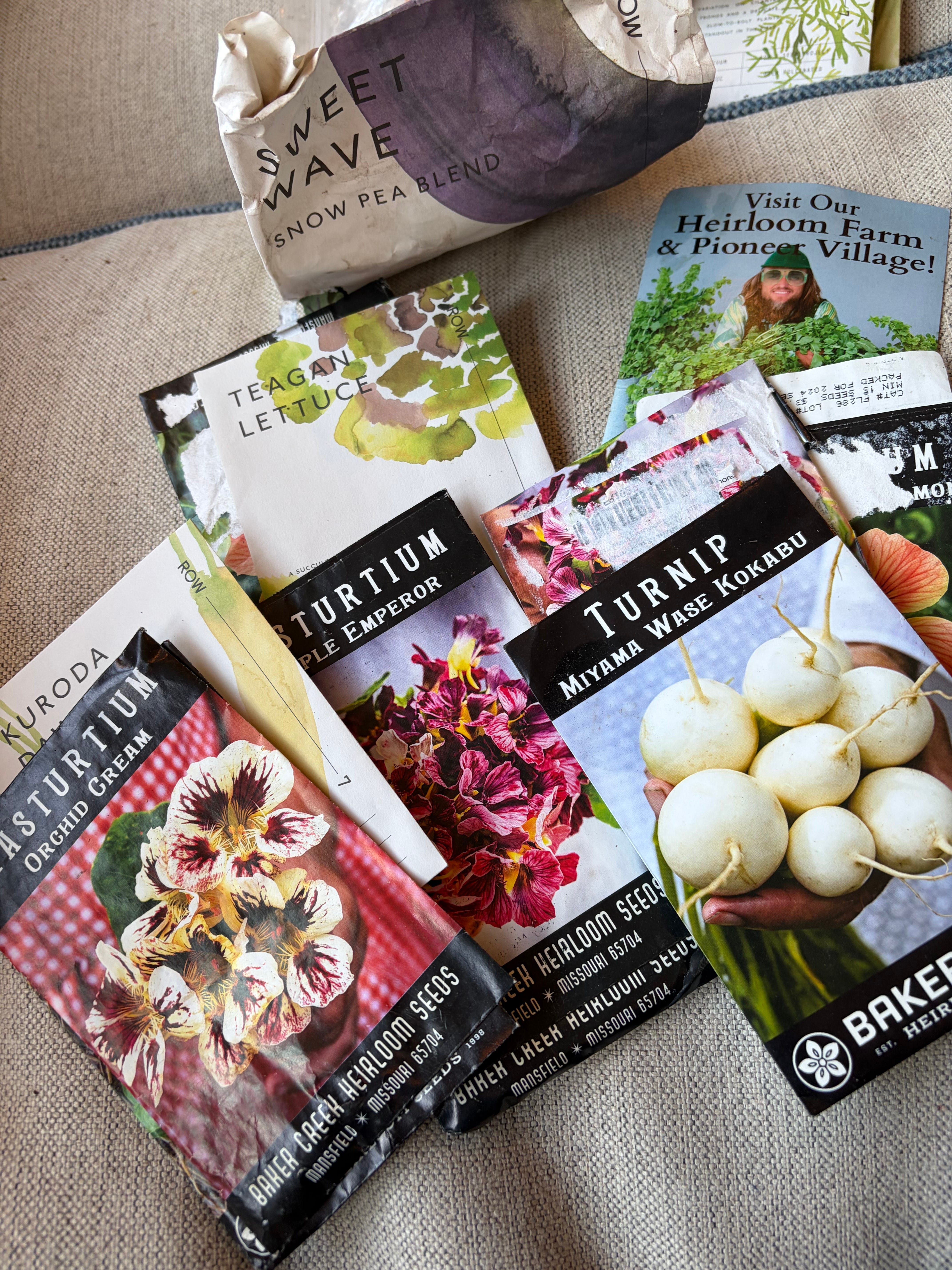
I like to corner my beds with nasturtiums with names that sound like they belong in a Victorian novel. Purple Emperor. Orchid Cream. They’ll sprawl where they want to by July and I’ll let them, because they’re useful and beautiful in equal measure. The Kokabu turnip is already in the ground. I’m envisioning rows of Teagan lettuce — succulent and heat-tolerant, which around here means it might actually make it to the table. And then there’s the one I’m most curious about: Kuoda Dawn carrot, yellow, with green shoulders that aren’t a flaw but a feature. Normally green shoulders mean the crown has pushed above soil and developed chlorophyll and something gone wrong. But Kuoda Dawn grows them naturally, and that green is a promise: sweet, crunchy, worth the patience. *If I grow them right.*
I’ll be starting more seeds side by side with Caitlyn at Mermaid Farm, which is my favorite way to do this work. Our conversations swing like a pendulum: cell tower coverage to gut health to how much potassium the soil actually needs and then back again. And then we’ll be interrupted by a cow that has gotten out. Caitlyn will glance up without alarm. *Rosie will get her back in.* Meaning her dog, trained for exactly this, her purpose, and she wil take care of business with much fan fare.
All in a dogs work!
And we'll go back to the seeds. Then the spring birds will stop in arrive and say hello to Caitlyn, who talks to them, and they completely say hello back. shell find a box of raisin and toss a few out to them as though this is just one moremoth to feed. It’s one jolly morning on a farm that is a whole world.
And I mustn’t forget the marigolds. I grow them every year not because I need convincing of their virtue, but because they take me somewhere the moment I catch their smell, that particular scent that lives somewhere between cut grass and cat pee, sharp and strange and completely itself. Not everyone loves it. I am helplessly hooked by it.
My father grew marigolds next to his tomatoes. That was just what you did, in his garden, in his logic. *They keep the tomato worms away*, he’d say, with the quiet authority of a man who had observed this to be true and needed no further evidence. He was a tomato gardener the way some men are fishermen: seriously, personally, with a particular pride in the result. The marigolds were part of the system. So I plant them too, next to my tomatoes, because he said so and because some knowledge is passed down not through books but through the specific smell of a flower on a warm afternoon.
Marigolds, they are sometimes forgotten but are sturdy in a way that feels almost moral. They are not fussy. They bloom hard, they hold their color, and they do their job. In a garden full of plants with grand names and delicate needs, the marigold just gets on with it. Like Caitlins’s dog….
The soil tested low. I’ll amend it when Mitchell gives me direction. I’m planting anyway. The daffodils took the freeze and straightened back up. The seeds grew tails overnight. The ground is waking up, and it knows exactly what it’s doing and so does the dog and even the birds show up. What an amazing world! Spring is…
But wait, I canpt leave without giving you this recipe I made this past weekend cause it still feels like cold winter…
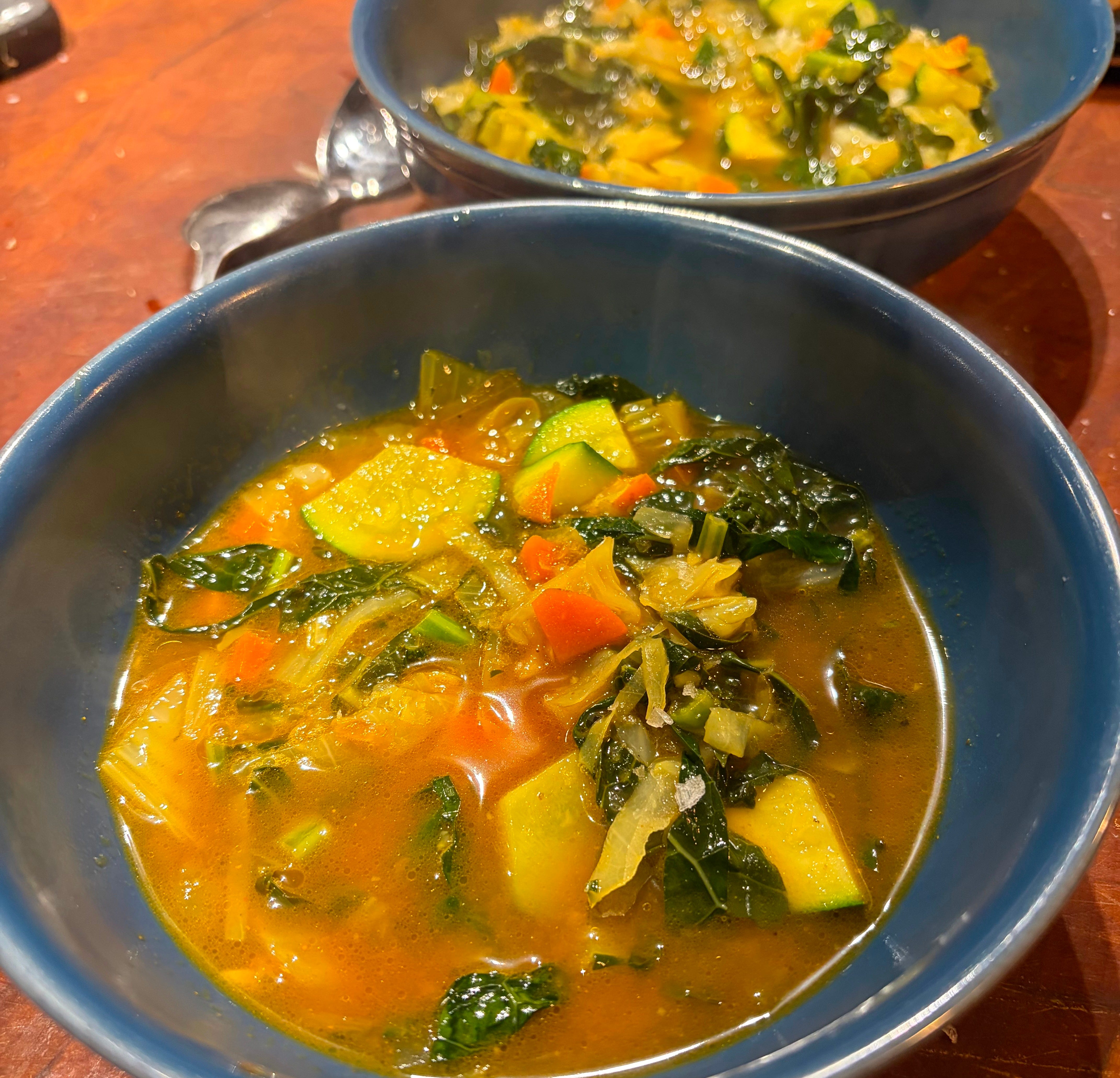
A Soup Worth Making: Curried Vegetable Soup with Homemade Stock
Here is a easy printable version.
Last week we had two big roasted chickens from Allen Farm, and afterward I placed the carcasses in a large pot with carrots, leek tops, fennel, a little ginger, a few bay leaves, thyme, rosemary, and some Italian seasoning from the back of the spice drawer. I covered it all with water and cooked very slowly for about four hours. Gently so that the water barely simmered and didn’t reduce. This is the key. It makes for a stock that is especially wonderful and rich. Strain it, then add salt generously, tasting as you go, until you can really taste it.
One more thing went into that soup that I almost forgot to mention. In the garden, a few kale plants had overwintered, stubborn and darkened by frost, but still standing. Before I dug them up and pulled them out for good, it seemed wrong not to save something from them. So I stripped some leaves, rough-chopped them, and threw them in with everything else. They had earned it. The soup was better for it.
For the soup:
- 2 carrots, cut into small pieces
- 1 large leek, cut into small pieces
- 1 small fennel bulb, cut into small pieces
- 1 small can of tomatoes
- 4–5 cloves of garlic, minced
- 1 zucchini, cut into slices
- A handful of overwintered kale leaves, rough-chopped
- A piece of kombu, chopped
- 2 tablespoons curry powder
- 6–7 cups homemade stock
- A little oil for sautéing
In a little oil, sauté the leeks and carrots until softened. Add the fennel and cook very slowly for about 20 minutes. Shake a generous amount of curry powder over the vegetables — about 2 tablespoons. Add the tomatoes, zucchini, kale, the stock, and the chopped kombu. Allow to cook for about 10 minutes. Serve.
Instant soup fit for a king.
From my garden to yours on this chilly April morning,
Jan
…
Jan
Matching jackets on a chilly morning
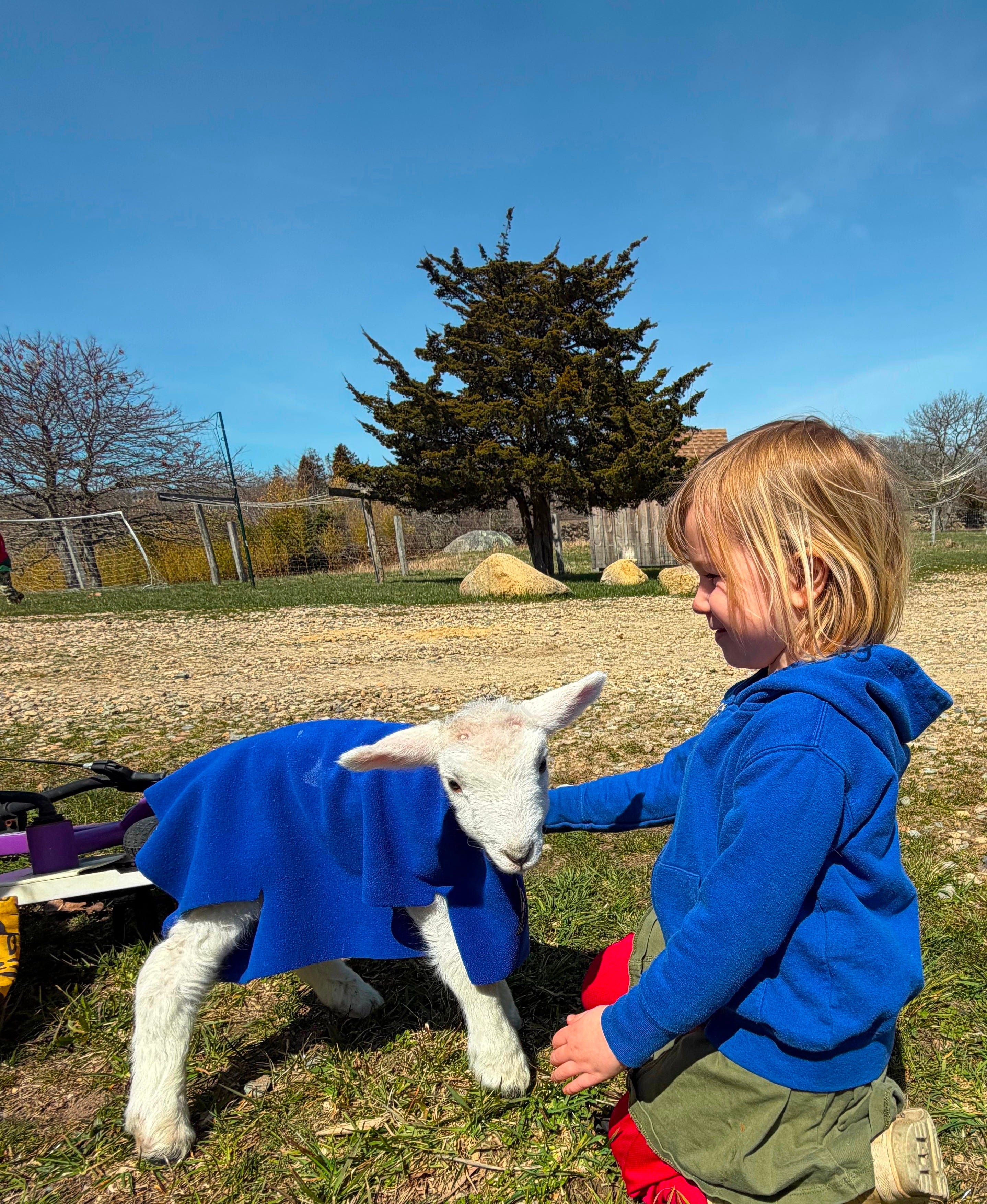
Lambing At the Allen Farm, where an orphan becomes a pet.
No posts
Comments
Nothing yet. Say the first thing.
Sign in to join the conversation.