
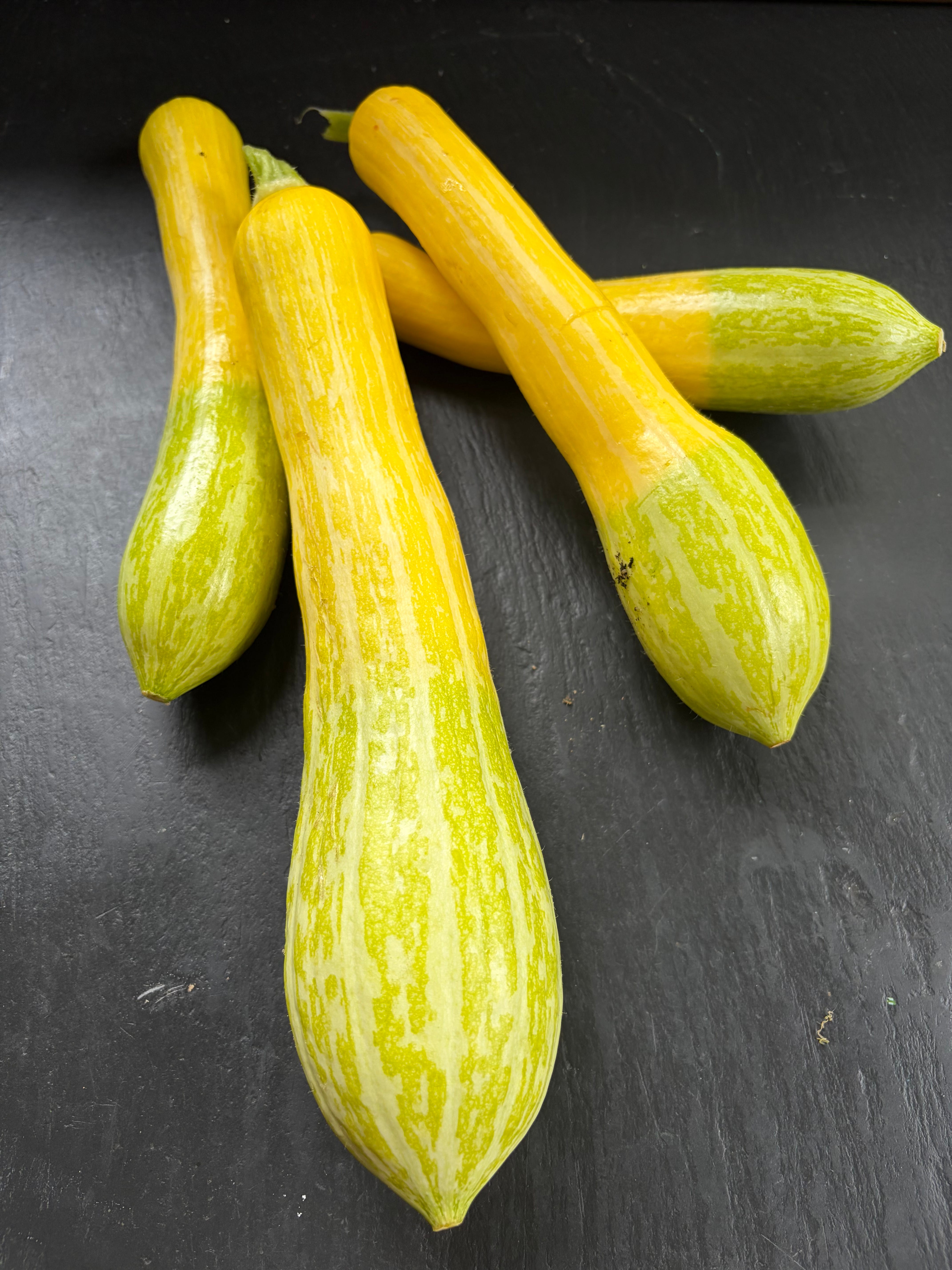
This summer squash is called Zephyr.
Zucchini! It seems to grow everywhere and many places appear as complete volunteers. It may be the most overlooked vegetable in the summer garden.
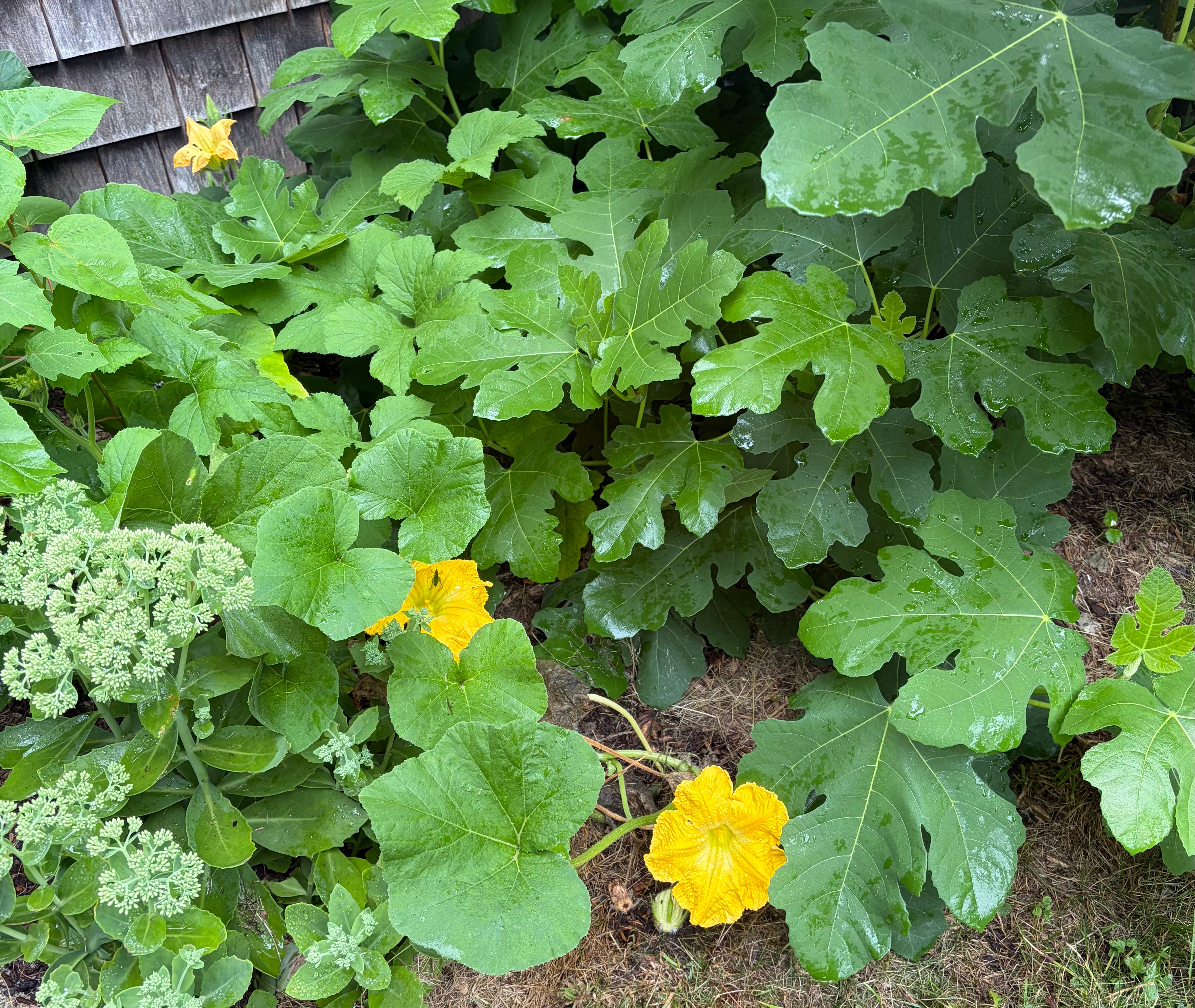
Here a volunteer grows behind my fig.
It grows in abundance, hides beneath enormous leaves, and sometimes seems to double in size overnight. By August, baskets of zucchini begin appearing on porches and kitchen counters, and everyone starts wondering what on earth to do with it all.Even my chickens get served a health portion as I just can’t keep up!
Zucchini also gets a bad rap for being watery, bland, or simply boring. But I will stand up for zucchini!
Fresh from the garden and lightly sautéed, zucchini is delicate, sweet, and delicious. The important words here are lightly sautéed. It must not be overcooked. Overcooked zucchini becomes soft and mushy and leaves everyone disappointed. Cook it just until it is tender, with a little color around the edges, and it becomes an entirely different vegetable.
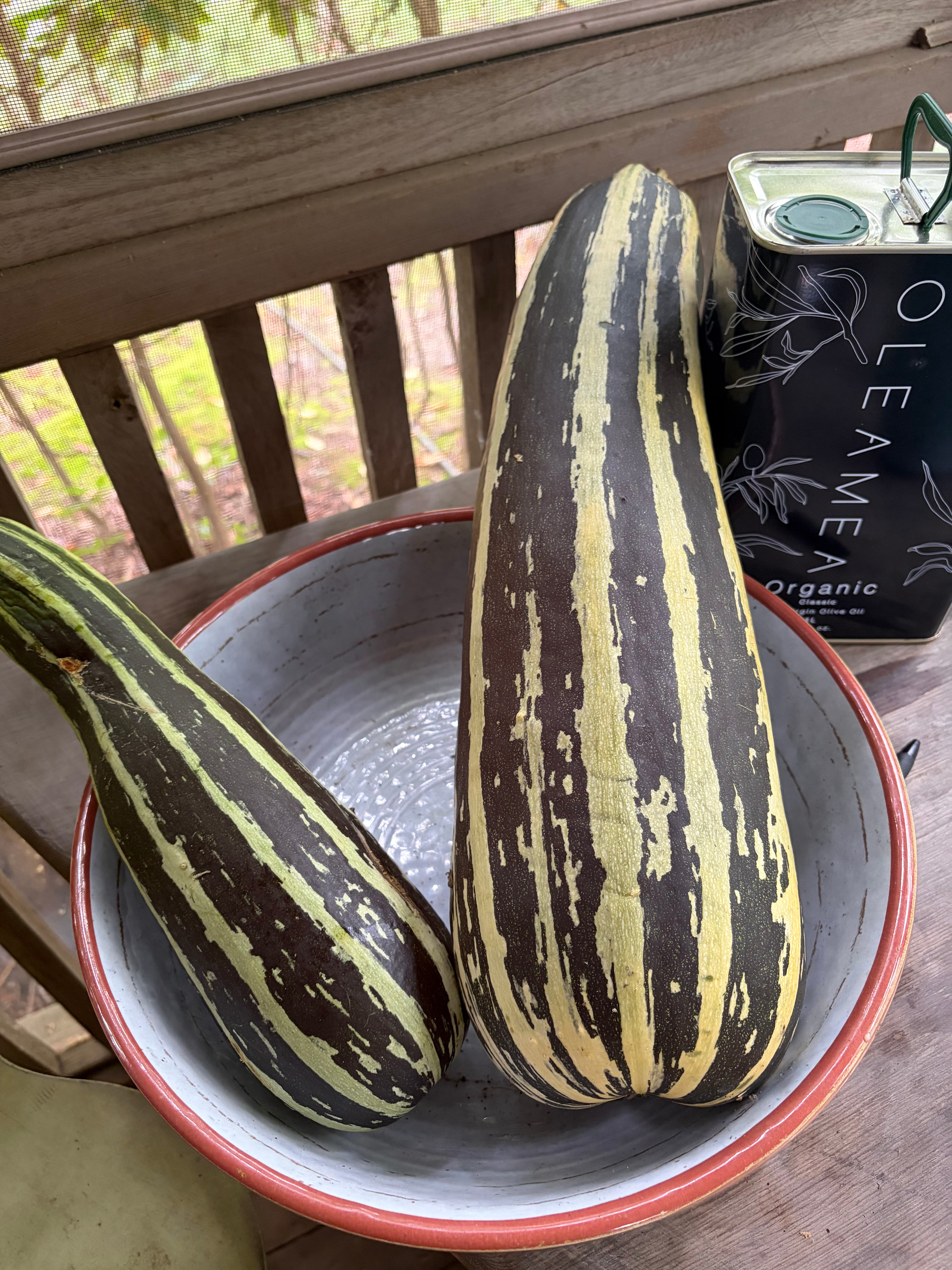
Green Zebra Zucchini ready for the chickens.
Or diced and sautéed with onion and tomato and garlic and blended in a sauce. Freeze for this fall and winter!
The Benefits of Zucchini
Zucchini may be mild in flavor, but it offers an impressive collection of nutrients. It is:
A good source of vitamin C, an antioxidant that supports immune function, collagen production, and the body’s ability to absorb iron from plant foods
A source of vitamin B6, which plays a role in energy metabolism, nervous-system function, and the production of neurotransmitters
A source of potassium, an important mineral for healthy blood pressure, fluid balance, muscles, and nerves
A source of manganese, which helps the body metabolize carbohydrates, protein, and fat
Naturally hydrating because of its high water content
A source of fiber, especially when you eat the skin
Rich in carotenoids, including lutein and zeaxanthin, which help support eye health
Adds volume, color, texture and nourishment to a meal
No single food can magically “boost” the metabolism, but zucchini provides several of the vitamins, minerals, fiber, and water the body needs to carry out its metabolic work. Pair it with protein and healthy fat, and it becomes part of a satisfying, metabolically supportive meal.
Easy Zucchini and Eggs
This is one of my favorite ways to begin the day, especially when the zucchini is coming directly from the garden.
Serves 1
1 small zucchini, thinly sliced
1 teaspoon extra-virgin olive oil or butter
A pinch of sea salt
2 eggs, poached
½ avocado, sliced
1 tablespoon of your favorite organic salsa
Fresh herbs or freshly ground pepper, optional
Warm the olive oil or butter in a skillet. Add the zucchini and a pinch of salt. Sauté quickly, turning the slices once or twice, until they are just tender and lightly golden. They keep cooking once removed from heat. Do not overcook them!
Place the zucchini on a plate and top with two poached eggs. Add the avocado and a generous spoonful of salsa.
Easy, breezy, colorful—and filled with protein, healthy fat, fiber, and flavor.
Consider joining us this fall for one of our retreats or online classes..
Are You Ready for a Metabolic Restart?
John and Jan offer classes, retreats…
Have you ever wondered what your metabolism really is—or how you can support it? Perhaps your energy has slowed, your habits have slipped, or you simply feel ready for a little restart.
Our upcoming five-week Zoom series is a wonderful place to begin.
For those that have joined us in the past in any of our classes or retreats, we are offering a discount!
Live Zoom Class begins this September
Metabolism is not simply how quickly we burn calories. It is the vast network of processes that converts food into energy, regulates blood sugar, supports hormones, maintains muscle, and influences how we sleep, think, and feel.
One helpful way to begin the day is with a satisfying breakfast built around protein, healthy fat, and fiber. This can help steady blood sugar, preserve muscle, and keep you satisfied. Add some movement—and, when it is appropriate for you, enough activity to work up a good sweat—and you are well on your way.
We hope you will join us from your own kitchen as we explore the science of metabolic health and turn it into practical, delicious habits you can use every day.
Join Us on Martha’s Vineyard This Fall: The Metabolic Brain
Your brain is the most metabolically demanding organ in your body. Although it makes up only about two percent of your body weight, it uses approximately 20 percent of your daily energy.
This retreat is not about memory tricks or another collection of supplements. It is about understanding the profound connection between metabolism and how clearly, calmly, and vigorously the brain functions.
Research increasingly connects metabolic dysfunction—including insulin resistance, elevated blood glucose, and impaired glucose use in the brain—with changes in mood, cognition, and neurological health. Alzheimer’s disease is sometimes described by researchers as “Type 3 diabetes,” although it is not an official medical diagnosis. The phrase reflects the growing scientific interest in the relationship between insulin signaling, glucose metabolism, and the brain.
The good news is that food, movement, sleep, and other daily practices give us powerful ways to support both metabolic and brain health.
We will gather on Martha’s Vineyard this fall to explore these connections through science, cooking, conversation, movement, and the shared table. And a trip to my favorite beach is included!
And finally….
Join Us in Florida: Regenerative Heart Health
Presented by John Bagnulo and Jan Buhrman
February 7–12, 2027
ChoZen Eco-Retreat & Sanctuary | Sebastian, Florida
Your heart is more than a muscle. It is a measure of how you live.
Cardiovascular disease remains the leading cause of death in the United States, yet many of its risk factors can be changed through the choices we make every day.
Our five-day retreat is built around one powerful idea: the right foods, prepared with care and understanding, can help protect and transform heart health.
Regenerative health means supporting the body’s innate capacity to heal, adapt, and thrive by looking beyond symptoms to the conditions that help create health. It also asks us to consider how our food is grown, how it is prepared, and how the health of a living landscape is connected to the health of a living body.
Over five immersive days at ChoZen, we will move from knowledge to practice—from lecture to kitchen and from science to table.
You will leave with new culinary skills, a practical heart-healthy pantry strategy, a collection of recipes you will truly want to make, and a clearer understanding of what your body needs to thrive.
You do not need to be suffering from a brain or heart condition to attend either retreat. Prevention is at the heart of everything we do. These programs are about learning how to nourish yourself now so that you can continue to live your fullest and healthiest life.
A Special Invitation
For those who register for all three experiences—the five-week Zoom series, The Metabolic Brain on Martha’s Vineyard, and Regenerative Heart Health in Florida—we are offering:
A private one-hour consultation with John Bagnulo
A private one-hour culinary and nourishment consultation with Jan Buhrman
We would be honored to have you join us. If you are ready to make a meaningful commitment to your health—or simply want to learn more—send us an email.
Here you can find our classesAnd Back to the Zucchini…
If your garden is anything like mine, there is still more zucchini waiting to be picked.
When I have more than we can eat, I lightly sauté onion and garlic, add chopped zucchini and fresh tomatoes, and cook everything just until tender. I purée the mixture into a beautiful zucchini–tomato sauce and freeze it in small containers.
Later, I use it as a base for soup, spoon it over vegetables, or replace part of the cooking water with it when I make rice.
For every cup of rice, use the total amount of liquid directed on the package, replacing about half of the water or broth with zucchini–tomato sauce. If the rice calls for two cups of liquid, use one cup of sauce and one cup of water or broth.
It is a simple way to capture the garden now and bring its color and nourishment to the table later.
So, before you dismiss zucchini as bland or boring, pick one while it is still small and tender. Slice it, add a little olive oil and sea salt, and sauté it quickly—just until the edges begin to turn golden.
Do not walk away from the stove, and please do not cook it into submission.
Sometimes the most overlooked foods need only a little attention, a hot pan, and the chance to show us what they can be.
No posts
Comments
Nothing yet. Say the first thing.
Sign in to join the conversation.