
It might seem very high and mighty for me to come on here and talk about what is or isn’t killing film discourse. I’m a guy with a 200 subscriber Substack account, hardly Mark Kermode or Susan Sontag. But I do have more opinions than I know what to do with, and film criticism is something that I care about quite deeply. Plus I think this one is interesting, so I’m going to throw it out there and see how it goes.
We live in an era where the majority of film discourse isn’t in person conversations or lengthy articles, but short statements with strict character limits. Substack is better for this than other platforms, but even I have fallen prey once or twice to oversimplifying something for the sake of a snappier note, even if it didn’t fully reflect my thoughts. These short posts and an attention economy lead to a discourse space revolving around simple hot takes rather than depth or, most importantly for this post, nuance. And this is where my main probably comes in, because the basic principle of what I’m about to complain about isn’t actually an issue.
I originally planned to title this ‘how calling someone the villain kills film discourse’, or ‘the one phrase killing film discourse’, or something else to that effect. But as I started writing, I realised that doing so would be playing into the exact kind of nuance lacking discourse I’m complaining about. Because whilst that title might have garnered some more clicks, it wouldn’t have been an accurate reflection of what I think. The simple practice of calling a certain character the villain isn’t an issue. And please don’t think I’m about to spend this post defending Rachel or Bear; calling either of those characters the villain is, in isolation, a completely justifiable thing to do, and generally a good read on what The Drama or Obsession are trying to say.
The potential issue comes from what follows that statement. Because whilst both Rachel and Bear are varying levels of terrible, they are also very well written and well fleshed out characters. Their evil is given clear motivation that doesn’t necessarily prevent them from being a villain, but does prevent them from being moustache twirling pantomime ones. And refusing to engage with that flattens film discourse and avoids genuine introspection or reflection.
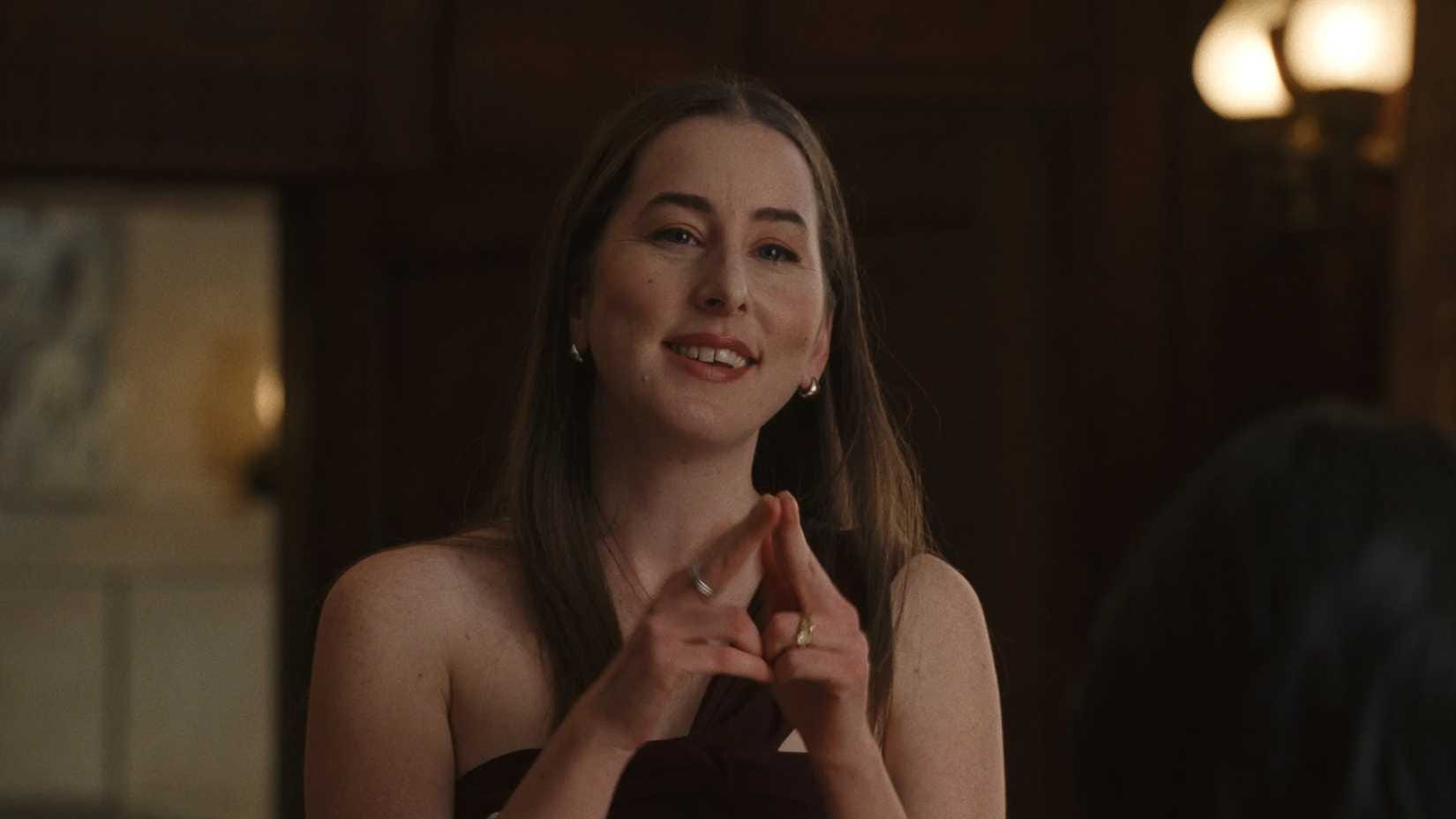
I’ll start with Rachel, because of the two she’s the one with the slightly less reprehensible actions. When Emma reveals that her high school self considered and planned a school shooting, it is Rachel who has the most dramatic and moralistic reaction. The distaste for her character also comes from her own confession, that she once locked a disabled child in a cupboard overnight. But her antagonism throughout the film isn’t really in that act itself, but in the incredibly negative and hypocritical attitude she takes towards Emma.
Rachel blames Emma for actions she never committed and has clearly moved on from, behaving vindictively and spreading gossip on Emma’s wedding day. She uses her own relative who became disabled due to a school shooting as a weapon against Emma in this fight.
But the reason I take an issue with the discourse around Rahcel as a character is because it often stops there. We outline her negative traits , condemn her, and feel good because of it. But the more interesting analysis comes when we dive into Emma’s motivations. Rachel is a character seemingly insecure of her own morality, someone determined to use her friend’s past immorality to make herself appear better by comparison. It’s also worth remembering that what Emma reveals is genuinely shocking, and that the way she and Charlie completely fail to defend it really doesn’t help. Circumstances then stack up against Emma, as a misunderstanding makes it seem like Emma is stealing job opportunities from her, a misunderstanding which isn’t Rachel’s fault and understandably adds to her vendetta.
But so far, none of this particularly matters. Sure, there’s more in depth analysis than some people are willing to give, but there are also plenty of people who understand this motivation perfectly well and factor it into their analysis. Where my real problem comes in is the ‘that could never be me’ attitude that people take towards these characters.
Whilst Rachel’s actions are massively distasteful, they really aren’t as foreign as people like to act. Of course, The Drama ups the drama to heights that most people’s lives will never reach. But Rachel’s behaviour is something we see all over the world every day. For starters, if someone admitted what Emma admitted, most people would be at least shocked. Sure, when we can sit as viewers aligned with Emma and already wanting to forgive her, we can think about how perfectly we would act. But were this to happen in reality, with someone that we know, then I imagine most people’s reactions would be very imperfect. Maybe we would eventually reach the conclusion that Emma is a changed person and should be forgiven, but to think that we would all act perfectly throughout the whole thing is just dishonest.
More importantly, the kind of moral superiority complex that Rachel takes is more common than we like to admit. Rachel decides that she is better than Emma, is perhaps insecure about her own callous revelation, and takes a firm moral stance to appear good. She hides behind a wider social issue, and vulnerable groups like disabled people, to back up her own personal vendetta. She decides that somebody is bad, and uses all possible evidence after the fact to back up this idea.
Can you honestly say that you’ve never tried to dishonestly use morality to justify your dislike of someone? I’d like to say I never have, and like to think that I never will again, but it is a very human, herd mentality behaviour. You decide you don’t like someone, and so any moral issue you can find to use against them becomes a useful tool, even if it’s a flimsy one. We tell ourselves that they deserve it, and we believe ourselves, only to recognise years later how ugly your behaviour really was. Of course, most people will never engage in it to the dramatic extent of a feature film, but traces of the same behaviour can be found in minor ways in most people’s lives.
This kind of one note villainising of characters is a tool to avoid introspection. When a film offers up a character with relatable if exaggerated flaws, we call them a villain and say that we could never be like them. We reduce the complexity of their character and make then a simplistic ‘Other’, because then we don’t have to face those flaws in ourselves. Whilst we sit and call Rachel a hypocrite, we often engage in the exact kind of hypocritical moral superiority which makes her a villain.
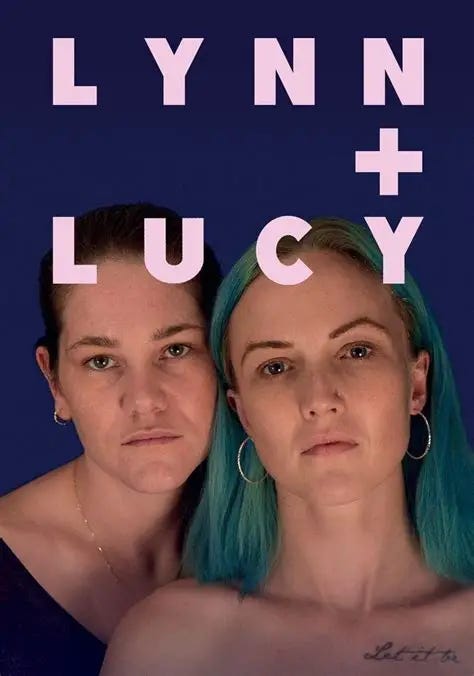
Lynn + Lucy is an English film from 2019 directed by Fyzal Boulifa. Lucy is accused of shaking and therefore killing her young baby. After this accusation, and further accusations of her being an abusive mother, her entire community turns on her. She spirals as she loses her community, but she still has her best friend Lynn to stand beside her.
However, as the film progresses, Lynn sees the scorn towards Lucy, the complete lack of empathy from everyone around her, and begins to turn. More than anything, Lynn is also a mother, and slightly insecure about herself. She doesn’t really get on with the other mum’s, and doesn’t feel fully comfortable as a mother herself. But even if she’s not perfect… well at least she didn’t kill her baby. Never mind whether Lucy intended to do that, or even if she did it at all. Never mind seeing Lucy as a friend, or even a person. Lucy become a villain, and a useful one for Lynn, as villainising her longtime friend gains her acceptance from a community who now see her as morally virtuous, and self-acceptance as a mother, because, well, at least she’s not Lucy.
In my opinion, Lynn and Lucy takes some missteps towards the end that undermine its message slightly. But it is a harrowing depiction of how individuals, and society as a whole, feel the need to construct a villain. Because a villain is the other, someone we are not. They are worse than us, therefore we are good. And we are not like them, so we can separate ourselves from their most negative traits.
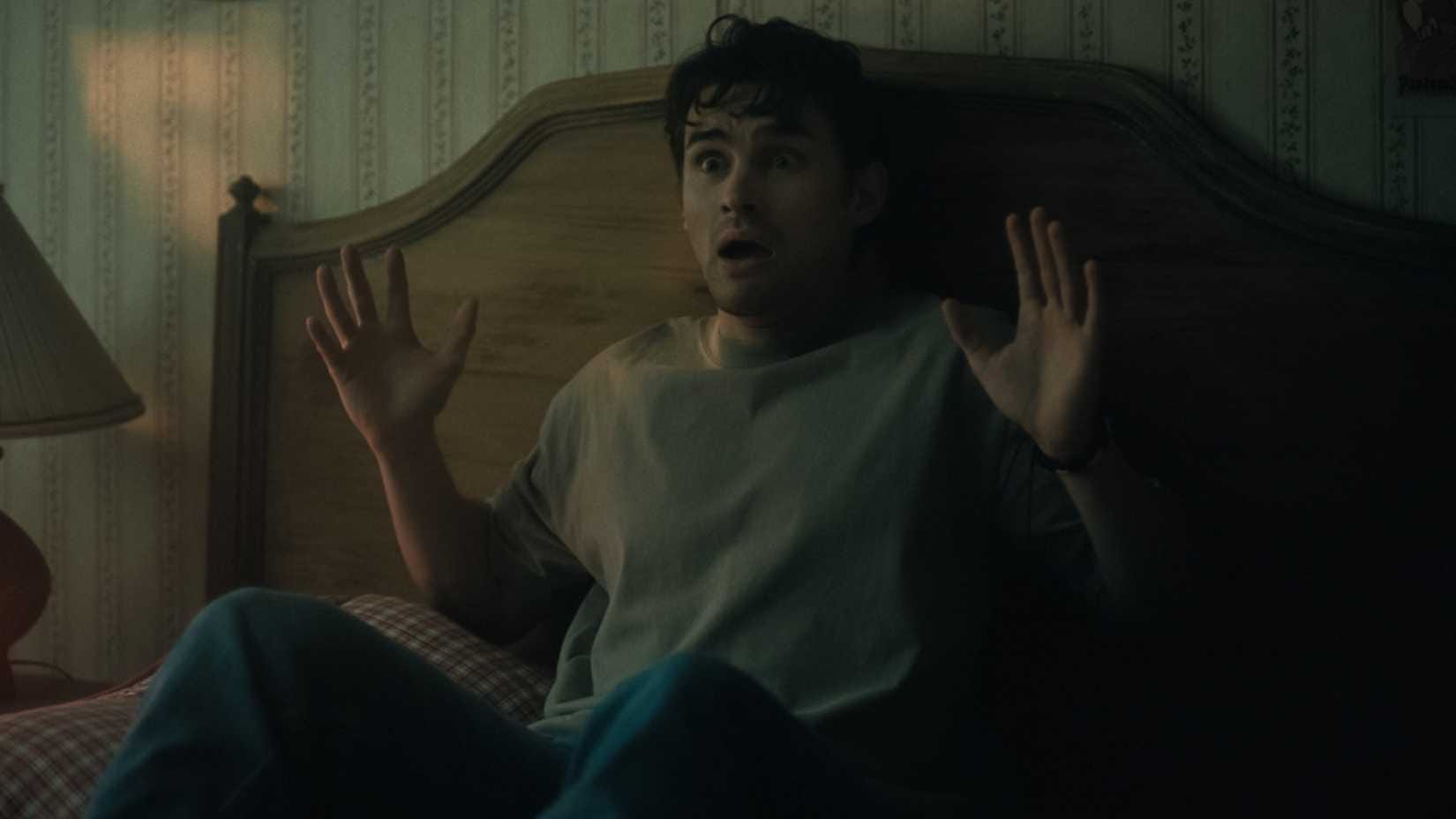
Now that my problem is established, I’m going to finish with the more extreme example of the two. Again, this is not some Bear apologia, nor is it me saying ‘well haven’t we all stolen someone’s bodily autonomy before?’ As with Rachel, I believe Bear takes very real and very common flaws, and magnifies them to a depraved (although not unrealistic) extreme to show how negative these impulses truly are.
For anyone unaware, Bear is romantically obsessed with Nikki, and makes a wish for her to love him ‘more than anyone else in the world’. Unbeknownst to him, the wish comes true, and Nikki becomes unhealthily obsessed with him. The initial silliness in the discourse around Bear begins here, as people condemn him for even making this wish in the first place. Again, I feel marking him as a villain the second he makes the wish is driven less by genuine engagement with the work and more by a need to villainise somebody, as it’s made pretty clear by the film that he has no real expectation of this wish actually coming true. Because why would he?
But Bear does become outright terrible as the film goes on, as he continues his relationship with Nikki despite being clearly aware that something is wrong. Maybe he doesn’t recognise that there’s anything supernatural right away, but he remains in a state of selfish denial about her behaviour so that he can maintain their relationship for his own benefit, no matter how it might be negatively affecting her. The most egregious example of this comes when he has sex with Nikki despite being massively aware by this stage that something is wrong, in a move that essentially amounts to rape.
This is villainous behaviour and Bear deserves to be hated. But again, the refusal to engage with the fairly common desires and insecurities at the heart of his behaviour, desires and insecurities especially common among men, is a refusal to engage with the work and ourselves honestly. Bear is someone who is deeply insecure. He’s desperate for a relationship with Nikki, but has no faith in himself to attract her or anyone else he actually likes. When he finally gets this chance, he is too afraid to let go of it to act morally. He clings on desperately in the face of mounting evidence against him, and ultimately reduces Nikki from another human to an object for his benefit.
And in much smaller scale ways, this is very common behaviour. The reduction of romantic partners to objects or tools for the interested party to benefit from in some way is a common one. This is particularly true in online dating worlds that discuss humans in terms of high or low ‘value’, advice that treats love like a checklist rather than an emotion. The obsessive need to date somebody often replaces the supposed love that we have for them, leading people to forget all about actually caring about the human being on the other end. And of course, this is exacerbated among men where the driving insecurity combines with a misogyny that already reduces women to objects.
I’m not really saying anything new here, but the point is that by simply calling someone a villain and refusing any nuance, we dehumanise these characters. And in doing so, we neuter their ability to teach us something about ourselves or our world. You don’t have to see yourselves in these characters, and certainly don’t have to forgive them, but we should recognise that they share flaws with real people. All that this dehumanisation achieves is to blind us to these flaws in everyday life, because these villainous traits are instead something that belongs over there, on the screen and far away from us.
This ended up far longer than expected, partly because I kept feeling the need to clarify myself and avoid any misunderstanding of my point. I want to also quickly point out that I don’t think I’m some singular genius on this. There’s plenty of great criticism dealing more in depth with the exact points I’m making here. But there are just as many people giving these films a less nuanced perspective than they deserve, and neutering their potential for individual or societal reflection on the issues they raise.
No posts
Comments
Nothing yet. Say the first thing.
Sign in to join the conversation.