
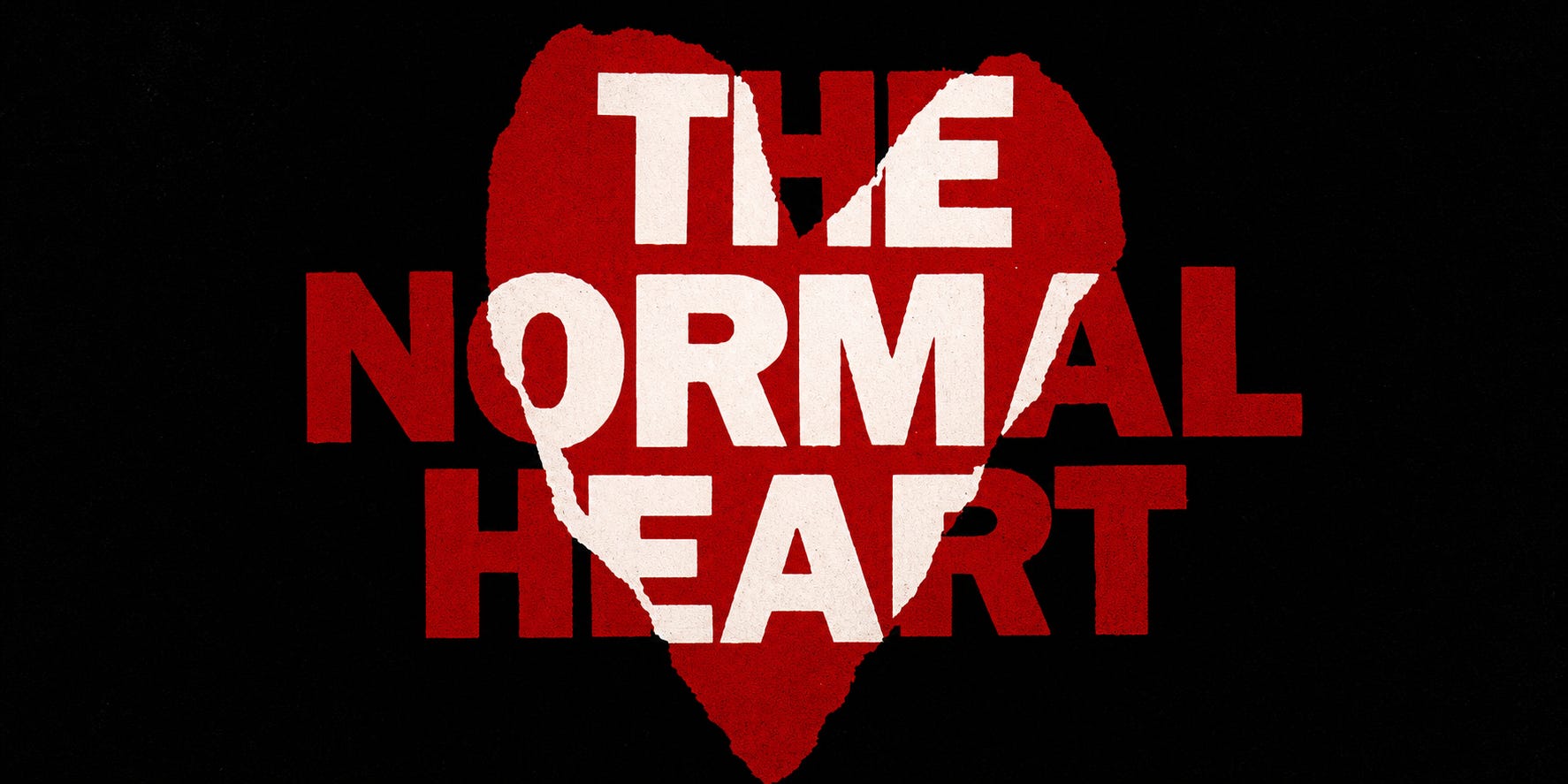
At the end of August, I’m performing in a one-night benefit reading of Larry Kramer’s The Normal Heart on Fire Island. I was a theater minor in college, and acting is something I’ve loved for as long as I can remember, but here’s why this role matters more than any other.
I was eleven in August 1981. Within months, the first stories showed up. The gay plague. Men in New York and California were getting sick. On TV, I watched them dying alone in the hospital in NYC, shunned by society, as I sat on a shag rug at my childhood home a few miles away in New Jersey. By the time I turned twelve, the government finally had a name for it: AIDS.
By nineteen, when I came out, I knew exactly what I was walking into. I walked in anyway. Within weeks of my sophomore year at Rutgers, I joined the Lesbian and Gay Alliance. The guy running it wasn’t doing much, and the lack of urgency frustrated me. Gays were getting sicker and sicker. It felt like time was running out. Three months later, I was co-president. I threw myself into all of it like it was a matter of survival. It felt like a war. I had been so terrified to even say the word gay out loud. The day I finally could, it gave me a power I never knew I had.
The fear followed me everywhere. Each time I was with a guy, it was there, pleasure followed by shame, guilt, and fear. I refused to let the disease stop me from searching for a community and a connection.
My people, my community, were being shunned and left to die by a government that didn't give a damn. Then I watched people come together. Lesbians, gay men, transgender people from every walk of life. They organized. They banded together. I copied everything they did, and I made it mine. They taught me how to be loud, how to be visible, how to stop hating myself the way America expected me to. I watched men the country had written off as disposable ACT UP—fight back!
My first job in New York was at CRIA, a small AIDS organization led by Dr. Joseph Sonnabend, who treated HIV-positive people with dignity while their own neighbors were trying to evict him. Later, I did HIV prevention work with the Harvard AIDS Institute and then with POZ Magazine. Even at the height of my Supreme Court case, AIDS was always in my mind.
When the Court finally ruled against me in 2000, I got on a plane and flew to the World AIDS Conference in Durban, South Africa. I told myself I wanted to be a million miles from the pain and the trauma of losing at the highest court in the land. Instead, I was at the center of the epidemic itself, on a continent being devastated by AIDS.
Somehow, I was lucky. I never got the virus. Many of the role models I love were not so fortunate. These are the memories I carry into this.
In The Normal Heart, I’m reading the part of Craig Donner. The play that put the worst years of the epidemic on a stage and forced everyone to look. Craig is the first character to walk on the stage, and the first to die. As I rehearse his lines, I am back inside the fear I grew up with: the boy in front of the TV sitting on a shag rug, watching it all unfold, dreading I would be next.
I lost two of the men who shaped me to this disease, Jason Worth and Mario Cooper. Then we lost a whole generation of men like them. I think about Jason and Mario all the time.
The reading is one night only, August 22, at Whyte Hall in the Fire Island Pines, forty years after Kramer wrote the play, featuring Andrew Scott, Andrew Rannells, Francis Jue, and Jerry Mitchell, directed by Leigh Silverman, alongside fellow activists Eric Sawyer and Todd Sears. It’s produced by the Fire Island Pines Arts Project (FIPAP) to benefit Broadway for Arts Education.
Here is the part that matters most to me. FIPAP isn’t only staging a night of remembrance for a select privileged few on Fire Island.
They are using the money to teach today’s high schoolers about the epidemic through intergenerational storytelling, so our history doesn’t die with the people who lived it.
If you can, please support Broadway for Arts Education or FIPAP to support other productions like this.
Subscribe to my Substack or follow me here JamesRDale.com.
Thanks for reading.
No posts
Comments
Nothing yet. Say the first thing.
Sign in to join the conversation.