
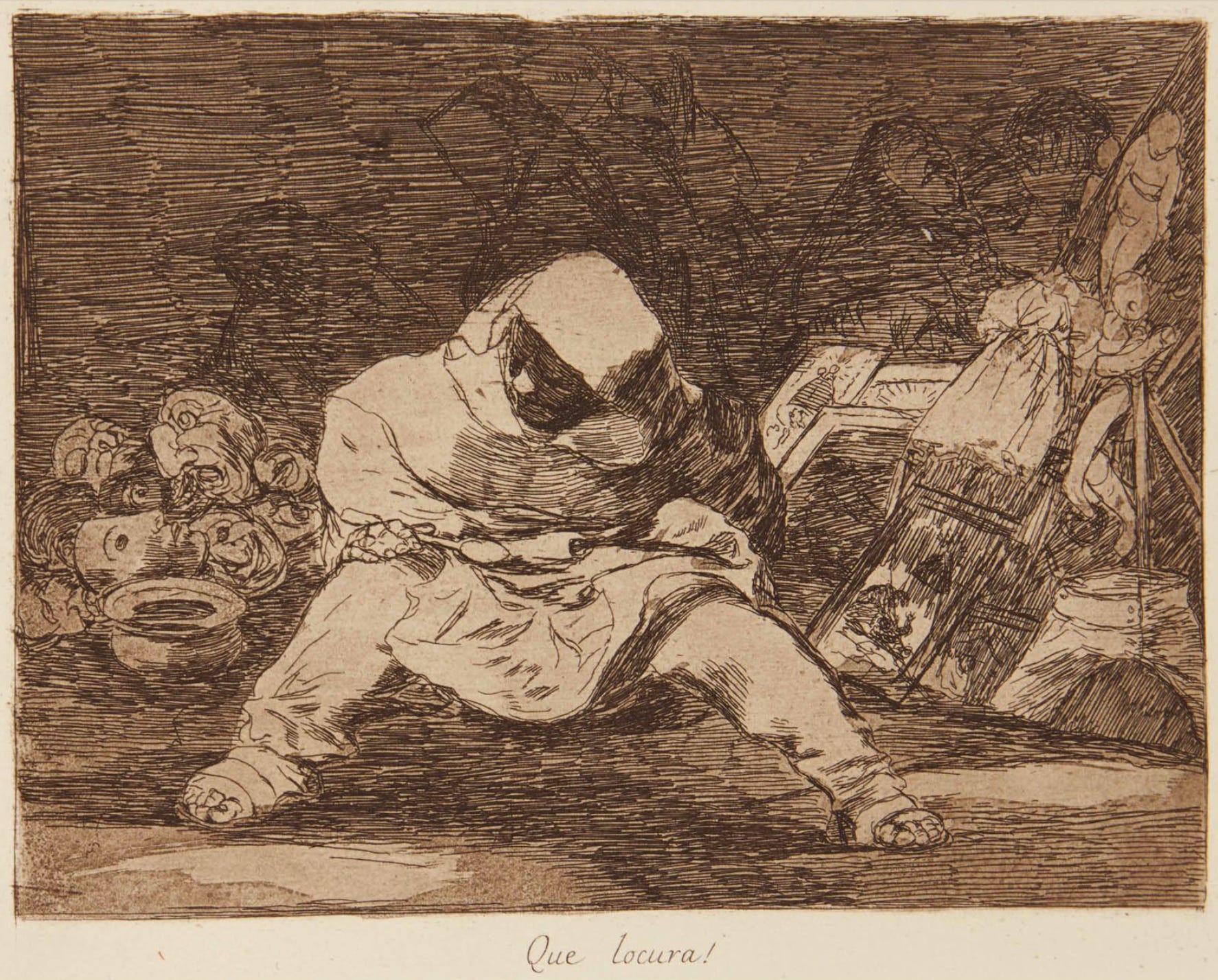
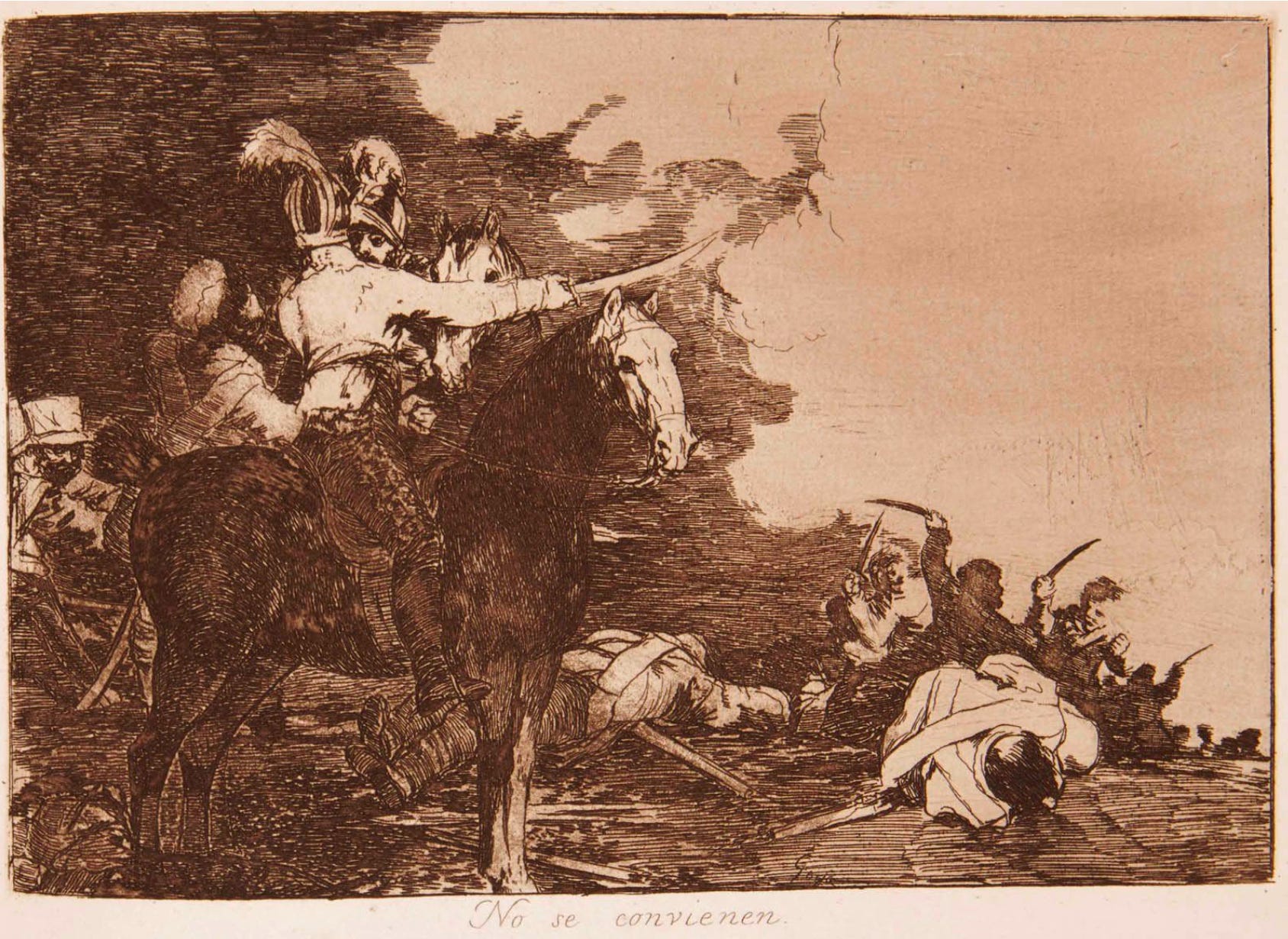
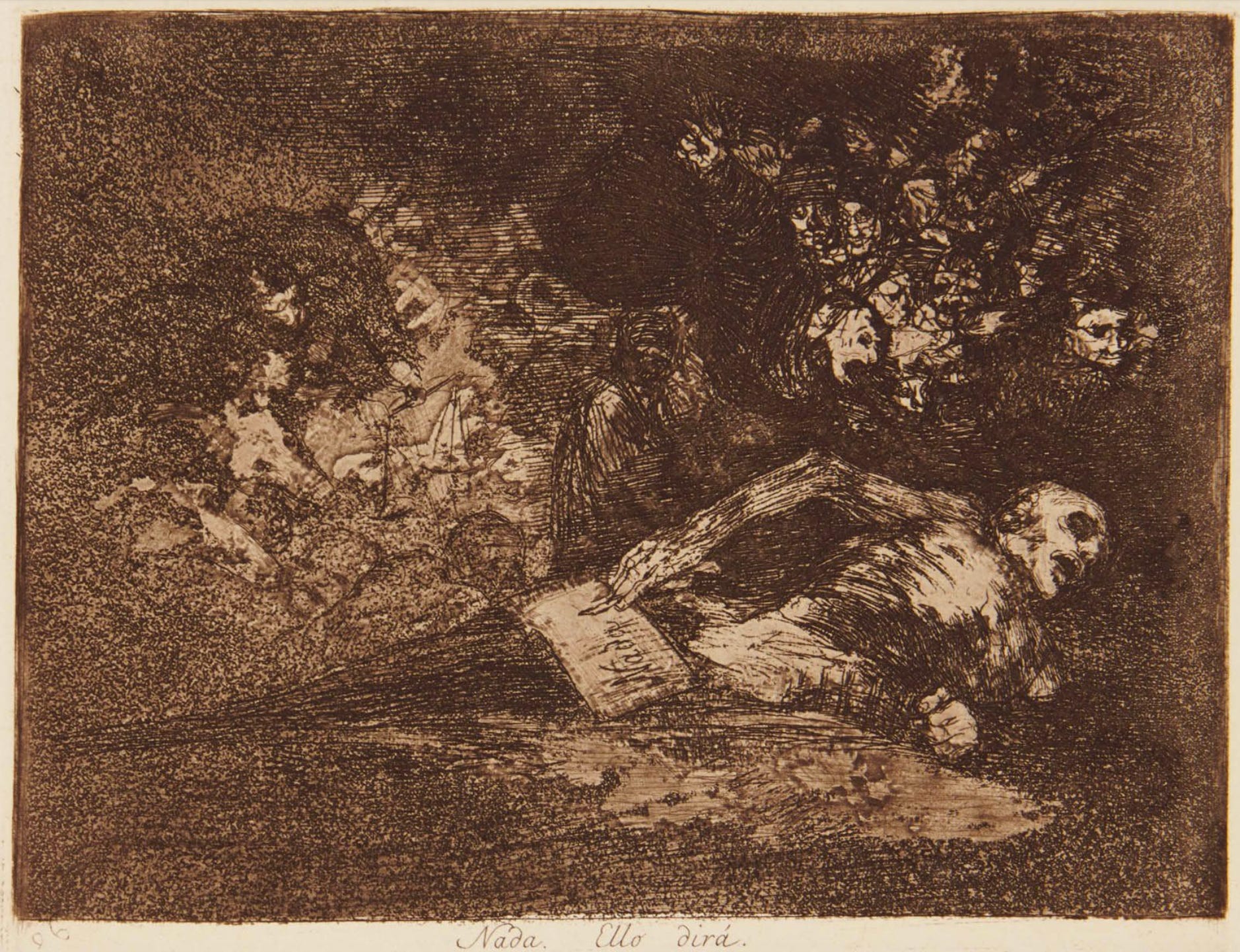
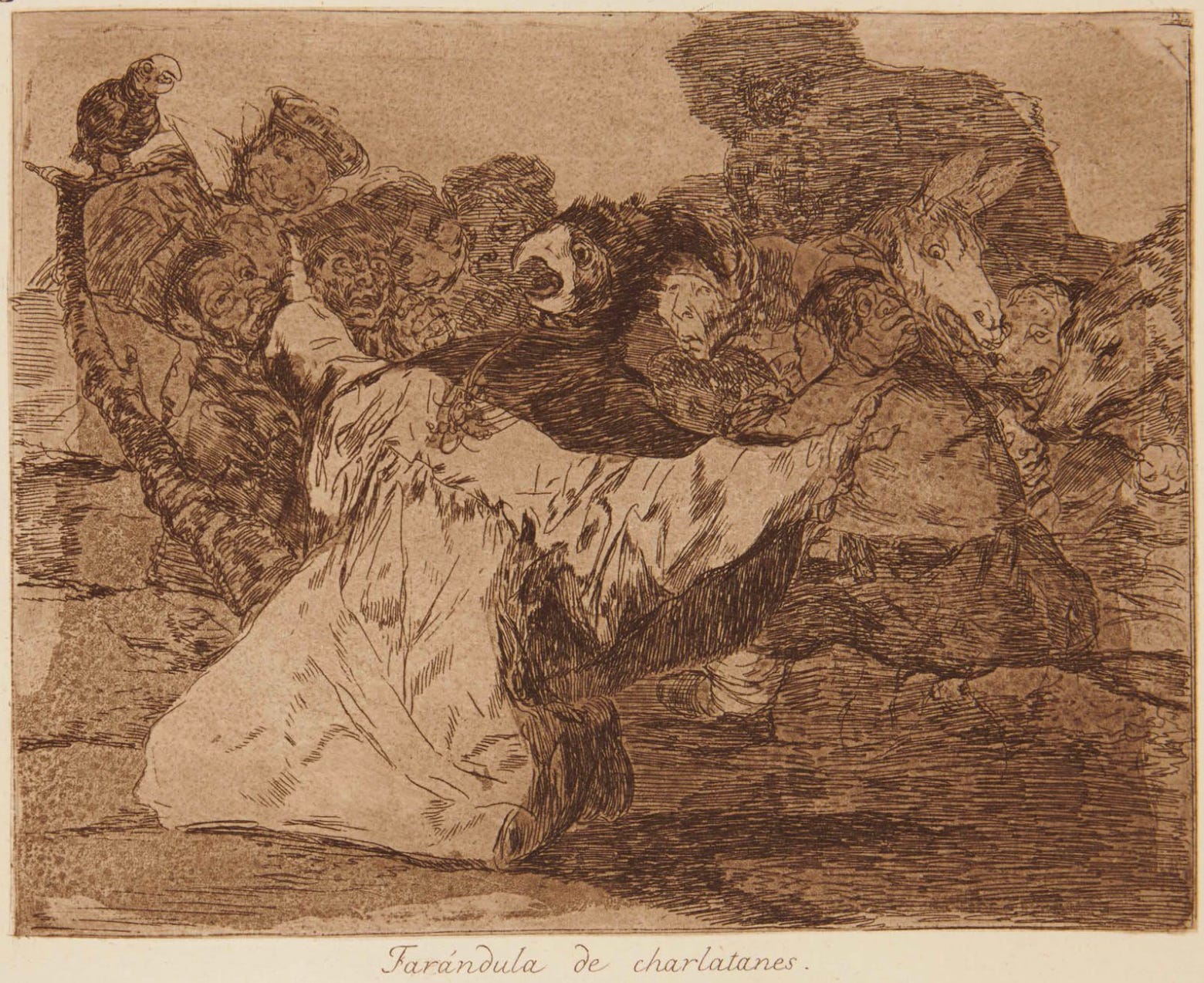
[…] That the horrific conditions you mentioned in your last report have continued to spread, unnoticed and unchecked, is all too consistent with the general situation at present. Not even atrocities merit attention anymore—unless, of course, the affected are persons of particular prominence. What is happening in Spain is indescribable. The details of the Japanese campaign, unfolding as it has been every hour of every day for all these years, are nearly unthinkable. I have heard credible accounts that should, by rights, deprive anyone of sleep for a lifetime. The punitive actions taken against the Chinese villages—where only the poorest of the poor already live—are horrors enough to eclipse the memory of the Thirty Year’s War and the etchings of Goya. We can only imagine how a force of soldiers with full cognizance of the fact that, in the event of serious injury, their own physicians will sooner send them to the afterlife than incur the costs of shipping them back home—that is, a force of soldiers for whom death itself is not considered a punishment—behaves as it dispenses punitive measures out to others. And the so-called ‘civilized’ powers of the world are content to sit back and watch.
And now we learn that England, after having granted Franco recognition even before its victory, is making the utmost efforts to reach an understanding with Japan. I remember a conversation I had while visiting Europe in 1937 with an English banker. I asked him what he thought of the Japanese war. His answer was, in sum: “The Japanese will first have enormous difficulties, but finally it will help British trade.”1 Whether his speculation will prove correct remains to be seen. But it is enough to convey some notion of the sort of morality the world cannot wean itself off of without appealing to all over again. What this means for the fate of a group as powerless as the Jews under conditions like these is self-evident.
In Hobbes—who, as the society that today reveals itself as such was only just beginning, provided the classical formulation of its founding principles—we find the following passage: “But the infliction of what evil soever, on an innocent man, that is not a subject, if it be for the benefit of the commonwealth, and without violation of any former covenant, is no breach of the law of nature. For all men that are not subjects, are either enemies, or else they have ceased from being so by some precedent covenant. But against enemies, whom the commonwealth judgeth capable to do them hurt, it is lawful by the original right of nature to make war; wherein the sword judgeth not, nor doth the victor make distinction of nocent, and innocent, as to the time past nor has other respect of mercy, than as it conduceth to the good of his own people.”2 And whoever the state considers a foreigner, a stranger, whoever has no power to stand behind them, “nocent or innocent,” can expect no mercy either.
—Max Horkheimer to Juliette Favez, 6/13/1939.3
Translator’s Note: On the text(s) for the “Remarks.”
Note on the series: Materials for a Historical-Critical Edition of “The Jews and Europe.”
Ernst Engelberg—Review: Forschungen zur Judenfrage (ca. 1939)4
Max Horkheimer—Postscript: Remarks on Liberalism and Anti-Semitism (1939)
T.W. Adorno—Report: On a Work of Ernst Engelberg’s (1937)5
Sourced from the Max-Horkheimer-Archiv [MHA], Max Horkheimer’s “[Postscript:] Remarks on Liberalism and Anti-Semitism” is the first complete, but unpublished, draft of Horkheimer’s infamous essay, “The Jews and Europe” (1939).6 The text of the “Remarks” translated below is a composite of two textual variants. The first textual variant is a 9-page typescript, “Nachbemerkung zu: Ernst Engelberg,”7 written as a postscript to Ernst Engelberg’s short review of the two-volume Forschungen zur Judenfrage (1937), a collection of texts by National Socialist historians edited by Wilhelm Grau of the Research Department on the Jewish Question, a division of Walter Frank’s Institute for History of the New Germany. Engelberg’s review was presumably written for the Zeitschrift für Sozialforschung, but would, for whatever reason, remain unpublished. While the difference in length between Engelberg’s single-paragraph review and the 9-page “Nachbemerkung” is striking, the publication of the pair of texts side-by-side in the ZfS review section would hardly have been unprecedented (cf. Horkheimer’s 1937 “Remarks on Jaspers’ Nietzsche”). The second textual variant is a 4-page typescript, “Bemerkungen zum Verhältnis von Liberalismus und Antisemitismus,”8 an excerpt from the “Nachbemerkung” and the basis of later drafts for “The Jews and Europe” as a stand-alone essay. Given the fact that the “Bemerkungen” was excerpted from the “Nachbemerkung” with only minor revisions, the following text is a translation of the “Nachbemerkung” with either bracketed inserts or editorial footnotes to mark the revisions. (Almost all of the revisions are either slight changes made to key formulations or sentences included to serve as transitional phrases and bridge previously disconnected sections.) Finally, I have also included a translation of Adorno’s previously untranslated, critical report of 1937 on an untitled historical project by Ernst Engelberg. While the Institute for Social Research (ISR) apparently declined to publish the work after Adorno’s critical report, they also seem to have followed Adorno’s closing suggestion to continue to support Engelberg with paid commissions, regardless of whether the results would be published in the ZfS, as in the case of the review below.
Together, these three texts are the first part of a running series on Substudies devoted to reconstructing the formation of Horkheimer’s “The Jews and Europe.” In addition to Otto Kirchheimer, who would contribute two memoranda on economic tendencies in National Socialism, and another collaborator (most likely Leo Löwenthal), who would contribute a memorandum on ‘the Jewish Problem’ in French literature, Adorno “intensively collaborated” with Horkheimer on the substantial revisions that were made to the essay between the completion of the first draft of the “Postscript” (to Engelberg’s review) and the publication of “The Jews and Europe.”9
At the center of this reconstruction are two theses: first, that Horkheimer’s “The Jews and Europe” was not only a piece of anti-fascist criticism, but also a communist polemic against liberalism and Zionism—and, furthermore, that this was clear to early readers, whether they were particularly enthusiastic about the essay (Walter Benjamin) or infuriated by it (Gershom Scholem); second, that Horkheimer’s “The Jews and Europe” would serve as the basis for the earliest drafts of the ISR’s “Research Project on Anti-Semitism” throughout the early 1940s.
I’ve been working on the project since February 2026, which is when I first came across the materials in the Max-Horkheimer-Archiv. The most demanding part of the work so far—identifying, transcribing, and translating as much of the ‘unique text’ from the hundreds of pages of surviving materials from the various drafts of “The Jews and Europe”—is nearing completion. At this point, I expect the series will be divided into three further posts: memoranda written for the essay (Part II), excerpts from drafts of the essay (Part III), and Horkheimer’s earliest draft of the ISR “Research Project on Anti-Semitism” proposal (Part IV).
Anticipated contents of the rest of the series:
Part II: Memoranda for “The Jews and Europe.”
Otto Kirchheimer—Memo: Structural Transformation of Production and Concentration Tendencies in the Banking Sector (1939).
Otto Kirchheimer—Memo: Reprivatization Tendencies in Fascism (1939).
[Leo Löwenthal?]—Memo: Notes on the Treatment of the ‘Jewish Problem’ in French Literature (ca. 1939).
Part III: Excerpts from Drafts of “The Jews and Europe.”
Max Horkheimer (and Theodor W. Adorno): Excerpts from Drafts of “The Jews and Europe.”
Letters, re: The Jews and Europe (1939-1940).
Part IV: Earliest Draft of the ISR “Research Project on Anti-Semitism” (ca. 1939/40).
Forschungen zur Judenfrage. Bd. I u. II. Hanseatische Verlagsanstalt. Hamburg 1937. (205 u. 232 S.; RM. 12.–, geb. RM. 13,50; RM. 13,50, geb. RM. 15.–)
The two volumes collect the addresses delivered at the plenary sessions of the Reich Institute Research Department on the Jewish Question, supplemented with a bibliography and further references to source materials. In their programmatic opening remarks, W[alter] Frank, president of the Reich Institute, and W[ilhelm] Grau, acting director of the Research Department on the Jewish question, argue that National Socialist historical science has to combine both tradition and revolution; that, despite the fact that the internal motives driving historical inquiry have been transformed, the disciplinary standards for proficiency, competence, and working technique in the historical field remained unchanged. “Every ass cloaks itself with the lion’s skin of anti-intellectualism”—and this will not be tolerated. Western liberalism, which even now attempts to encircle Germany morally, must be attacked with its very own weapons: “with the means of rigorous scientific method and critique.” On occasion, it almost reads like a profession of traditional historicism: its interest in the concrete and the individual, the pride it takes in the precise determination of historical facts. The views of a Rosenberg, who would dispense with concrete determinations altogether in favor of mythical law, are proscribed from the outset. In practice, of course, they have prevailed. —Ernst Engelberg (Geneva).
Frank’s idea that it would not be all that difficult for the Völkisch-inclined to attack liberalism by means of its own instruments is not as far-fetched as it might first appear.10 Liberalism erects no bulwark against anti-Semitism either. The emancipation of the Jews was a secondary condition for the sake of the accumulation of capital. Specialized laws [Sondergesetze] that singled out individual persons and specific minorities had proven an obstacle.11 Legal equality, on the other hand, promoted the use of property holdings of important social groups during the expansion of free trade. As conditions changed, equality began to lose the rational character to which it owed its existence in liberalism. It became increasingly groundless, more difficult to justify. The sole legal basis of equality—namely, its purposiveness for the given order of society—progressively disappeared. Even for the Jewish entrepreneur, any ‘rationality’ that contradicted the conditions for the exploitation of capital in a specific phase was considered either eccentricity or subversion. The rationality of the present phase now turns against him too. There was a morality immanent to the reality in which the Rothschilds first rose to prominence, the same measure by which they have now been weighed and found wanting: the morality of economic power.
[The character of this power has changed. As the negative of the unity of a free and self-administered society—in whose direction humanity was pointed with the dissolution of liberal economics—fascism realizes the unity of an apparatus of oppression.]12
The oft-celebrated intimacy between the declaration of the equality of man made in the French Revolution and the humane convictions found in the pages of a few French philosophers was always, even during the revolution itself and not just as a latter-day distortion of the 19th century, part and parcel with the harmonizing illusions of political economy. As an eminent authority on the revolutionary movement writes, the introduction and toleration of revolutionary measures “was decided as a result of the fact that the people had given the matter serious consideration. This sort of thinking was by no means the prerogative of a few educated and progressive spirits. Rather, there was a sizable elite across France that discussed the causes of the evils and the nature of their remedy.” (D. Mornet, Les origines de la Révolution Française. Paris 1933) Of course, to the extent the revolution went beyond specific economically desirable goals, a reconsideration was in order. To the uninitiated, it might seem that, in the period leading up to the French Revolution, the people “had just read the Contrat Social, the Code de la Nature, two or three dozens of treatises and dissertations, in which the authors constructed a philosophical and utopian community in the abstract. But what was truly worth knowing came from thousands of sources, flowed through thousands of channels. […] True, philosophy was often a topic of great interest. But for the people of the age, despite later distortions at the hands of Taine, philosophy was understood as the love of science, the desire to learn and to debate, not simply about topics such as natural law or the social contract but about all of the various sciences, about nature and life as a whole. The people of the time sought education in geography, foreign languages, physics, chemistry, natural history—not just topics like deism and republicanism. What the majority of the people demanded was not a ‘system’ […] nor the elaboration of ‘laws of the mind,’ but realities, rules for experiment and experience, practical and practicable knowledge.” The overriding concern was less the problems of the Physiocrats than specific social evils, reforms in the government of the provinces and various offices of state, social welfare, and so on. The bourgeoisie have always been pragmatists. They have always had their eyes on their property. Not even the development that was cut short by Robespierre’s fall pointed to some greater freedom; rather, the plans of Robespierre and Saint-Just contained the statist elements that already pointed towards the indefinite establishment of terrorist bureaucracy. The order that arose in 1789 bore inside itself the tendency towards National Socialism from the beginning. Only, the time for its realization had not yet arrived.
This abortive movement resumed in the 20th century. Instead of the unity of a freely self-administered society—towards which humanity was pointed as possible salvation at the end of liberalism—fascism realizes its opposite: the unity of an apparatus of oppression. Fascism expends the most technologically advanced forces of production in the service of the well-organized ruling groups that have seized hold of the key to social wealth: the material means of production. Such groups no longer have anything to fear from the resistance of individuals. The murder of all the revolutionary leaders under the fascist terror continues in the perpetual decapitation of the masses as such, a process already initiated by the mode of production itself. Whereas, in earlier times, the worker was the one who functioned as a mere appendage of the machine he had to operate, in the later phases of the same system, all the branches of culture have been integrated into the economy and directly repurposed for the sake of reproducing the relations of social power. From childhood, one finds themselves surrounded on all sides, in and outside of work, by rigid constellations that command the adoption of specific modes of behavior for everything from telephone operation to automobile repair, sports events to air raid drills. The very fact of one’s existence, so thoroughly dominated by the economy, straps them into an unending gauntlet of situational imperatives. In their everyday lives, they are required to perform a countless number of pre-set motions. Both the instruments someone uses at work on the factory floor and the instruments they use during their remaining hours of leisure come with precise instructions for how they are to be used. The switches and levers are commands.
Whoever who complies without question to the traffic signals on city streets has already been conditioned to respond to the cues and calls of fascist rallies and mass assemblies. In their submission, they act not as a collection of individual agents but as one—one who has already been captured by the world of things well before the totalitarian machine has a chance to overwhelm them by force. Individual expressions have become extensions of technical apparatuses. But this is not because technology is too advanced. To the contrary: like all other cultural factors in a disintegrating society, including science and art, technology, too, is caught in the same process of disintegration it reinforces. If technology “soulless,” this is only because it merely serves its own reproduction, i.e., the economic power of the existing order. In the system of competitive struggle, no one can truly enjoy the fruits of time-saving technology. In the totalitarian order, a tyrannical bureaucracy has installed itself in the empty stead of a subject of society, a position that remains empty under its rule. The constitution of such a subject could only be that of the spontaneous activity of all of its members; its living content could only consist in the substance of their lives. Today, the bureaucratic order has disposal over whatever undivided time is not necessary for the mere reproduction of the material life of society. It uses this time for the luxury of its own protection. In fascism, there is no longer any doubt about the true significance of technology. As with every other social endeavor, technology, too, has been reduced to a common denominator: that of power and exploitation.
When liberalism was in full bloom, the spheres of social life had not yet been leveled down to the same extent they are today. The law still possessed a kind of universality that applied to the ruling groups as well; its existence had not yet been reduced to ordinances. Money was not simply a form of distribution from rulers to ruled, but was, for better and for worse, tied to the growth of capital-power [Kapitalmacht], and the latter was tied, in turn, to the fulfillment of certain useful social functions. With the growing or shrinking of his money-capital, which flowed back to the entrepreneur as a result of whichever business venture he invested his capital into, he was capable of discerning to some extent whether and on what scale a given enterprise was useful for society. The anonymous judgment the market passed on the salability of commodities was at the same time a kind of declaration that these commodities somehow contributed something to the promotion of social life in general. With the progressive elimination [Ausschaltung] of the market, the role money played, as the medium in which such declarations were made, diminished in importance as well. At present, needs may indeed be more appropriately and accurately satisfied than they were in the mechanical balancing-act of capital interests of variable magnitudes. But the verdict of the market over who should live and who should die, who live in comfort and who in misery, who fall to hunger and who rise to power, a verdict even the ascendant powers of industry had to contend with, is now direct dispensation by those powers of industry themselves. Anonymity has passed into planning—not the free planning of a unified humanity, but the shrewd planning of its sworn exploiters. In the past, it is not just the verdict that was anonymous. The sinners and the elect of the production process were targeted anonymously as well, i.e., not in their human particularity. The judgment of the market did them the honor of ignoring their persons. To that extent, it was human in its inhumanity. Today, however, those who should live and those who should die are deliberately designated. Even the so-called “manipulation of currency” in the planned economy of the rulers ends in naked robbery. Just as little as money was ever truly an instrument of the entrepreneur in the 19th century, the same could be said of the state: it only ever functioned in this sense by presiding over what was, by and large, a public process of balancing between various economic interests. Political institutions were, within certain boundaries, required to follow their own rules or laws.13
And yet, the antagonism of social classes remained, lying concealed behind the democratic media of competition and money, law and state. The fact that human beings today have been reduced to mechanisms that react to the flip of a switch is a direct consequence of their separation from production. At first, this separation was merely from the possession of private property, such that workers had to hire themselves out in order to participate in production. As the incentive towards production waned, in industry as much as in agriculture, among the propertied by dint of economic laws, the workers were increasingly ejected from the production process tout court. The existence of the workers was reduced to that of objects of social administration. And so, they developed the impulses, skills, and the wiles of such objects. While the control of the propertied classes slipped through the fingers of the smaller owners into the hands of the Generaldirektoren and Direktionsgeneräle, the majordomos of capital, the working masses came into the permanent employ of unemployment, with aspirations for lifetime positions. They became increasingly dependent on trade unions and, as a result, the state. The reification of human beings into centers of obedience-reactions stems from their position in the production process, their class situation, whose dynamics are grounded first and foremost in the bourgeois economy and not the totalitarian system.
The same rationality according to which the defeated competitor has always sunk down into the ranks of the proletariat, the purposive design of the class-based economy, has now passed its verdict on the Jews as well. They have fallen under the wheels.14 Today, there are other parties that have proven themselves more capable: the leaders of the new order in economy and state. The totalitarian entrepreneurial spirit [totalitäre Unternehmungsgeist] knows how to skillfully employ rational methods in all spheres of life. Abroad, it boldly steps into the ring with competing powers and at the same time, at home, decisively resolves the old liberal problem of the industrial reserve army. It salvages what there was to be salvaged from liberalism—on the condition that the wretchedness of the whole should remain unchanged. Liberal apologists should be satisfied.
The Jews grow desperate—or rather, those Jews whose lives have already been affected. The others, in the more democratic countries, who are still permitted to grumble with Aryans about taxes, are rather reluctant to see their fleeing Rassegenossen cross over to their side of the border. The fascists rely on such embarrassment. The new arrivals to the new country have gauche accents and awkward manners. They are reminiscent of Eastern—or, even worse, colored—Jews. The ideological mechanism that compels someone to degrade once-humiliated targets of social injustice twice-over to reinforce the semblance of rational grounds for their distinction from those who are persecuted—this classic practice of ruling classes since Aristotle, and off which anti-Semitism now thrives—is Jewish no less than it is Gentile. It belongs to every antagonistic society. Whoever falls in this economy can expect nothing from its worshippers but to reaffirm the economic judgment of their expropriation, whether it was anonymous or named. Why should anyone expect that the Jews or Aryans who have for so long accepted the immiseration of entire social and national groups, the mass poverty of mother- and daughterlands alike, the smooth functioning of prisons and madhouses will suddenly come to their senses when faced with concentration camps? The National Socialist plan to expel the remaining Jews into the ranks of the lumpenproletariat is yet another piece of evidence that the authors of National Socialist policy have a keen sense of their social environs. Once the Jews are down-and-out, not even the fleeting pathos of bourgeois class solidarity—the indignation that not even the rich are safe any more—will do them any good. Once the Jews have become part of the poor, their fate is all the less pitiable. After all, the poor will always be with us. No one can change the world. There is a pre-established harmony between an economy racked by crises and the needs of ruling powers. Human beings are, of course, to be permitted some measure of happiness. Otherwise they would cease to function so well as machines. Wherever the threat of unbroken prosperity arises, however, the masses must be reduced to masses all over again through violence, i.e., through misery. The fury this misery incites, raging like a fever in the hidden depths of all those reduced, body and soul, to a condition of utter dependency, springs into action whenever an opportunity presents itself for its release on the weak—in other words, on the dependent themselves. Though the German workers schooled in revolutionary ways of thinking look upon the pogroms in evident disgust, whether this will also be the case in working populations in other European countries is less certain. Public interest in the fate of the Jews wanes and the worries of day-to-day life step back into the fore. Despite the good-will of more enlightened minds, wherever they end up, emigrating Jews find themselves confronted with the coldness of competition and the dull, directionless hatred of the crowds, which feeds—in more than one sense—off their very presence. Even in their downfall, they can still perform a useful service for the self-reproduction of society in its given form.
The social order that regards the fate of individuals with indifference holds nothing back against minorities either. To call on the liberal kind of thinking to oppose fascism is to appeal to the same authority through which fascism prevailed. The victor can indeed claim the slogan “freie Bahn dem Tüchtigen” as his own.15 Having so roundly beaten the competition on the national scene, he can dispense with competition altogether. In his defense, he could always say: Laissez-faire, laissez-aller. Why should I be so constrained? After all, I provide work and bread for the masses at least as much as any champion of the free-market economy. Naturally, the proletarians, the colonized, and the malcontents will complain. But—for the love of God—when have they not?
***
Q: Are the Jews a nation [Volk]?
A: They have no land, but they have a tradition. In the Middle Ages, they clung to it. For that they endured persecution. In the modern era, when the expansion of economic power became the true, fundamental principle of action, the Jews assimilated. Just as Christianity once had, so Judaism, too, sank down to the level of a purely internal affair, into mere religion. But neither the Jewish nor the Christian bourgeoisie simply abandoned their old faith. Rather, they conserved it as a means of maintaining the order of the modern state. Rather than lamenting or overcoming its negation, they retained it—as a lie. When God was laid and left to rest in peace, humanity lost what consciousness it had of itself. Human beings forgot what it is that unites them: their universal forsakenness.
In a world increasingly dominated by the competitive struggle, shared interest was no longer expressed in the form of the wish for eternal happiness, but in terms of national sentiment [Nationalgefühl]. Where contradictions inherent to the ‘Nation’ [Nation] sharpened into cracks in its concept, however, it was exposed as ideology. Today it has acquired a kind of real validity for itself once more. In those states where the principle of economic power has been embodied in the form of totalitarian bureaucracy, the dominated masses, as dependent on their leaders as the armed hordes of antiquity on their commanders, hope and even stand to gain privileges like increased wages—on the condition, that is, they facilitate the extortion of some thing, whether during times of peace or war, from some one, whether other states or any group at all. This is the new meaning of the ‘Nation.’ The Jews fall victim to it.
Q: So are the Jews a nation [Volk]?
A: The individuals who will overcome this horrible reality, this hell of nationalism whose epicenter is Europe, must come from all countries. And they can be called a nation [Volk] when this name is an emphatic one, for then the time of nations [Völker] will have come to an end.
—Max Horkheimer (1939)
The work in question consists of an overview of the best-known German historians from [Heinrich von] Treitschke and Sybel up through the Third Reich, each of whom is examined from the perspective of their political-social position and in view of the question: to what extent do the historical elaborations of the National Socialists truly represent something new, as they pretend, or whether they stem from the tradition of “anti-liberal” kleindeutschen Geschichtsschreibung, as pursued by Treitschke through the Pan-Germanists [Alldeutschen]. As is to be expected, the answer falls on the side of this continuity. The methodology is very straightforward: from the works of historical writers, certain passages are extracted that are supposed to shed light on their attitudes towards state, society, Volk, individual. The materialist methodological approach is only mentioned on occasion, and even then in an unfriendly tone. The “ethical-idealistic” impulse of the “decisionistic” Treitschke-school is assumed without question, and although the sympathies of the author are clearly on the side of a social methodological approach, no effort whatsoever is made to seriously bring the ideological character of said writers to the fore. There are several points of interest that emerge in the details. For example: that the “ideographic” method of the Southwest-German school [of neo-Kantianism] has from the outset served and “rallied around”16 a reactionary-individualizing view of history that denies any kind of historical lawfulness. In this same connection, certain indications are provided with regard to Windelband-Rickert’s concept of “Wertbeziehung[en]” [“value-relationships”], which is characterized as the resigned-reactionary surrogate of the evaluative bourgeois-enlightened view of history.
There are also several first attempts made regarding insights into the nexus of relativism, subjective voluntarism, and imperialism. ([Hans] Delbrück’s characterization of the “open-minded” Großbürgerlichkeit is also useful.) On the whole, however, the scientific merit strikes me as extremely meager. The concepts employed throughout are too abstract and too primitive. When confronted with a figure of real interest such as [Karl] Lamprecht, Engelberg completely flops. On the one hand, Lamprecht’s own contribution to the official historiography is grossly underestimated; on the other hand, the truly and profoundly dialectical problem is overlooked—namely, that Lamprecht’s conservative critics, such as Georg von Below, are, from our point of view, in the right when they criticize the withdrawal of cultural history from political history. (Cf. Benjamin’s “Fuchs” in its original form.)
However, what seems most objectionable about the work to me is the following: the “scientific” results it derives, with a notable degree of circumlocution and pretension, are in fact the kind of results the reader, without needing to be a professional historian, would already know. In this sense the work is, like so many other products of the present-day Geisteswissenschaften, un-rational.17 When Engelberg, for instance, describes National Socialist historiography as a direct continuation of the Pan-Germanic type a la [Dietrich] Schäfer, and when he further shows that, under the guise of National Socialism, the usual “neo-Rankean” enterprise of the historical sciences continues unchanged—while both of these claims are incontestable, they are also both completely apparent to anyone with basic instruction in the subject. On the other hand, the so-called National Socialist historians, the “mysticism” of [Alfred] Rosenberg, etc., is taken far too seriously. Further, a constructed academic-rationalist reaction is set up as its opposite that, as far as I know, does not exist, if only because the German-nationalist professors of history themselves never took Rosenberg seriously for a second. As a point of curiosity, I would like to note that Engelberg claims Engels originally criticized Bernstein “from the right” in a footnote, and does this precisely where one would, logically, expect the exact opposite. Considered in purely literary terms, the work demonstrates certain traces of talent. However, it is also clear that the whole thing was written much too hastily. At base, it consists solely in presentations of individual historical writers, but lacks any sustained construction.
Under these circumstances, I must advise against the publication of the work in our journal. The results are not proportionate to the expenditure of space and time, and involves nothing, I believe, that would suggest Engelberg belongs to us at all. Should it be possible, however, on the grounds of precise instructions I would be happy to provide, to persuade Engelberg to carry out a truly in-depth and concrete analysis of the connection between the Southwest-German epistemological-critical method and the specific contents of the reactionary kleindeutschen Geschichtsschreibung (of a length no more than one sheet), then I believe that such a work would indeed be defensible and that we could assume responsibility for its publication.18
Engelberg sent me his work via Flechtheim and Mandelbaum and, in the letter attached, asked whether the total fee of 300 Swiss francs would be appropriate. In terms of scientific merit, I am absolutely convinced. The work did not require any time-consuming studies of the materials by Engelberg, since it refers exclusively to the usual writings written by the best-known authors among contemporary historians. The theoretical points of view are at present commonly held and the presentation seems to clearly indicate that Engelberg wrote the text in great haste. However I do not wish to judge in advance whether Engelberg, someone who is still entirely unknown to me and who, it seems, has had some rather difficult experiences, should not receive something more from us again for humanitarian or political reasons.
[MHGS Ed. Note:] Thomas Hobbes, Leviathan, in: The English Works, Vol. III, London 1839, Chapter XXVIII, S. 304f.
Max Horkheimer to Juliette Favez, 6/13/1939. In: Max Horkheimer, Gesammelte Schriften, Band 16 (1995), 607-610. Author’s translation.
“Gutachten über die Arbeit von Ernst Engelberg. [1937 (Typoskript-Durchschlag im Theodor W. Adorno Archiv)].” In: Theodor W. Adorno, Max Horkheimer. Briefwechsel. 1927-1969. Band I: 1927-1937. Edited by Christoph Gödde and Henri Lonitz. (Suhrkamp Verlag, 2003), 557-560. Author’s translation.
Max Horkheimer, “Die Juden und Europa,” in: ZfS Vol. 8, No. 1/2 (1939), 115-137.
For the standard English translation: “The Jews and Europe” [1939]. Translated by Mark Ritter. In: Critical Theory and Society: A Reader. Edited by Stephen Eric Bronner and Douglas Mackay Kellner (Routledge, 1989), 77-94. [link]
“Nachbemerkung zu: Ernst Engelberg,” 9-page typescript, in: MHA Na 634, S. [73]-[82].
“Bemerkungen zum Verhältnis von Liberalismus und Antisemitismus,” 4-page typescript [2a)]: In: MHA Na 634, S. [68]-[71].
Theodor W. Adorno and Gretel Adorno to Walter Benjamin, 7/15/1939: “Firstly, as far as the Baudelaire is concerned, the prospect of publishing it in the first issue of the journal this year (a double issue) would be the ideal fulfilment of a dream. For apart from the Baudelaire piece, this issue will also contain an extremely important essay by Max which I have intensively collaborated on myself—the piece is provisionally entitled ‘Europe and the Jews,’ but it essentially presents the first outline of a theory of fascism. In addition, it will contain four chapters from my study of Wagner (namely, chapters I, VI, IX and X linked together with short connecting passages). If the issue does appear in this form, then it will really approach what I wish for the journal, and I think I can also safely say the same for Max.” In: Theodor W. Adorno and Walter Benjamin, The Complete Correspondence 1928-1940. Edited by Henri Lonitz and translated by Nicholas Walker (Harvard University Press, 1999), 313-314.
[Translator’s note:] Völkisch-inclined: [völkischerseits]
[Translator’s note:] Specialized laws: [Sondergesetze]
[Translator’s note:] Addition from the “Bemerkungen.”
[Translator’s note:] Handwritten insert, German:
As industrial society became entrenched in the most developed countries, where life became bearable for certain significant segments of the populace, the individual acquired a sense of self-consciousness. Free literature and art emerged correspondingly.
[Translator’s note:] Handwritten insert, German:
A sizable elite, this time not merely in France but all throughout Europe, has begun to look back, inquiring into “the causes of the evils [viz., plaguing Europe] and the nature of their remedy,” and places less emphasis on a handful of more advanced minds than with practical and usable knowledge. This time, the results are unfavorable for the Jews.
[Translator’s note:] “rallied around”: [“beispringt”]
[Translator’s note:] un-rational: [unrationell]
[Translator’s note:] epistemological-critical: [erkenntniskritischen]
No posts
Comments
Nothing yet. Say the first thing.
Sign in to join the conversation.