
The Dish: Pumpkin sabzi, aloo paratha, kachori and cucumber salad
The Monthly Theme: Souring agents
The Lesson: Where to use mango powder
The Region: North India
This week we’re continuing our month on souring agents, and the ingredient we’re looking at is amchoor.
Amchoor is dried mango powder. More specifically, it is made from unripe mangoes, which are dried and ground into a sour powder.
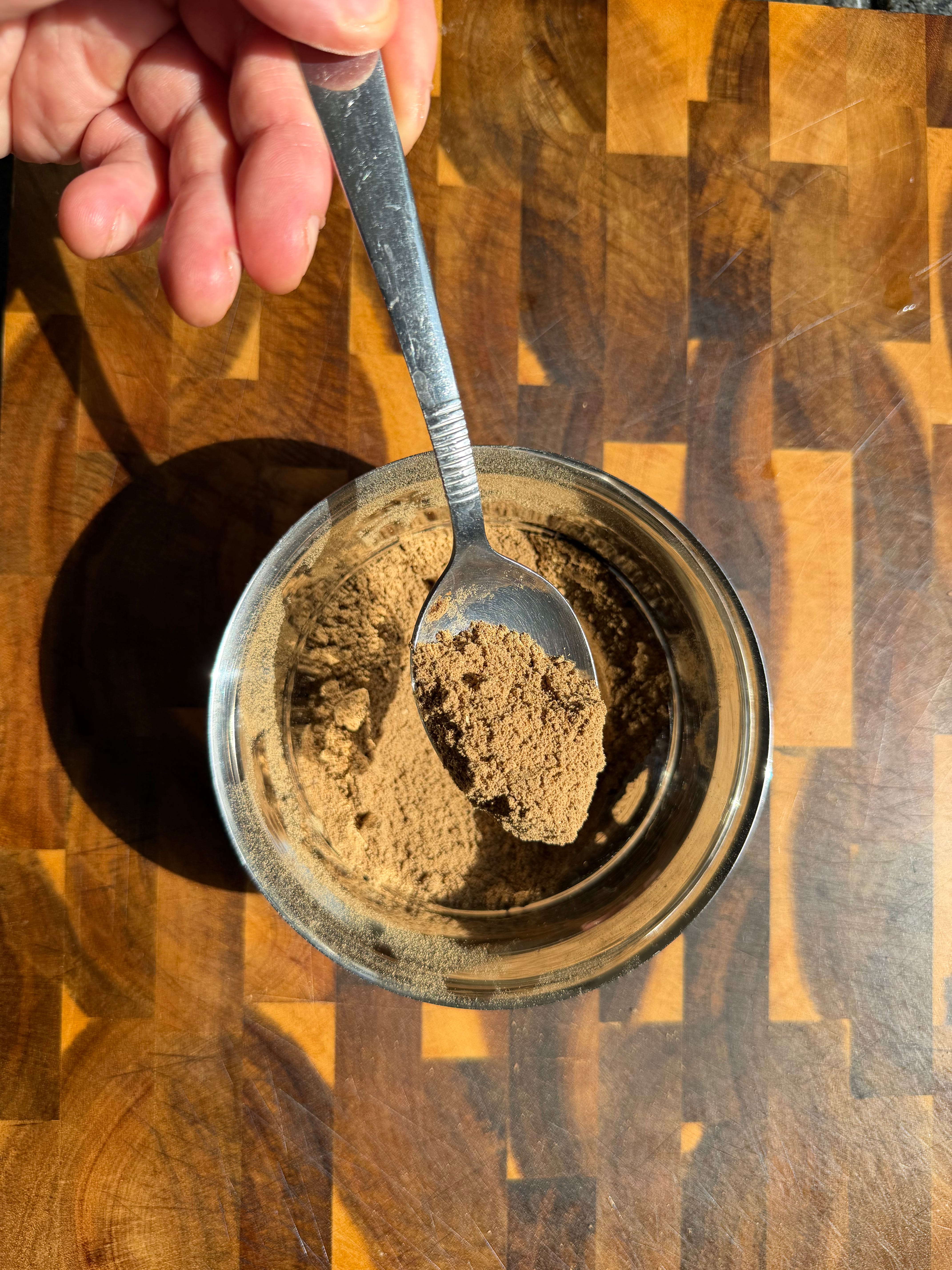
Before I started cooking Indian food properly, I had no idea mango was used like this. We’re all used to ripe mangoes being sweet and juicy, but unripe mango has a completely different taste. It is sharp, sour and slightly fruity, and once it is dried into a powder, it can be added straight into food.
This is the ingredient that gives so many North Indian dishes that fresh, tangy finish. It can stop a pumpkin sabzi from tasting too sweet, make a potato filling taste brighter, cut through the richness of fried snacks, or give a simple cucumber and onion salad that sour, salty edge you get from chaat masala.
I first noticed it through chaat masala, which is a spice mix often sprinkled over Indian snacks, fruit, salads and street food dishes. It had this sour, salty taste that I loved, and when I looked at the ingredients, I realised some of that sourness was coming from dried mango.
After that, I started seeing it in lots of North Indian recipes. It gets added at the end of dry sabzis, mixed into potato fillings for things like aloo paratha and kachori, and sprinkled over raw salads.
It does a similar job to lemon or lime, but because it’s a powder, it adds sourness without making the food wet.
Good amchoor should smell sour and a little fruity when you open the packet. The colour is usually pale beige to light brown. If it smells dusty, stale or musty, it probably won’t do much for the dish. I’d also avoid anything damp or clumpy, because it usually means moisture has got in.
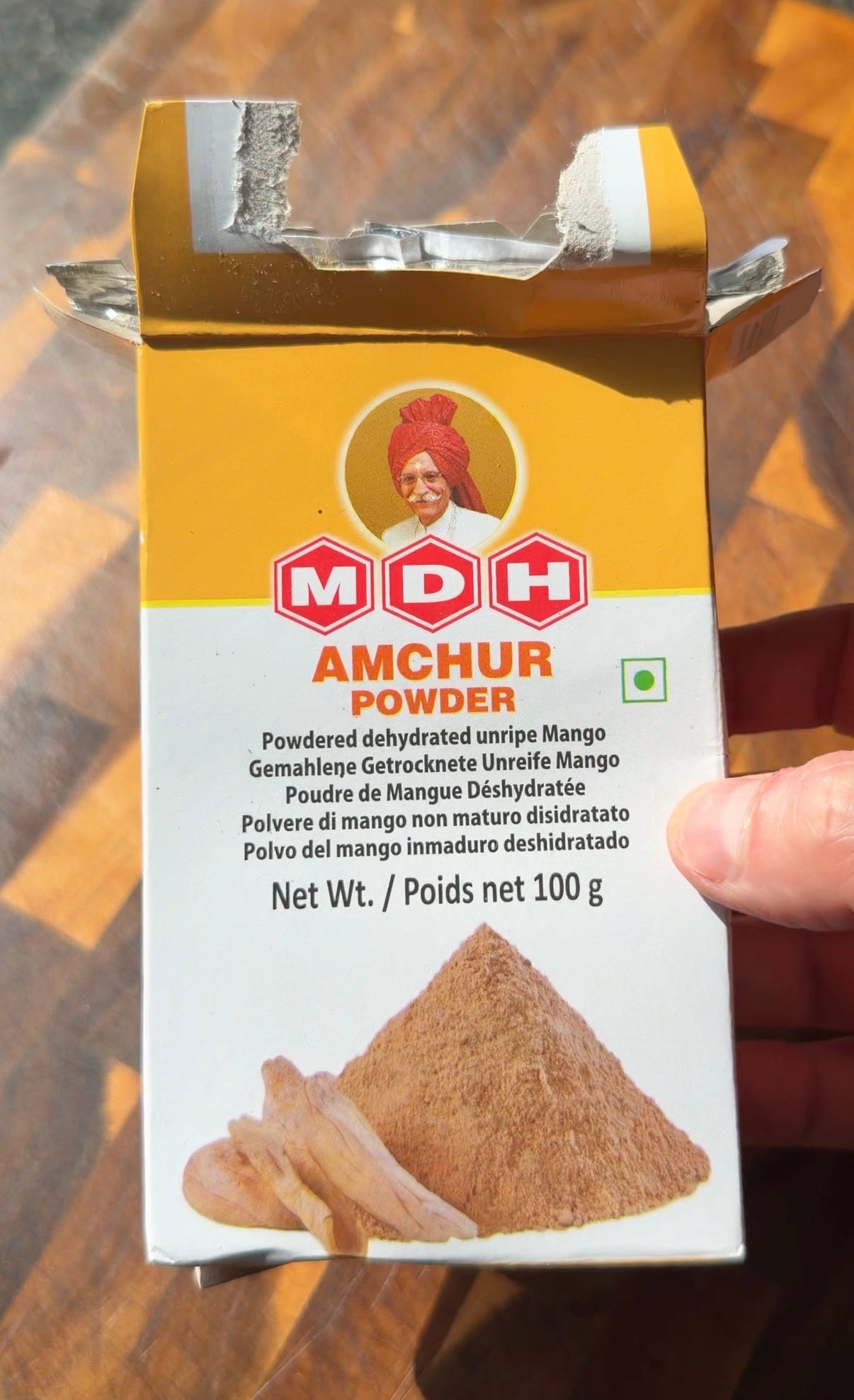
You don’t need huge amounts of it, so I’d rather buy a smaller packet and use it while it still has some aroma.
In a dry pumpkin sabzi, amchoor is added right at the end. The pumpkin becomes soft and naturally sweet as it cooks, so the amchoor cuts through that sweetness and gives the dish a sharper finish.
You do not want to add it too early here. If you add it at the end, the sourness stays more noticeable.
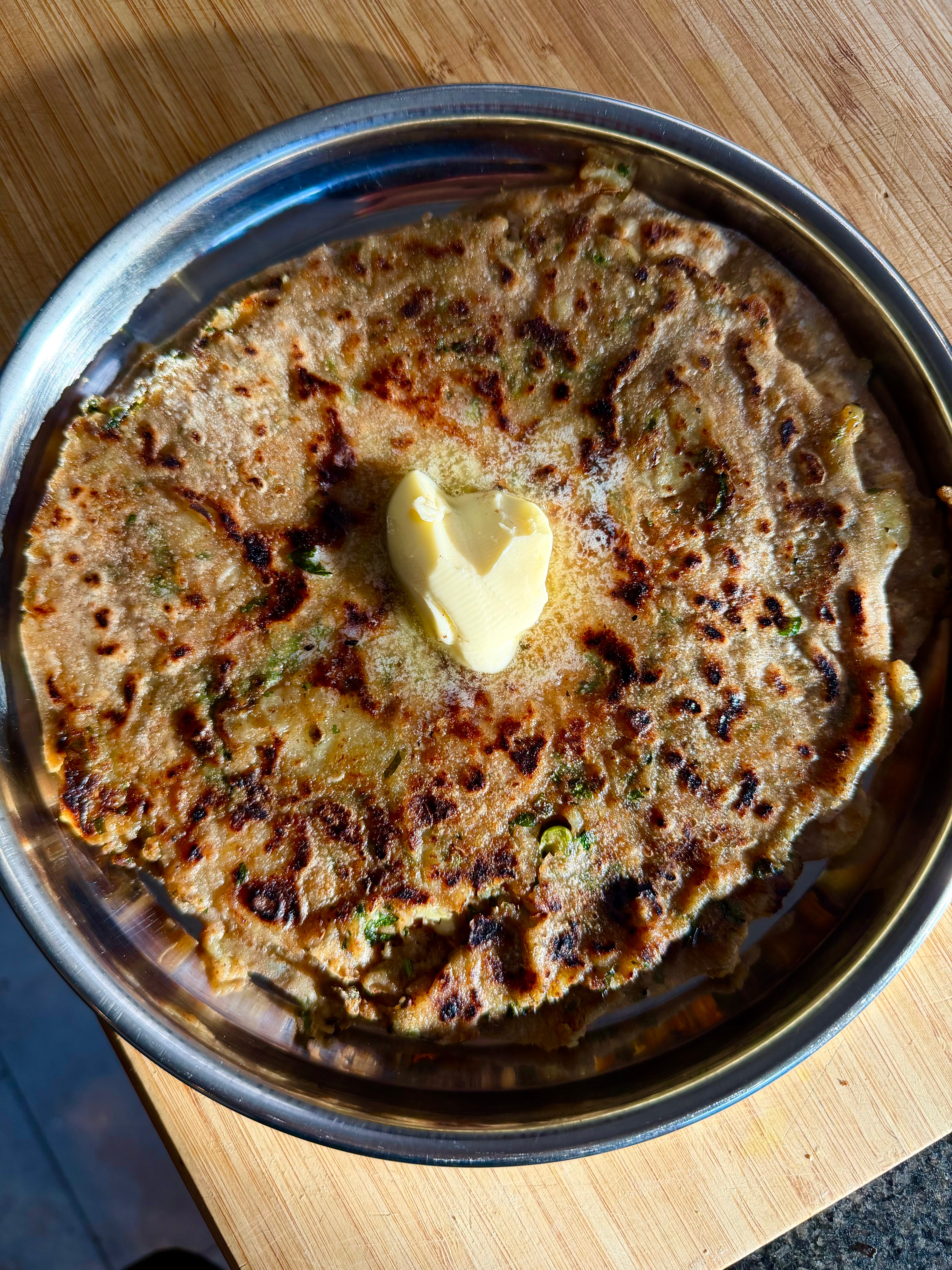
In aloo paratha, amchoor goes into the potato filling. You could use lemon or lime for sourness, but that would make the filling wetter, which is not what you want when you’re stuffing and rolling dough.
Amchoor gives the potato filling tang without loosening the mixture.
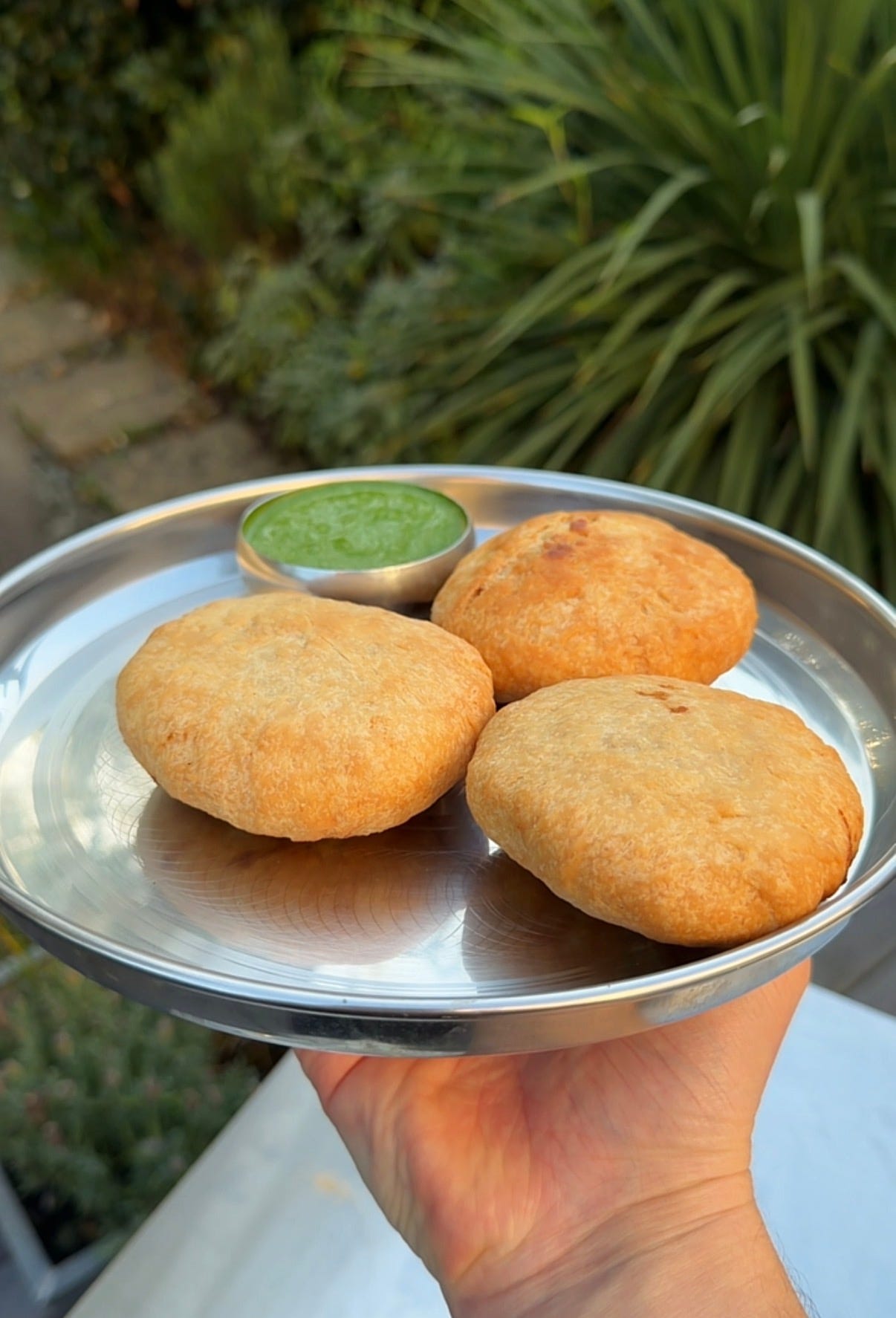
Kachori is another good example. The filling needs to be dry enough to sit inside the dough and fry properly. Amchoor gives the potato mixture that sour edge without adding any liquid.
It also works well with chilli powder, coriander powder, cumin and hing.
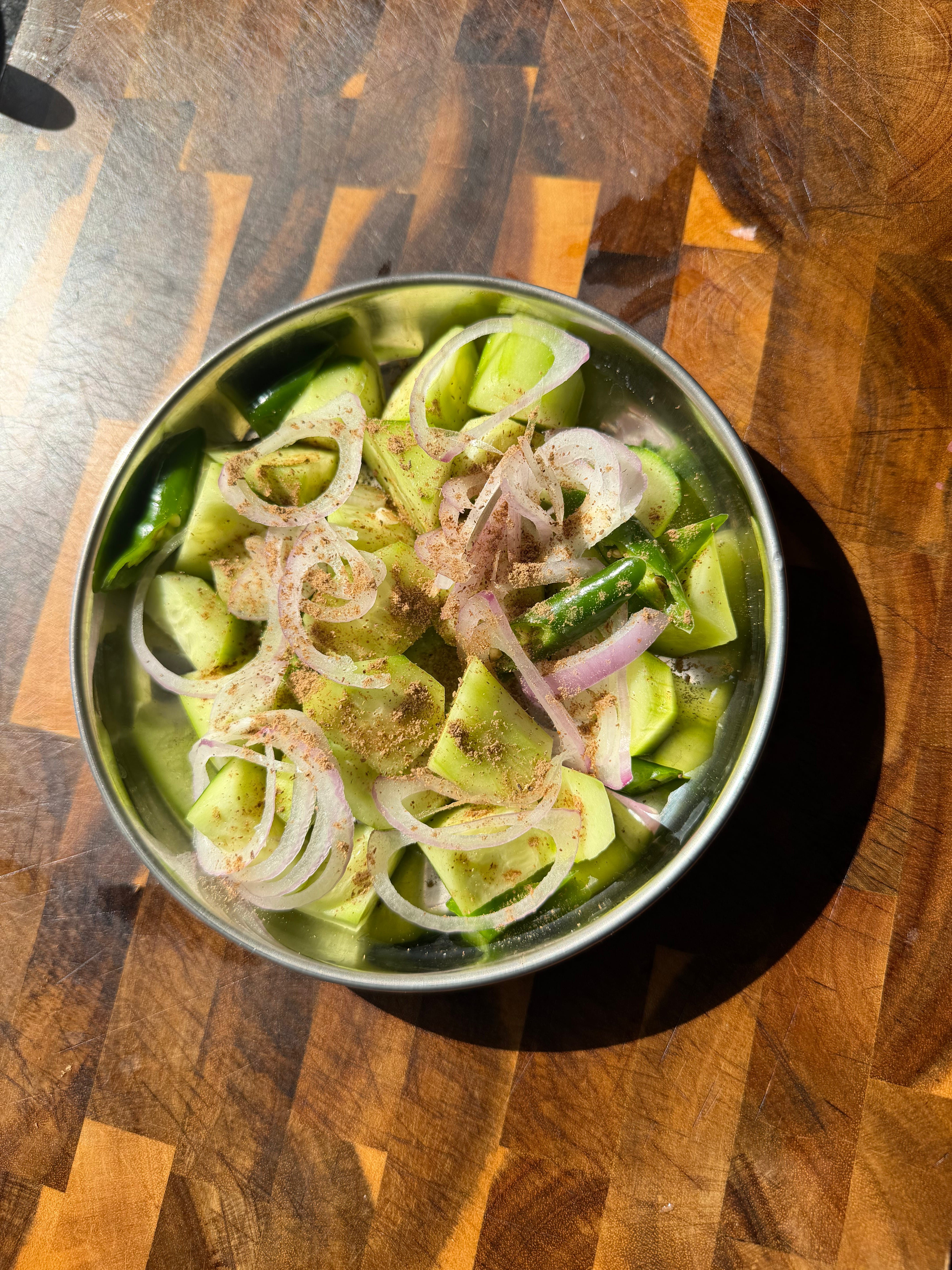
This is the simplest use. Cucumber, onion, green chilli and chaat masala. The chaat masala brings salt, spice and sourness, and a lot of that sour taste comes from amchoor.
This is one of the easiest ways to notice what dried mango powder does, because there is no cooking involved.
Paid subscribers get the full recipes below, including exact quantities and methods for pumpkin sabzi, aloo paratha, kachori and the cucumber salad.
Comments
Nothing yet. Say the first thing.
Sign in to join the conversation.