
Hi everybody! Thanks for being here. If you’ve been around The Woodlands for a while you know that I’m the son of an immigrant. And I’ve been thinking about what makes somebody an American…. with the help of Isaiah and Abraham Lincoln.
And before we start, a reminder about scheduling me for your event. My colleague Holly Davis is now working on my 2027 schedule. If you would like to invite me to lead a retreat, offer a talk, participate in a webinar, or preach at your event, just give her a shout.
And now on to…..
Bill corrected my pronunciation of Tolkien. He said, “It’s Tol-keen, not Tol-ki-en.”
I said, “Oh Bill, that’s just because your Irish.”
He laughed and said, “Well, Jake, that does explain a lot of things. But not this. He was one of my professors. And that’s how he said it.”
We were both still untenured assistant professors and enjoyed eating lunch together. He taught English Lit. I was a philosopher. Over one of those shared meals he said something that left me thinking at the time and that I think has renewed relevance in these unsettled, unsettling times: “You know why we Irish tend to get on so well with you Southerners. We both grew up in a conquered nation.”
What Bill meant was that we both knew what it was like to grow up in a context viewed as intellectually and culturally inferior by our country’s elites. True enough. But it occurred to me that a conquered nation is one that is going through a period where its existential bearings have been disrupted. It will struggle to get a clear sense of its identity. Who are we and who is really one of us?
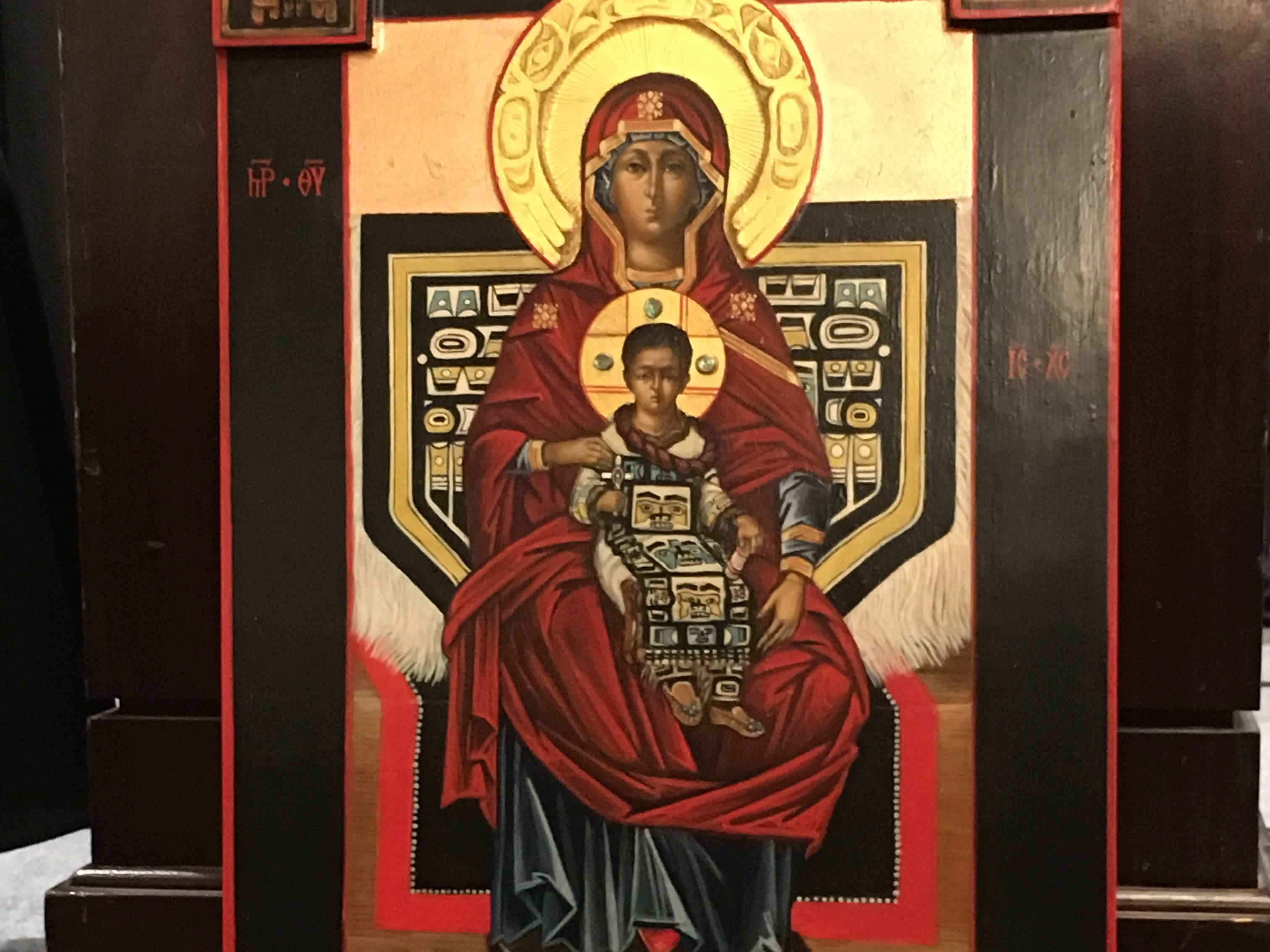
What triggered my memory of that exchange with Bill was reading a passage from the prophet Isaiah. It may be familiar to you: “My house shall be called a house of prayer for all peoples.” (Isaiah 56:7) And that passage got me thinking about what it must have been like for the Israelites to return to their conquered nation, to Jerusalem, from Babylonian Captivity. That’s not just a random thought. It’s crucial context for understanding the passage and, as it turns out, for finding a way through the social turmoil we’re experiencing today. Put a pin in that last bit and let’s turn to the historical context for Isaiah 56.
You may recall that the Babylonians defeated Judah and took many of its residents captive. They lived in that foreign land for fifty years or so, all the while hoping to be restored to their home. Eventually, Cyrus the Great’s Persian armies conquered Babylon, and he decreed that the Israelites could return to their beloved Jerusalem. What they found there was poverty, sickness, and destruction. The city’s walls had been destroyed and the Temple lay in ruins. They would have to start all over. And at the foundation of this reconstruction project was an existential question. Who are we really?
Isaiah’s answer stands in tension with the response given by Ezra and Nehemiah. And as we’ll see below, this biblical tension prefigures the tension we’re experiencing as a nation right now. According to Ezra and Nehemiah, what makes someone an Israelite is basically blood and history. “They excluded from Israel all who were of foreign descent.” (Nehemiah 13:3) Any man married to a foreign woman was ordered to divorce her. (Ezra 10:2-3)
By contrast, Isaiah was saying that faithfulness to the covenant with God defines anyone and everyone a child of God. They could offer sacrifice in the Temple. Whereas Deuteronomy had excluded foreigners and eunuchs from the Temple (23:1, 3), Isaiah said that God’s salvation comes to “the foreigners who join themselves to the Lord, to minister to him, to love the name of the Lord, and to be his servants.” (56:6)
In other words, loving what God loves how God loves it braids us into the family of God. Not our blood or our heritage.
Jesus took up similar language. He was teaching a crowd. His mother and his siblings showed up and sent someone to tell him that they had arrived. As Matthew records:
He replied to him, “Who is my mother, and who are my brothers?” Pointing to his disciples, he said, “Here are my mother and my brothers. For whoever does the will of my Father in heaven is my brother and sister and mother.” (Matthew 12:48-50)
In other words, loving what God loves how God loves it braids us into the family of God. Not our blood or our heritage.
To summarize the contrast between Ezra/Nehemiah and Isaiah briefly, the former uses heritage and history to exclude individuals from Israel. Isaiah recognizes faithfulness to the covenant as the principle of inclusion in Israel.
We’re having a parallel argument now. What makes somebody a real American?
Drawing on the work of Yoram Hazony, those in the national conservatism movement insist that citizenship claims should be rooted in ancestral ties to this land. Vice President J.D. Vance has reportedly said as much directly: those whose ancestors fought in the Civil War have a greater claim to America than any new arrival to our shores. Blood and history, again, is the answer.
Lincoln answered differently. At Gettysburg he called this a nation “conceived in Liberty, and dedicated to the proposition that all men are created equal.” Not one conceived in blood. Four years earlier he’d put it this way: the Declaration of Independence is the electric cord that links the hearts of all Americans together. When new immigrants commit to the proposition that “all men are created equal,” the cord connects them to the Founders and to everyone else dedicated to that proposition.
There are echoes of Isaiah in Lincoln’s vision. And it brings to mind Jesus pointing at a room full of strangers and calling them his mother and his siblings. According to Lincoln, an immigrant is one of us not because of bloodline or heritage. But because of faithfulness to the sacred ideal that defines us and binds us into one: each human being is equal in the sight of God.
We’re not actually living in a conquered nation. Nevertheless, these are tumultuous, uncertain, and anxious times. So, we are working out the question of our identity. And it is no surprise that we find ourselves focusing on immigrants. Are they really one of us?
Jesus does not provide a detailed immigration policy for us. And for that matter, there are Americans who are not Christians anyway. Nevertheless, he shows his followers the spirit that we should embody in our approach to the question.
First, every stranger we meet is already the beloved child of God. It doesn’t matter where they came from, how they got here, or what language they speak. Treating them as such is who we are.
Second, what makes any person one of us, what makes them American, is not how long they’ve been here, who their great-grandparents were, or their ethnicity. Rather, it is their faithfulness to our shared ideal of freedom and equality.
None of this is to say that we should impose our Christianity on this nation as a whole. However, our faith is more than a merely private matter. Our relationship with Jesus informs how we enter into the public square. And he has taught us to treat strangers as part of the family of God.
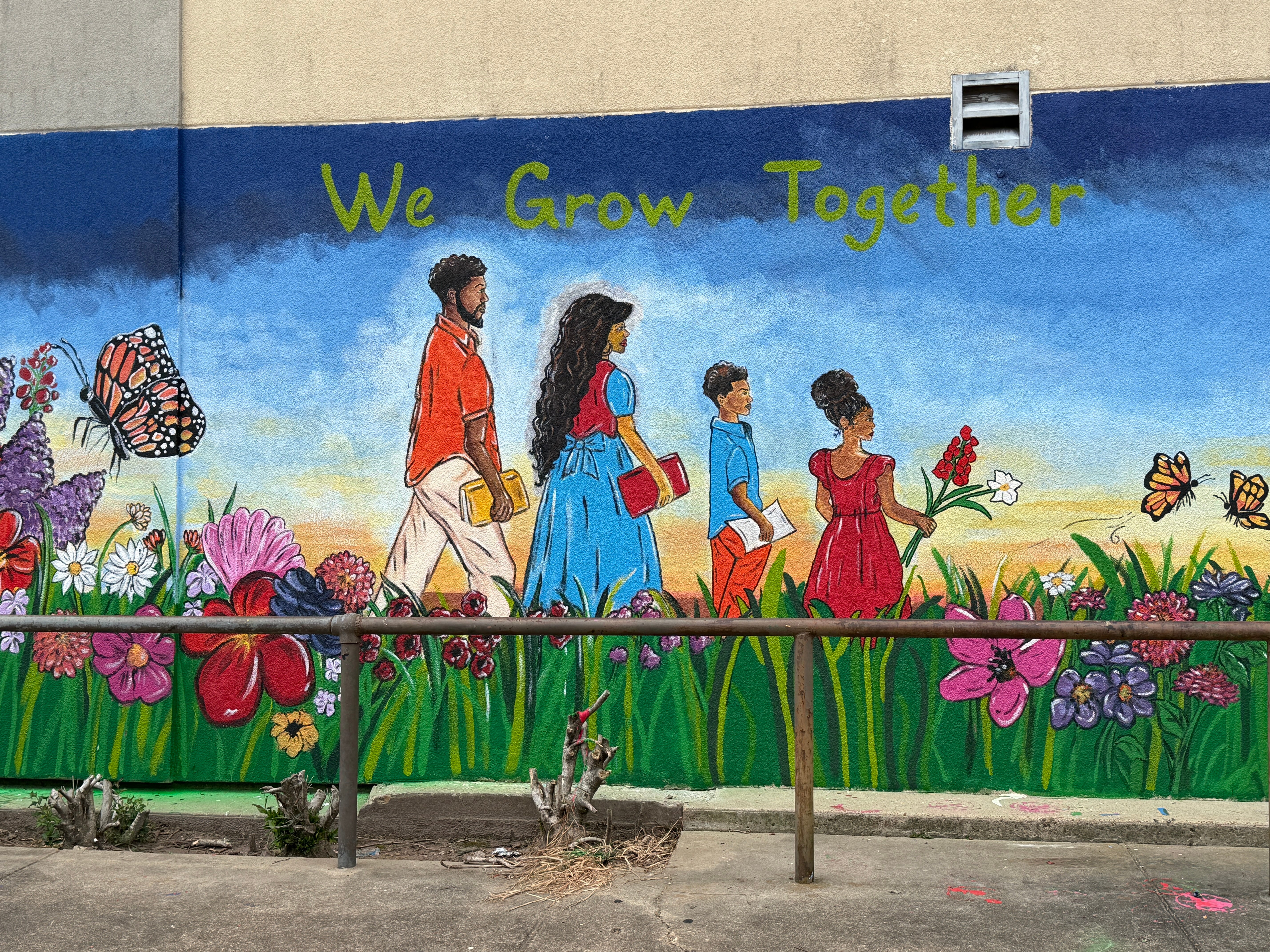
Everything at The Woodlands is always free. Paid subscriptions are voluntary. Proceeds are used to support ministries in under-resourced communities. Those include providing food, adult literacy, and educational support for children and youth at places like Alma Redwine Elementary in Sonia Quarters.
Find a quiet few minutes at the end of the day. Breathe. Let your body settle before your mind does.
1. Gratitude. Where did you feel genuinely welcomed today — not tolerated, not merely included, but wanted? Sit with that feeling a moment before moving on.
2. Review. Walk back through the day. Who crossed your path — in person, on a screen, in a passing thought? Notice, without judging yet, who you moved toward and who you moved away from.
3. The harder question. Was there a moment today when you measured someone by where they came from, what tribe they belonged to, what side they were on — rather than by whether they were trying, in their own way, to keep faith? Don’t rush past this. Let it be uncomfortable if it needs to be.
4. Sorrow, honestly held. If you drew a boundary today that Isaiah wouldn’t have drawn — around ancestry, party, class, or grievance — name it to God plainly. No performance. Just honesty.
5. Grace and resolve. Remember that you, too, are one of the ones let in on nothing but fidelity — not pedigree, not merit, not the right family. Ask for one small chance tomorrow to extend that same welcome to someone you’d normally overlook.
Close, if it helps, with:
Lord, you have never once asked me for my ancestry. Only my faithfulness. Let me offer others what you’ve offered me. Amen.
That’s it for this week friends. Until next time, be well and God bless.
Jake
Comments
Nothing yet. Say the first thing.
Sign in to join the conversation.