
Hi everybody! Thanks for being here. Practicing the Kingdom is a series that explores how following Jesus reshapes our imagination, our desires, and our way of life. Today we’re discussing how our everyday being has an eternal trajectory.
The Woodlands is always free. Paid subscriptions are a gift. They help fund ministry to children, youth and adults in under-resourced communities.
Her surprise bordered on shock.
We’ve known each other for years. She’s heard me say that God is love countless times. So, she assumed that she was echoing my own sentiments when she said, “There is no hell. A loving God would not torment anyone for eternity.”
I gently responded, “Well, actually, I do believe in hell.”
She said, “What do you mean? How can you say that? Coming from you that doesn’t make sense.”
You might be thinking the same thing, and I don’t blame you. That’s especially so if you think of heaven and hell as celestial destinations. As places that God ultimately sends us as either reward or punishment for the kind of life we’ve lived.
I’ll turn to C. S. Lewis to help me explain what I’ve got in mind.
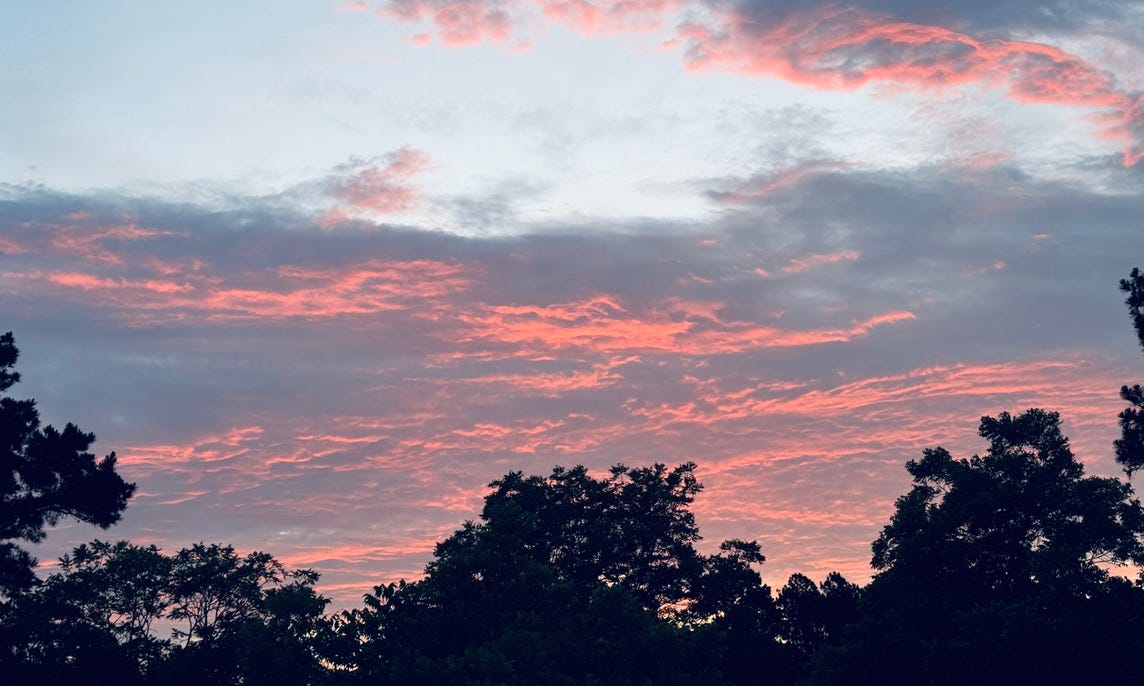
In his novel The Great Divorce, he imagines a bus ride from hell to heaven. The residents of a dreary gray town are given the opportunity to visit heaven and even remain there if they wish.
To their surprise, heaven is not soft and ethereal. It is solid and real. The grass feels like needles beneath their ghostly feet. The visitors themselves are thin and insubstantial by comparison.
Again and again, they are invited to let go of their pride, resentment, self-pity, and illusions so that they can become real enough for heaven. Many refuse. They return to the bus and ride back to the gray town.
Lewis’s point is that heaven and hell are not about where God sends us after we die. Instead, heaven and hell are about where we’ll want to be. And where we’ll want to be hinges on who we’ve become. Lewis puts it like this:
There are only two kinds of people in the end: those who say to God, “Thy will be done,” and those to whom God says, in the end, “Thy will be done.” All that are in Hell, choose it. Without that self-choice there could be no Hell. No soul that seriously and constantly desires joy will ever miss it. Those who seek find. Those who knock it is opened.
There are two ways of being in this world. Two sorts of love. One is love of God and love of neighbor. Paradoxically, we find ourselves not by centering on ourselves, but by giving ourselves away in love. By contrast, there is love of self above and even at expense of all others. Isolation and misery are its result.
we find ourselves not by centering on ourselves, but by giving ourselves away in love.
Heaven is about becoming more real, more alive, more fully the person God created us to be. Hell is the tragic alternative—a life that grows smaller, thinner, and less real because it cannot surrender itself to care.
Look, I feel the pull of self-centeredness. To be honest, I’ve succumbed to it more often than I want to admit. Maybe you have, too. But that doesn’t condemn us. We can, to use Lewis’ image, hop the bus to heaven anytime we choose. But we cannot choose what heaven will actually be like. Reality does not bend itself to our wishes. Learning to become real—and to accept reality as it is—can be both difficult and painful.
I think Jesus was getting at something like this when he said, “Do not fear those who kill the body but cannot kill the soul; rather fear him who can destroy both soul and body in hell.” (Matthew 10:28)
Jesus seems less concerned here with what might happen to us than with what might happen within us. Some ways of living gradually deform the soul. They make us smaller, less alive, less capable of love. They lead to what Søren Kierkegaard called despair.
Externally, we may appear to be flourishing. And yet our inner life can be filled with turmoil or feel desperately hollow.
People have always compared themselves to others. Neighbors, classmates, church members, colleagues at work. Now—in this digital, algorithm-driven era—we compare ourselves to billionaires, celebrities, and influencers on Instagram and TikTok. They have resources that most of us cannot access. And besides, the images they present are curated to present only the most flattering perspectives.
So, our age urges us to rush forward to curate our own best lives now. To construct a life for ourselves. And so, we are haunted with fear that we will fall behind or fall short. We will never be enough or measure up. Someone is always getting ahead of us or catching up to us. Windows of opportunity are closing and expectations are shifting. We’re weighed with dread that we’re not really living our best life now.
Jesus urges us to take up another way of being. The true self we yearn to be is not something we achieve. It’s something we receive. We become real by opening ourselves to, and being shaped by, God’s love for us. We are already the beloved. To live into that reality is to love with the love that we are always already being given.
To illustrate my point, I’ll turn to another story. Here’s a slightly lengthy passage from Margery Williams Bianco’s, The Velveteen Rabbit:
“Real isn’t how you are made,’ said the Skin Horse. ‘It’s a thing that happens to you. When a child loves you for a long, long time, not just to play with, but REALLY loves you, then you become Real.’
‘Does it hurt?’ asked the Rabbit.
‘Sometimes,’ said the Skin Horse, for he was always truthful. ‘When you are Real you don’t mind being hurt.’
‘Does it happen all at once, like being wound up,’ he asked, ‘or bit by bit?’
‘It doesn’t happen all at once,’ said the Skin Horse. ‘You become. It takes a long time. That’s why it doesn’t happen often to people who break easily, or have sharp edges, or who have to be carefully kept. Generally, by the time you are Real, most of your hair has been loved off, and your eyes drop out and you get loose in the joints and very shabby. But these things don’t matter at all, because once you are Real you can’t be ugly, except to people who don’t understand.”
Like I said above. I do believe in hell. In moments of self-centeredness, I’ve had foretastes of it. By grace, I mostly stumble and scooch along a different path. Walking the way of heaven is neither easy nor pain-free. At times, I do feel a bit loose in the joints and more than a little shabby.
I still have a long road ahead of me. But I can’t imagine using my return ticket.
Once each day this week, pause for a moment and ask:
What made me feel more fully alive today?
Notice whatever comes to mind.
Prayer
Lord Jesus Christ, make me more fully alive in your love. Amen.
That’s it for this week, friends. Next month we begin a 4-part series called What We’re Looking For. Part 1 is “Our Holy Longing.” As usual, posts will drop each Friday. I’m revisiting and revising posts from the Archives while I’m away on vacation. You may recognize the titles, but check them out. They’re going to be a bit different. Until next time, be well and God bless.
Jake
Comments
Nothing yet. Say the first thing.
Sign in to join the conversation.