
If you’re worried about losing your memory one day, I want you to look somewhere most people don’t:
Your grocery cart.
Because the pattern of what you eat, week after week, year after year, can meaningfully shape the health of your brain.
Leafy greens.
Berries.
Beans.
Nuts.
Whole grains.
Fish.
Extra virgin olive oil.
These foods aren’t exactly sexy.
Well... maybe they are.
But this week, I want to show you why they deserve your attention.
Week 1, we moved.
Week 2, we slept.
Week 3, we’re going into the kitchen.
And for this one, I called in backup.
This week, Dr. Annie Fenn came to my studio here in San Diego.
If you don’t know Annie yet, you should.
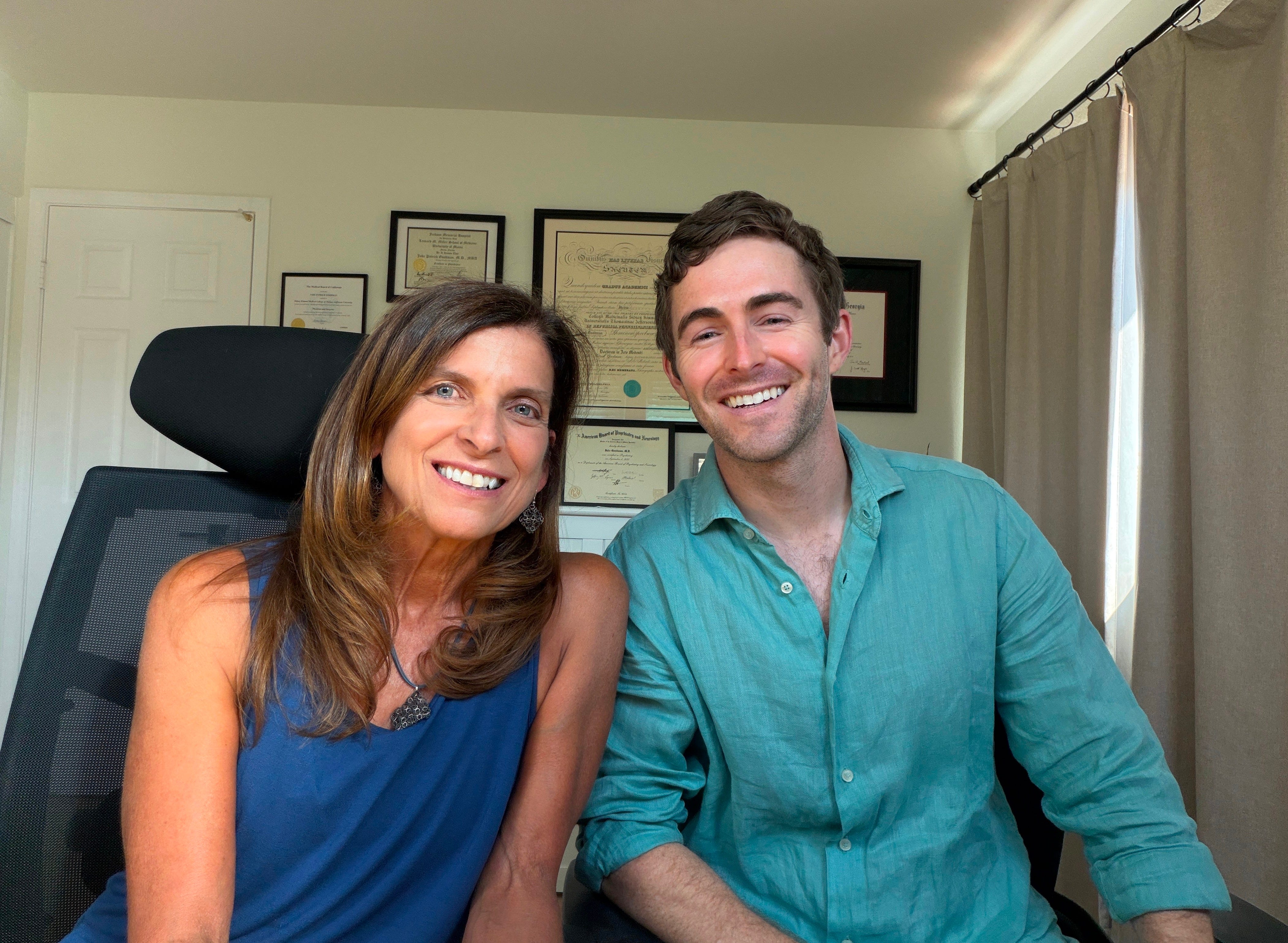
She is a physician, author, founder of Brain Health Kitchen, and one of my favorite educators in the brain health space.
She has spent years studying how food intersects with cognitive health and traveling the world to learn how people in longevity-focused communities actually eat.
Greece. Sardinia. Costa Rica.
Communities where people regularly remain active and engaged well into later life.
So when I knew Week 3 of this challenge was going to be about nutrition, I asked Annie if she would help me teach it.
She said yes.
And then she went above and beyond.
We recorded a 15-minute conversation specifically for this Brain Health Challenge.
In it, Annie:
Shares the top three lessons she learned from visiting Blue Zones, where many people live into their 90s and 100s.
Gives her #1 piece of advice for anyone who wants to lower their dementia risk through food.
Lays out the foods we should be eating more often if our goal is to protect our brains for the long run.
More on that in a minute.
First, let’s talk science.
There are approximately 4,972 diets on the internet.
Okay, I made that number up.
But you get the point.
Keto.
Carnivore.
Vegan.
Paleo.
Mediterranean.
Intermittent fasting.
The list never ends.
But when it comes to brain health, there’s one dietary pattern I think is particularly useful to understand:
MIND stands for:
Mediterranean-DASH Intervention for Neurodegenerative Delay.
It combines two well-studied eating patterns:
The Mediterranean diet and
The DASH diet, which was originally developed to help lower blood pressure.
The MIND diet takes elements from both and puts extra emphasis on foods associated with healthier cognitive aging.
Think:
Leafy greens
Other vegetables
Berries
Nuts
Beans
Whole grains
Fish
Poultry
Olive oil
And less of:
Pastries and sweets
Fried foods
Butter
Red meat
Foods high in saturated and trans fats
One study followed more than 900 older adults and found that those who followed the MIND diet most closely had a 53% lower rate of developing Alzheimer’s disease compared with those who followed it the least.
And here’s what really caught my attention:
Even people who followed it moderately had a 35% lower rate.
Now, this was observational research, so we cannot say the MIND diet itself prevented Alzheimer’s disease. And a later three-year randomized trial did not find a significant cognitive advantage over a control diet. So the evidence is promising, but not definitive.
Beyond this study, a growing body of research suggests that dietary patterns rich in plants, fiber, unsaturated fats, whole grains, nuts, berries, and fish are associated with better cardiovascular, metabolic, and cognitive health.
And if you’ve been following this challenge, you already know:
What’s good for your heart and blood vessels is often good for your brain.
That makes food worth taking seriously.
As a psychiatrist, I ask every one of my patients what they eat for breakfast.
Probably not the most stereotypical psychiatry question, but I think it matters.
The first meal of the day can make a huge difference in how you feel through the morning: your energy, focus, hunger, and whether you hit that late-morning or afternoon crash.
For years, I’ve built my breakfasts around protein + fiber. This habit got me through some of the hardest parts of residency, including 24-hour shifts, and I still rely on essentially the same four breakfasts today.
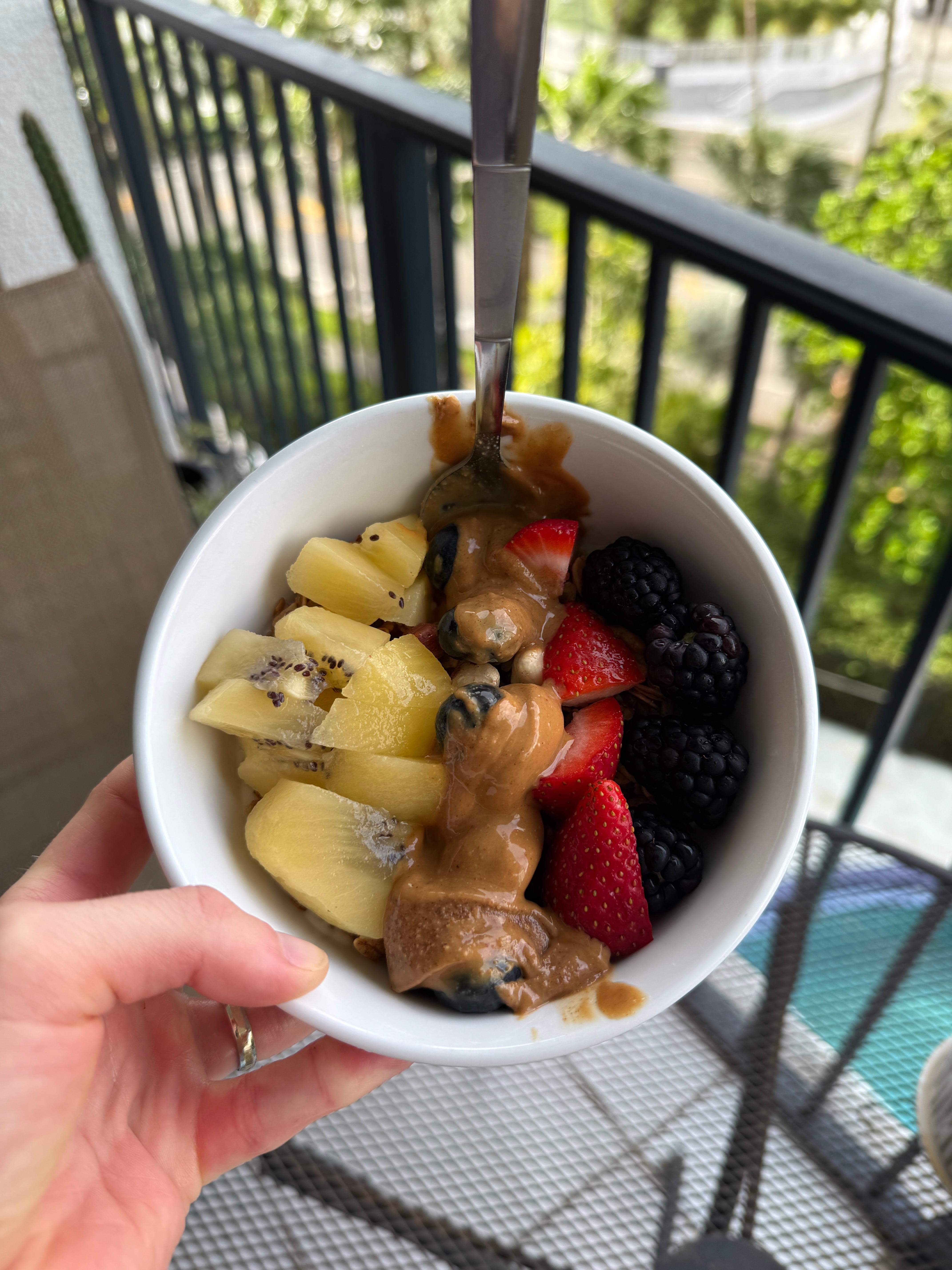
Greek yogurt or kefir + berries + walnuts or pecans + chia, flax, or pumpkin seeds + almond or peanut butter + a little honey.
This is probably my most frequent go-to.
Two scrambled eggs, usually with spinach or another leafy green + whole-grain toast + avocado.
Bonus points when the greens come straight from my garden.
Oatmeal made with milk + almond or peanut butter + pumpkin seeds + fruit + a little honey.
For oatmeal, I especially love apples, peaches, figs, or persimmons.
I’ll prep these on Sunday night and make enough to last several days.
Oats + almond milk + almond butter + chia seeds + hemp seeds + pumpkin seeds + crushed walnuts + a little Greek yogurt or kefir + a touch of honey.
Let it sit in the fridge overnight, grab it in the morning, and you’re done.
The combination of protein and fiber helps keep me full and energized throughout the morning, which is exactly what I’m looking for.
I also take 5 grams of creatine every morning, usually mixed into a little almond milk. I primarily started taking it for strength training, but there’s also promising research around creatine and brain health. I’ve written much more about that in previous newsletters.
Then, some tea.
That’s breakfast at the Goodman house probably 95% of the time.
This week’s challenge is about making brain-healthy eating simple enough to actually do.
And paid subscribers are getting something I have never offered before.
Below, I’m giving paid subscribers:
• My complete 6-5-4-3-2-1 Brain Food Reset
• The exact MIND-diet food targets we’re using this week
• A simple grocery list you can take to the store
• Easy ways to incorporate these foods without overhauling your life
• And an exclusive 15-minute video with Dr. Annie Fenn, recorded specifically for this community
Annie shares lessons from years of studying brain-health nutrition and spending time in longevity communities around the world.
This video is not being posted publicly.
It is for members of this challenge only.
The free newsletter explains the science.
The paid challenge turns it into a plan.
If you’ve been thinking about joining us, this is a very good week to do it.
Comments
Nothing yet. Say the first thing.
Sign in to join the conversation.