
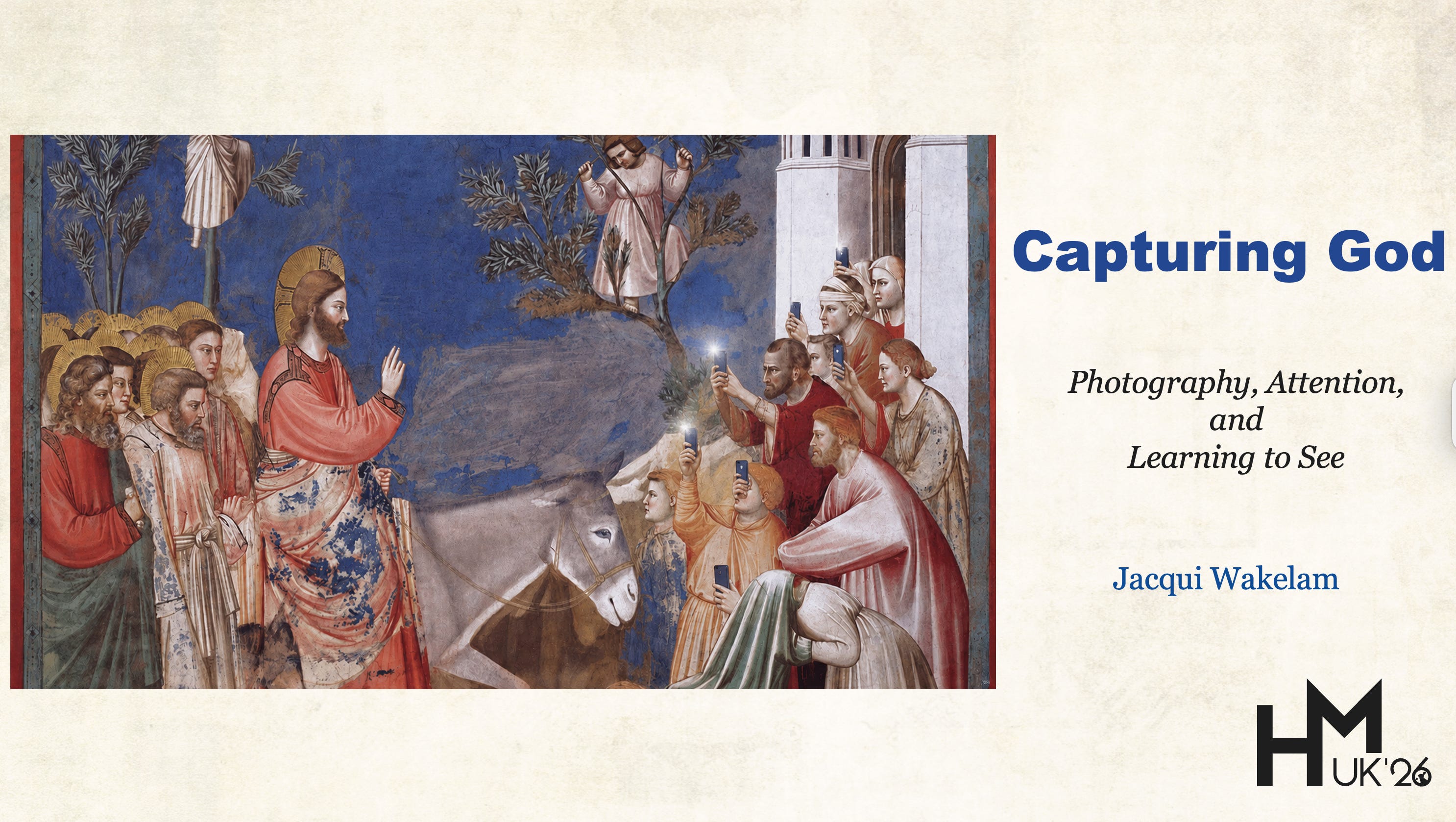
For me, photography didn’t begin with a camera. It began with wanting to slow down, to pay attention, to be present, to capture the sometimes almost imperceptible moments I might usually miss.
When we hold our attention on one small thing of beauty, our eyes begin to adjust. We see more clearly.
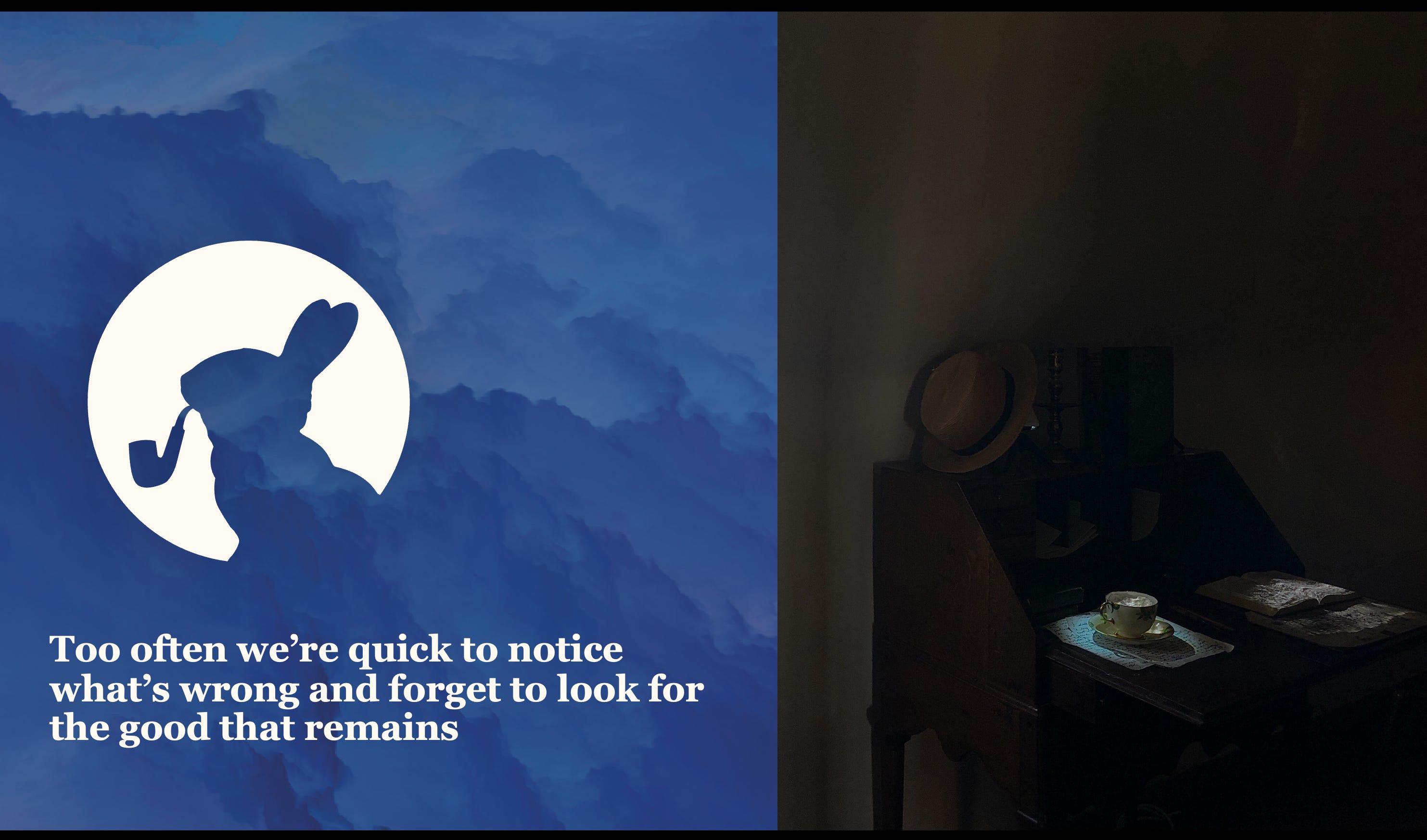
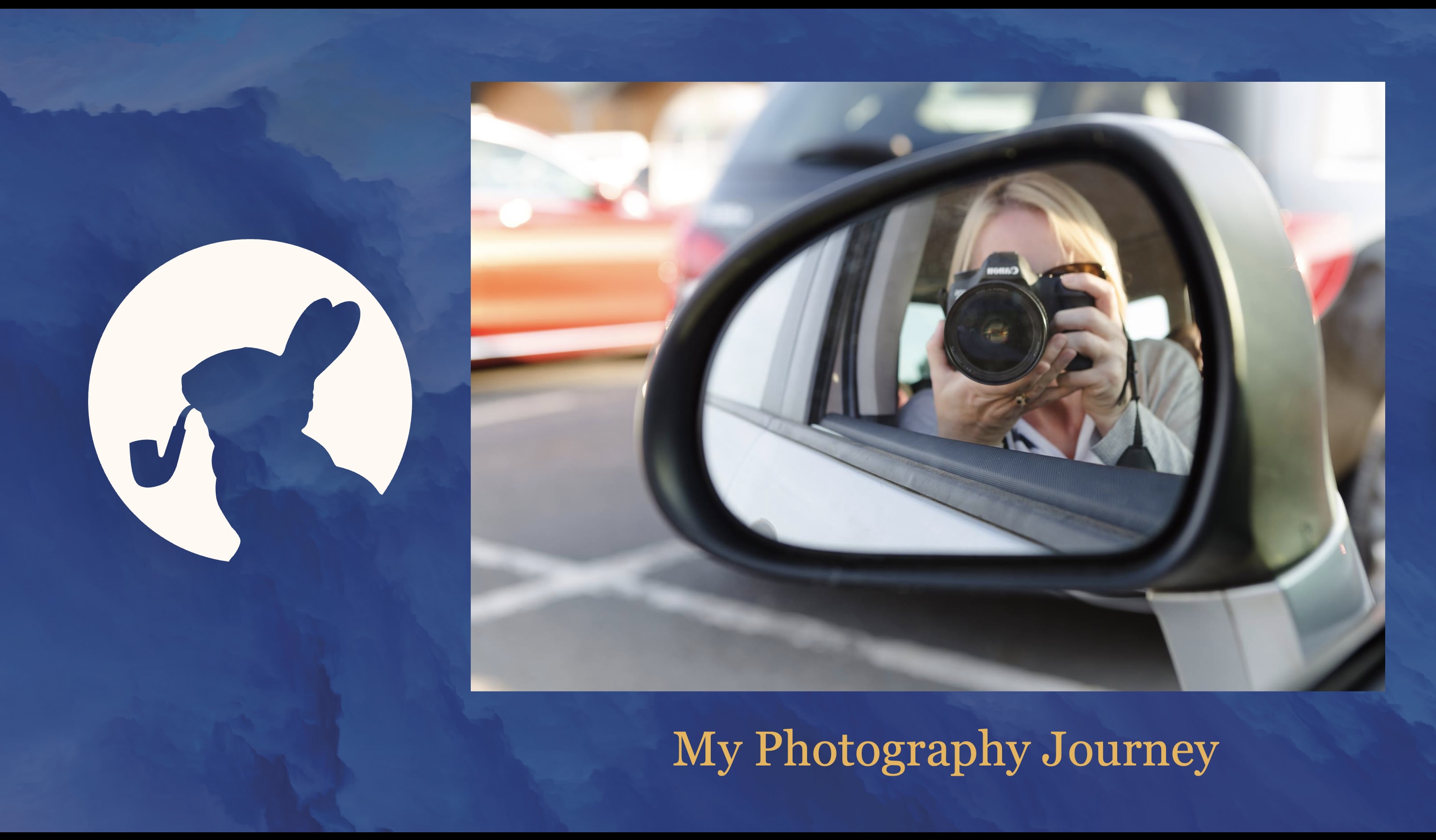
Looking back now, I can see...
I’d pretty much worked in every photographic genre. I can see there was a natural instinct to capture the unseen, to notice the imperceptible, or to draw attention to overlooked beauty, the details. But I didn’t understand at the time what God was teaching me, like moving from wide-angle to macro. It would only come into focus in recent years.
My photography journey began by documenting events and people, but slowly became something very different. Capturing the moments so others could enjoy them.
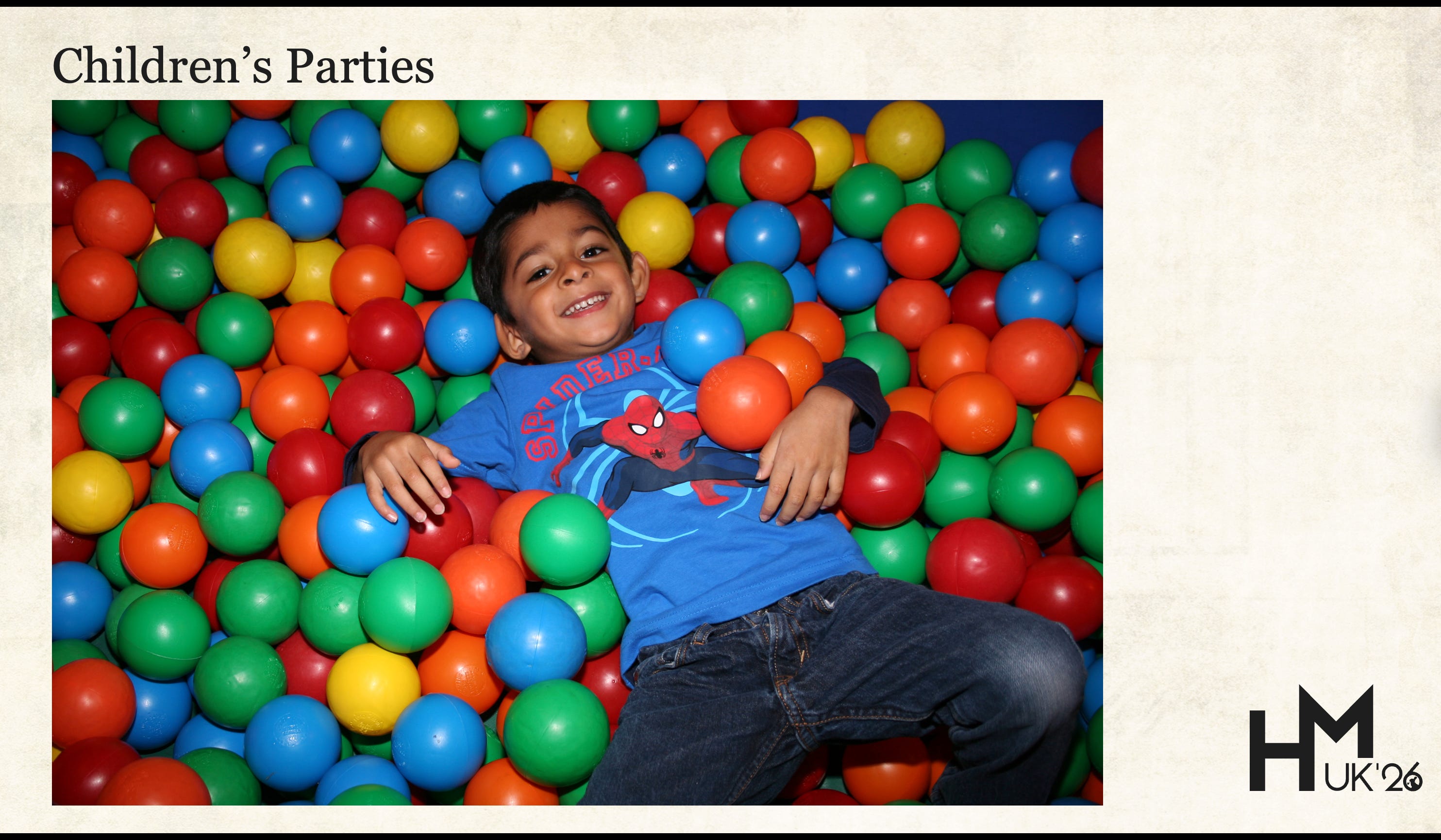
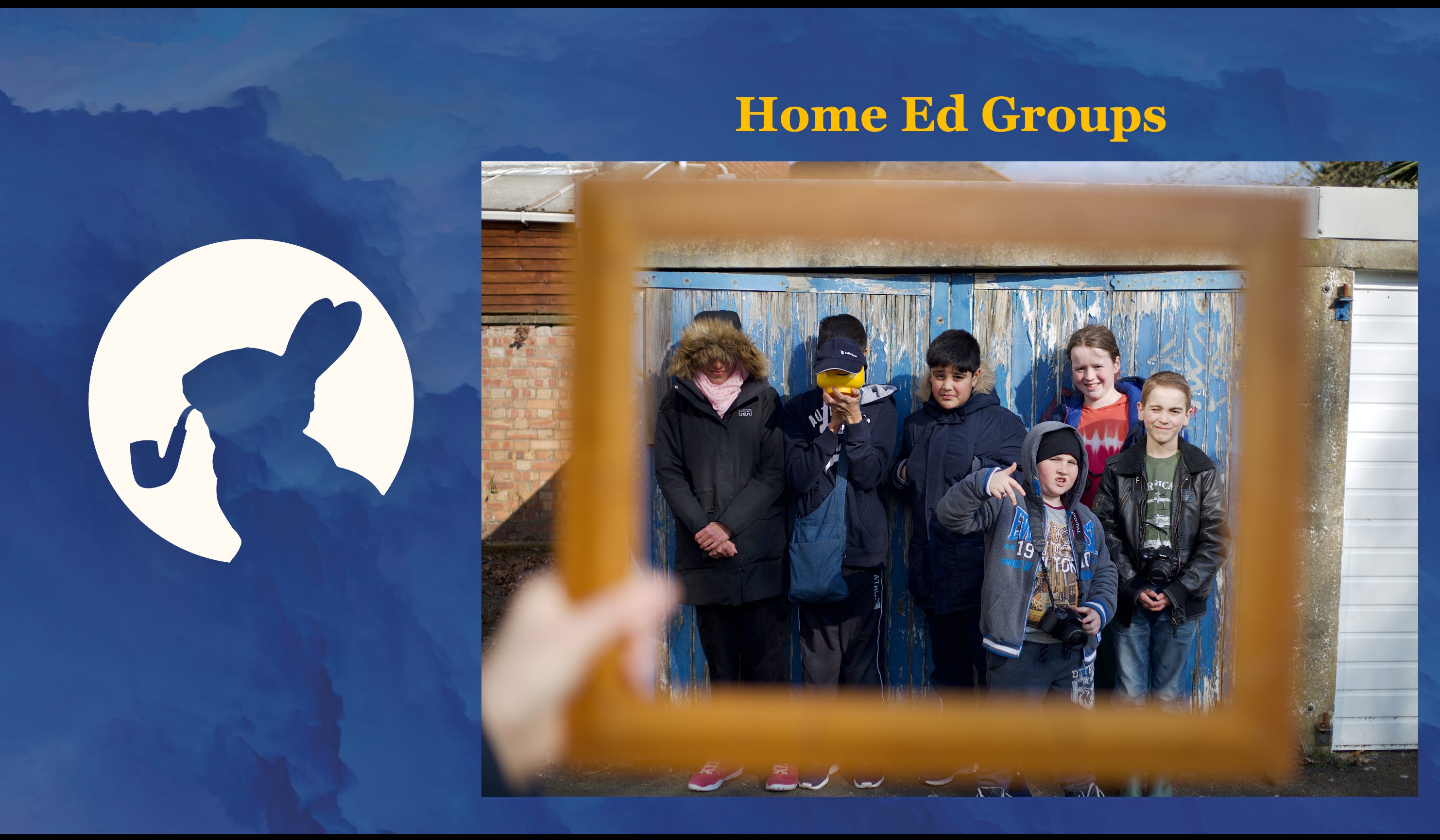
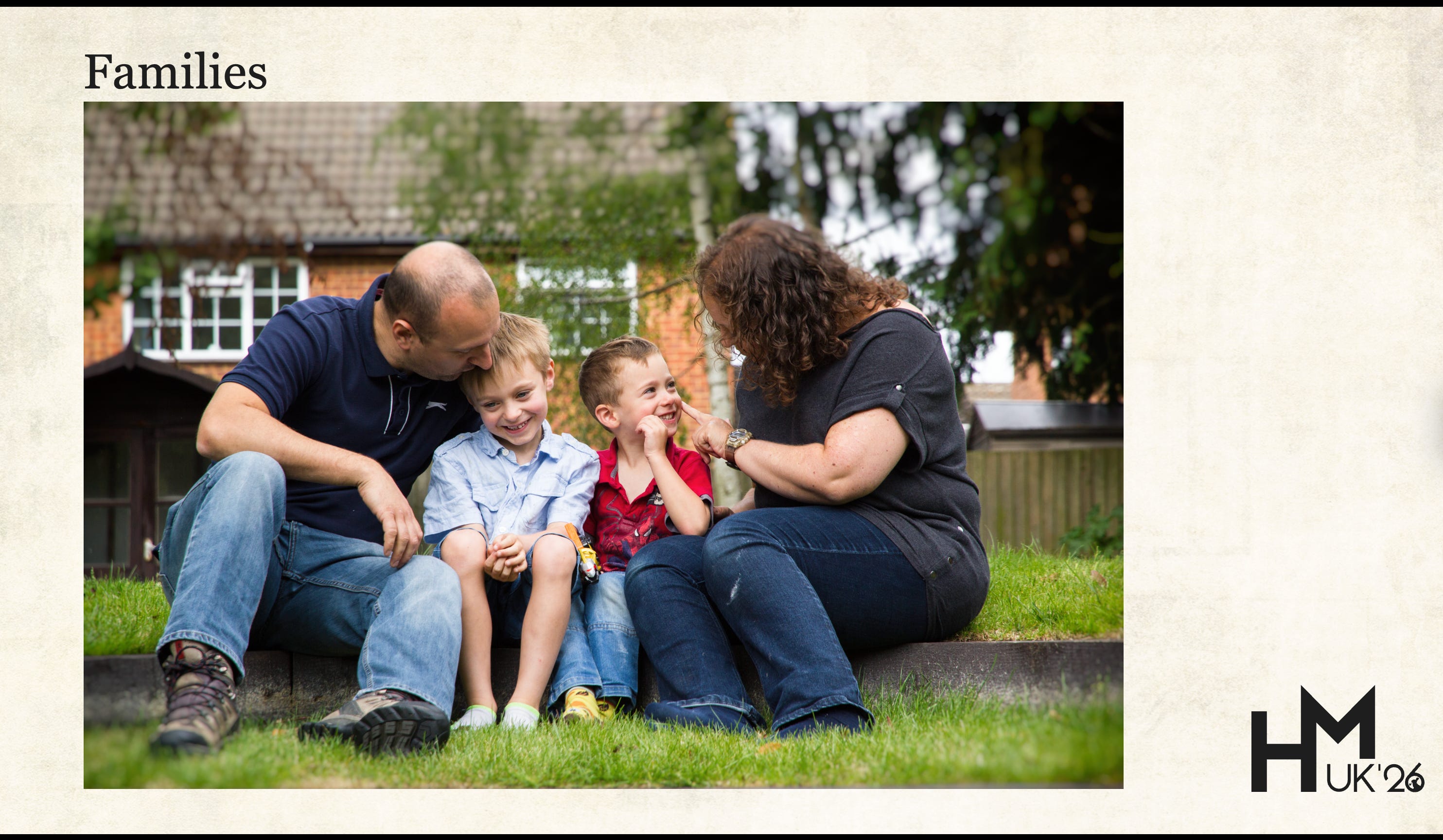

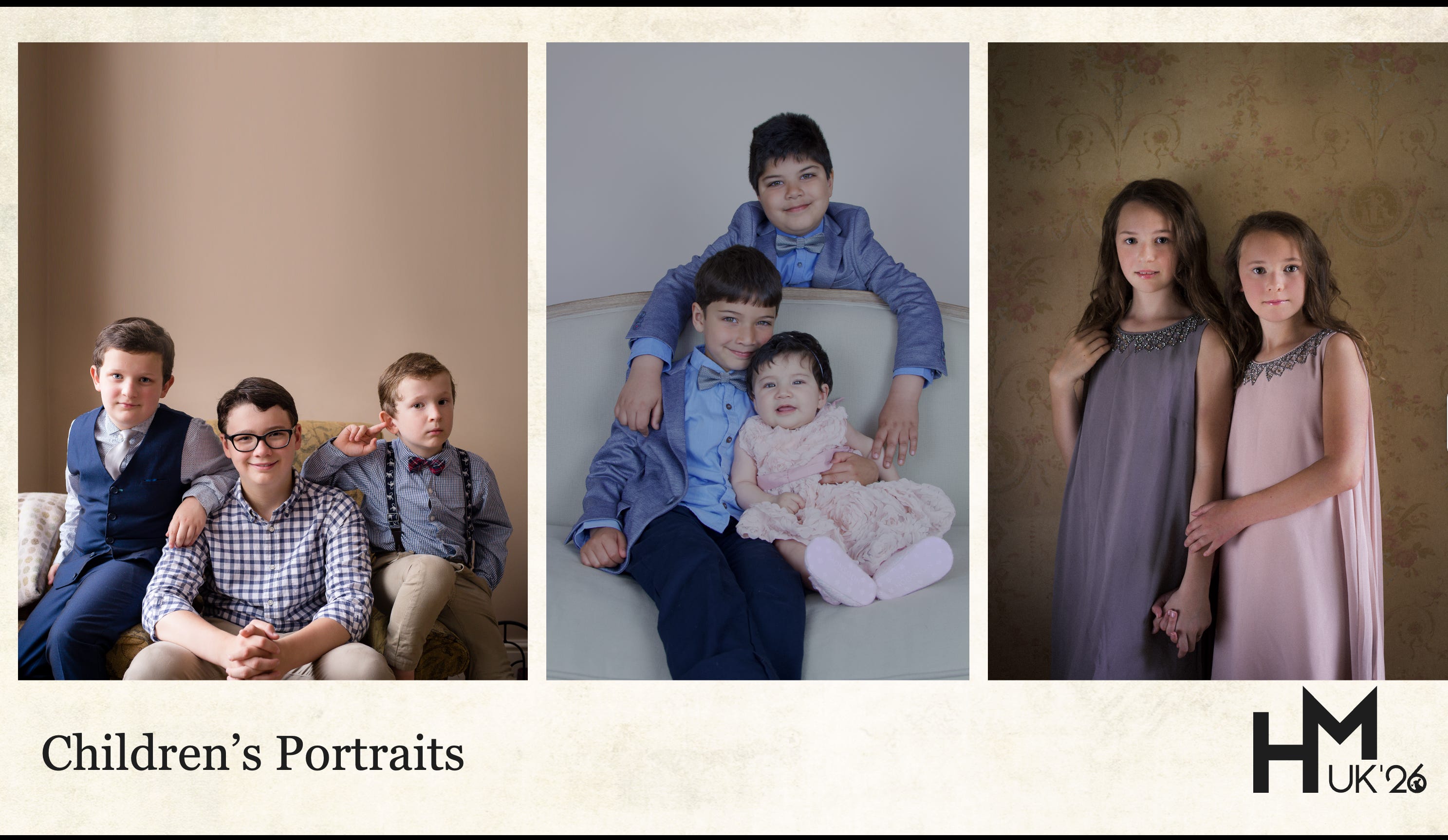
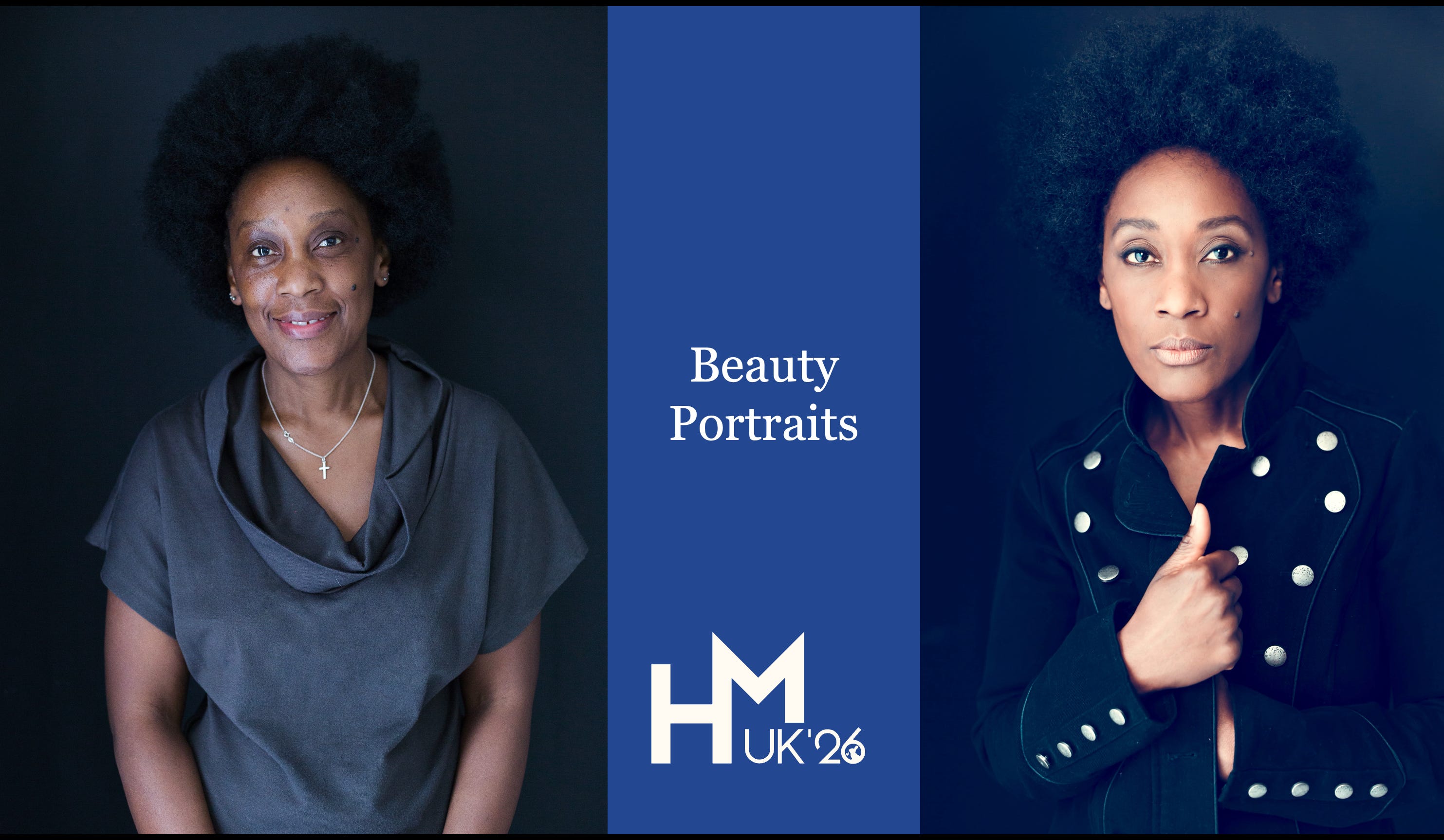
Many of us assume beauty is only for the happy or the comfortable. But beauty is often most meaningful to the anxious, the grieving and the weary.
I come to you not as someone who has life neatly held together, but as someone who has known heartbreak, abandonment, loneliness and sorrow. It is often in these darker seasons that reminders of God’s goodness and closeness become most necessary. Just as God met Elijah under the broom tree with food, water and rest, small tangible mercies can restore the soul.
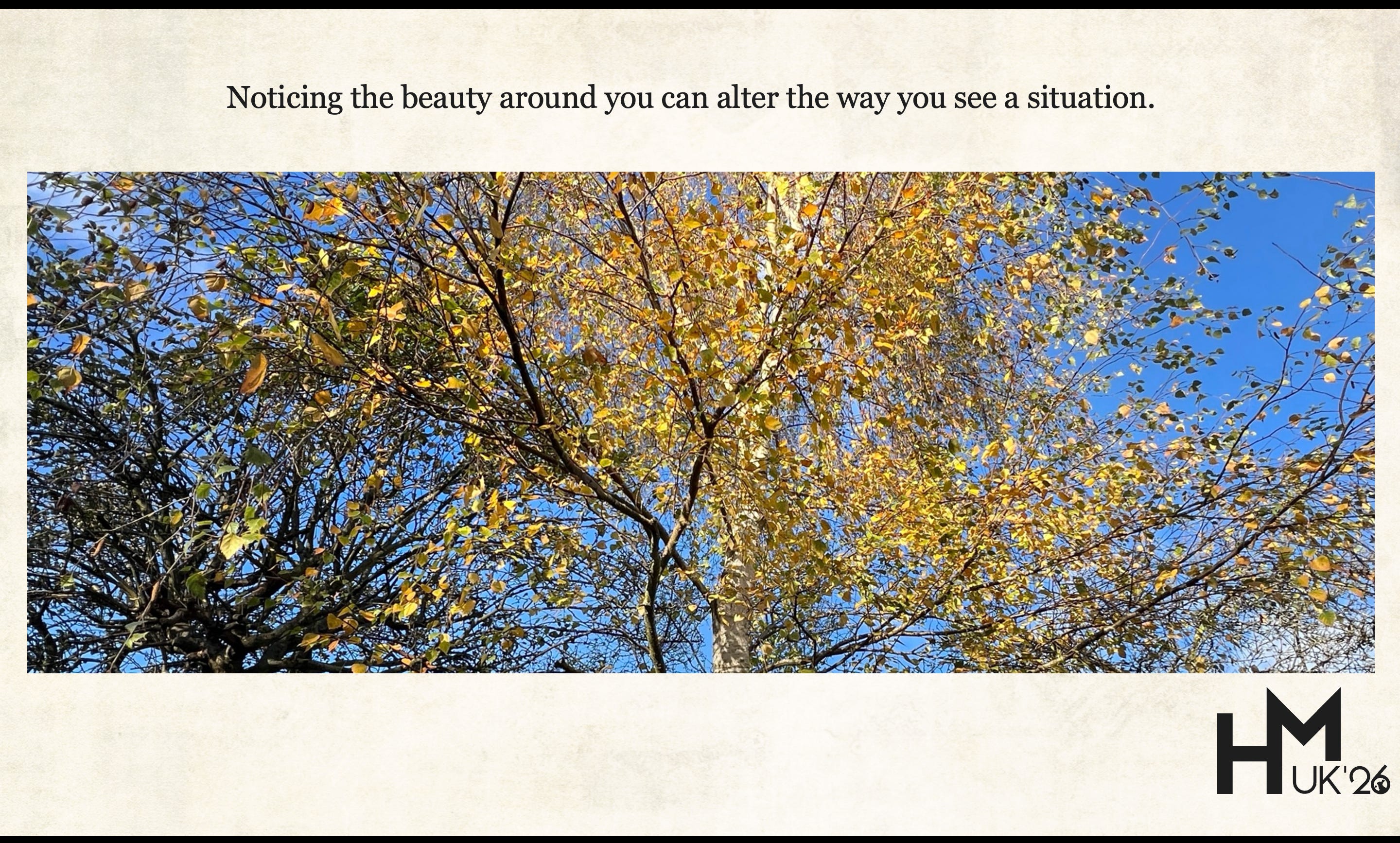
Noticing beauty around you can alter the way you see a situation. It can remind you of a bigger narrative, a “deeper magic” as C.S. Lewis called it.
I was reminded of this most recently. I was experiencing a heavy season. This particular afternoon, it seemed too much, so I took myself into the garden to breathe, to be. As I stood there and allowed myself space to process, something unexpected, uninvited happened...
It wasn’t dramatic. Just quiet. I saw this silver birch. The light caught it in a way I’d not noticed before. It looked gilded. Its extraordinary beauty broke through my very ordinary, miserable moment, and in that quiet moment of paying attention, I got angry.
Angry that this glare of beauty seemed impervious to my pain.
I think God doesn’t shout. He waits for us to get quiet, to notice flaring leaves. It didn’t fix anything. But later, it became this.
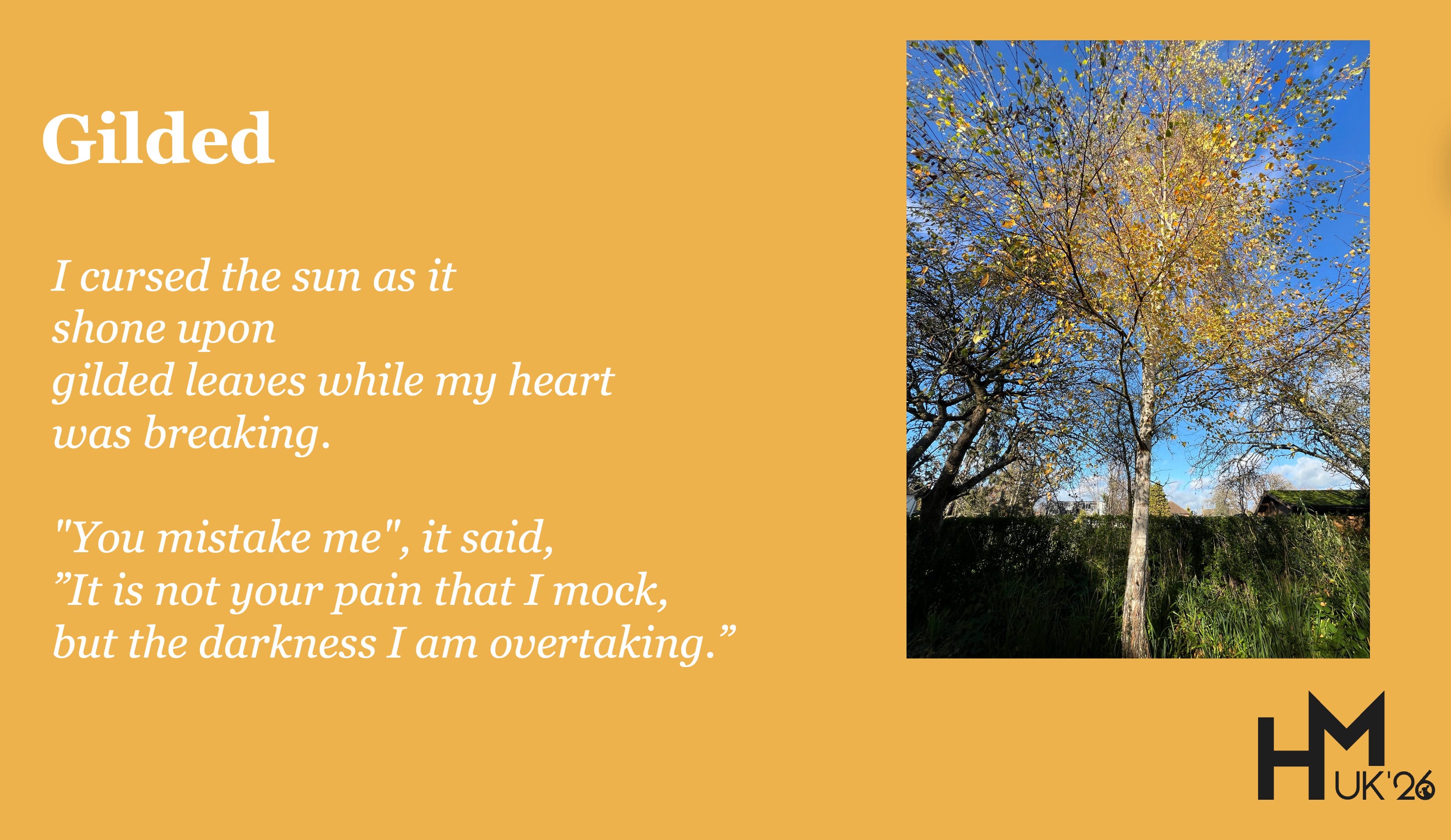
That moment has begun to shape how I see everything.
We live in a hurried, distracted age. W.H. Davies captures the problem perfectly when he asks: “What is this life if, full of care, we have no time to stand and stare?”
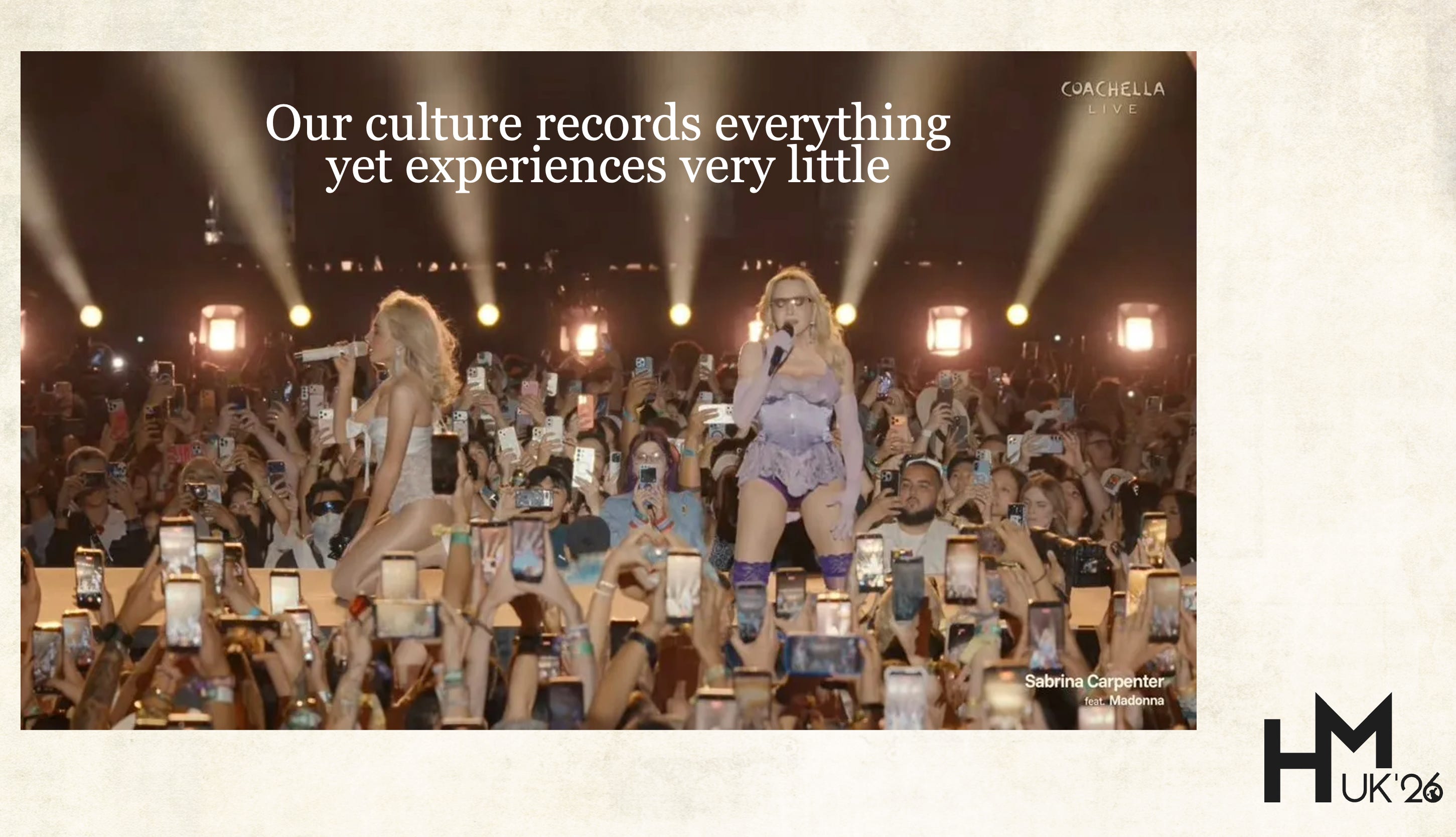
This isn’t just my story. This is our culture.
“Our culture records everything yet experiences very little”, as seen in crowds who film moments on their phones but often fail to inhabit those very moments.
“If you want to keep your memories, you just have to live them.” — Bob Dylan
Noticing isn’t just about looking more carefully. It’s about relating differently.
And this is what I’ve been realising also ... The problem isn’t just that we don’t notice. It’s also that we don’t always really know what we’re looking at.
Because noticing at its deepest level isn’t just observation. It’s the beginning of a relationship.

To name something is to begin to know it. Just as Adam named the animals, he created a deeper relationship with them.
In the book Laddie (Gene Stratton-Porter), the narrator realises he knows what birds and streams do but longs to know their names so he can understand and enjoy them more fully.
Attention is the beginning of relationship. Because when we give something our attention, we begin to know it more deeply.
Simone Weil said “attention is the rarest form of generosity”, meaning that to truly attend to something is an act of love.
We live in an attention economy. Our attention is worth more than oil. (Wish I could fill my car up woth attention!) Attention is a fossil fuel, non-renewable. Once you’ve spent it, it’s gone forever.
In a culture that constantly vies for our attention, learning to notice what matters becomes a spiritual practice.
Jesus invites anxious people to practise attention when he said “consider the lilies.” He was speaking to worried and fearful people and directing their gaze towards beauty so that they might remember God’s care.
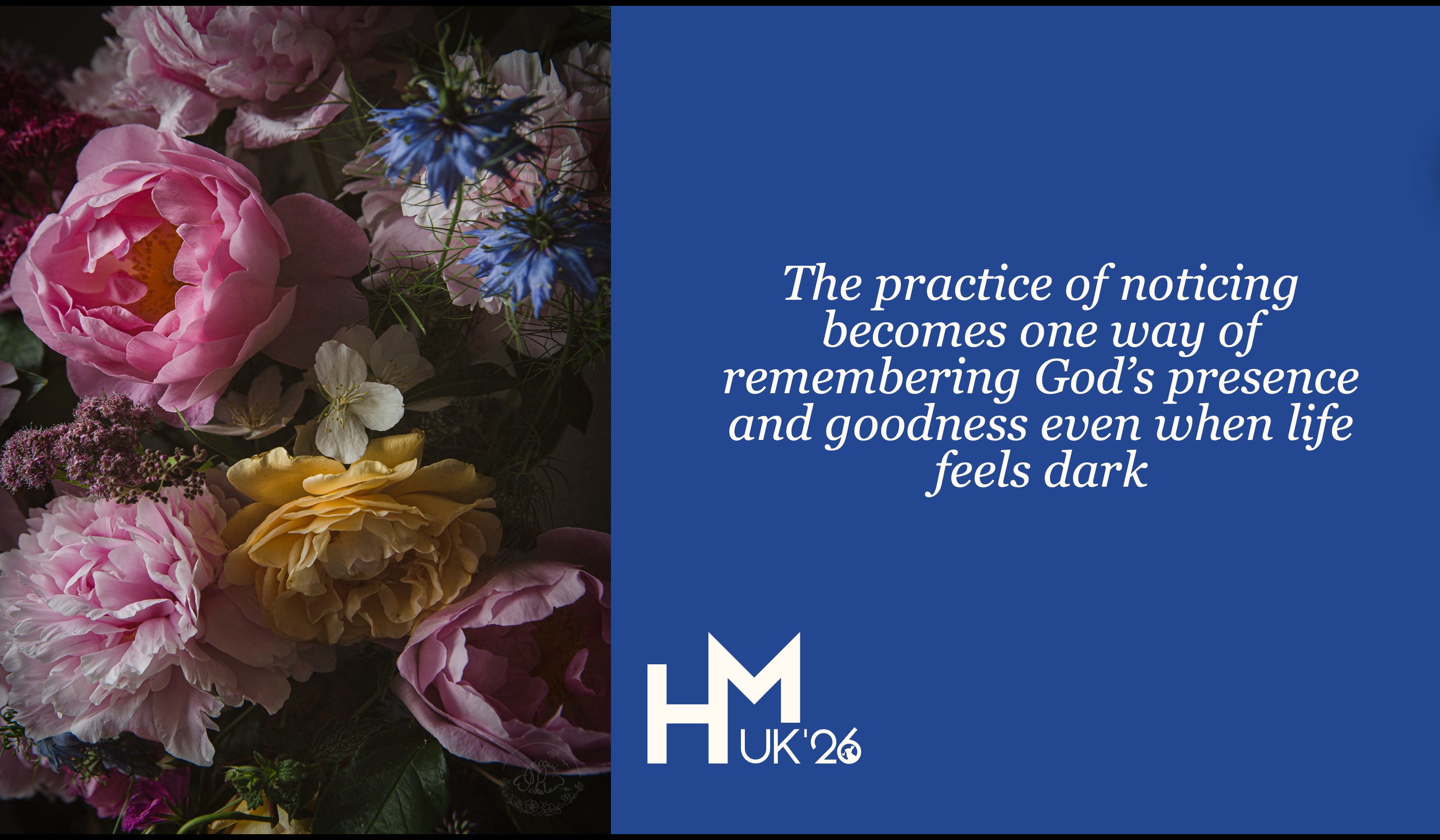
The Bible repeatedly calls for God’s people to remember, because human beings are remarkably quick to forget. The practice of noticing becomes one way of remembering God’s presence and goodness, even when life feels dark.
You might ask: “How can I see anything good or beautiful when I am surrounded by such darkness?”
But I would put it to you that if you can notice just one thing and hold your attention there, you will not be able to keep count of the new things you will begin to notice. You will not be able to keep up with God.
This is something we can practise.
As Brother Lawrence modelled, we can practise the presence of God.
* Apologies, I references the wrong brother in the audio, both great brothers!
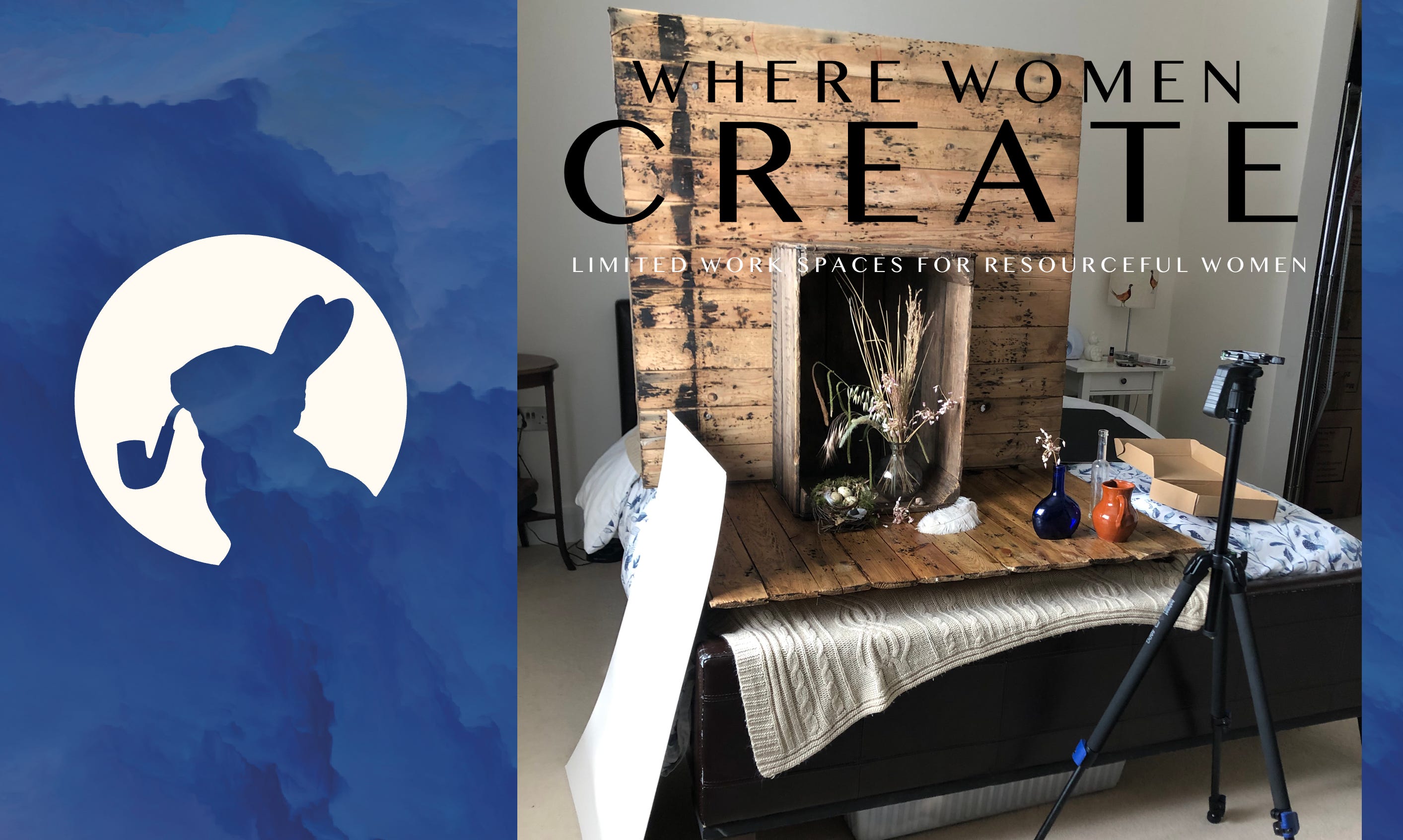
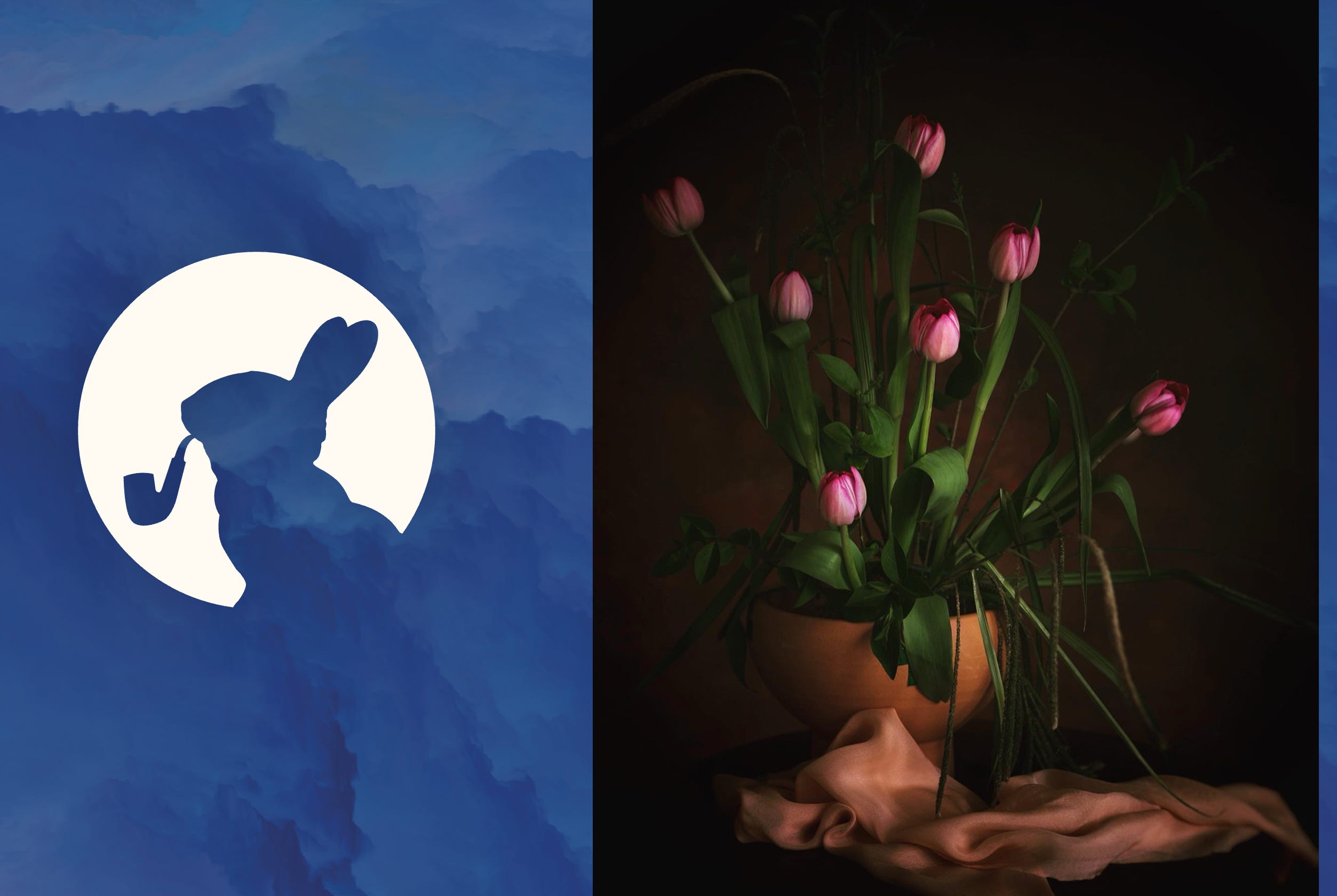
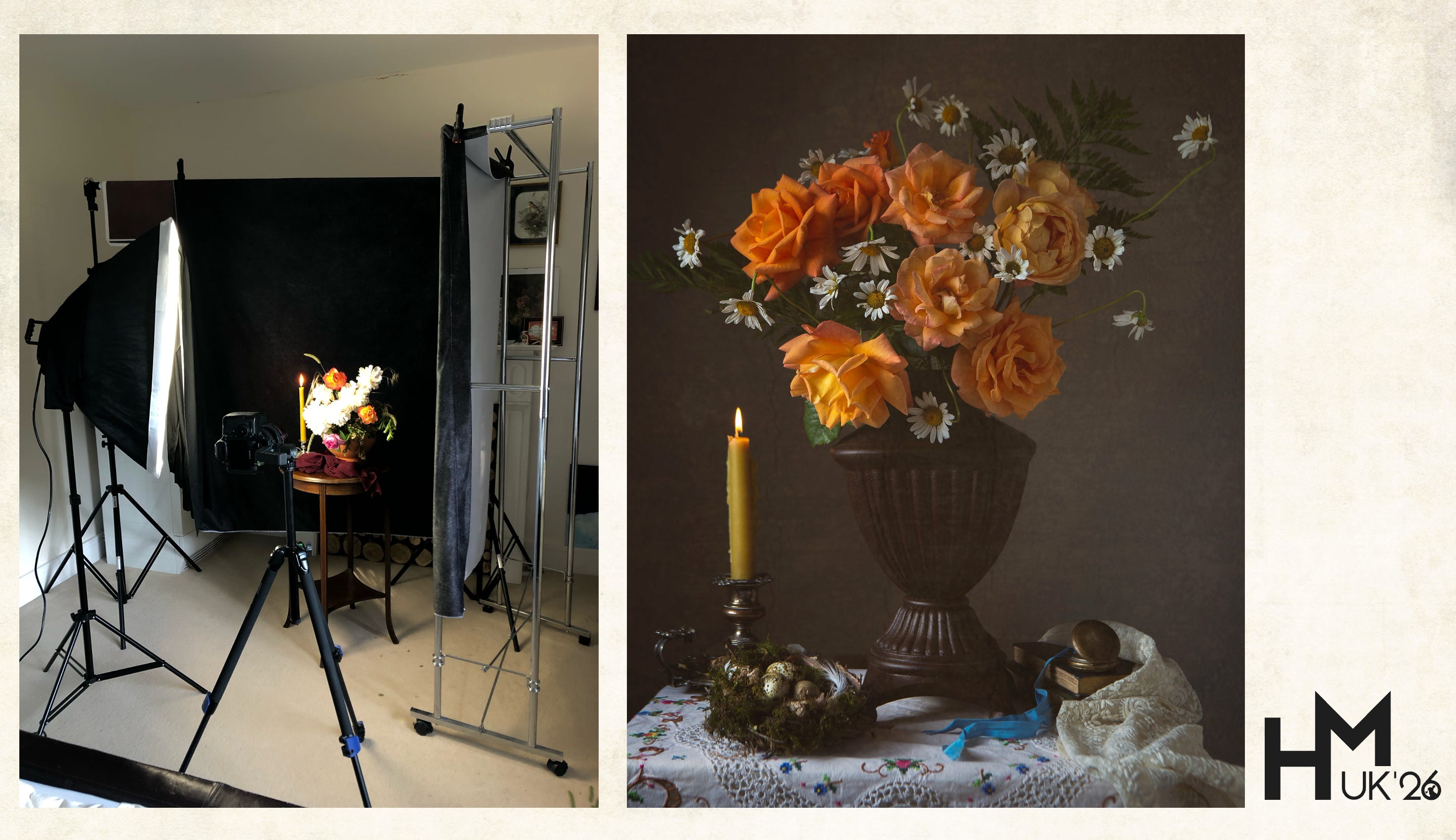
This way of seeing began to shape what I created. Born in lockdown, I sought a beauty and stillness my anxious heart craved. I began to shoot still life compositions.
During the Covid lockdown my still life photography grew from a desire to bring a small piece of beauty and light into people’s homes. I created the Beagle for Beauty. Photography slowly became less about capturing moments and more about learning to pay attention and inviting others into stillness.
Art at its best is not simply something to consume but an invitation into contemplation.
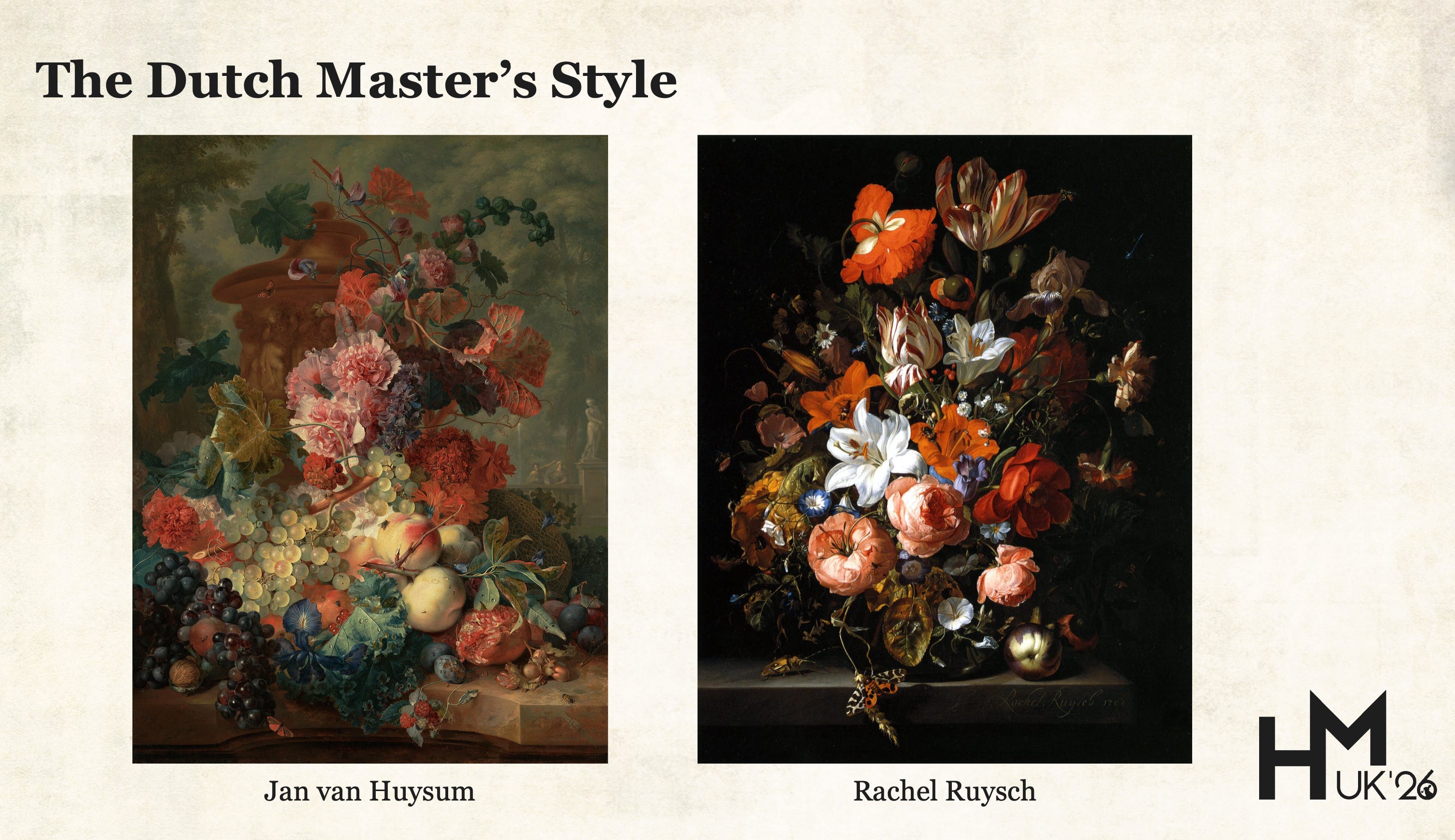
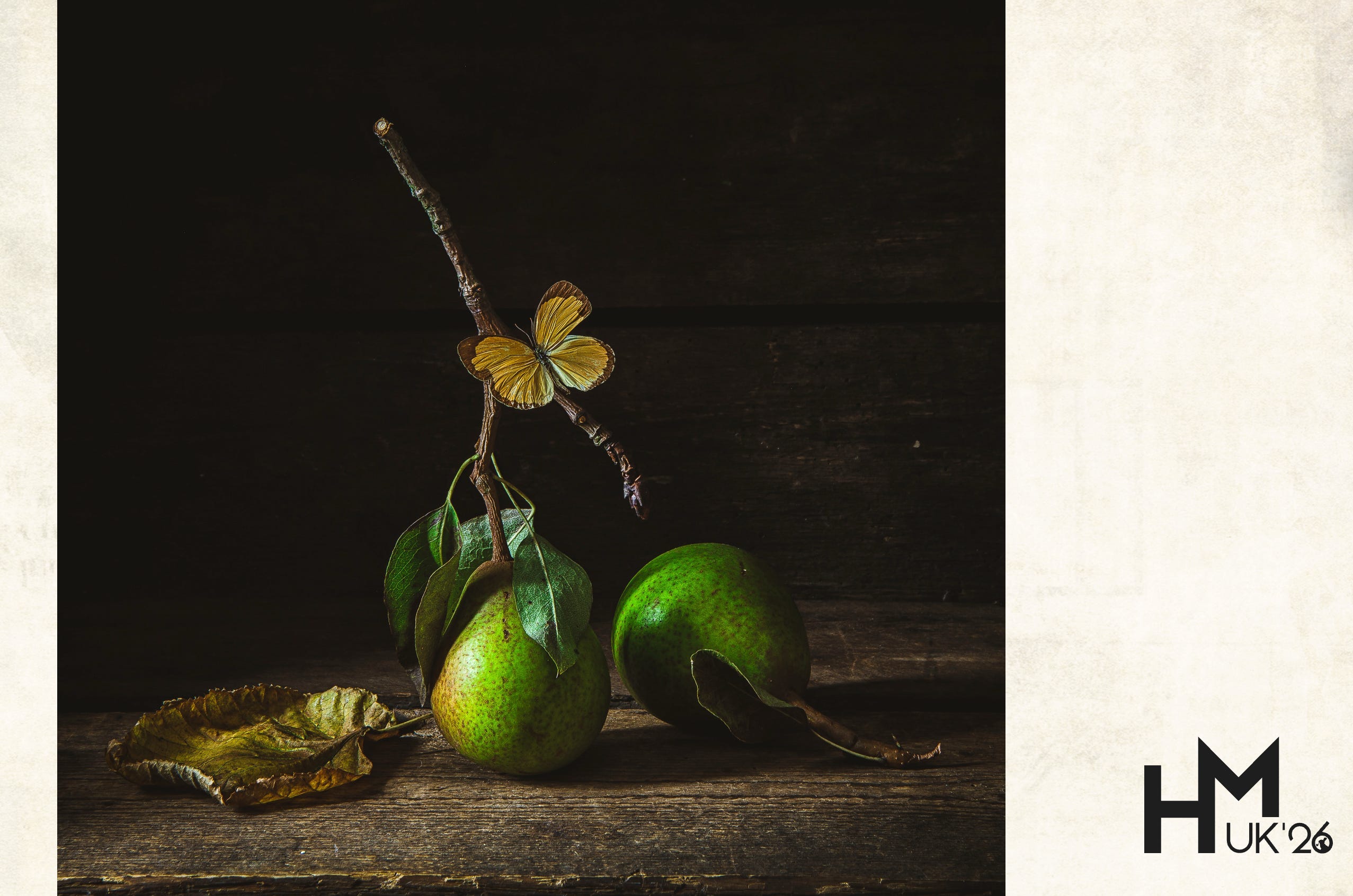
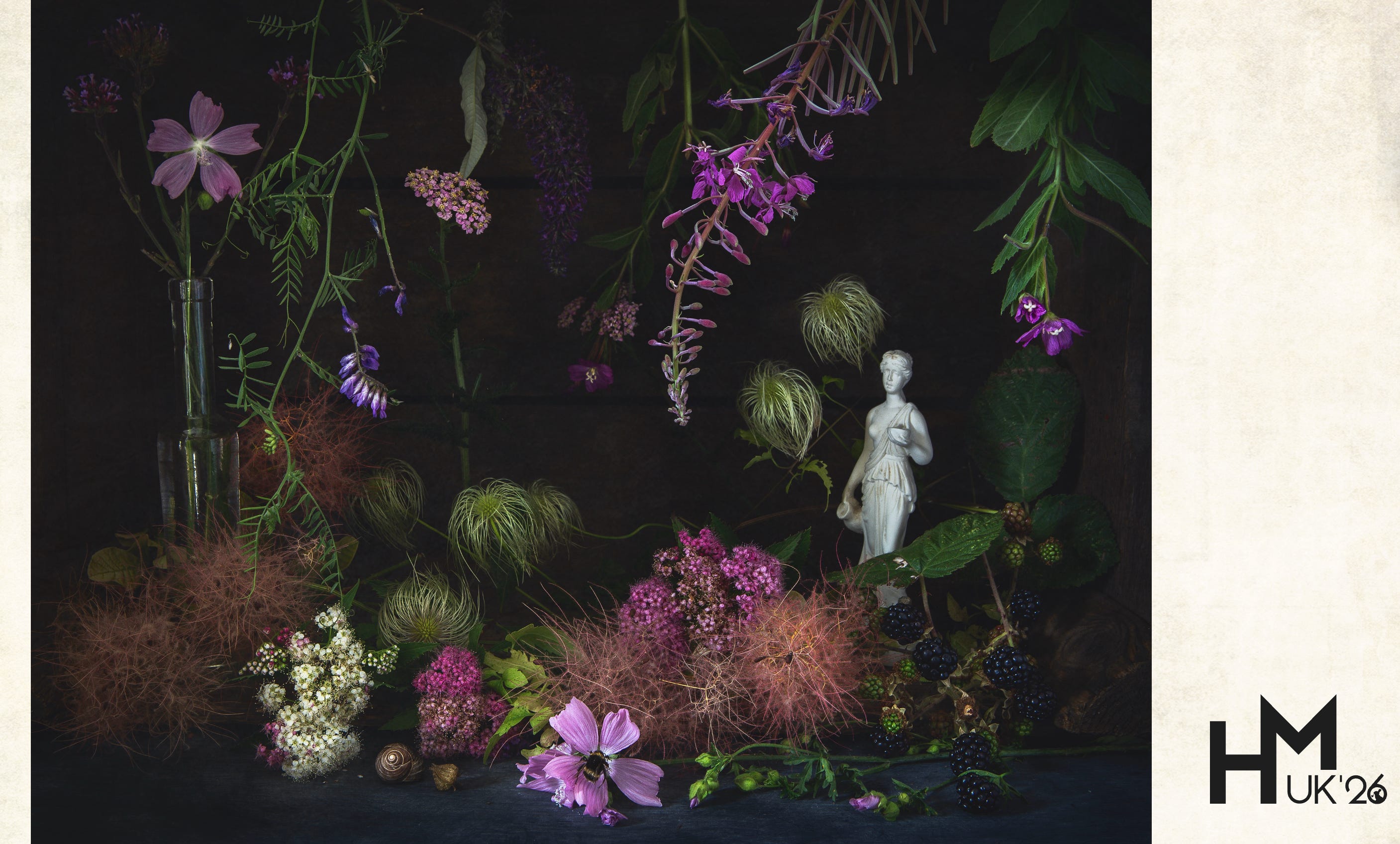
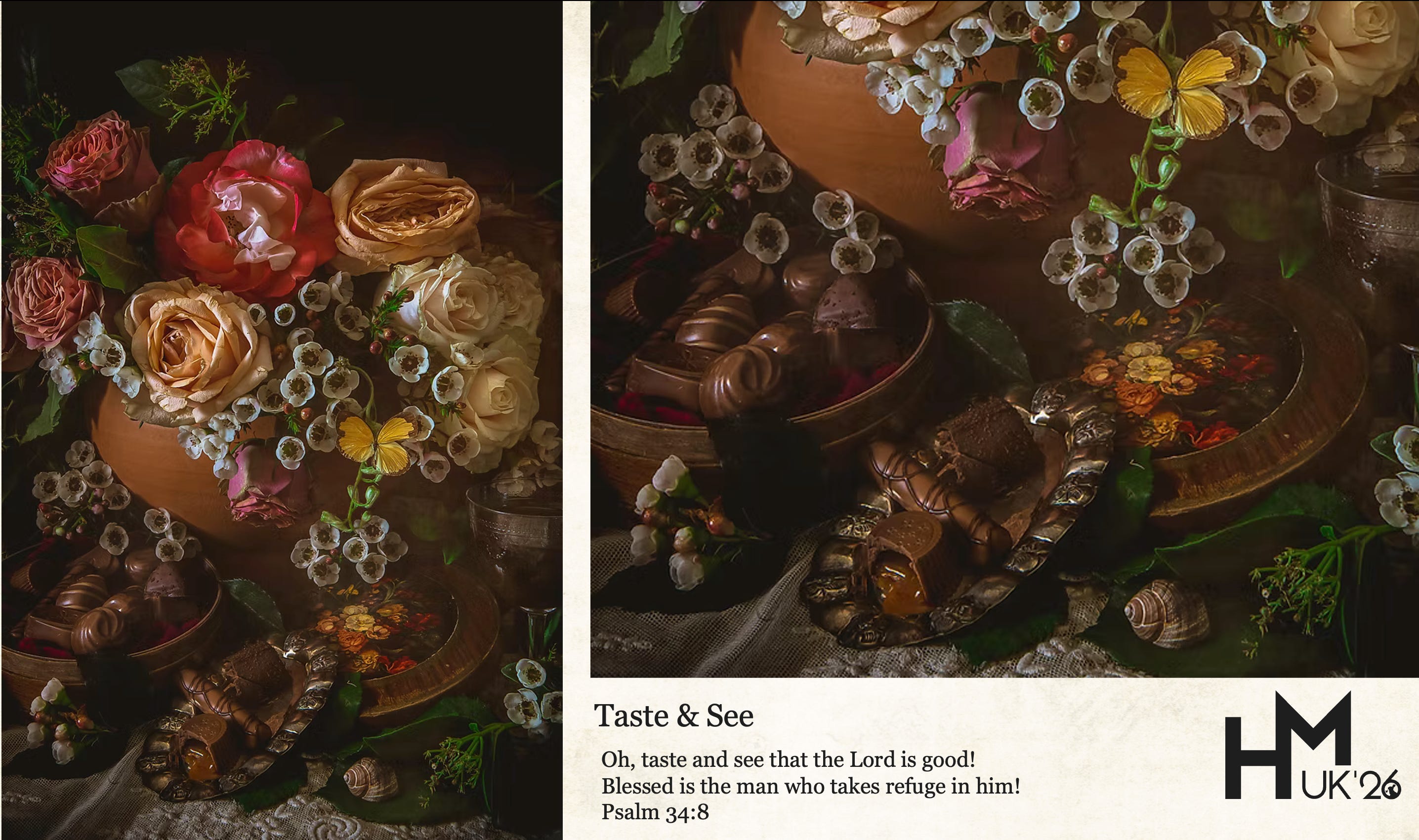
I was inspired by the Dutch Masters style, drawn by the contrast of light and darkness, vibrant colour, skulls, creatures, its symbolisms. Jan van Huysum. Rachel Ruysch.
Memento Mori “Remember that you have to die.”
My photography became about paying attention. About detail. Stillness. Lilias Trotter, speaking of the 42 drops of dew on the blade of grass observed, “how still it had to stand to hold its weight of glory.”
How the presence of shadow made the things of light stand out.
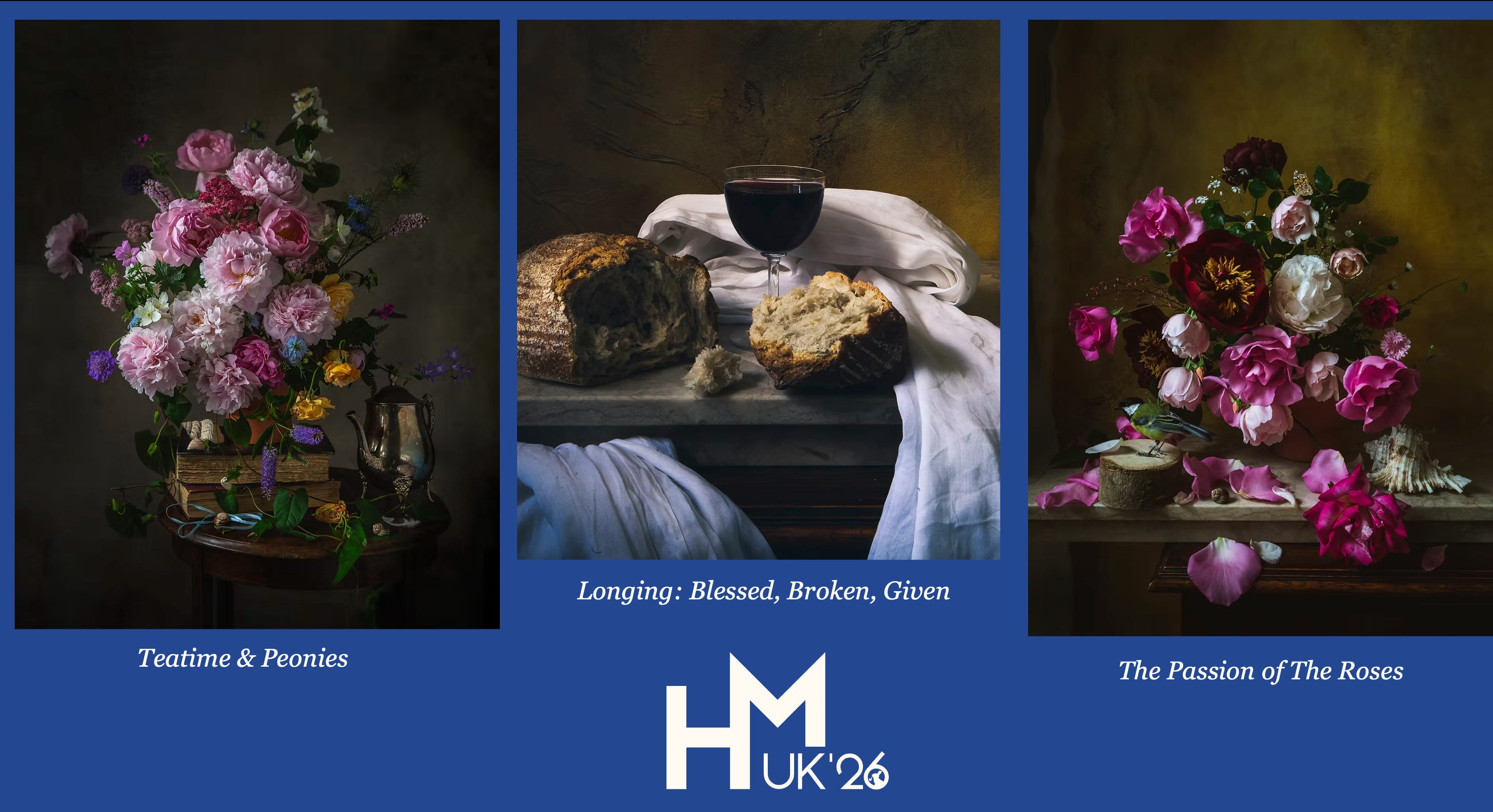
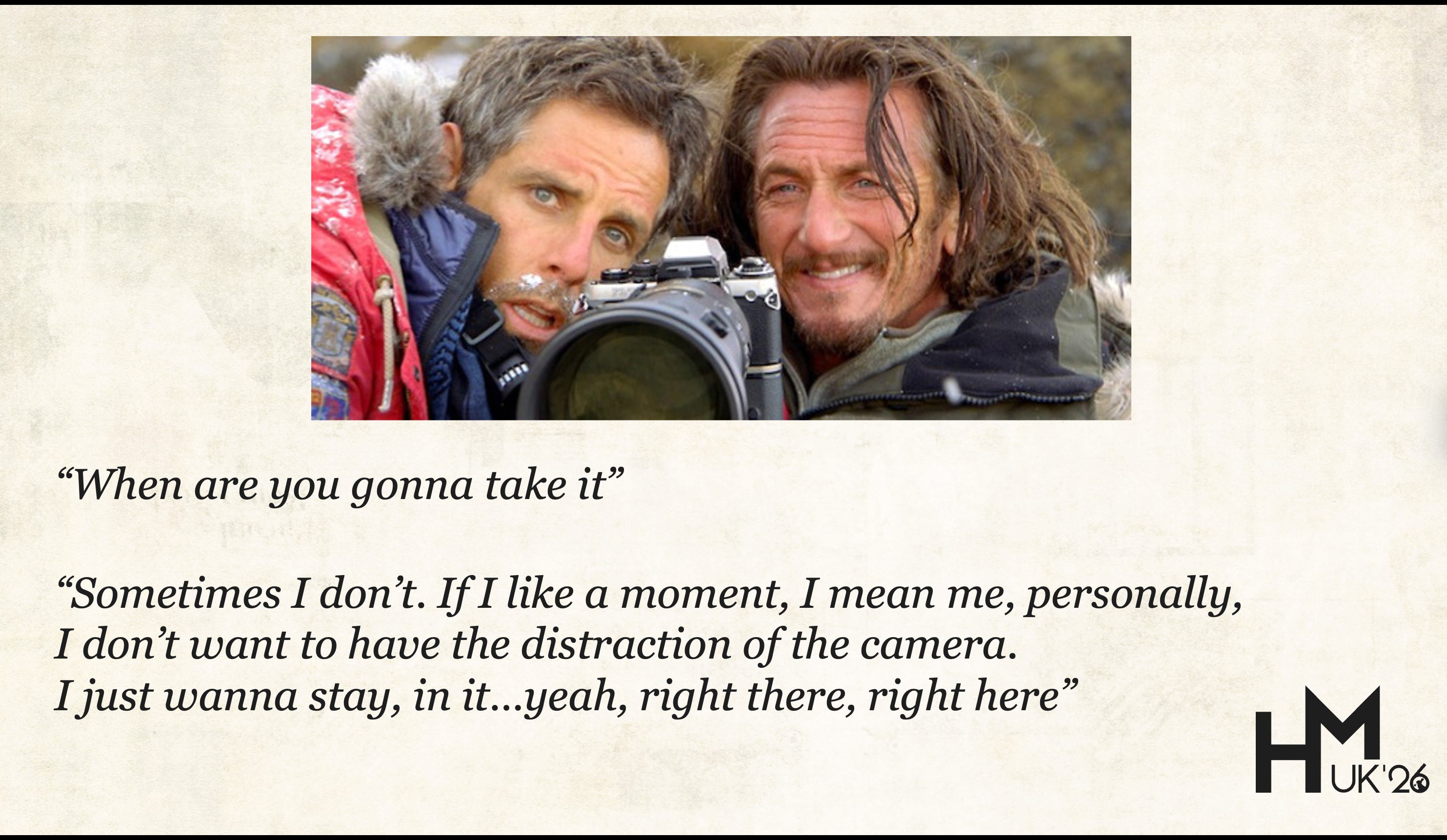
In The Secret Life of Walter Mitty, the photographer chooses not to take a photograph of the snow leopard because sometimes the moment itself is enough.
The problem is not photography itself but the posture we bring to it.
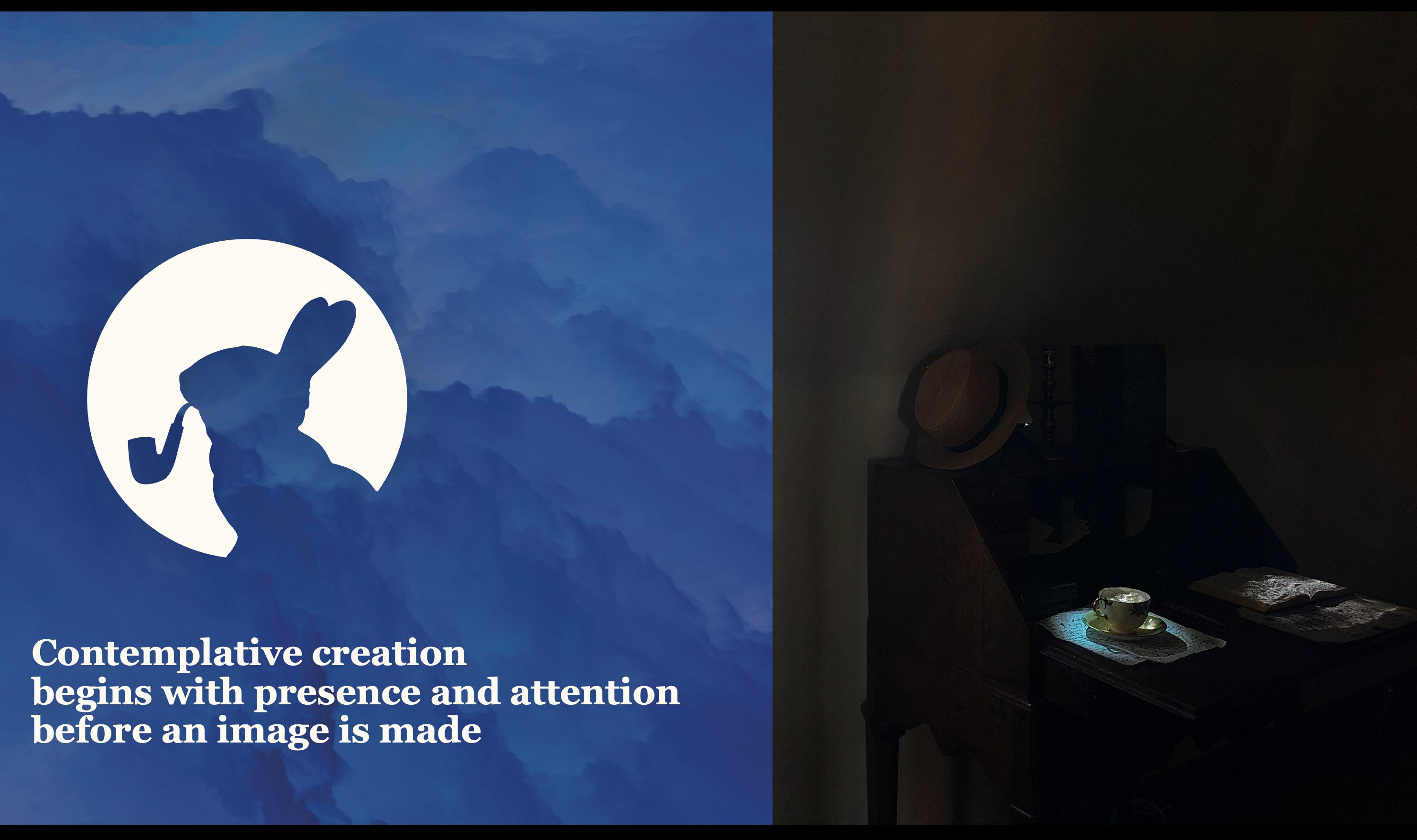
Beauty can be approached through consumption, through possession disguised as preservation, or through contemplative creation. Contemplative creation begins with presence and attention before any image is made.
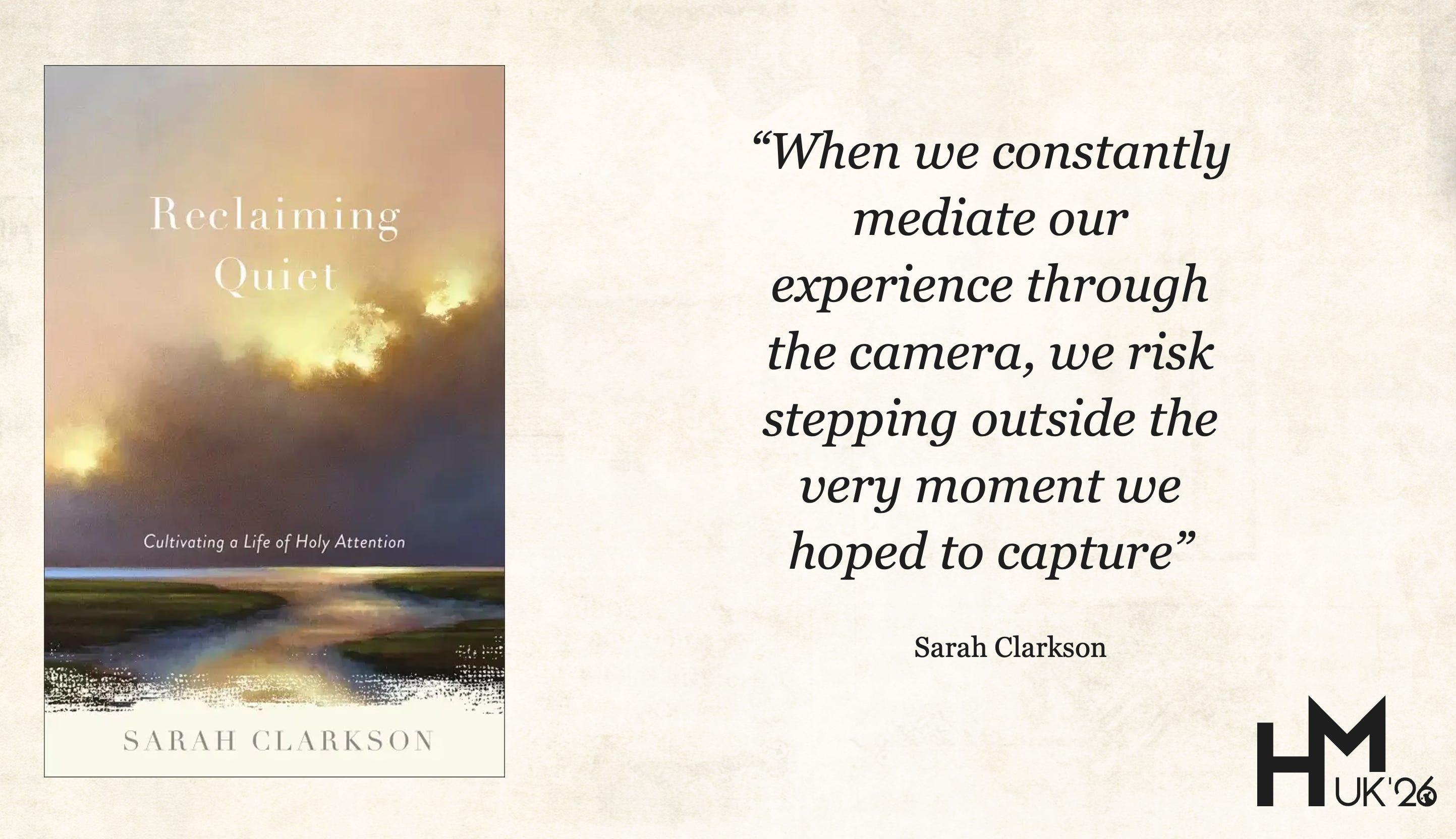
Sarah Clarkson writes that when we constantly mediate our experience through the camera we risk stepping outside the very moment we hoped to capture.
I have to be careful not to do this with my own work.
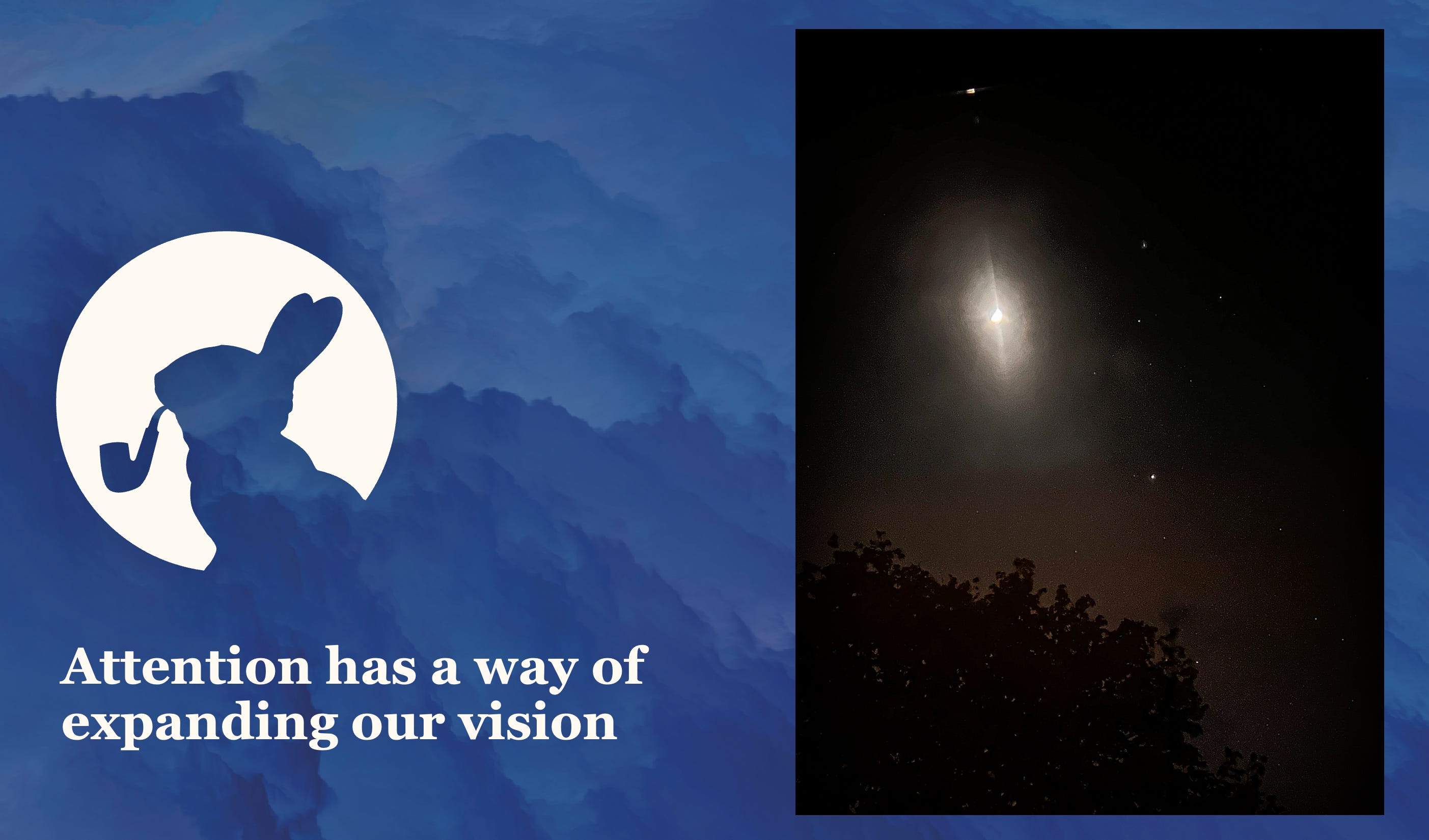
Attention has a way of expanding our vision.
When I photographed the moon recently, it was the only light I saw. But soon, the surrounding stars appeared, and because of the long exposure even more stars were revealed. The longer I paid attention, the more I could see. I could barely keep up.
Christina Koch, an astronaut who recently returned from orbit around the moon said that what struck her most was the glowing beauty of the Earth because it was surrounded by so much blackness.
Light is most visible when it is held within darkness. Darkness actually sharpens our awareness of light. There are some things we only notice when the world grows quiet enough for us to see them.
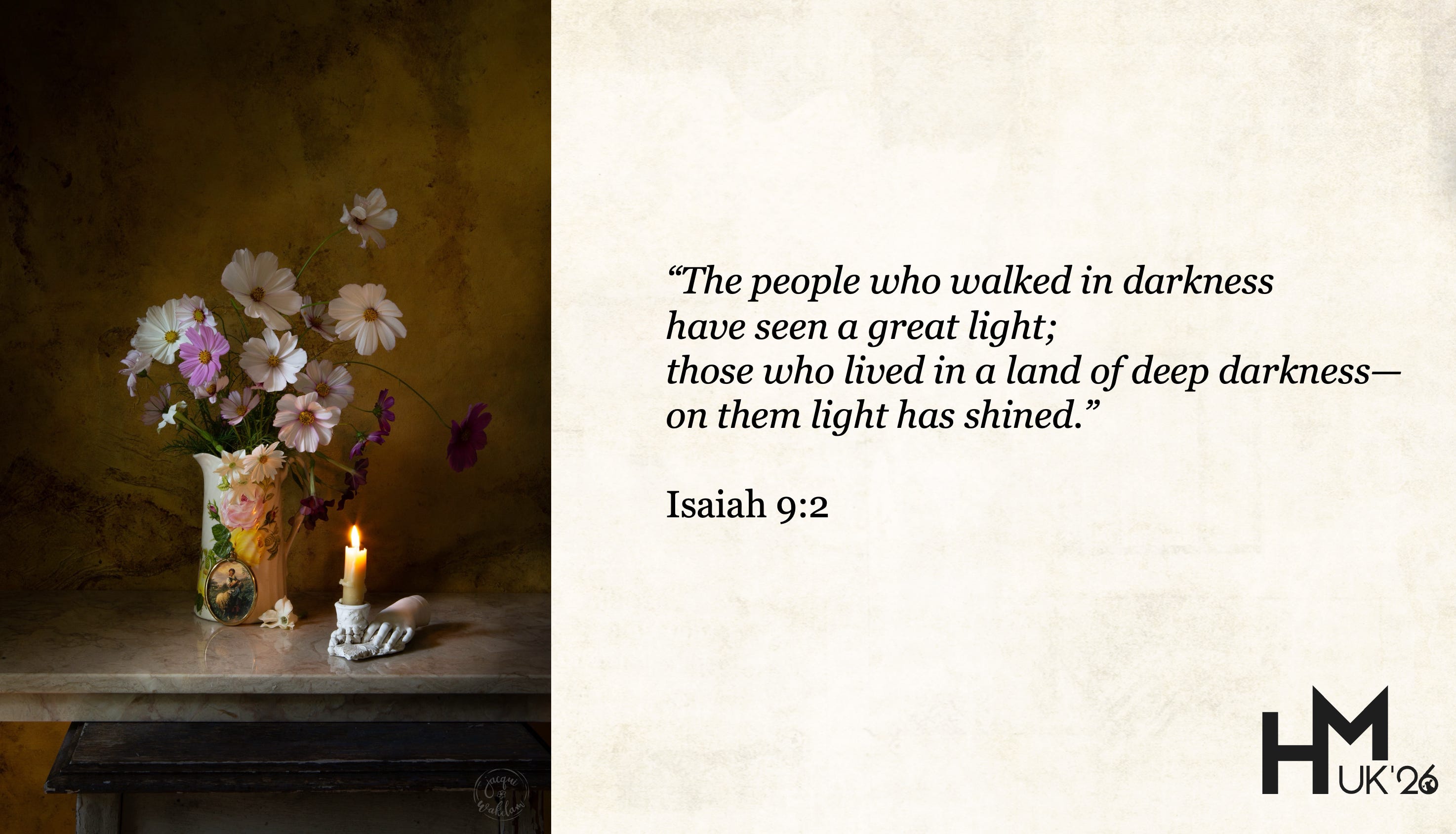
The light is there if we will give our attention to it.
The practice of noticing trains our eyes to look for light, colour, pattern, what we might call the fingerprints of God.
NOTICING WALK
In the workshop, we took a noticing walk. Alone or in pairs, but without talking. Naming things we saw. Sitting somewhere and listening. Letting Mary Oliver’s instruction be the guide: “Walk slowly, bow often.”
You can do this wherever you are. It can even be indoors.
When we returned and shared what we had seen, we often discovered that beauty was present all along.
The invitation is not simply to take photographs but to practice seeing.
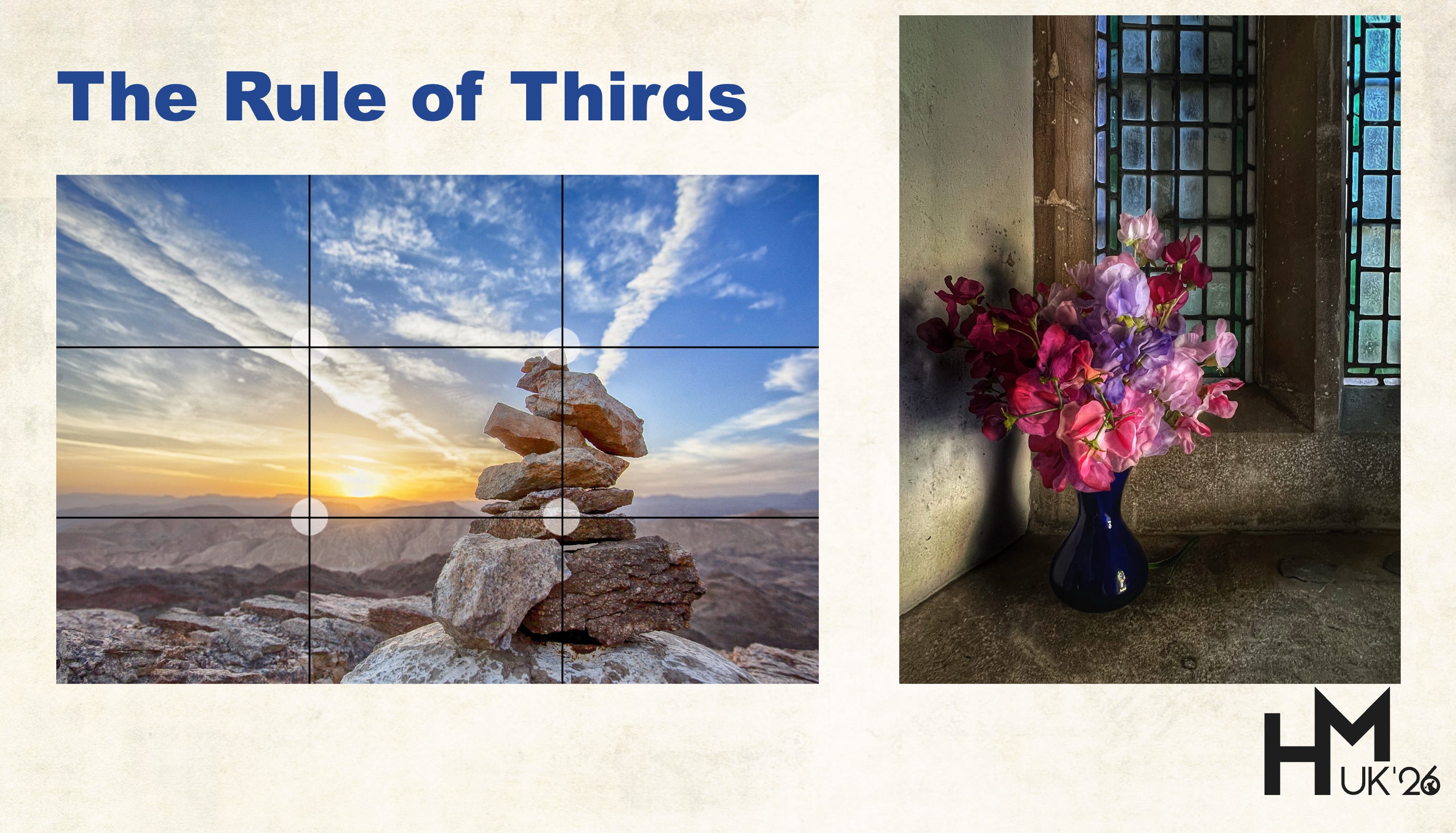
When you’re ready to think about how you frame what you see, here are a few tools worth knowing.
— Divide your frame into a grid of nine and place your subject along the lines rather than dead centre. Where the lines cross are your ‘power points’, it’s where the eye is naturally drawn. Try to place your subject, the thing you want to notice, on one of these intersections.
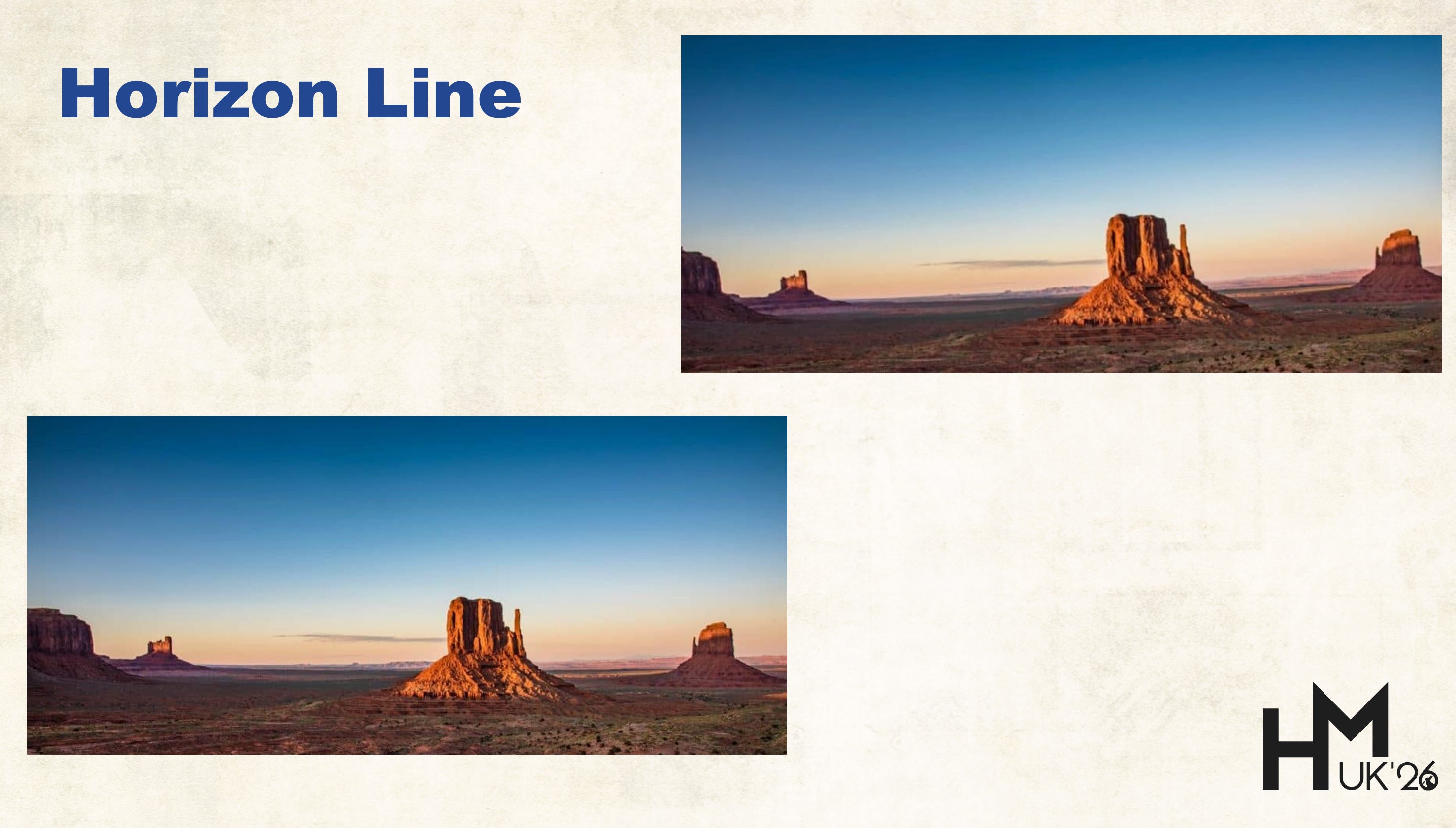
— Where you place the horizon changes everything about what a photograph feels like. Try and keep your horizon line’s straight, this little tip make s a big difference.
— get closer than you think you need to. Let the subject dominate.
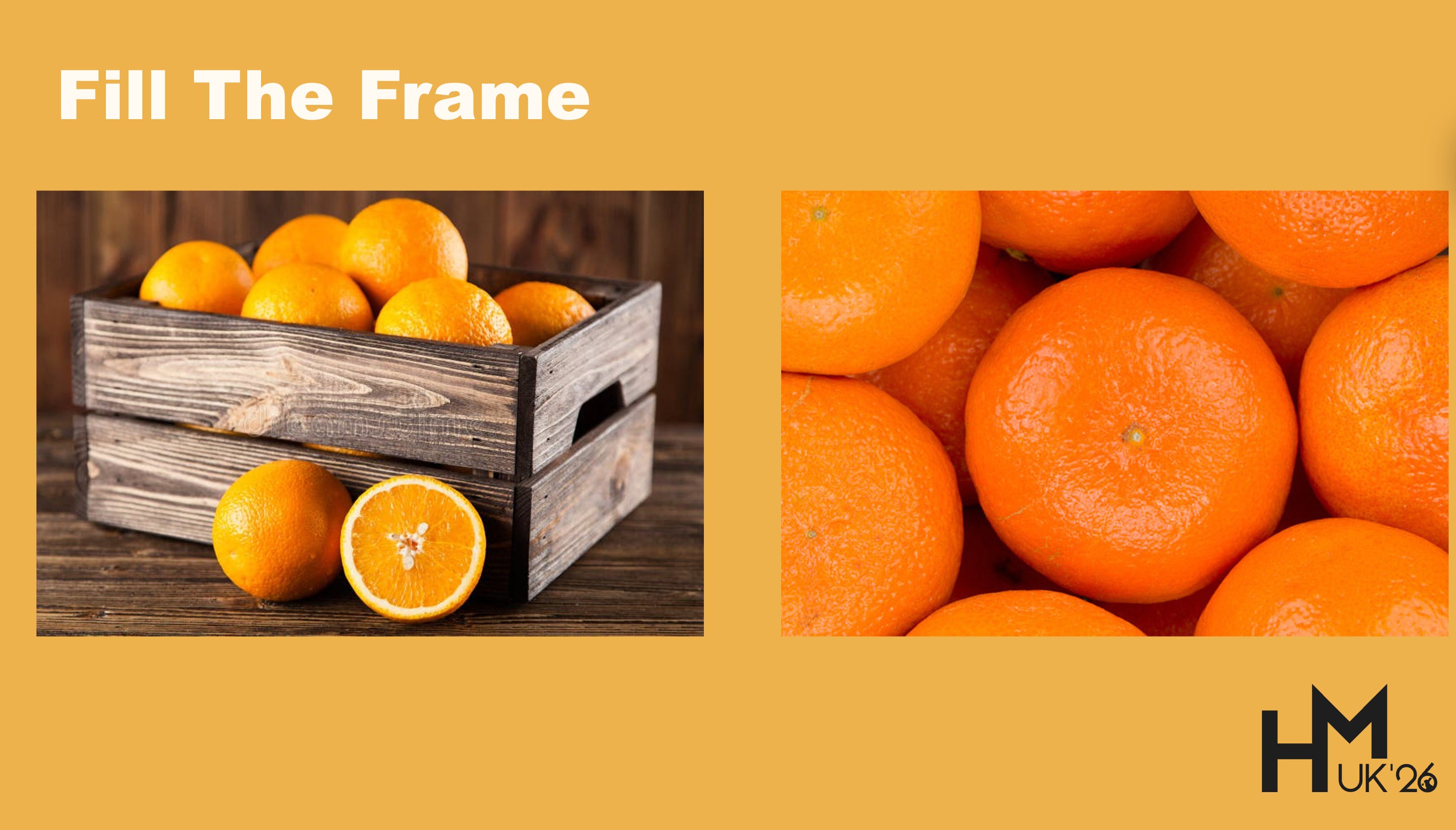
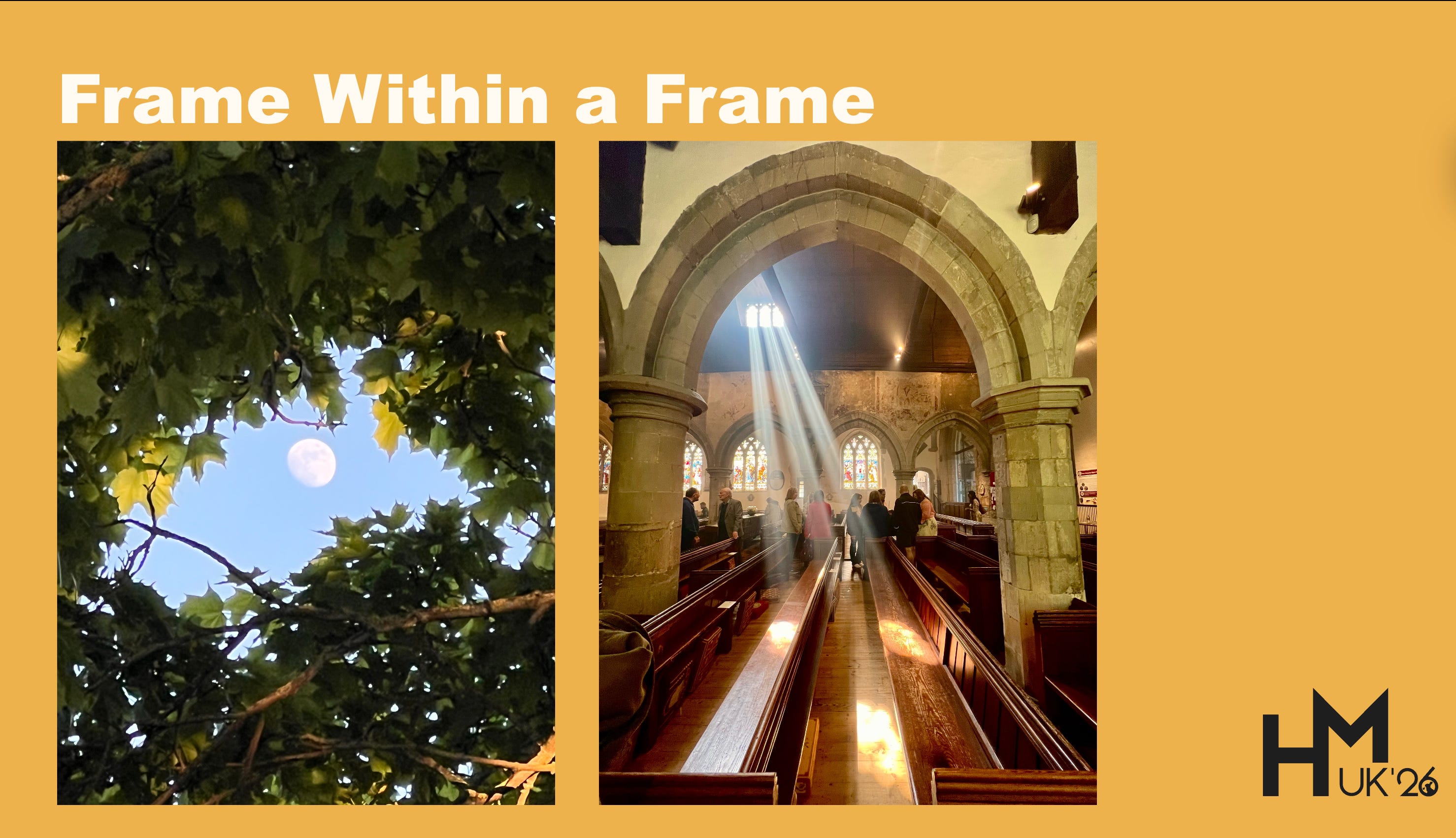
— use doorways, windows, branches, archways to create a natural frame inside your frame.
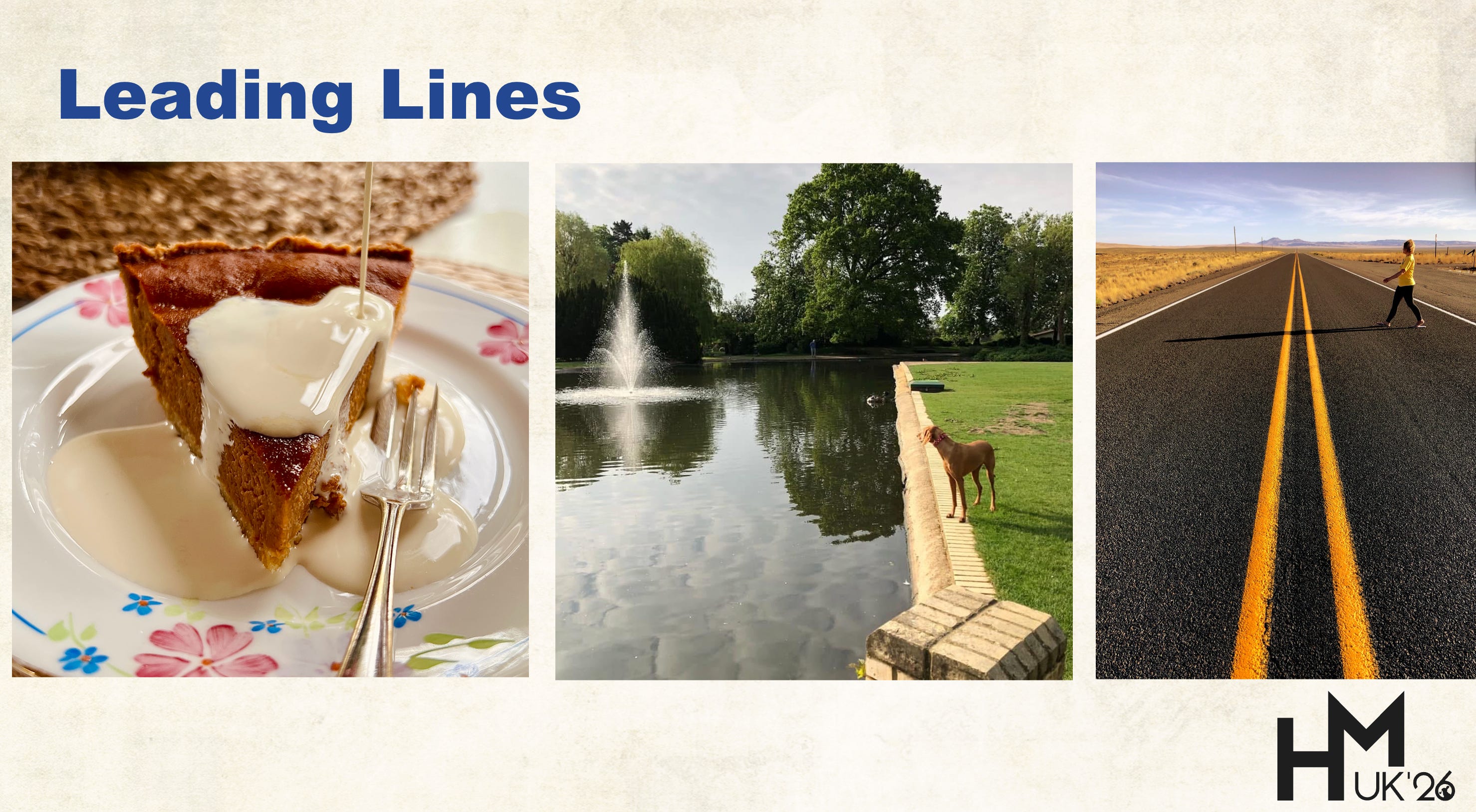
— roads, walls, paths, rivers draw the eye through an image. Use them intentionally.
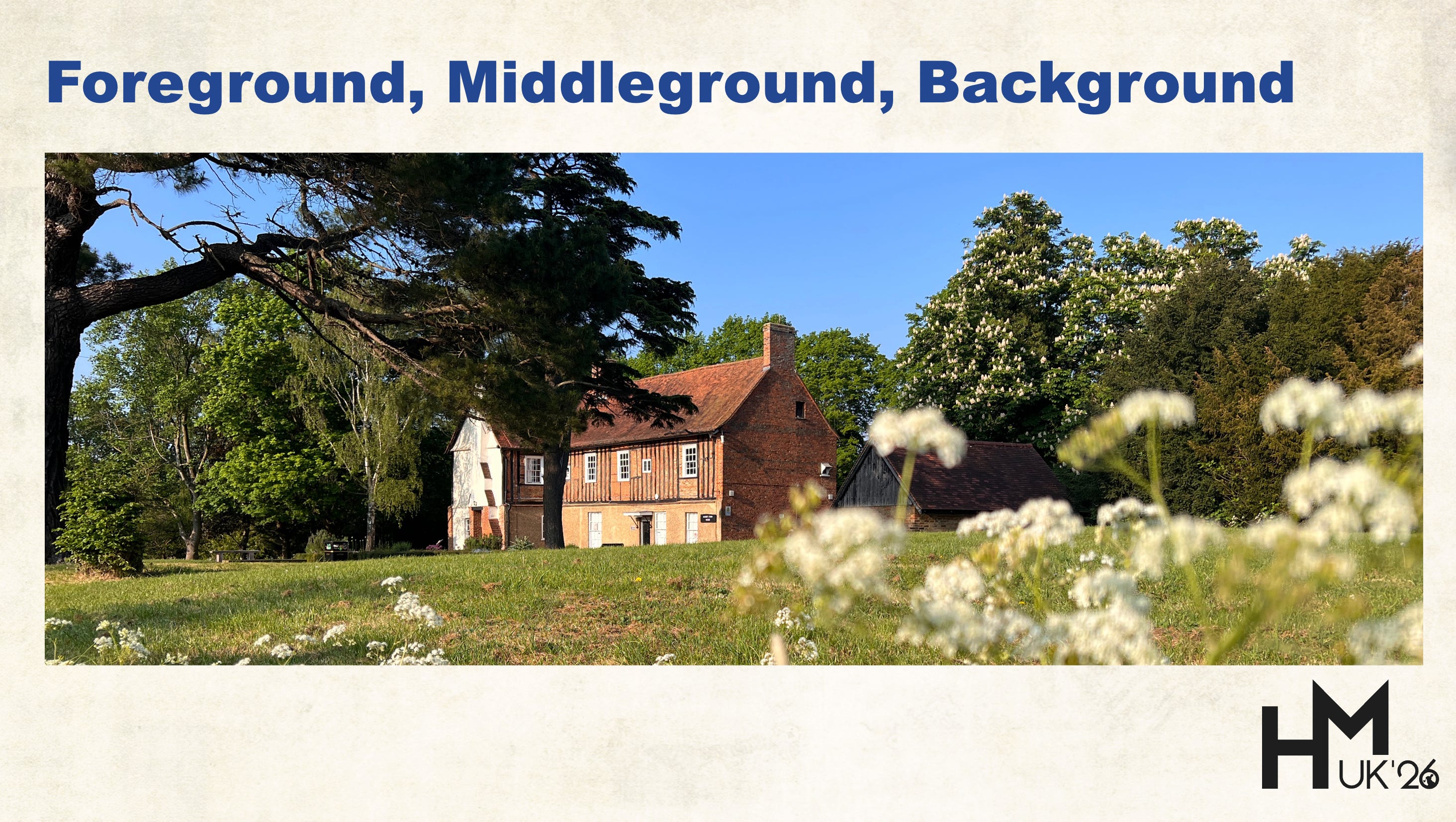
— Landscapes land more dynamically when you have these three aspects. Always try to find something to go in your foreground, it helps give the image scope.
This super fun grid was created by Simone, one of my workshop attendees. These are so incredibly easy to do, I was genuinely amazed at all Simone managed to find around the Huthcmoot venue. Can you guess Simone’s theme?
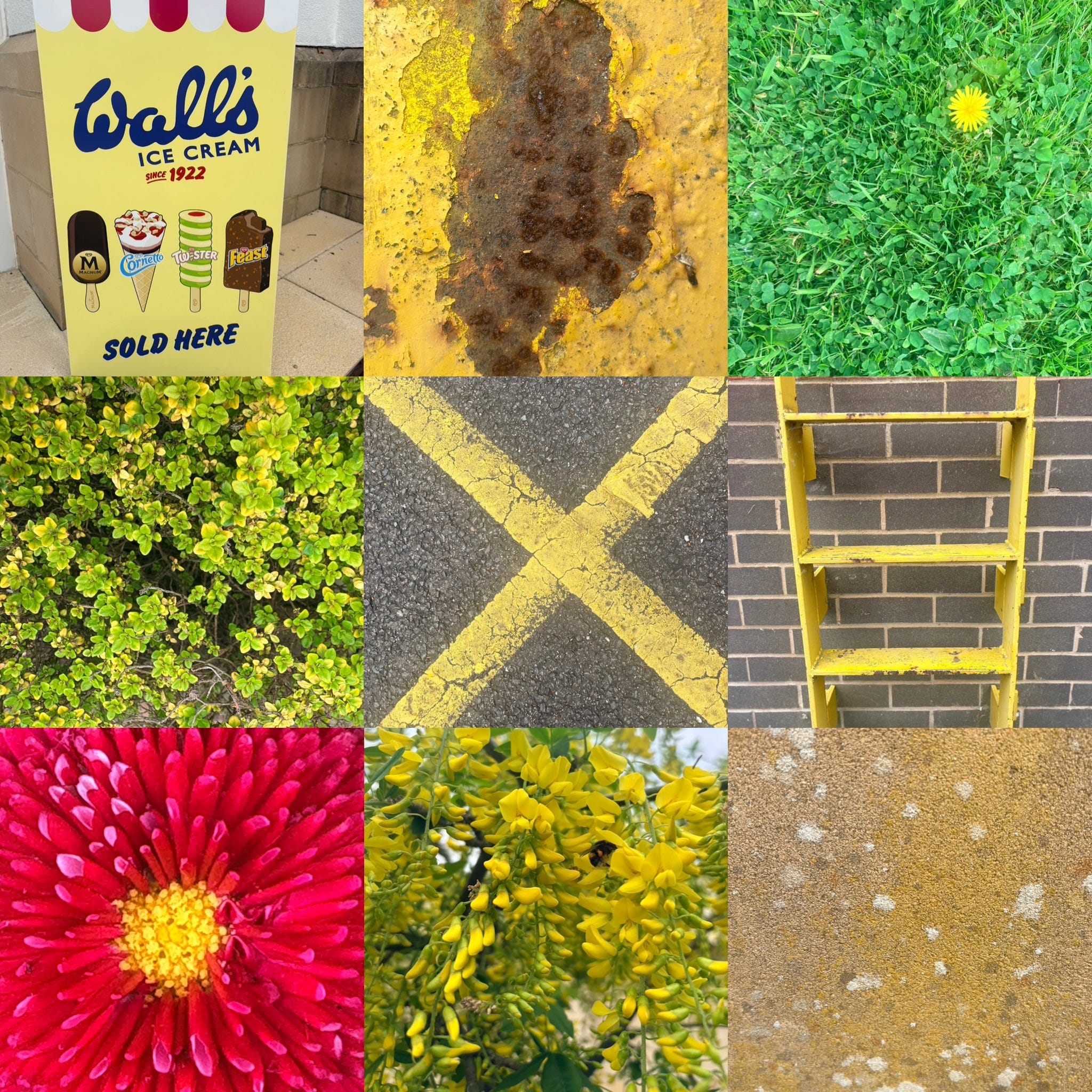
These grids are fun for a noticing walk, to give you a little focus for seeing those details. Why not choose one for yourself, maybe go with a friend. You can pick a colour, textures, shadows, light, reflections, anything! Here’s one I did for Blue from my high street.
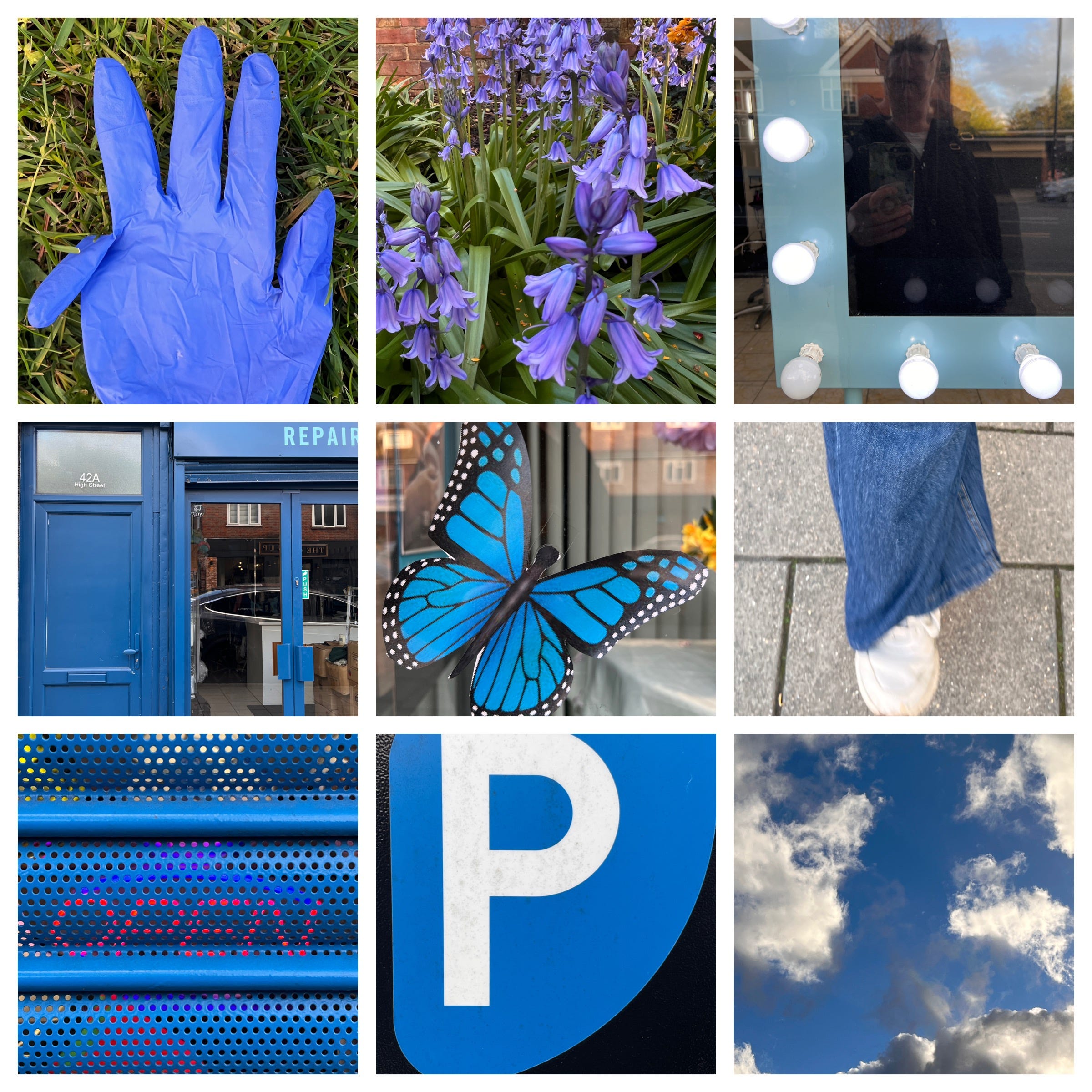
What did you notice today? What surprised you? Did anything become more beautiful the longer you looked at it? Did anything interrupt your thoughts?
What do your current photos tell you about yourself? What does paying attention awaken in us that distraction numbs? How did naming something change the way you saw it?
What if attention can become a form of prayer or spiritual practice? How might noticing reshape the way we see people, not just objects? Is it possible that beauty is not frivolous, or escapism, but resilience?
What do you hope to notice differently when you return home?
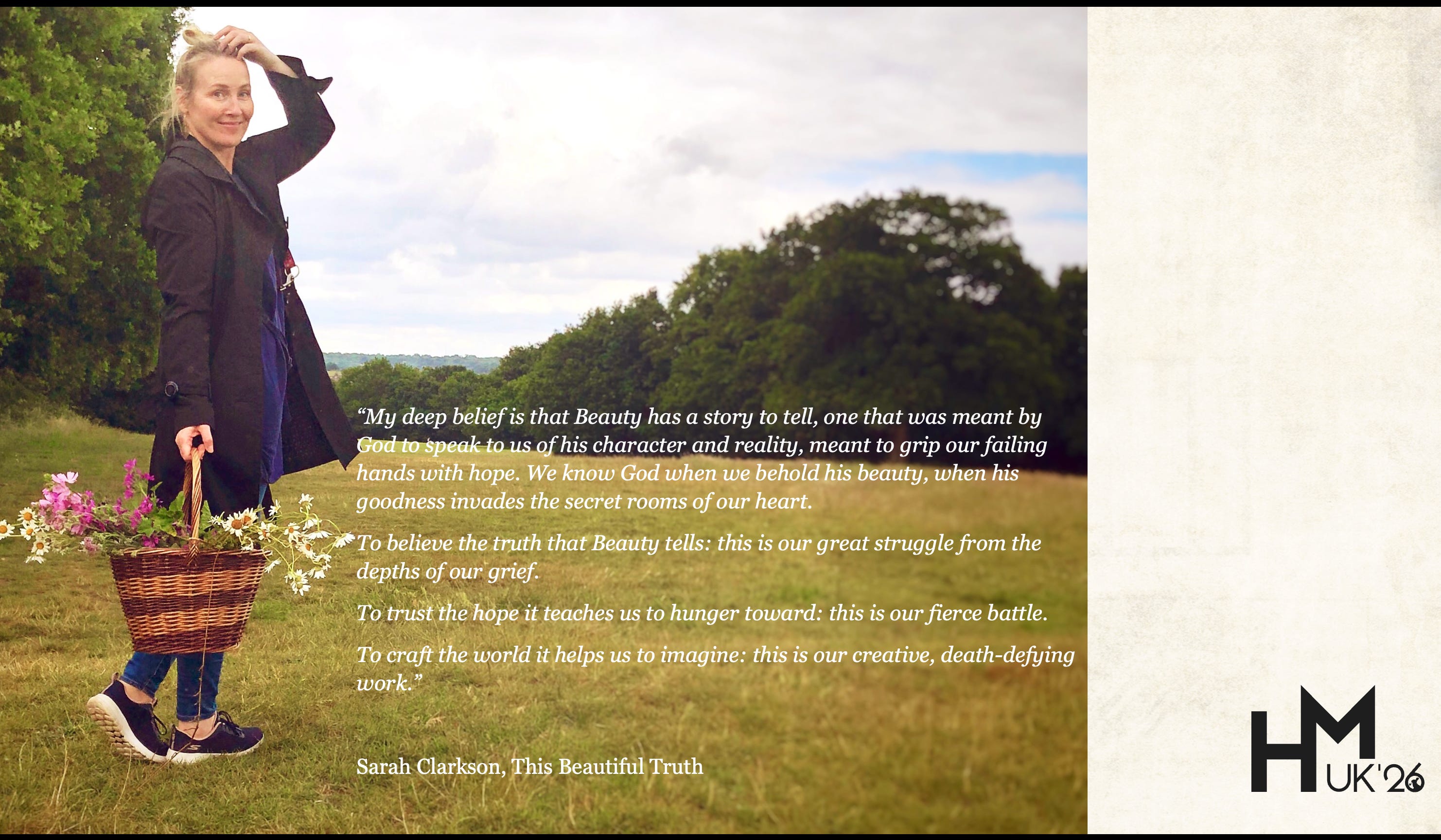
This is our death defying work.
Walk slowly, bow often. Take, create and curate a beautiful album that brings you joyful memories. Print your images!
Because a poor life indeed would be one in which, full of care, we never made time to stand and stare.
Jacqui
Comments
Nothing yet. Say the first thing.
Sign in to join the conversation.