
Whether you are a tourist or a lifelong Pittsburgh resident, one of the largest issues in District 9 is easily visible on a quick drive through Homewood: the vast array of vacant abandoned properties. On each block, only about a quarter of the housing is occupied or maintained, with many lots lying empty. Not only does it hurt the quality of life for the neighbors and look bad, but it also has adverse impacts, even beyond the neighborhood's bounds. The concentration of vacant and tax-delinquent properties in Pittsburgh’s District 9, particularly in Homewood, creates a self-reinforcing cycle of disinvestment that weakens city finances, depresses property values, and destabilizes community life, requiring targeted public intervention to break it.
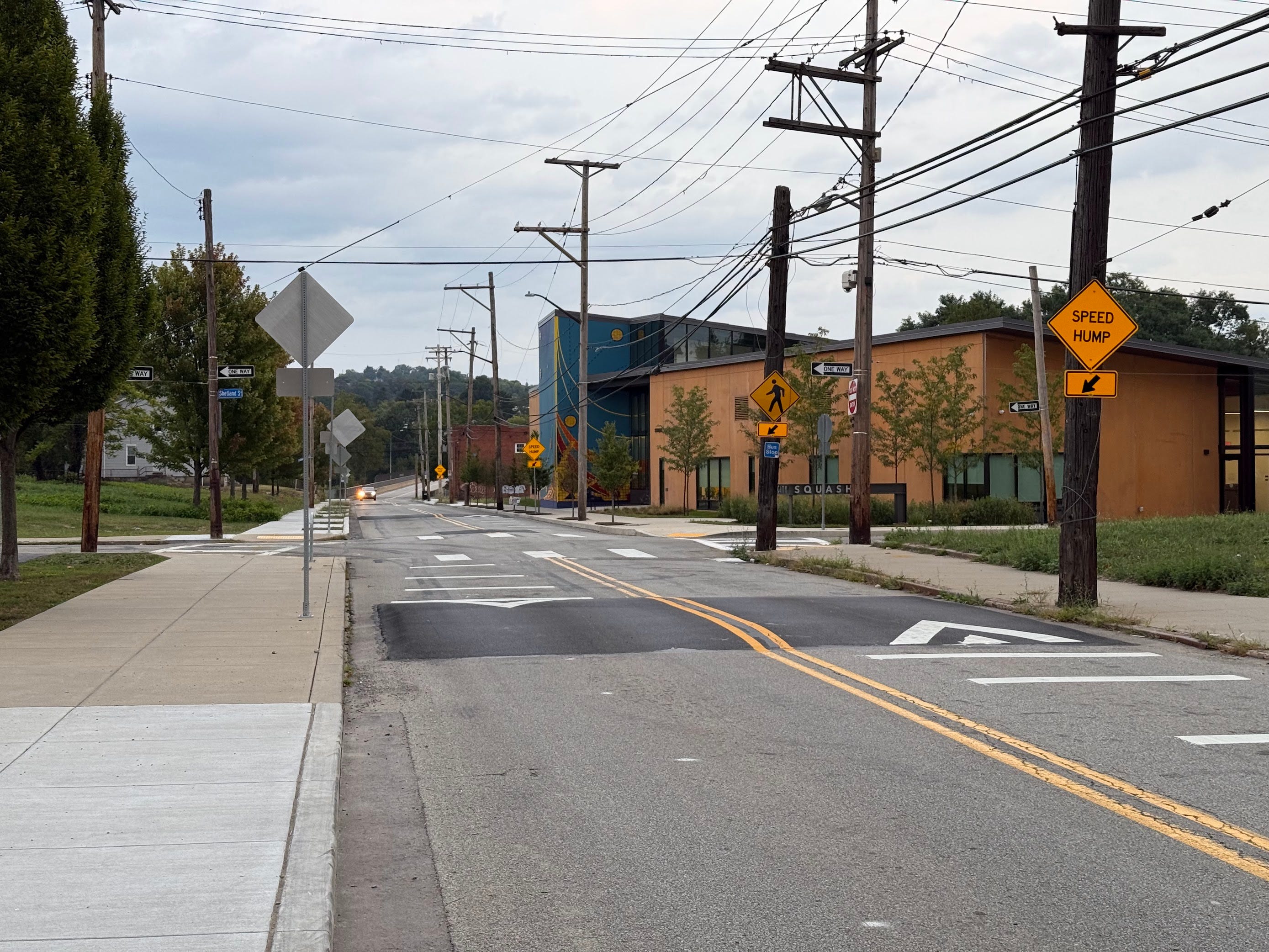
As some background, Homewood, along with the other neighborhoods of D9, is suffering the consequences of their past stained by redlining and white flight. At one point, East Liberty and Homewood were some of Pittsburgh’s wealthiest neighborhoods, founded by names you hear in Pittsburgh regularly, Wilkens, Negley, and Carnegie. However, over time, the wealthy moved further out of the city into more suburban neighborhoods like Highland Park, Squirrel Hill, and further out because of the democratization of the former neighborhoods. When they left, their land was subdivided and sold to new immigrants of various origins. Even then, it was an escape from Pittsburgh’s smokey downtown and Monongahela Valley. These German, Italian and Scots-Irish immigrants came to Homewood and East Liberty for the flatter land and access to the Pennsylvania Railroad. Around the same time, an African-American population moved into the neighborhood because of the same affordable housing that the white immigrants took advantage of. The neighborhood stood as one of Pittsburgh’s only mixed neighborhoods during the first quarter of the 20th century; however, once banks began the process of redlining around the country, Pittsburgh’s East End was further segregated. White residents who have been able to rise economically moved out to the suburbs, and few remained, making Homewood a vast majority black neighborhood. The status as a redlined neighborhood removed any opportunity for Homewood to move up and improve, creating a cycle of disinvestment that stands to this day.
While properties across the East End and Hill District lay abandoned, they can come to that state in a long list of ways. In a very common example, a lower-income family heir inherits the land of their parent; however, due to the lack of tax payments, decide to just abandon it, leaving the tax debt on the property. Especially in the second half of the 20th century, property values in Pittsburgh’s black neighborhoods were falling so fast that they were lower than the tax delinquency, making them a terrible investment prospect for any developer. When foreclosed, a house transfers the tax and utility debt to the new buyer, so even when sold at a very low cost, it would not be worth it for almost all buyers. Many of these properties became financially toxic assets. Even though property values for each property are relatively low, when each property lays abandoned, the tax delinquency adds up over time. Based on the map below, which visualizes data from the County, the highest concentration of unpaid taxes lies in District 9. Homewood is a particular victim of this because the amount of taxes owed on many of these properties outweighs the property value, making a potential purchaser end up buying more debt than the property is worth. The biggest issue here is that vacancy and tax delinquency reinforce each other, continuing the disinvestment cycle that redlining started years before.
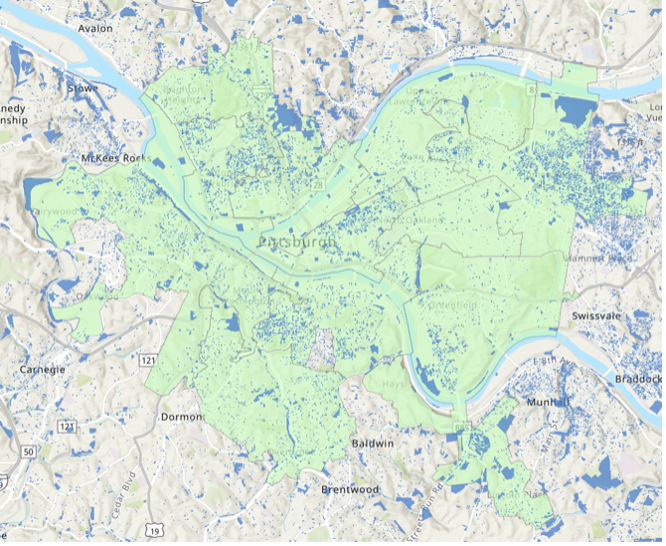
While a single delinquency may not be breaking a city budget, a neighborhood full of delinquencies accumulated over decades, can provide a major burden for a budget, especially for a mid-size city, such as Pittsburgh. The total accumulated delinquency across many parcels is estimated to reach $9,104,043 in annual costs, including property tax loss, code enforcement, police and fire dispatch, on top of the loss of property values amounting to $266,332,325 based on a study released by the Center for Community Progress in 2017. Additionally, demolition costs have reached $7,052,627 over the past four fiscal years in the City’s operating budget. For context, FY26’s total operating revenue amounts to $693,235,671, making demolitions about 1% of the total budget, which, if it were not for the property abandonment, could be used in a way that has a more positive impact on city residents. Even though many of these vacancies and tax delinquent properties lie in D9, the impact is on the city’s whole budget. Vacancy is not just a neighborhood issue; it is a citywide fiscal issue.
On top of the effects faced by the whole city, Homewood residents also see issues of their own because of the abandoned properties. For one, the values of all properties in the neighborhood are impacted; no one wants to live in a neighborhood that is seen as abandoned and crime-ridden. This makes the disenfranchised minority homeowners’ would-be generational wealth almost worthless, cementing the cycle of poverty. Additionally, abandoned properties can bring issues, such as bug or rodent infestations that spread around a neighborhood. Even one abandoned home, such as the abandoned funeral home on Robinson St in West Oakland, can bring raccoons and rats to neighboring homes, despite the abandonment only being a single property, not the majority of the neighborhood, as it is in District 9.
The urban blight also deters development in the neighborhood. While East Liberty was similarly redlined and abandoned, the lots were bought up before the tax delinquency and demolition costs were higher than the value of the home, so developers could rebuild and gentrify the neighborhood. The same is not true in Homewood today. On one side of the busway and railroad is Bakery Square, a new high-tech-focused development; on the other is Larimer, an area marked by abandoned factories and lots. On one side is Penn Ave, the home of AI in Pittsburgh, and on the other is Hamilton, which struggles to find businesses. This is because the Bakery Square lot was simple enough for Walnut Capital to acquire from Nabisco, while the multitude of small properties, each with its individual tax liens and high acquisition complexity, make it much more difficult to develop there, especially when considering that tax liens often exceed property value. First-time homebuyers purchasing an abandoned property are faced with incredibly high costs of ownership, despite the low buying price, from extensive renovations at best, to a teardown at worst, all on top of any tax liens. It would be much cheaper and easier to buy a new or continuously lived-in home. The risks associated with buying an abandoned home far outweigh the potential return.
Even residents living in kept-up housing in Homewood face issues from abandoned housing and lots. The urban blight gives the neighborhood reduced stability as many people avoid the neighborhood at all costs due to perceived high crime, whether or not it is the case on the ground. There is also a psychological impact of living around blight, a loss of hope for the neighborhood. No amount of community programming and outreach could outweigh the feeling of living in a neighborhood that has been left behind and forgotten by time. As the few that remember Homewood before die off, the less there is hope to return, as do the few community elders that keep the neighborhood a community.
The conditions in District 9, particularly in Homewood, are not isolated, but part of a self-reinforcing cycle of disinvestment. This cycle begins with vacancy. As properties are abandoned, due to inheritance issues, foreclosure, or long-term neglect, they are removed from productive use and stop contributing to the tax base. Over time, these properties accumulate tax delinquency, often exceeding their market value.
At this point, properties become effectively unmarketable. Developers and potential homeowners are deterred by the burden of back taxes and the high costs of rehabilitation or demolition. This lack of demand contributes to declining property values across the neighborhood. Even well-maintained homes lose value when surrounded by blight, undermining wealth for existing residents. As values fall and acquisition becomes more complex, private investment retreats. Developers shift to lower-risk areas like East Liberty, while first-time homebuyers are priced out by hidden costs rather than purchase price. Without new investment, vacancy persists and expands, restarting the cycle.
This is not a cycle the market can resolve on its own. High tax burdens, low values, and fragmented ownership make these properties liabilities rather than assets. Without intervention, there is little incentive for private actors to reenter the market, allowing disinvestment to continue. Breaking this cycle requires targeted public action to reduce tax burdens, consolidate ownership, and return properties to productive use. The following section outlines policy solutions aimed at doing so.
Thankfully, there is already work being done to slow this cycle. The Land Bank of Pittsburgh was created so that these abandoned properties can be wiped of the tax liens and redeveloped without such a high burden on low-value land. However, the scope of the organization still does not go far enough. Many properties in the East End and Hilltop lay abandoned. The biggest issues faced by the organization could be solved with increased funding (as many issues can). The Land Bank only hires 3 employees to manage the acquisition and sales of each property. Seeing as Pittsburgh has neighborhoods filled with such properties, more staffing could help the Land Bank increase in scope. Additionally, the faster acquisition and disposition of properties (i.e., removal of waiting periods) by the Land Bank could assist in accelerating development, lowering the cost of housing across Pittsburgh. Additional partnerships with the Urban Redevelopment Authority could also allow the city to work with developers to create new housing and commercial spaces, as we saw in East Liberty.
To help revitalize these neighborhoods, the city could create more programs that reduce or eliminate back taxes to make properties a more viable investment. Currently, to get tax liens forgiven on a property, it must be acquired through the Land Bank; however, more investment in the land bank and/or more similar programs could allow direct-to-buyer tax forgiveness programs that would forgive tax liens for buyers under an income level or that have less than a certain amount of wealth. Currently, Land Bank-owned properties are only available to individual buyers and city residents before being available 30 days later for developers and corporations. This waiting period rightfully prioritizes the little guy (individuals) over corporations in these purchases; however, it can majorly slow down development as each individual property takes time to acquire, then a waiting period, then takes time to sell. When added up for each property, a multi-lot development may accumulate large delays or even be stopped. A broader tax forgiveness program would require the city to prioritize long-term tax base growth over short-term revenue, which regular elections would incentivize the latter. This challenge has recently intensified; while these initiatives could have been tied to the city’s preexisting Side Yard Sale program, the Pittsburgh City Council voted in October 2024 to shut down that program amid concerns over real estate speculation. Proponents of the suspension, like Councilor Deb Gross, argued the program needed a reevaluation to ensure lots aren’t being snapped up by out-of-state investors. However, for neighborhoods in District 9, this suspension removes a vital tool for abutting homeowners to acquire and merge vacant lots at below-market rates. Moving forward, the Land Bank must be expanded to efficiently absorb this demand or else the loss of the side-yard path will simply leave more parcels in a state of permanent tax delinquency.
To encourage development, especially in Homewood, the Land Bank should move beyond case-by-case parcel-by-parcel acquisition and sales, and encourage larger block-wide mixed-use developments, with Council-set requirements in place for placement, housing, commercial space, or similar. Even just one of these block-wide projects in Homewood, including a neighborhood staple, could make a huge difference in how people see the neighborhood. The other way the city could make a major change is by making some sort of automatic tax lien forgiveness in sales. I.e. if a property is left abandoned for 20 years, upon sale, the tax delinquency could be forgiven when sold to a city resident or when turned into an owner-occupied home.
While existing efforts such as the Land Bank represent an important step toward addressing vacancy and tax delinquency, the current approach remains limited in scale and scope relative to the magnitude of the problem. Expanding staffing, accelerating processes, and increasing access to tax lien forgiveness would improve the effectiveness of these tools, but alone may not be sufficient to break the broader cycle of disinvestment. A more comprehensive strategy is needed, one that not only reduces financial barriers but also addresses fragmented ownership and the difficulty of assembling land for redevelopment. Without a more targeted and scalable intervention, these policies risk mitigating symptoms rather than fundamentally restructuring the conditions that allow widespread abandonment to persist. However, due to the current makeup of Council, a broad-based solution would most likely not pass. Without intervention, the cycle will persist, but with targeted policy, District 9 and the city as a whole can stabilize and rebuild.
Thanks for reading Jacob Bikes! This post is public so feel free to share it.
Comments
Nothing yet. Say the first thing.
Sign in to join the conversation.