
Last weekend, I went to the Ohio State University campus for the Ohio Rail Summit. What I expected was a conversation about passenger rail. What I walked into was something much bigger.
This was not just a room full of people who like trains. It was students, advocates, and organizers from across Ohio and neighboring states trying to answer a deeper question about what transportation can do for a place. The conversations moved quickly beyond infrastructure and into economics, identity, and growth. Rail was the entry point, but it was never the full story.
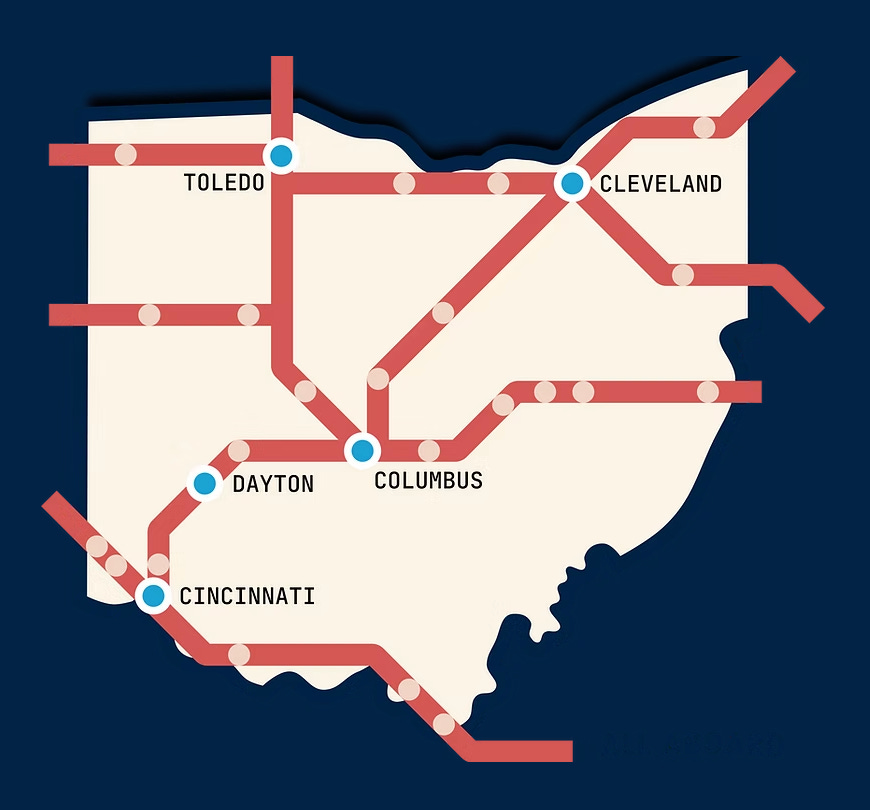
Much of the discussion centered around the federal Corridor Identification program, which is pushing states to study where passenger rail can be expanded or reintroduced. In Ohio, that process has coalesced around three main routes, each offering a different vision for what rail could look like in the state.
The first is the 3C+D corridor, connecting Cincinnati, Columbus, Cleveland, and Dayton. It is the most intuitive route on the map and the one that feels almost inevitable once you see it drawn out. These are the largest population centers in the state, and the infrastructure largely already exists. Freight railroads own the tracks, which creates a political and contractual hurdle, but physically, the corridor is there. It fits neatly into the federal program as an entirely in-state route with strong ridership potential. More than anything, it feels like the spine of a future system.
The second corridor, called Midwest Connect, stretches from Chicago through Columbus to Pittsburgh. It is more complicated and requires coordination across multiple states, which makes the politics harder. At the same time, it has a quiet advantage. A significant portion of the track in Ohio is already publicly owned by the state, which lowers the barrier to implementation in a meaningful way. It also connects major economic centers across the Midwest, linking Chicago to Columbus and on to Pittsburgh. It may not have the same immediate clarity as the 3C+D route, but it carries a different kind of regional significance.
The third corridor runs from Cleveland to Detroit through Toledo. Compared to the others, it feels smaller and more incremental. It overlaps with existing Amtrak service, which means improvements could be built on what is already in place. That makes it one of the more realistic near-term opportunities. It also ties into a broader Great Lakes network that advocates have been pushing for years.
Behind much of this momentum is All Aboard Ohio, a statewide advocacy organization that has been around for decades but has recently found new energy. Their timing has been important. As federal funding opportunities emerged, they were ready to push the state to act. What had been dormant ideas quickly became active proposals, backed by studies and growing public attention.
The most compelling part of the summit, though, was not about corridors or funding. It was about a small town called Crestline.
Mayor Linda Pitt spoke about a series of events held along the proposed 3C+D route to gauge public interest. In most places, organizers expected a few dozen people to show up. In Crestline, more than four hundred residents came out. That kind of turnout does not happen by accident. It reflects a real hunger for connection and opportunity.
Crestline is the kind of place that often gets overlooked in conversations about growth. It is small, walkable, and surrounded by rural communities. Places like it act as economic hubs for their regions, much like Keene does in New Hampshire. They concentrate activity, support local businesses, and maintain a sense of place even after years of disinvestment. When you introduce rail into that environment, the possibilities expand quickly. Commuting becomes more viable, new businesses have a reason to locate downtown, and growth can happen without defaulting to sprawl.
This is where the idea of satellite transit-oriented development starts to take shape. Instead of focusing only on major cities, rail can support a network of smaller nodes that grow together. It is a different way of thinking about development, one that feels especially relevant in a state like Ohio.
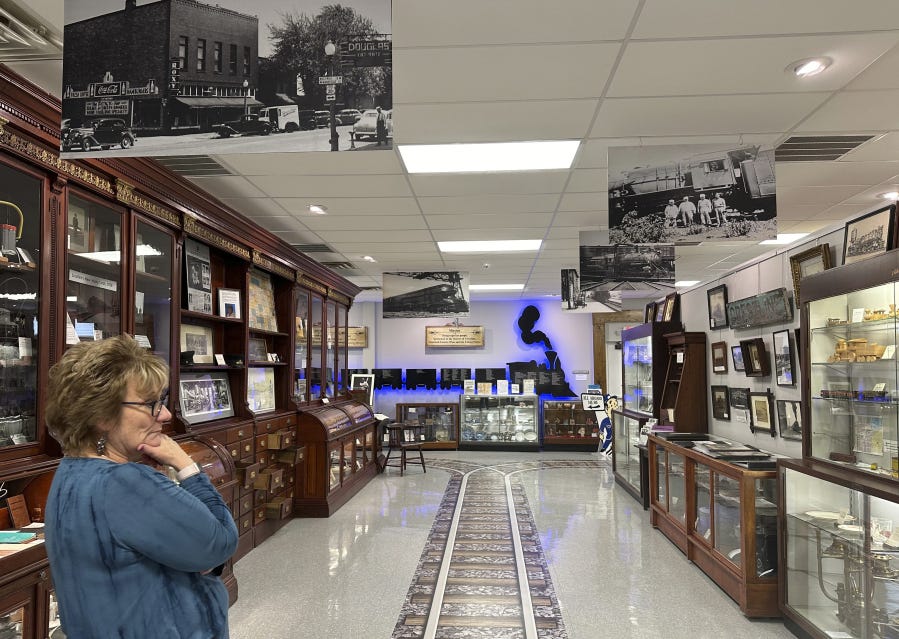
That idea came up directly in a conversation led by Hayden Clarkin, known online as the Transit Guy. He posed a simple but important question about what it would mean not just to build rail, but to build around it. The distinction matters. Rail is not just a service. It is a framework that can shape land use, generate economic activity, and influence how communities grow over time.
This question feels particularly urgent in Central Ohio, where the Mid-Ohio Regional Planning Commission has identified the region as one of the fastest growing in the country and the largest without intercity passenger rail. Growth is already happening. The issue is whether that growth will be organized to create lasting value or continue to spread outward without structure.
What stood out most to me throughout the summit was not just the substance of the proposals, but the language people used to talk about them.
In Massachusetts, transit conversations often center on equity and access. In Pittsburgh, they tend to focus on preventing cuts and maintaining existing service. In Ohio, the framing is different. The emphasis is on economic development, competitiveness, and attracting investment. Even the concept of freedom is framed through that lens. One speaker described freedom as the ability to choose not to drive. I use a similar line in New Hampshire, tying into the state’s culture and motto, Live Free or Die.
That difference is not accidental. It reflects a deliberate approach to coalition building. Advocates are tailoring their arguments to resonate with different parts of the state. In some places, the focus is on growth. In others, it is about connection. The underlying goal is the same, but the path to building support varies. In Pennsylvania, Transit4AllPA uses different language in Pittsburgh and Philadelphia than they do in small systems like Lancaster and the Lehigh Valley.
Ohio itself is not a uniform place. Cities like Cleveland and Cincinnati share a legacy of industrial development, while Columbus has grown around government and education and now feels closer to a fast-growing Sun Belt city. Those differences shape how people think about transportation and what they expect from it.
Rail has the potential to bridge those divides. It can connect legacy industrial cities with newer growth centers and link small towns to larger economic networks. It offers a way to create a shared structure across a state that often feels fragmented.
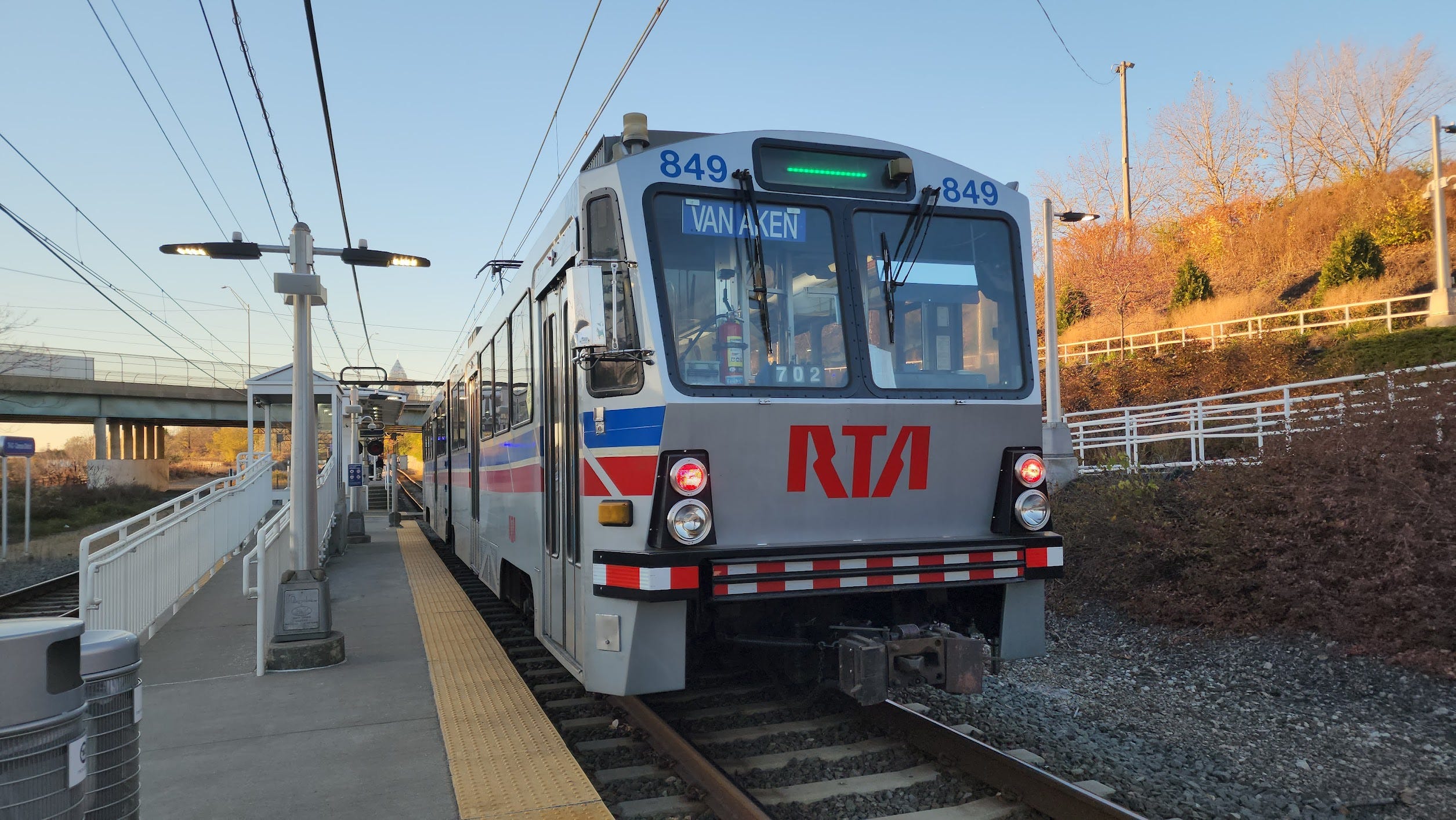
By the end of the summit, it was clear that this is no longer just a theoretical conversation. Ohio is beginning to imagine a different future for itself, one where transportation plays a central role in shaping growth and opportunity. And that shift in thinking is where real change begins.
Thanks for reading Jacob Bikes! This post is public so feel free to share it.
Comments
Nothing yet. Say the first thing.
Sign in to join the conversation.