
By Jackson Katz
Men’s leadership in the titanic struggle to end men’s violence against women has been woefully inadequate – to date. I know that many men care about this issue, some very deeply. But not enough have stepped up to create a “tipping point” for change.
Women’s leadership -- multiracial, multiethnic -- has been world-historical in its transformative impacts. Not so for men.
I’ve written and spoken about this countless times over the years.
Which brings me to the reason for this post.
Sexual assault awareness: some relevant background
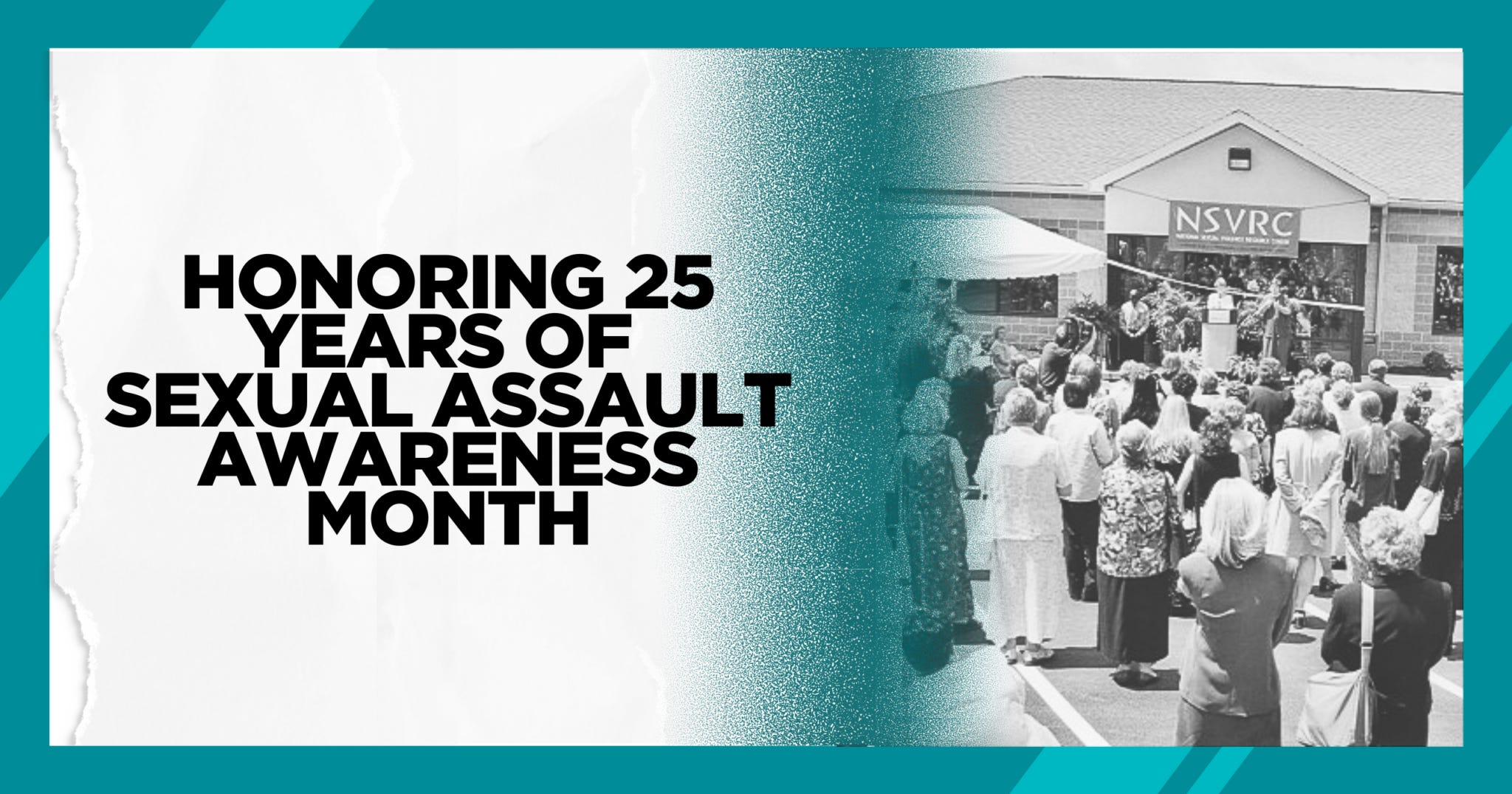
Today is the last day of April, which is Sexual Assault Awareness Month in the U.S.. It was formally recognized as such in 2001.
I’ve long had a (loving) critique of SAAM. I realize it’s an important organizing tool for sexual assault programs and other initiatives. Fair enough. Over the last quarter century, I’ve done many hundreds of talks and trainings in April because of that focus – as have many others.
Still, the underlying concept of the need to “raise awareness” lacks necessary ambition.
Today, we need a lot more than “awareness raising.” We’ve had that for DECADES. We need action. We need accountable leadership on the personal, institutional, political, and cultural level -- especially from men.
When I say that “we’ve” been aware of the pervasiveness of sexual violence for a long time, what I mean is that the feminist-led anti-rape movement began to raise consciousness about this critical (and ancient) issue in the 1970s.
This is far from a new conversation -- even among men. An ethnically and racially diverse cohort of men (too few of them!) have been active participants and supporters of women in the antirape movement since that time. They’ve been educating, writing, speaking, and organizing to resist rape culture for more than a half-century. About men’s sexual violence toward women and non-binary people — and also toward other men.
Here are a few book-centric data points to put things in historical perspective (not to be confused with a systematic literature review):
· The first major feminist book analyzing rape was Against Our Will: Men, Women, and Rape (1975), written by the late feminist journalist and activist Susan Brownmiller. This groundbreaking work was published more than a half-century ago.
· One of the first books by a man about rape was a slim paperback called Men on Rape: What They Have to Say About Sexual Violence (1983), by Timothy Beneke.
· The first book to identify rape explicitly as a men’s issue, and offer both analysis and solutions, was another short paperback, entitled Stopping Rape: A Challenge for Men (1993), by Rus Ervin Funk.
Against Our Will was a bestseller, and one of the most influential books of the twentieth century. Unfortunately, the above-mentioned books and other materials that focus more directly on men have reached a very small and somewhat niche readership.
As many of you know, I’ve been trying to break through to a wider audience with my own books on this topic, first with The Macho Paradox (2006 and revised version in 2019), and then the recently published Every Man (2026).
I point this out because I and others have seen, anecdotally, a noticeable uptick in the incidence of men speaking out about sexual violence. They’re doing so in response to a number of factors. These include: a new generation of profeminist men is coming of age and finding its voice; the outrageous and relentless sexual assault scandals that keep happening (e.g. the Epstein Files, the Pelicot mass rape case in France); a growing sense of responsibility to counter the malign influence on boys and young men of misogynous manfluencers like Andrew Tate; and because they understand that the deeply misogynous and abusive porn culture has had a truly pernicious effect on the sexual socialization of countless young heterosexual men.
Perhaps the development most responsible for men’s increased willingness to speak out is that many of them have heard women’s profound disappointment – and anger – that more men haven’t shown up to stand with them in the face of growing and increasingly brazen cultural misogyny. This includes the ongoing and enormous problems of sexual and domestic violence, along with relentless right-wing attacks on their reproductive freedom and other basic rights.
Some men react defensively to women’s righteous indignation by reaching for the old playbook of whataboutism (what about all the men who are abused?), and predictable cries of “not all men.”
But others seem more ready to break their complicit silence.
Looking back and moving forward
Which brings me back to the reason why I wrote this post. I’m energized and hopeful about the potential to expand dramatically the number of men who are willing to stand up and speak out in this fraught historical moment.
There are clearly more men and young men today than ever before that are willing to be vocally anti-sexist, both informally and in the context of organized programs and initiatives. (Despite massive setbacks in these efforts due to funding cuts by the current federal government).
I only ask that as we move forward, we keep in mind that many of the ideas that underpin this renewed sense of possibility have been around for quite a while.
To that end, I want to share with you a wise and prescient quote from Rus Funk’s groundbreaking book Stopping Rape:
“It’s not enough to be another man against violence; not enough for us to oppose rape; not enough for us to participate in Take Back the Night marches or donate money to local battered women’s shelters or rape crisis centers. It is not enough for us to learn to talk with each other, or to cry, or to learn how to carry a baby, change a diaper, or interact lovingly with children. All of these activities are essential and necessary and important and wonderful. But none of this is enough -- all of this is not enough. Doing all of these things will not stop men’s violence. Men’s violence begins and will end with the ‘man in the mirror,’ and with our willingness to confront ourselves, each other, and our society until men don’t rape any more. This (book) is about that self-examination. And why this self-examination, painful and difficult as it is, is so critical. Men are more than strong enough and creative enough to muddle our different ways through.”
He wrote that thirty-three years ago.
I’m very happy to see an increase, recently, of men on social media posting about what men can -- and must -- do about the pervasive problem of sexual violence, and all forms of men’s violence against women. It’s good to see.
But raising awareness alone won’t cut it. At long last, we need to take this all to the next level.
No posts
Comments
Nothing yet. Say the first thing.
Sign in to join the conversation.