
By Jackson Katz
I titled my new book, as most of you know, Every Man: Why Violence Against Women is a Men’s Issue. Not “some men who abuse women.” Every man.
I did this because my goal is to challenge the cultural norms, expectations, and ideas about masculinity that allow men’s violence against women to persist in the first place.
Which raises an uncomfortable question:
Why are so few influential men talking to other men about this?
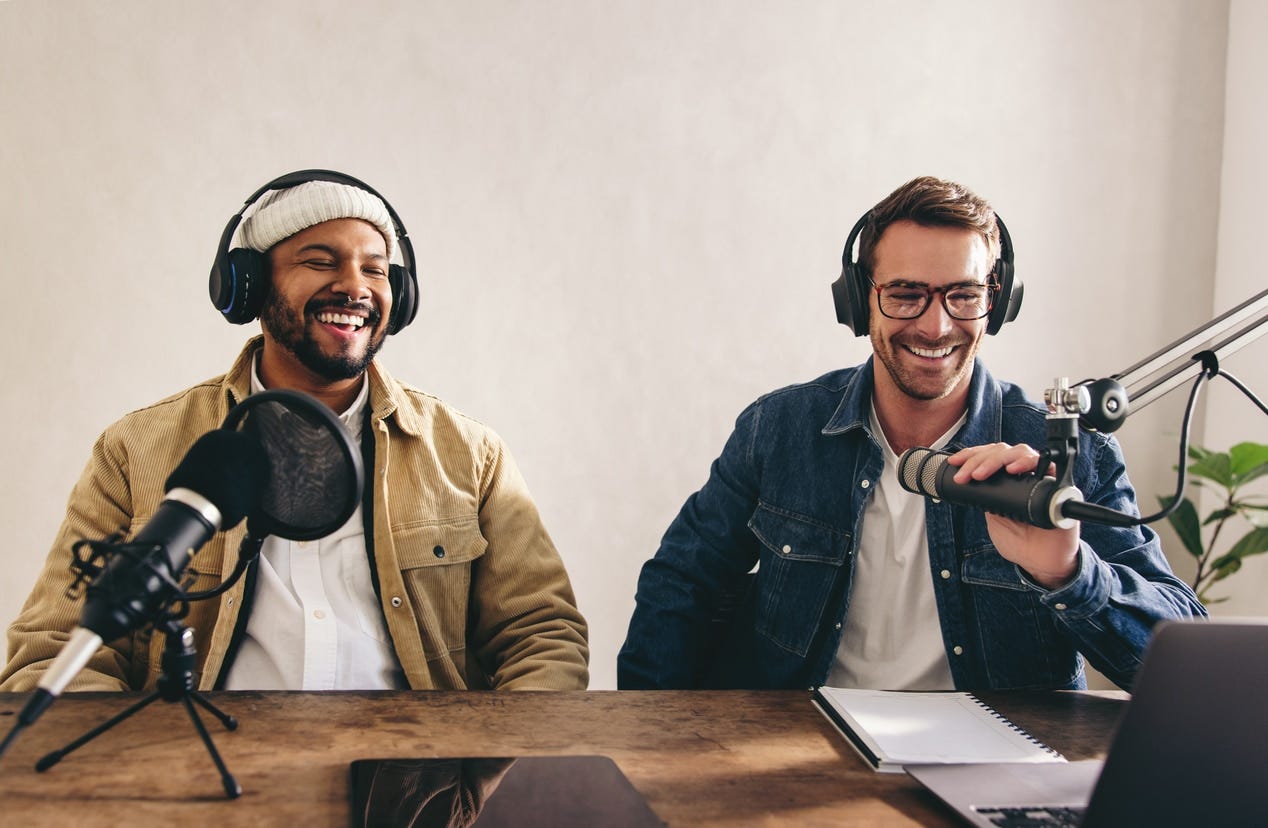
Especially the men with some of the largest male audiences in modern media: podcasters.
A small number of men are leading this important conversation elsewhere. Some of them work in the sexual assault and domestic violence movements. Others are active in broader, intersectional efforts for gender equality.
But I’m trying to push the idea of engaging and mobilizing men in gender violence prevention to the next level -- into the mainstream of male culture.
The goal is to make gender-based violence a topic of conversation wherever men gather to discuss important ideas: from the barbershop to the boardroom, from the dinner table to the graduate seminar, from wonky political talk shows to podcasts of every sort.
We especially need this from the types of podcasts that reach large numbers of men -- including young men.
The only way to reduce dramatically the appalling level of men’s violence against women in the U.S. and around the world is to challenge and change the underlying norms in male culture that make it possible. The misogynous attitudes and beliefs that rationalize – and even encourage – men’s abusive behaviors toward women.
This enormous problem can’t be solved by running from one broken man to the next and trying to fix him. That’s a hopelessly naive and futile strategy.
We need to think much bigger. This is a public health problem, so we need to move upstream to confront the problem at its source.
The powerful role of media hosts and creators
We need to take this conversation into one of the most powerful sources of conversation, connection, and community in many men’s lives: the podcast universe. Male podcasters shape conversations about masculinity every single day — whether they intend to or not. They discuss matters of health, fitness, finances, sports, relationships. Some of the more cerebral hosts talk about science, history, philosophy, and of course, politics.
Charlie Sabgir, director of the Young Men Research Project, elaborates on the importance of podcasts in the contemporary media ecosphere:
“Podcasts have become a dominant medium in today’s attention economy, with young Americans driving the trend. As of 2024, over 100 million Americans tune in weekly… Fueling this surge is the 12-34 crowd, with nearly three in five Americans in this age group (59%) listening weekly.
The overwhelming majority of podcast listeners expect accurate information, often trusting podcasts more than traditional news sources. For young men especially, podcasts have become a low-friction way to stay informed and form opinions on politics and society.
For millions of (them), these podcasts extend beyond entertainment—they shape how listeners understand politics, offering unfiltered opinions and permission structures to endorse or reject different viewpoints, movements, and individuals.”
But when it comes to misogyny, sexual violence, abuse, coercion, or the role men themselves can play in changing the culture? The silence is deafening.
To be sure, a tiny group of male podcasters discuss – or focus on – the issue of gender-based violence. But they tend to have small, niche followings. They include some gems: the Now and Men podcast, co-hosted by Sandy Ruxton and Stephen Burrell; the Partnered with a Survivor podcast, co-hosted by Ruth Reymundo-Mandel and David Mandel; and the Speaking Of podcast, hosted by David Garvin.
Other male podcasters, like Charlamagne Tha God, have spoken out on topics like rape culture. California Governor Gavin Newsom had me on his podcast in 2025 to talk about these issues and more.
But despite occasional exceptions, when was the last time you heard a top male podcaster with a large audience talk in an extended and meaningful way to his co-hosts, or his listeners/viewers, about what men can and should do in response to the outrageous levels of misogynist violence that appear in our news feeds every day?
The Podcast Bros have been virtually silent on this topic. That includes not only the right-leaning hosts, but also most of the liberal and progressive ones, too. It’s been this way for years, from the moment podcasts emerged in the early 2000s, right up the present.
Sure, they have plenty to say about newsworthy scandals like the Epstein files. They’re happy to denounce pedophiles. They’re more than willing to criticize infamous predators like Harvey Weinstein and P. Diddy.
But when it comes to discussing some of the deeper societal roots of misogynist abuse, like the “hostile sexist” attitudes that are reinforced in certain peer cultures, or the normalized sexual degradation of women in porn culture? Or having on guests who can speak to what role men can play in addressing these sorts of issues? Crickets.
Let’s be part of the change
I suspect that male podcasters have been largely AWOL on this critical topic for a very simple reason: it’s never even occurred to them that they have a distinct role to play. Nor has anyone – to the best of my knowledge – ever held them accountable for failing to do so.
Violence against women is still widely framed as a “women’s issue.” When was the last time you read or heard media commentators even mention the ongoing crisis of sexual assault or domestic violence as a men’s issue, a vital topic that influential men in new or old media should be grappling with and presenting to their audiences?
On top of that, anti-feminist charlatans in the “manosphere” like Andrew Tate, Myron Gaines and many others have managed to convince millions of impressionable young men not only that they’re not responsible for violence against women – but that men are in fact the true victims!
But the manosphere didn’t arise in a vacuum. Millions of boys and young men were already searching for guidance in a changing cultural landscape on matters related to gendered expectations and norms surrounding “what it means to be a man.” This included questions about identity, purpose, goal-setting, relationships. And sadly, disconnection and social isolation are all too common among men of all ages – including young men. The loneliness epidemic is real.
In addition, working to end “violence against women” has never been understood primarily as the responsibility of men in the mainstream of cultural thought and practice. This is due to a phenomenon present with many other issues as well. Members of subordinated, oppressed, or marginalized groups often have the added burden that people expect them to advocate for themselves, bring up the topic, put it on the agenda.
Members of the dominant group are rarely expected to do this work. This is true when it comes to systemic inequalities like racism, anti-LGBTQ bias, and of course misogyny and all forms of men’s violence against women.
Historically and right up to the present, it’s mostly women who raise the issues, write and speak about them, organize around them. It’s not that men don’t care about any of this. But generally speaking, they rarely bring up these issues on their own, see them as “men’s issues,” or face much criticism for failing to address this subject matter proactively.
I’m not fully immune from some of these dynamics myself. Consider this: When I was formulating a plan to promote my new book Every Man, I started to brainstorm about which people in media that I knew -- or knew about -- who might want to interview me or feature my book.
When it came to podcasts, I scrolled through the various women with sizable followings that I assumed would be especially interested in the subject matter. But then I caught myself. Why confine my search to women? Why shouldn’t I reach out to men, too? My instinct had been to think immediately about women podcasters, and give the men a pass. But isn’t this part of the problem?
I’ve been arguing since the 1980s that violence against women is a men’s issue. With respect to podcasters, that means that influential male podcasters -- manfluencers -- should be some of the first people I should reach out to!
Especially if we’re serious about providing young men and boys with a counter-narrative to the ignorant misogyny they hear on a daily basis in the misogynous manosphere.
The challenge to podcasters
Which prominent male podcaster will decide that this conversation matters enough to bring to his audience?
Who will be among the first to say that respect and support for women’s rights, and accountable leadership on the crisis of men’s violence against women, should be central topics for strong and responsible men to address?
Who will model what moral and cultural leadership on these vital topics actually looks like for men?
I want to address male podcasters directly:
If you rise to the challenge, many people will support you. There are many great guests you can invite on that are ready and willing to engage. Charismatic women and men. There’s certainly a long list of women with expert knowledge and lived experience.
The fraternity of men who work on the issue of men’s violence against women is still relatively small in relation to the vast scope of the problem.
Nonetheless, the list includes many impressive and accomplished men: former professional athletes, retired military leaders, law enforcement officials, business leaders, political figures. All of whom can speak to the ways in which men have -- and can – make a difference on these issues.
I can provide all sorts of suggestions for quality guests. All over the world!
The potential guest list also includes many men with profound personal connections to the subject: men whose daughters were raped, or murdered by boyfriends or husbands; men who grew up in homes where they were traumatized by their father’s abuse of their mother; men who themselves were victims of sexual abuse, usually -- but not exclusively – at the hands of other boys/men.
When you platform these guests, you can discuss and debate all sorts of topics: why should all men be responsible for the actions of some men? Am I my brother’s keeper? Why don’t more men interrupt and intervene when their male friends treat women poorly, or make demeaning comments about women’s bodies, sexuality, intelligence?
How do we reconcile the epidemic of men’s violence against women with the reality that many men are struggling economically, socially, and professionally? Are these perhaps related? Is casual misogyny connected to more extreme acts of violence, like femicide? What can be done about the fact that misogynous porn has normalized verbal and physical aggression by men during sex with women, including the highly dangerous practice of “choking” (which is actually strangulation)?
Do these issues play out similarly across a range of ethnic and racial groups? How important is it to include cultural complexity and nuance in the discussion?
When you open up space for these sorts of conversations, you’ll be doing your audience an incredibly valuable service. You’ll be helping to foster an environment in which it’s okay for guys to talk about these difficult issues.
But it’s even more than that. So many of the problems that men and young men face today are directly connected to distorted ideas about “manhood” they’ve been saddled with by a deeply misogynous media and political culture that also does incalculable harm to women and girls.
As a man with a mic and influence, you can help lead others to see that there’s no contradiction between supporting women’s struggles for justice and dignity and advancing men’s emotional, physical, and mental health.
In fact, all of these are deeply interconnected.
And please remember: silence is not neutrality.
In a media culture already saturated with misogyny, choosing not to engage this conversation is itself a cultural choice.
The question is: which men with influence are prepared to make a different one?
The conversations are waiting for you to start them.
No posts
Comments
Nothing yet. Say the first thing.
Sign in to join the conversation.