
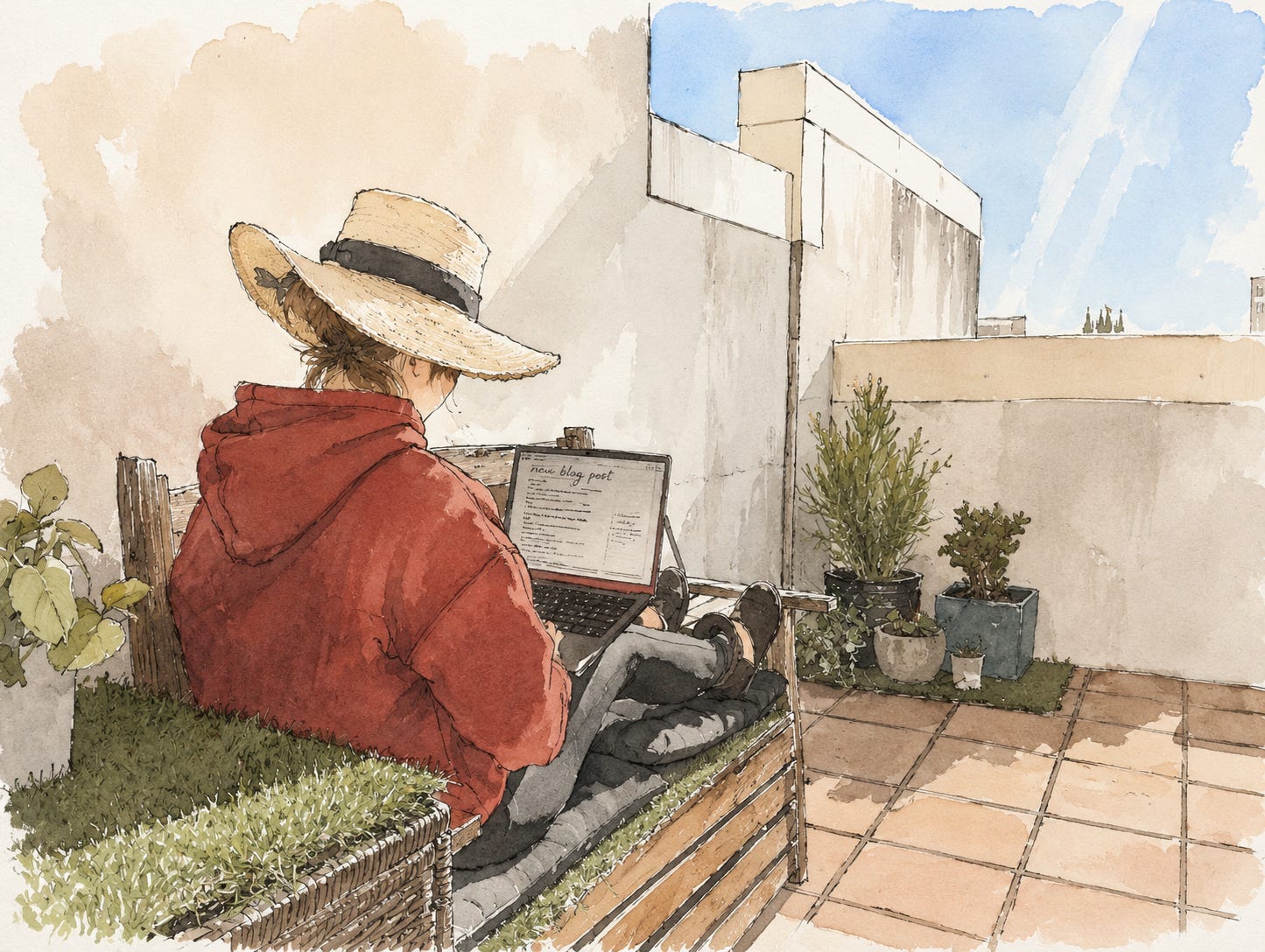
Writing this from my rooftop right now.
Birds. Sunshine. My little plant corner. A laptop.
It took me a while to figure out that this one small moment in the morning is what fills my cup.
I believe in taking proactive steps to build the environments to enable the best version of myself - if the energy takes me to a different country, I would make the move.
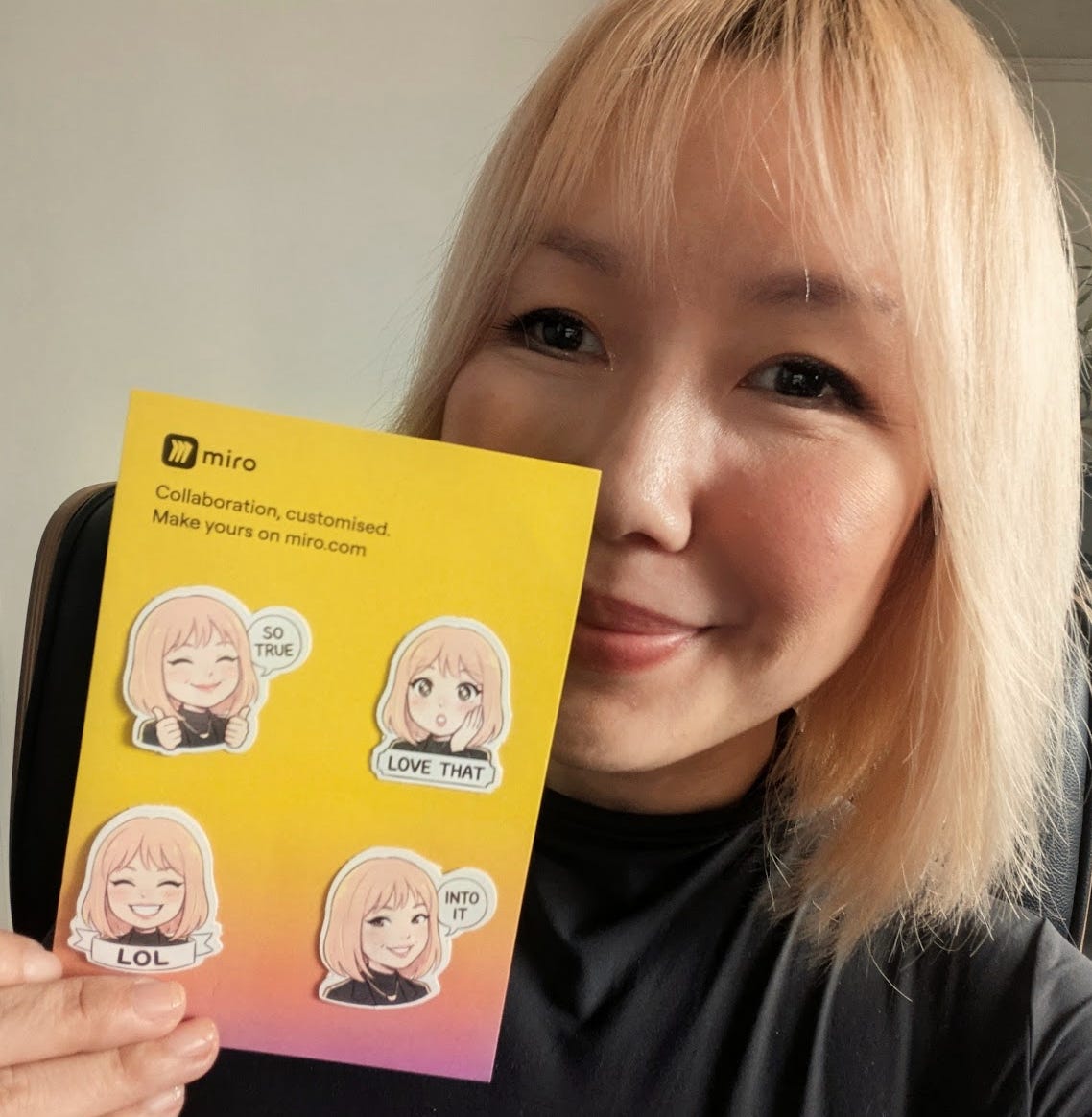
Speaking of good energy, I went to the Miro Canvas event in Sydney this week. What a vibe. I’ve been a Miro user since day one, and if you know me, you know blank canvas is where all great things start. We designers have always lived in the messy middle. Idea dumps, wild connections, organised chaos. Miro just makes it feel more human.
They gave me my personalised emoji stickers at the event - and I was like a kid in a candy store!! 🤩 Needless to say - this is one of my favourite new features from the upcoming Miro AI releases (YESS, you can soon create your on digital stickers).
One of the key reminder for the event 👇🏽
“Keep things weird and fun.”
In a world that’s sprinting toward efficiency, that reminder is actually a creative lifeline. Weird and fun is where innovation lives.
And innovation, as we all know, is what creates real business differentiation.
OK.. Today’s post is all about BUILDING and BREAKING TRUST
I’ve been thinking about it a lot lately. I’ve broken trust. I’ve met people who made me feel immediately safe and seen. And I’ve worked alongside people for years where something invisible always sat between us.
Trust is the invisible architecture of every relationship, every career, every team.
These are some of the personal stories and reflections - I hope these inspire you to build and find trust in your own circles.
Years ago, I landed a role building a design function from the ground up at a startup. I was passionate. I was ready. I had the whole plan.
30 days: establish the foundation.
60 days: the team hits momentum.
90 days: we launch.
I thought this was leadership. I thought the clarity of the plan showed vision. What I didn’t see was that I had walked into a room where everyone was swimming in their own lane, at their own pace, in water I hadn’t spent any time in yet.
I pushed my agenda. I moved fast. My intention was to do good work for the company.
But I created anxiety in the process.
And slowly, quietly, I lost trust along the way. Not because people didn’t like me. Not because the work was wrong. Because I had inherited my past into an environment that wasn’t ready for it. I forgot to stop and ask: what does this team actually need right now?
It took a longer road to rebuild. One relationship at a time.
Then one day I came across Bruce Lee’s words. 🧘🏽♀️
“Be like water.”
Water shapes itself to a waterfall. It flows through rock. It rests in a lake. One element, infinite forms.
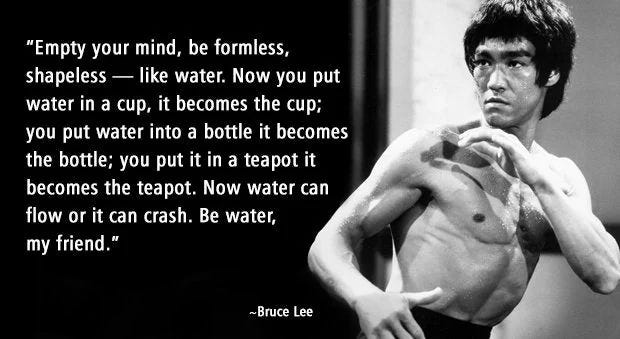
That hit me somewhere deep. I had been showing up as a battering ram when what the situation needed was flow.
The shell I’d built around myself: “the high achiever, the one who delivers, had made me rigid.” Underneath it, I still had water. I just had to let it flow and be adaptable to the surroundings.
A collaborator who taught me what integrity costs.
A few years back, I was deep into a business collaboration on a complex project. We both showed up passionate in week one. By month two, something had shifted. Meetings got cancelled last minute. Messages left unanswered until I followed up. Then followed up again.
The project became exhausting. Not because of the work, but because of the weight of uncertainty and the emotional labour of chasing. I had to called it off - despite how much hard work had already gone in.
That experience sharpened something in me. I have what I call a personal branding promise: I will always deliver early. I never miss a deadline. If it’s a collaboration, I am proactive, always moving the needle, never waiting for the last minute to become someone else’s problem.
Your work integrity is your personal brand: Find them. Name them.
And these becomes how people talk about you when you’re not in the room.
I managed a designer once who was genuinely talented.
Every time he showed up, it was perfect. Perfectly finished deck. Precise product delivery But he didn’t communicate between deliveries. He’d finish a project without telling me so that I can reevaluate his work capacity. He’d join team calls with camera off half the time. I was always the one reaching out to ask where things stood.
I gave him feedback. Nothing shifted.
He kept delivering. But trust never grew. And promotions stayed distant.
Visibility also builds your personal brand!
In the case of B2C marketing, the average consumer needs to see your brand across multiple channels, up to 15 times, before they decide to buy. In a work environment, trust is built the same way. It’s not one great piece of work. It’s consistent presence in the key moments. The conversations, the updates, the small acts of showing up.
Visibility isn’t vanity. It’s how trust accumulates.
Earlier in my career I genuinely believed that being hired meant being trusted.
Wrong.
Trust isn’t transferred with a contract. It’s earned in micro-moments. In the things you notice, the things you make room for, the way you show up before anyone asks you to.
Here’s what I’ve learned: everyone has their own definition of what good looks like.
A CEO worried about headcount productivity needs you to read that and bring your work close to that concern.
A PM focused on go-to-market traction needs you to connect what you’re building to those stakes.
The highest-level players I’ve ever worked with don’t box themselves into their own style. They stay observant. They stay flexible. They step out of their own box to enter someone else’s conversation.
Here’s the question I ask designers when they tell me a stakeholder doesn’t understand their work:
“Have you taken the time to understand them first?”
Lay the bricks for others. That’s how others eventually lay them for you.
Someone who earn real trust aren’t always the best at their tools. They’re the ones who understand what the people around them actually care about, and bring their work close to that.
They pave the way for others to work better. Before justifying their own value.
That’s the shift from execution to partnership.
She was good. She was passionate. She meant well.
But she was so focused on what she wanted to build that she forgot to ask who she was building with.
Trust isn’t something you announce or plan into a 90-day deck. It’s something you earn in the daily fabric of how you work. How you show up when no one’s watching. How you talk about your colleagues when they’re not in the room. How you hold your word when it would be easier to let something slip.
It’s slow. It’s quiet. It’s built in moments, not milestones.
And if you’re reading this and thinking about a relationship, a team, a stakeholder, a collaboration that feels a little distant right now...
Maybe ask yourself:
what does trust look like to the person on the other side?
A few questions to sit with:
💬 Who in your work life do you most want to build trust with right now?
💬 What does “good” look like to them, not to you?
💬 And what’s one thing you could do this week to define your integrity value - so that you can define a trustful personal brand.
🫶🏾
I hope this post spark some lights and reflections for your day.
Hit reply if this resonates.
I read everything.
Jac ✌️

How I can help you:
After 18+ years as a strategic business designer running two successful companies and helped companies raise millions in fundings, I now help designers unlock their strategic thinking skills and become irreplaceable business partners.
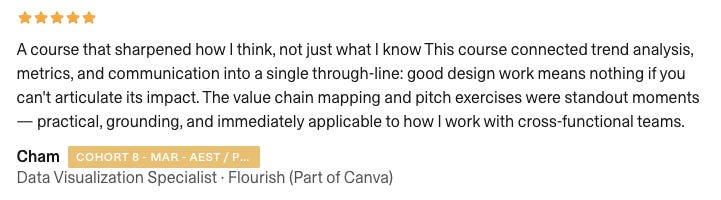
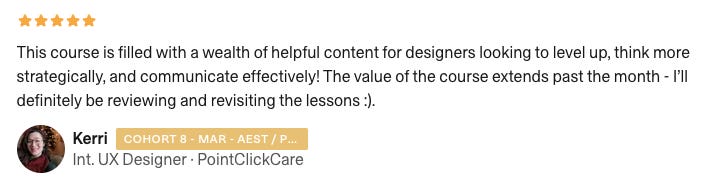
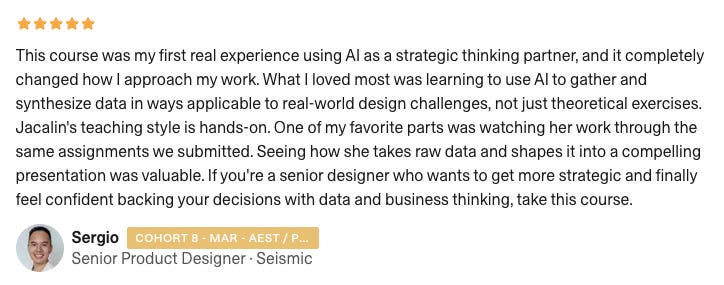
This 4-week live cohort “AI Powered Strategic Design Accelerator.” covers strategic business acumen, strategy visioning, strategic communication, connecting design to business impacts.
Alumni reflected +67% more confidence in making strategic decisions and connecting design to business.
Next Intake: JULY (SOLD OUT) // OCT(50% SOLD OUT)
If you’re in Australia - All of your educational expenses is fully tax deductible for the financial year
💬 What alumni say from previous cohorts:
No posts
Comments
Nothing yet. Say the first thing.
Sign in to join the conversation.